Medical Device Product Development Life Cycle: Key Phases, Challenges & Solutions
Table Of Content
Published Date :
22 Jun 2026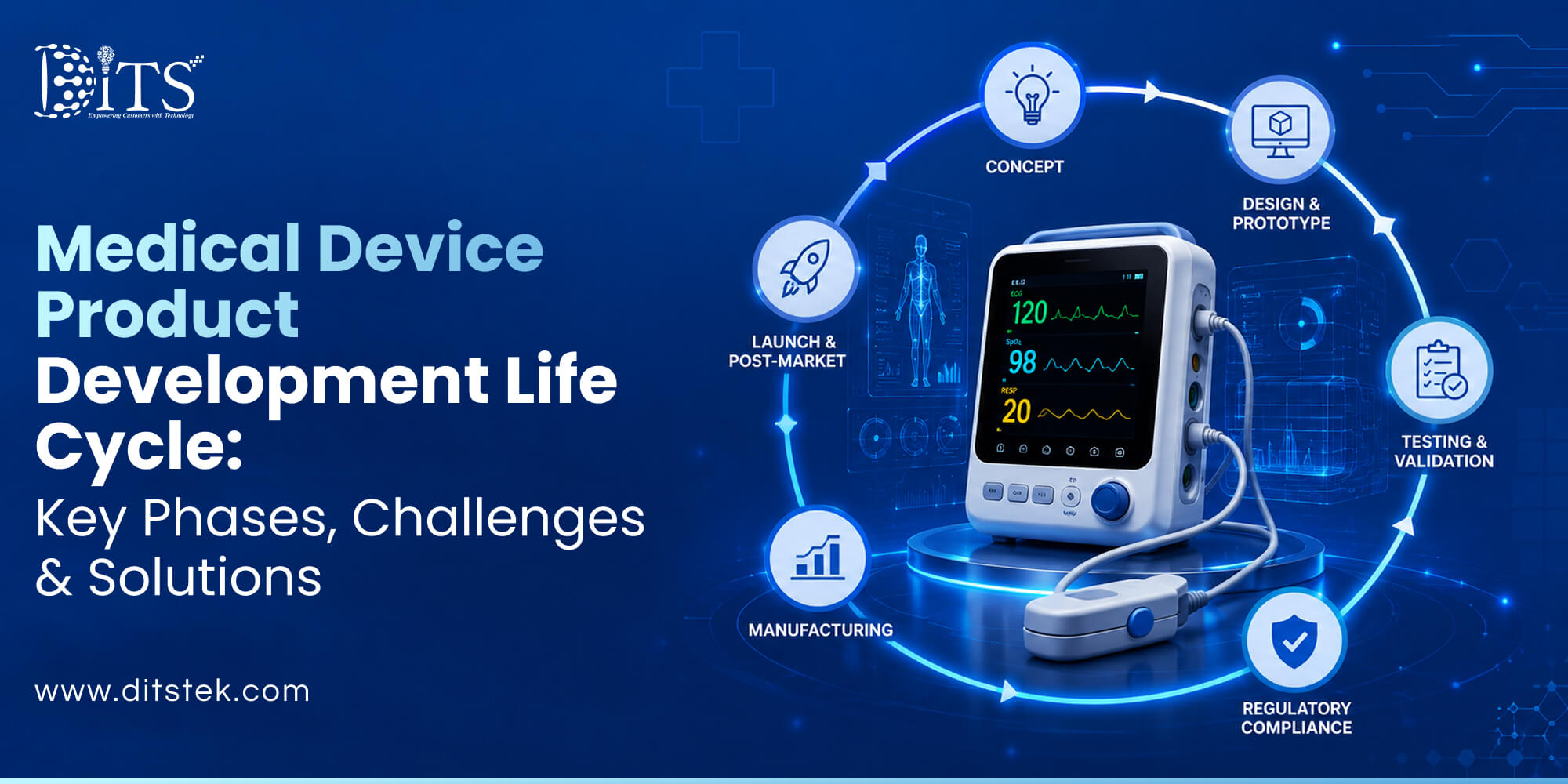
Key Takeaways
- The medical device product development process begins with research, creating roadmap, design, development, validation & verification, risk management launch, and post marketing.
- With top-tier medical device product development services, businesses will strengthen compliance, handle complexity, and reduce risks to a greater extent.
- The medical device development timeline is usually between 4-7 weeks for MVP development, and full-fledged development varies depending on the complexities involved.
- The steps in medical device product development process offers a well-structured path that ensures safe development and launch of medical devices, while addressing
- technical and regulatory risks.
- In 2026, the overall revenue in medical devices market is expected to be around US$571.72 bn. Moreover, the CAGR is expected to be US$717.38bn by 2030.
Introducing an innovative medical device into clinical practice is not that easy. It must adhere to an extensive set of criteria that demonstrate its device's safety and effectiveness, reliability in the clinical setting, and overall clinical readiness.
Medical device product development lifecycle is much more complicated than other types of product development because there are strict requirements at each step of the design and development process. Any small mistake related to conceptualizing, prototyping, regulatory approval, risk assessment, or compliance requirements can pose a serious risk and could result in either failure to submit the medical device for approval or removal from the market.
What is Medical Device Product Development Lifecycle?
The process includes all the essential phases, from planning and ideation to launch. It is much more rigorously regulated than standard product development; it has a structured, phased approach in which every step must be planned, validated, and thoroughly documented. Medical device product life cycle encompasses the following aspects:
- Conceptualization
- Feasibility analysis
- Prototyping,
- Verification/validation
- Regulatory compliance
- Launch and post-market monitoring
Medical device development process matters because a medical device is directly related to the patients' well-being and clinical outcomes. Managing these steps effectively helps reduce potential design failures, regulatory delays, and prevents safety issues.
Collaborating with a reliable healthcare software development company with expertise in advanced technologies will help you achieve long-term business success.
Need Expert Support For Medical Device Development?
Overcome technical, regulatory, and integration challenges with experienced product development teams and healthcare technology specialists.
Medical Device Product Development Phases
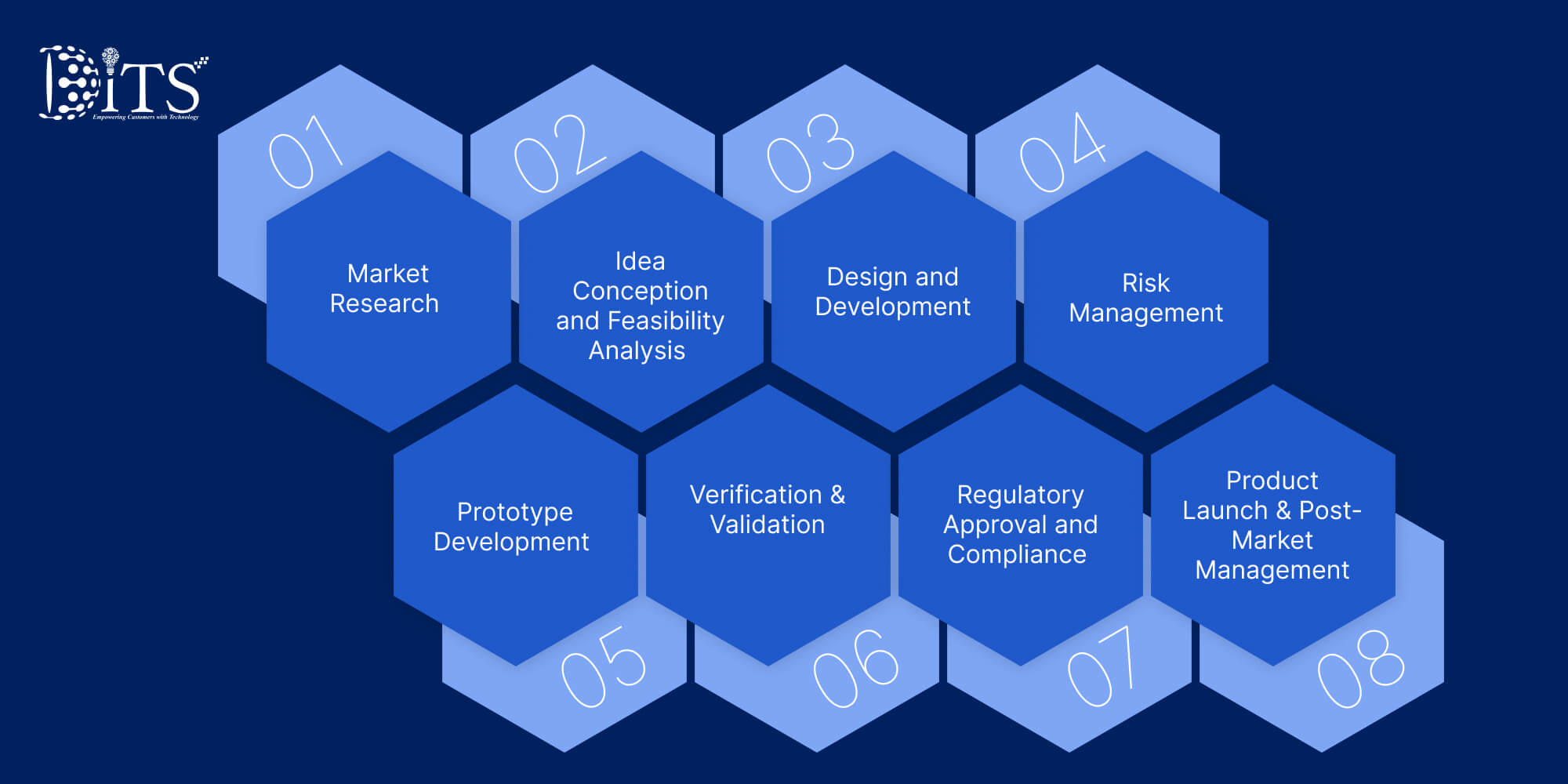
The medical device development stages takes a product from a notion to the market through a variety of stages, each comprising the following phases: development, design, testing, regulatory compliance, medical device software integration, and connected device optimization.
Market Research
At the outset, the product lifecycle aims to identify the unmet clinical need from patients' pain points, the clinical workflows of medical practitioners, and existing treatment gaps. It includes voice-of-the-customer interviews with physicians, nurses, patients, and purchasers to confirm demand.
Competitive analysis, market sizing, and reimbursement research are performed to understand market potential. It converts ideas for healthcare products into opportunities, with a well-defined target market, user requirements, and a business plan.
Idea Conception and Feasibility Analysis
After the idea is confirmed, it needs to be investigated for its potential to be designed, approved, and marketed. The elements of this process are technical feasibility, clinical feasibility, financial feasibility, and assessment of the regulatory pathway.
To establish the core functionality, analyze design principles, and identify the limitations, proof of concept (POC) or early prototypes are often built. An early risk-benefit study is conducted to assess whether the anticipated clinical utility justifies the potential risks in terms of safety, usability, regulatory considerations, development, and other factors.
Design and Development
This stage transforms the approved concept into an execution plan. The following factors will be considered at this step: design inputs, user needs, product characteristics, design controls, and QMS expectations to ensure that the design process is safe and consistent.
Furthermore, a design and development plan (DDP) will be developed, where all activities related to responsibilities, milestones, review activities, and testing activities will be covered. A traceability matrix will help link all necessary aspects, namely: user needs, design inputs, design outputs, verification, and validation.
Risk Management
Risk management identifies, evaluates, and controls potential safety concerns related to medical devices throughout their product development life cycle (PDLC). This risk management process includes hazard analysis, failure mode identification, risk evaluation, and eliminating risks for patients, users, and operators.
There are several key standards that teams typically follow to manage risk; however, ISO 14971 is the primary risk management standard used by most medical device manufacturers. There are also many tools available to assist manufacturers with risk analysis, including Failure Modes and Effects Analysis (FMEA) and Fault Tree Analysis (FTA), which allow for the examination of various failures, their root causes, and impacts.
Prototype Development
This phase of medical device product life cycle is where a functional final product is produced by using many methods, such as integrating the hardware with the software, conducting usability testing, and quickly producing multiple models (prototypes) of the product to make sure that the new device works well in real-life conditions.
Clinician feedback is just as critical to the project’s success as it identifies workflow issues, increases clinician satisfaction, eliminates unnecessary expenses, etc.
Verification & Validation
Both are very important phases, as they ensure that the device is designed to meet the proper requirements and is capable of safe and effective clinical use in the real world. Through bench testing, biocompatibility testing, electrical safety testing, software validation, and clinical validation testing, the teams can identify any performance issues.
This is a very crucial step in medical device process development as it lowers the risk of causing an injury or death, and improves the quality of the documentation that supports the regulatory process. This phase guarantees the final product is absolutely safe, and ready for market.
Regulatory Approval and Compliance
For a medical device to be marketed, it has to comply with the appropriate safety, efficiency, and quality requirements. In the US, this will be determined by several factors including the classification of the device (e.g., class I, II, III) and risk level of the device. Depending on the type of device, there are many pathways to gaining regulatory clearance or approval from the FDA .
Moreover, the medical device needs to be compliant in terms of quality, safety, risk management, and data protection. Even HIPAA compliance is necessary as it safeguards sensitive health data. the other critical documents encompasses technical file, design history file (DHF), and the device master record (DMR).
Product Launch & Post-Market Management
Product commercialization is the final step in achieving approval for the medical device and getting it to market. Using a solid go-to-market plan and a well-structured medical device commercialization plan results in a disaster-free healthcare product launch with rapid adoption. After the product has been launched, post-market activities needs to be managed that includes compliant management, CAPA, vigilance reporting, updates and recall of products, and shipping costs.
Key Regulatory Standards in Medical Device Product Life Cycle
The medical device development process introduces significant regulatory standards that ensure quality management, clinical evaluation, and compliance with FDA, HIPPA and EU MDR.
| Standard | Purpose |
| IEC 62304 | Provides standards for medical device software development processes. |
| ISO 13485 | Establishes the requirements for a comprehensive quality management system (QMS) for medical devices. |
| FDA 21 CFR 820 | Establishes quality system regulations (QSR), including design controls, for medical devices in the US. |
| ISO 14971 | Provides guidance for managing risk throughout the medical device life cycle. |
| HIPAA | Establishes national standards to protect sensitive patient health information (PHI) from being disclosed without consent. |
Ready To Build Future Ready Medical Devices Today?
Transform medical device ideas into market-ready products with end-to-end development, compliance, and engineering support services.
Challenges and Solutions in the Medical Device Product Development Lifecycle
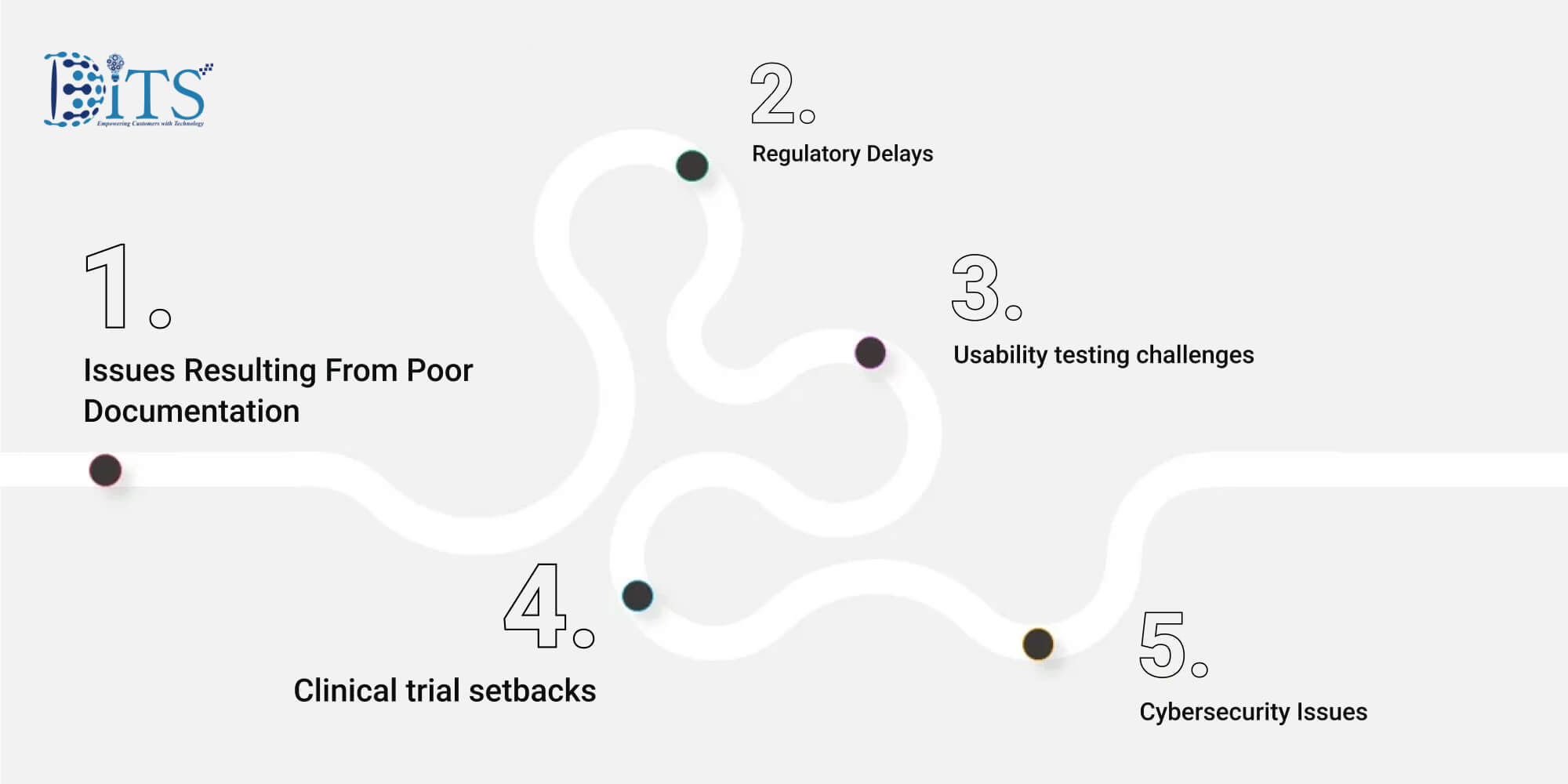
MedTech software development is an integral part of the medical device product development process as it offers ultimate support, data management, compliance, device functionality, etc., so all of these introduce massive challenges and risks during the entire cycle.
Challenge: Issues Resulting From Poor Documentation
If there is a lot of incomplete documentation or if the documentation is poorly organized it can result in delays in receiving regulatory approval or create confusion about compliance.
Solution: Keep clear records of your design efforts, create risk files, create test reports, create traceability matrices, create quality documents, etc., throughout the development process. Business workflow automation helps businesses automate the record entry and keep the data clean and structured.
Challenge: Regulatory Delays
This is the most common form of challenge experienced in the medical device development process. It arises either due to poor planning or uncertainty surrounding the approval process, which results in regulatory approval delay.
Solution: Early in the development of a new product, develop a regulatory strategy, identify what FDA or global regulations will apply to the product, develop your testing and document plans, and plan design controls accordingly.
Challenge: Usability testing challenges
Poor usability testing can result in user error or difficulty with product workflow and ultimately lead to disconnection in user engagement.
Solution: Conduct human factor studies early in the process; run prototype testing with clinicians, patients, and the end-user; run simulated-use testing with clinicians, patients, and end-users.
Challenge: Clinical trial setbacks
The unclear points, along with a significantly weak design, are hugely responsible for the delay in clinical trials.
Solution: Aligning study protocols, planning clinical delays in advance, and taking guidance from regulatory and clinical experts on foolproof claims/approval requirements push the clinical trial forward.
Read more: Clinical trial management system software
Challenge: Cybersecurity Issues
With so many devices interconnected with each other, there is always a risk of data breach and intrusion into privacy, leading to hacking and other system-related vulnerabilities.
Solution: Build cybersecurity into the design process through secure architecture, threat modeling, software testing, data protection, and post-market monitoring.
Final Words...
Behind every successful medical device is a moment where someone asks, “How can this be safer, smarter, or easier for patients and clinicians?” With prominent medical device product development services, businesses can mitigate risk, reduce complexity, and gain confidence in bringing compliant, safer devices to market.
Turning a simple idea into a market-ready solution does require innovation, for which the medical device product development lifecycle is extremely important. This structured approach from conceptualization to validation and then post-market monitoring ensures long-term product success.
FAQs
How long does medical device product development take?
The medical device product development lifecycle takes around 4-13 weeks based on the device type, risk level, testing requirements, software involvement, and other complexities.
Why is medical device software development process important?
The medical device software development process is important because it helps businesses to build highly scalable, effective, and reliable medical devices, which help remove documentation gaps, regulatory delays, and post-marketing issues.
How much does medical device product development cost?
The cost ranges from $25k- $150000, depending on the project requirements. This involves regulatory submissions, software integration, and post-market support. The cost is subject to variation depending on the MVP, prototype, and full-fledged scalable product.
What is post-market surveillance in medical device development roadmap?
Medical device post-market surveillance involves regular product updates, CAPA, real-world performance tracking, vigilance reporting, and future safety improvements.
What are the biggest medical device product development challenges?
The top challenges include medical device risk management, clinical trial setbacks, regulatory delays, cybersecurity concerns, and poor documentation. If these challenges are not adequately handled in a timely manner, you'll see increased costs incurred along with increased time prior to requesting regulatory approval.

Nidhi Thakur
With more than 19 years of experience - I represent a team of professionals that specializes in the healthcare and business and workflow automation domains. The team consists of experienced full-stack developers supported by senior system analysts who have developed multiple bespoke applications for Healthcare, Business Automation, Retail, IOT, Ed-tech domains for startups and Enterprise Level clients.
Recent Posts

Automated document processing helps reduce cargo insurance claim delays by streamlining document handling, validation, and claims workflows.

Automated document processing helps reduce cargo insurance claim delays by streamlining document handling, validation, and claims workflows.
Discover how chronic care management software uses algorithmic triage to identify patient risk, prioritize care, and improve care team efficiency.