Software Development for Energy Sector in South Africa: Guide
Table Of Content
Published Date :
26 Feb 2026
Energy companies in South Africa are dealing with power supply gaps, rising operational costs, and the need to manage both traditional and renewable energy sources. Businesses need better control over generation, distribution, and consumption to stay competitive.
A software development company for energy sector in South Africa helps businesses to build systems that track energy usage, manage assets, and improve decision-making. With the right energy software development services, businesses can reduce downtime, improve efficiency, and better plan resources. Investing in custom energy management software development allows companies to run operations smoothly and scale as demand grows.
Energy Sector Software Development Demand & Stats 2026
In 2026, the software development landscape for the South African energy sector is defined by a massive shift toward decentralization and renewables, driven by the ongoing need to bypass traditional grid instability (load shedding) and high Eskom tariffs.
Market Size & Growth Stats
- Energy Management Systems (EMS) Market: Projected to reach $732.6 million in revenue by the end of 2025, with a forecasted growth to $2.19 billion by 2033.
- Sector CAGR: The energy software and management market in South Africa is growing at a robust 14.6% CAGR (2026–2033), making it the fastest-growing regional market in the Middle East & Africa.
- Renewable Capacity: The Southern African renewable energy market is estimated at 42.84 GW for 2026, with solar and wind software being the primary drivers for new development projects.
- Data Center Power Market: Closely tied to energy software, this market is valued at approximately $266 million in 2026, growing at a 13.6% CAGR.
| Metric | Stat Value | Context / Driver |
| EMS Market Size | $839.5 Million | Total revenue for Energy Management Systems in SA, reflecting a surge in private energy monitoring. |
| Growth Rate (CAGR) | 14.6% | The projected growth rate for energy software solutions through 2033, the highest in the MEA region. |
| Dominant Segment | 82.3% Share | Industrial Energy Management (IEMS) holds the lion's share as mines and factories automate "energy wheeling." |
| Renewable Volume | 42.84 Gigawatts | The total renewable market capacity requiring software for grid integration and storage management. |
| Custom Dev CAGR | 21.1% | The growth rate for custom-built software, driven by unique local needs like load-shedding automation. |
How Software Works with Renewable Energy
Software systems help renewable energy businesses monitor assets, control operations, and improve efficiency. These solutions support real-time decision-making, reduce downtime, and ensure stable energy production across solar, wind, and hybrid environments.
Renewable energy operations depend on software to connect generation, storage, and distribution into one system. Sensors installed on solar panels, wind turbines, and battery units send real-time data to centralized platforms. These systems process inputs using analytics engines and trigger automated actions such as load balancing or fault alerts.
Energy management systems help operators track consumption, control output, and manage peak demand efficiently. Through energy sector software development, businesses integrate IoT devices, SCADA systems, and cloud dashboards for complete visibility. For example, a solar farm operator can monitor panel performance, detect underperforming units, and schedule maintenance without visiting the site. Energy software development services also support predictive maintenance by analyzing historical data and identifying failure patterns. This reduces downtime and improves asset life.
Ready to Modernize Your Energy Operations?
Discover how tailored software can reduce downtime, automate grid control, and improve renewable asset performance across distributed environments.
6 Demanding Renewable Energy Software Solution in 2026
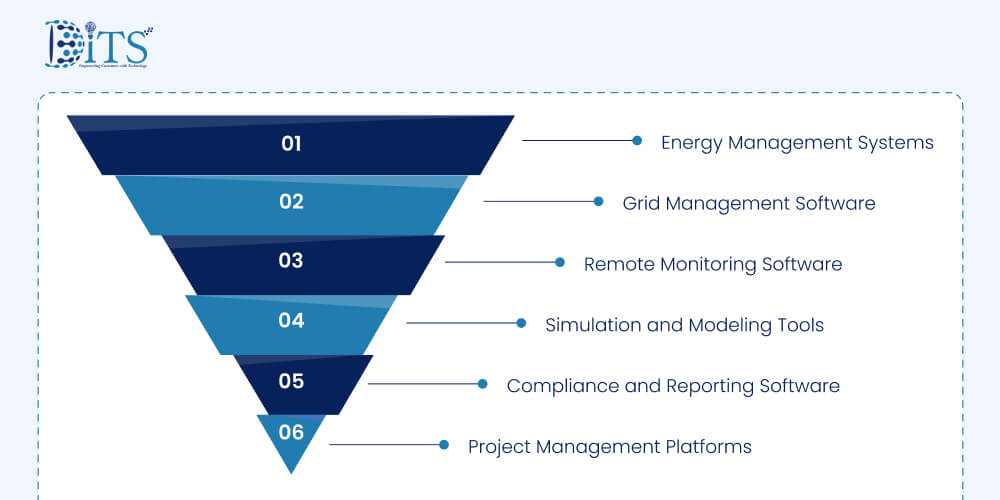
Renewable energy businesses need advanced software to manage generation, monitor assets, balance grids, simulate projects, ensure compliance, and track project execution. DITS Innovations’ energy sector custom software development solutions help reduce downtime, improve efficiency, and support scalable operations across solar, wind, and hybrid energy setups.
Energy Management Systems
Businesses use centralized dashboards to track energy consumption, generation, and storage across solar, wind, and hybrid setups. With custom energy management software development, operators can control load distribution, reduce wastage, and improve efficiency in daily operations.
Grid Management Software
Energy providers manage complex grids with fluctuating supply and demand. Grid software uses real-time data processing and predictive analytics to balance loads and prevent outages. Energy software development services support stable distribution and better control over decentralized energy networks.
Remote Monitoring Software
Companies monitor solar panels, wind turbines, and battery systems using IoT-enabled platforms. Real-time alerts help detect faults early. This custom energy software development approach reduces downtime and maintenance costs while improving asset performance across distributed locations.
Simulation and Modeling Tools
Before setting up renewable plants, businesses use simulation tools to analyze site conditions, energy output, and financial feasibility. Energy sector software development enables accurate forecasting, helping companies plan investments and reduce risk in large-scale projects.
Compliance and Reporting Software
Energy companies must follow strict regulatory standards and reporting formats. Automated systems generate compliance reports, track emissions, and maintain audit logs. Energy software development services ensure businesses stay compliant while reducing manual reporting efforts.
Project Management Platforms
Renewable projects involve multiple stakeholders, timelines, and budgets. Digital platforms track construction progress, resource allocation, and cost management. With custom energy software development, businesses gain better visibility and control over project execution from planning to deployment.
Top 6 Advanced Features of Energy Sector Software Business Should Have
Modern energy platforms require advanced features to manage assets, predict failures, and optimize performance. These capabilities help businesses improve efficiency, reduce operational risks, and scale effectively using reliable energy sector software development solutions.
Real-Time Data Monitoring and Analytics
Energy businesses need dashboards that collect and process live data from IoT sensors, smart meters, and grid systems. With energy software development services, operators can track performance, detect anomalies, and make faster decisions to maintain stable operations.
Predictive Maintenance Engine
Advanced systems use machine learning models to analyze historical equipment data and predict failures before they occur. This custom energy software development feature helps reduce downtime, schedule maintenance efficiently, and extend asset life in solar, wind, and hybrid energy setups.
Automated Load Balancing and Control
Energy platforms must manage fluctuating supply and demand using automated control systems. Through custom energy management software development, businesses can distribute load efficiently, prevent outages, and maintain grid stability across multiple energy sources.
SCADA and IoT Systems Integration
Seamless integration with SCADA, IoT devices, and cloud infrastructure ensures centralized control of operations. Using software development services, businesses can unify data from different sources, enabling better visibility and coordination across distributed energy assets.
Advanced Reporting and Compliance Management
Energy companies must meet regulatory requirements and maintain accurate reporting. Built-in reporting engines generate audit logs, emission reports, and performance summaries. Energy sector software development ensures compliance while reducing manual workload and human error.
AI-Based Forecasting and Optimization
Forecasting tools analyze consumption patterns, weather data, and historical trends to predict energy demand. With AI integration services, businesses can optimize production, reduce waste, and improve planning accuracy, making operations more efficient and financially stable.
Looking to Optimize Renewable Performance?
Leverage AI-powered analytics and centralized dashboards to maximize output from solar, wind, and hybrid infrastructure.
Custom Energy Software Development Cost Breakdown
DITS delivers energy software development services starting from $25,000 or $22/hour, with AI-driven development reducing timelines, lowering costs, and improving overall delivery efficiency.
| Component / Phase | Estimated Cost (USD) | Hourly Equivalent (@ $22/hr) | AI Impact on Cost & Speed |
| Requirement Analysis & Planning | $2,000 – $3,500 | 90 – 160 hrs | AI-assisted documentation and workflow mapping reduce planning time. |
| UI/UX & Dashboard Design | $3,000 – $5,000 | 135 – 225 hrs | AI-driven design tools speed up prototyping and iterations. |
| Core Development (Backend + APIs) | $6,000 – $10,000 | 270 – 450 hrs | AI code generation accelerates development and reduces manual effort. |
| System Integration (IoT, SCADA) | $4,000 – $8,000 | 180 – 360 hrs | Pre-trained connectors and AI mapping improve integration speed. |
| Testing & Security | $1,500 – $3,000 | 70 – 135 hrs | Automated AI testing identifies bugs and vulnerabilities faster. |
| Deployment & Maintenance | $2,500 – $4,000 | 115 – 180 hrs | AI monitoring tools reduce downtime and manual intervention. |
| Total Project Estimate | $19,000 – $33,500 | 860 – 1,510 hrs | Overall 30% faster time-to-market with AI. |
*Note: Comprehensive enterprise-grade energy sector software development typically starts at a fixed price of $25,000 to cover end-to-end AI model training and grid compliance.
Best Use Cases Energy Sector Software
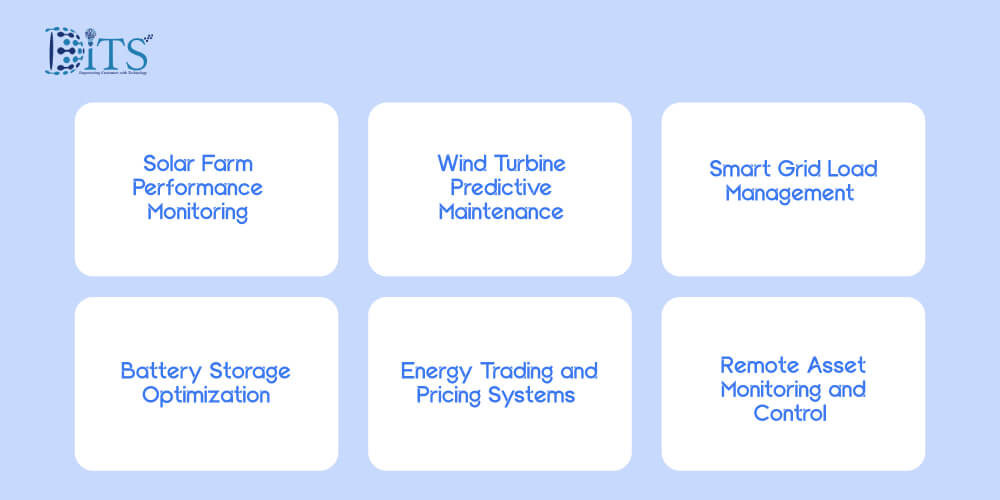
Energy software solutions help businesses monitor assets, manage grids, reduce downtime, and improve efficiency. These real-world use cases show how energy sector software development supports better control, cost savings, and scalable operations across modern energy environments.
Solar Farm Performance Monitoring
Operators use centralized dashboards to track panel output, detect faults, and compare performance across locations. With custom energy software development, underperforming panels are identified quickly, helping businesses take action and help maintain consistent energy production.
Wind Turbine Predictive Maintenance
Energy companies analyze turbine vibration, temperature, and operational data using AI Agent systems. This helps prevent failures before breakdowns occur. Energy software development services reduce maintenance costs and prevent unexpected downtime in large wind farms.
Smart Grid Load Management
Utility providers balance electricity demand and supply using real-time grid monitoring systems. Energy sector software development enables automated load distribution, reducing outages and improving grid stability across residential, commercial, and industrial consumers.
Battery Storage Optimization
Energy businesses manage battery systems by tracking charge cycles, storage levels, and discharge patterns. Custom energy management software development ensures stored energy is used efficiently, especially during peak demand, improving cost control and energy utilization.
Energy Trading and Pricing Systems
Companies use software to analyze market demand, pricing trends, and supply levels. This helps businesses decide when to sell energy for better margins. Energy software development services support faster, data-driven decisions in competitive energy markets.
Remote Asset Monitoring and Control
Energy companies monitor distributed assets like solar panels and substations through cloud-based platforms. Custom energy software development allows remote access, real-time alerts, and automated controls, reducing manual intervention and improving operational efficiency across multiple sites.
5 Best Tools to Develop for Renewable Energy Sector Software
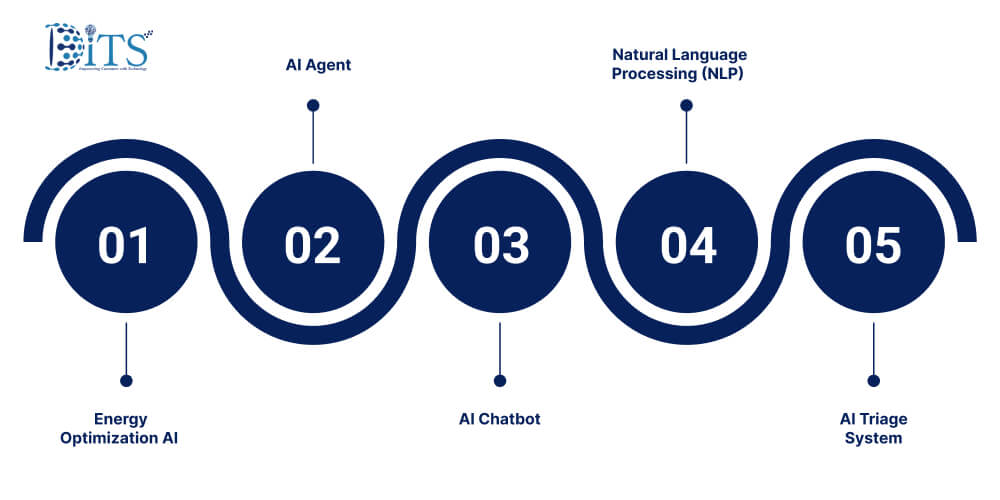
AI-driven tools help renewable energy businesses monitor assets, optimize efficiency, and improve decision-making. These software solutions illustrate how energy software development services can be applied to real operations for cost reduction, reliable output, and scalable growth.
Energy Optimization AI
Businesses can analyze energy generation, storage, and consumption patterns to maximize efficiency. Energy software development services implement AI models that automatically balance supply and demand, reduce wastage, and improve overall energy utilization for solar, wind, or hybrid energy setups.
AI Agent
AI Agent development allows continuous monitoring of turbines, panels, and grids. It predicts faults, triggers maintenance alerts, and automates operational decisions. This tool ensures renewable assets remain functional, reducing downtime and increasing productivity across large-scale energy operations.
AI Chatbot
An AI chatbot acts as a 24/7 virtual assistant for operators, maintenance teams, and clients. An AI chatbot development company helps to create systems that handle inquiries, report anomalies, and provide operational guidance, improving response times and workforce efficiency.
Natural Language Processing (NLP)
NLP analyzes reports, regulatory documents, and operational logs to provide actionable insights. By integrating this AI tool into energy software development services, businesses can make faster, data-driven decisions and maintain compliance with industry standards.
AI Triage System
AI triage systems categorize maintenance alerts, prioritize critical faults, and assign tasks to teams automatically. This application of energy software development services helps operators respond efficiently, reduce downtime, and maintain continuous energy production with minimal manual intervention.
Want Better Control Over Energy Assets?
Implement intelligent monitoring, predictive maintenance, and AI-driven optimization to increase efficiency and lower operational risks.
Why Choose DITS for Custom Energy Software Development
DITS Innovations delivers tailored energy software solutions that streamline operations, optimize assets, and reduce costs. Our energy sector software development services provide businesses with scalable, efficient, and secure systems designed for real-world renewable and conventional energy operations.
Expertise in Energy Sector Software Development
DITS brings extensive experience in energy software development services, building systems for solar, wind, and hybrid energy projects. Our team designs platforms that integrate IoT, SCADA, and cloud analytics to provide real-time visibility and operational control for energy businesses.
Tailored Software Development
We create custom energy software development solutions aligned with each business’s unique needs. From asset monitoring dashboards to predictive maintenance tools, DITS ensures systems are practical, scalable, and optimized for day-to-day operations.
AI-Driven Optimization and Automation
DITS leverages AI integration in energy software development services to automate load balancing, predictive maintenance, and performance monitoring. Businesses gain faster insights, reduced downtime, and efficient energy utilization across distributed renewable or conventional assets.
End-to-End Support and Maintenance
Our custom energy management software development includes deployment, training, and ongoing maintenance. DITS ensures systems remain updated, compliant, and aligned with business growth, enabling companies to focus on operations while software manages energy workflows effectively.
FAQs
1. What are energy software development services?
Energy software development services involve designing, building, and maintaining software solutions for the energy sector. These systems help businesses monitor assets, manage grids, optimize consumption, and ensure compliance with regulatory standards.
2. How does energy sector software development improve operational efficiency?
Energy sector software development integrates real-time monitoring, predictive maintenance, and automated reporting. Businesses can reduce downtime, manage resources efficiently, and make data-driven decisions to improve overall energy performance.
3. What is custom energy software development and why is it important?
Custom energy software development creates tailored solutions for a company’s specific energy assets and workflows. Unlike off-the-shelf software, it addresses unique operational requirements, improves scalability, and ensures better control over energy management.
4. How can custom energy management software development help my business reduce costs?
With custom energy management software development, companies can optimize load distribution, monitor asset performance, and automate routine tasks. This reduces waste, prevents unplanned downtime, and lowers maintenance and operational costs.
5. Why should I choose DITS for energy software development services?
DITS Innovations is a leading provider of energy software development services. We deliver tailored, AI-enabled solutions that streamline operations, enhance efficiency, and support scalable growth across renewable and conventional energy businesses.
6. Can DITS handle large-scale energy sector software development projects?
DITS specializes in energy sector software development for startups, mid-size, and large enterprises. Our custom energy software development approach ensures reliable integration, high-performance systems, and long-term support for complex energy operations.

Dinesh Thakur
21+ years of IT software development experience in different domains like Business Automation, Healthcare, Retail, Workflow automation, Transportation and logistics, Compliance, Risk Mitigation, POS, etc. Hands-on experience in dealing with overseas clients and providing them with an apt solution to their business needs.
Recent Posts
Explore how intelligent document processing for insurance helps businesses automate document workflows, reduce processing costs, improve accuracy, and strengthen operational efficiency across insurance functions.
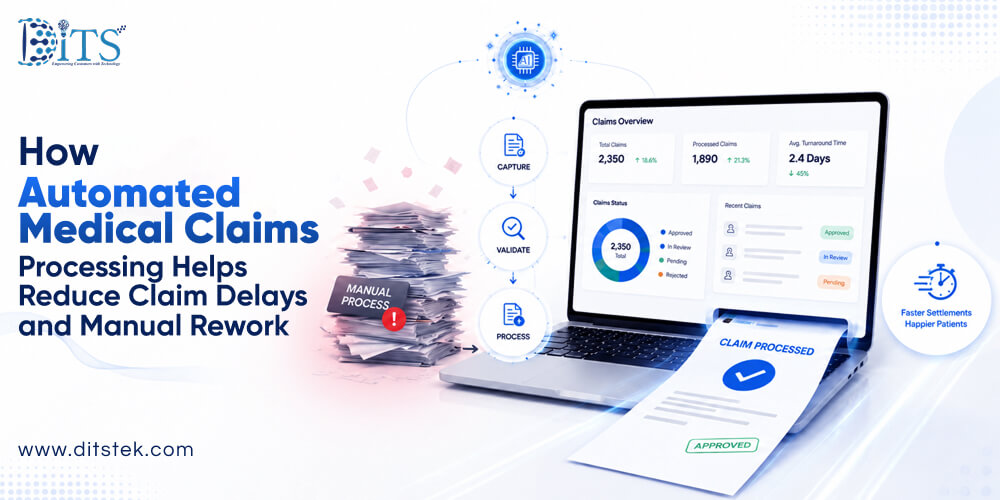
Discover how automated medical claims processing reduces delays, manual rework, claim denials, and administrative costs while improving reimbursement speed and operational efficiency.
Learn how to build medical billing software with essential features, integrations, security, and development costs.