What are the Challenges of Warehouse Management
Table Of Content
Published Date :
24 Jun 2026
Key Takeaways
- Inventory inaccuracy is one of the most typical warehouse management problems
- Inefficient layouts and space usage really slow the operational pace down.
- Labor shortages make workforce management a lot harder in U.S. warehouses.
- Then there’s the lack of real-time data, which messes with decision making and basically weakens demand forecasting.
- Digital warehouse platforms help by improving inventory visibility, and they speed up fulfillment faster than before.
Warehouse operations used to feel simple: goods showed up, they got stored, then later they shipped out. However, with time things became challenging for warehouses and supply chains. All across the United States, distribution centers are now stuck with faster delivery expectations, order volumes, and operational costs that keep rising.
Shoppers want products the very next day or expect same-day deliveries, so warehouses have to run with serious efficiency. At the same time, labor shortage is one of prime concerns, and storage expenses are getting heavier, which adds more stress to the logistics teams.
So that brings up a question for business owners, what are the challenges of warehouse management in modern supply chains?
The answer isn’t just about moving inventory around. It also comes down to data visibility, teamwork between shifts and roles, technology integration, and operational accuracy. And if any one of those pieces wobbles, the effect spreads fast, touching customers, suppliers, and the bottom line. Getting a clear view of these pressures is basically step one for creating more intelligent warehouse operations.
What Warehouse Management Involves
In big logistics hubs across Atlanta and Houston, warehouses really act like highly coordinated operational centers; the warehouse management and user demand have moved ahead of its time and are fulfilling the demand.
Warehouse management usually includes a few core things that end up shaping fulfilment speed and accuracy, and it’s more connected than most people assume.
Inventory Storage and Organization
Products have to go somewhere smartly, so that items that sell often are still within easy reach while slower moving inventory stays placed in a way that doesn’t eat the most critical space.
Order Picking and Packing
Workers or automated systems find the items, confirm quantities, and then prepare everything for shipment. Even a tiny slip here can cause delivery issues, then costly returns, which nobody really wants.
Receiving and Shipping Processes
New goods get verified, labeled, and moved into storage fast. Outbound shipments need to be packed the right way and sent on schedule so the service commitments stay intact.
Inventory Tracking and Reporting
Real inventory visibility helps managers watch stock levels, anticipate shortages, and prevent overstocking that basically ties capital in place.
When all of these parts run smoothly, the warehouse turns into an efficient fulfillment machine. But when the systems start failing, even small operational gaps, they can turn into big warehouse management problems, and that ends up affecting the entire supply chain more than people expect.
Facing Common Warehouse Management Challenges Today?
Improve inventory accuracy, reduce delays, and streamline warehouse workflows with scalable digital management solutions.
Major Challenges of Warehouse Management
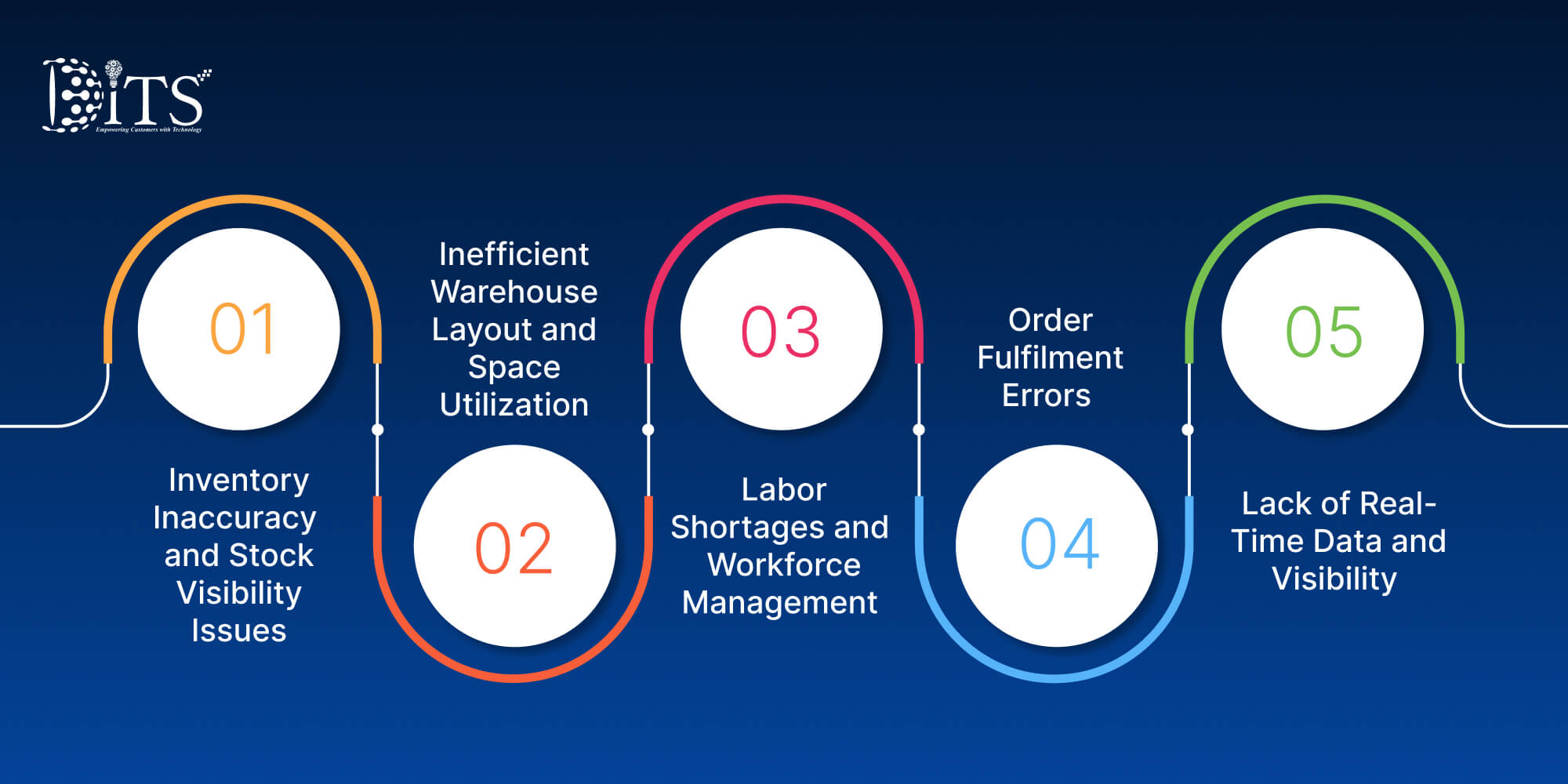
Here are some of the most common challenges in warehouse management that businesses run into when they are trying to keep supply chains running efficiently.
Inventory Inaccuracy and Stock Visibility Issues
Inventory mismatches are still one of those most frustrating day-to-day operational things for warehouse managers.
Common causes include:
- Manual data entry slip ups
- Inventory updates that come in late
- Misplaced items during receiving or storage
- When these gaps show up, you end up with two pretty serious results.
- Stockouts, which delay customer shipments
- Overstocking, which increases storage costs and ties up capital
In big fulfillment centers in places like Seattle and Denver, where thousands of SKUs are moving every single day, having near real-time stock awareness really matters.
Inefficient Warehouse Layout and Space Utilization
Warehouse layout directly affects productivity, yet many facilities grow organically without strategic planning.
Typical operational issues include:
- Slow movement between picking zones
- Poorly organized storage areas
- Underutilized vertical space
For fast-moving distribution centres, especially those serving e-commerce markets in places like Los Angeles or Miami, inefficient layout quickly becomes one of the biggest warehouse management challenges.
Labor Shortages and Workforce Management
Warehouses require trained staff who understand inventory systems, safety procedures, and fulfillment workflows.
However, companies often struggle with:
- Difficulty recruiting warehouse staff
- High employee turnover
- Long training cycles for new workers
Seasonal peaks make the situation even more complicated. During holiday sales or promotional campaigns, warehouses in regions like Dallas or Columbus may need to increase workforce capacity by 30–50 percent in a matter of weeks.
Order Fulfilment Errors
Even well-managed warehouses occasionally ship the wrong product. But frequent picking errors can damage customer trust and create costly reverse logistics.
Typical causes include:
- Similar product packaging
- Poor barcode scanning processes
- Manual picking in high-volume zones
When fulfilment errors happen businesses have to juggle product returns, replacement shipments and customer service complaints, all at once.
For high volume retailers, and distributors these issues can rapidly balloon into major operational costs, it’s kind of immediate.
Lack of Real-Time Data and Visibility
Warehouse decisions can’t wait. Managers need to see exactly how inventory is moving, where the bottlenecks crop up, and how fast orders are actually processed.
Yet, many warehouses still lean on outdated reporting systems which give delayed insights, and then everyone guesses instead of knowing.
Without real-time visibility:
- Inventory planning becomes reactive
- Order processing delays go unnoticed
- Demand forecasting becomes inaccurate
Organizations undergoing digital transformation often put warehouse visibility first because operational data helps managers react pretty fast , to the shifting demand.
Technology Integration Challenges
Technology is supposed to simplify warehouse operations, but integration issues sometimes pop up and then create brand new complications. A lot of companies still run older enterprise systems, and those systems have trouble getting along, with newer warehouse platforms.
For organizations looking at legacy modernization , warehouse systems are often some of the earliest platforms that require upgrades. Without proper integration, warehouse software can’t really provide the operational intelligence companies need , in a reliable way.
Common integration barriers include:
- Incompatible data formats between systems
- Complex connections between ERP and warehouse platforms
- High cost of replacing legacy infrastructure
For organizations exploring legacy modernization, warehouse systems are frequently among the first platforms that require upgrades. Without proper integration, warehouse software cannot deliver the operational intelligence companies need.
Warehouse Safety and Compliance Issues
Warehouses are busy environments with heavy equipment, moving vehicles, and huge volumes of goods. So safety management becomes a day to day responsibility, not a one time task.
Businesses also have to follow strict safety guidelines set by OSHA. Compliance usually means regular inspections, worker training programs, and operational protocols that are clearly defined.
Ignoring safety isn’t really an option. Accidents can disrupt operations, raise insurance expenses, and affect employee morale, all at once.
Managing Seasonal Demand and Demand Fluctuations
Warehouse demand rarely stays steady across the year. Retail peaks, promotional events, and market disruptions can trigger sudden spikes in order volume, pretty unexpectedly.
Consider a typical e-commerce surge during the holiday season. Warehouses in Chicago or San Bernardino may see order volumes increase two or three times within weeks.
This creates several planning challenges:
- Temporary workforce expansion
- Rapid inventory replenishment
- Increased pressure on picking and shipping teams
If preparation is weak , operational bottlenecks show up pretty fast. And once delays start stacking up, trying to catch up becomes incredibly hard, like almost impossible
Getting a clear grasp of the obstacles in warehouse management helps organizations spot where operational weak points are hiding before the trouble spills over and starts impacting customers
How These Challenges Impact Business Performance
Problems happening inside the warehouse spread through the whole supply chain and finally reach the people waiting for the order
When the challenges in warehouse management are left unresolved, companies usually run into outcomes like the ones below.
| Operational Challenge | Business Impact |
| Inventory inaccuracies | Lost sales opportunities and excess holding costs |
| Slow picking and packing | Delayed order fulfillment and customer dissatisfaction |
| Workforce inefficiencies | Rising labor expenses and reduced productivity |
| Poor system visibility | Weak planning and reactive decision making |
| Technology fragmentation | Operational silos and slower data flow |
Operational Costs
Operational costs are usually the first thing to climb. Extra labor hours, inefficient storage, and repeatedly handling returned goods quietly inflate logistics budgets.
Delivery Speed
Delivery speed becomes another concern. Customers today want dependable shipping timeframes, particularly in competitive places like New York or San Francisco. And if the warehouse operations start to drag, shipments miss their dispatch windows and the promised deliveries start slipping, even when everyone is trying.
Customer Trust
After that, customer trust is basically the last thing to survive. Companies that keep sending out the wrong items, or just delivering late, tend to watch clients drift away toward more reliable rivals. It’s not just annoying, it’s genuinely costly.
In short, warehouse inefficiencies don’t usually stay as “only operational” headaches. They turn into strategic business risks that touch revenue, customer loyalty, and the bigger picture of long term growth.
Strategies Businesses Use to Overcome Warehouse Management Challenges
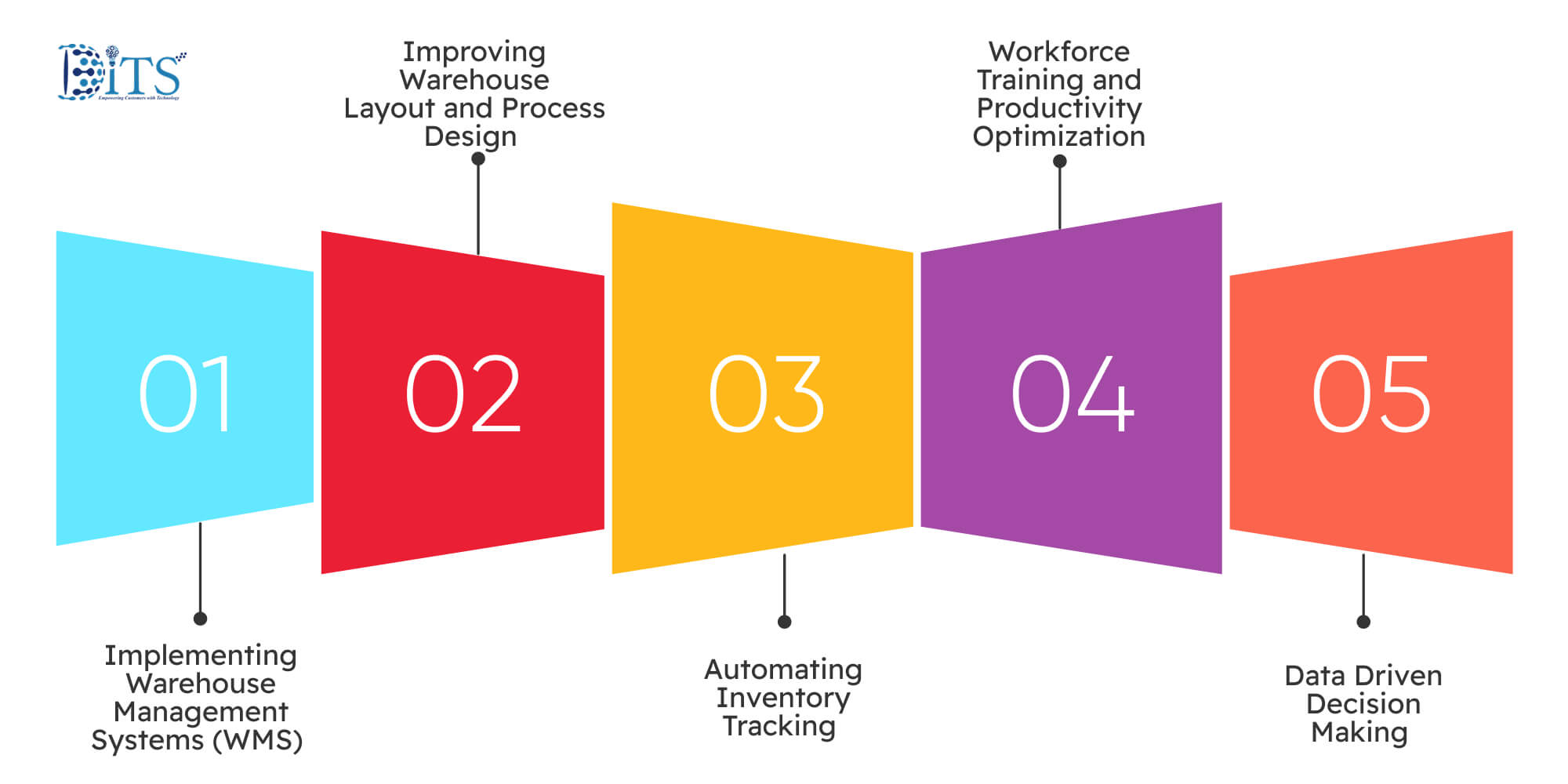
When things like inventory errors, labor shortages, or slower fulfillment start messing with day to day performance, organizations really need to shift toward more intelligent operational tactics to handle it.
Implementing Warehouse Management Systems (WMS)
A warehouse management system basically brings order , and also a clearer view of what’s happening each day. Managers can follow inventory, orders, and shipments from one centralized place, which helps reduce the “guessing” part
A more current WMS can help a business with several things, including
- Watching inventory quantities in real time
- Boosting picking correctness with barcode scanning
- Coordinating inbound and outbound shipments more cleanly
- Spotting workflow slowdowns early, before they become a bigger problem
A lot of large distribution centers in Memphis and Chicago rely on these setups pretty heavily , just to keep fulfillment moving smoothly.
Improving Warehouse Layout and Process Design
Warehouse layout influences how quickly workers move, locate products, and prepare shipments. Poor layout design increases travel time and slows operations.
Businesses often redesign their warehouses by:
- Creating dedicated picking zones
- Using vertical storage systems to maximize space
- Separating inbound and outbound traffic paths
Even small layout adjustments can significantly improve productivity. A well-planned warehouse simply flows better.
Automating Inventory Tracking
Manual inventory updates create delays and inaccuracies. Automation reduces these risks while improving stock visibility.
Common automation approaches include:
- Barcode scanning systems
- RFID-based inventory tracking
- Automated inventory updates during receiving and shipping
Companies in huge logistics hubs, like Los Angeles and Atlanta, are starting to put real money into these technologies so they can keep stock counts more accurate and cut down on human error.
Workforce Training and Productivity Optimization
Technology by itself cant really fix everything. Workers still have to grasp the systems, understand safety procedures, and know the everyday workflow processes in practice.
Most organizations raise workforce productivity by doing a few consistent things, like:
- Setting up structured onboarding programs
- Running safety and operational training on a regular basis
- Checking productivity metrics so they can spot inefficiencies early
A well-trained warehouse team operates faster, makes fewer mistakes, and adapts better during peak demand periods.
Data Driven Decision Making
Modern warehouse operations generate enormous amounts of operational data. Smart organizations use that information to guide decisions.
Managers analyze metrics such as:
- Order fulfillment speed
- Picking accuracy rates
- Inventory turnover
- Storage utilization
When used effectively, this data allows businesses to continuously refine operations and reduce recurring warehouse management challenges.
Role of Digital Solutions in Modern Warehouse Management
Warehouse operations today sort of depend a lot on software platforms that connect inventory, logistics, and operational data into one broader ecosystem.
Importance Of Integrated Warehouse Platforms
Modern warehouses run better when their systems communicate pretty seamless. An integrated platform links warehouse operations with inventory systems, shipping carriers and enterprise resource planning tools
These platforms typically enable:
- Centralized inventory management
- Automated order processing workflows
- Real-time shipment tracking
- Data sharing across departments
Organizations that invest in logistics and transportation software often gain stronger control over order fulfilment and delivery coordination.
Real Time Inventory Monitoring
Accurate stock visibility is one of the biggest advantages of digital platforms. Instead of relying on delayed reports, managers can instantly see inventory levels across storage locations.
Real-time monitoring allows businesses to:
- Prevent stock shortages before they occur
- Reduce overstocking and storage costs
- Improve demand forecasting accuracy
In large fulfilment centres serving e-commerce markets in cities like San Jose and Denver, this level of visibility helps operations teams respond quickly to sudden order spikes.
Analytics And Operational Visibility
Data analytics tools give warehouse leaders deeper insight into operational performance. Instead of guessing where problems occur, managers can identify inefficiencies with measurable metrics.
Analytics platforms help track:
- Order processing speed
- Inventory turnover rates
- Warehouse space utilization
- Employee productivity
For companies undergoing broader AI integration, analytics becomes even more powerful. Smart systems can detect operational patterns, predict demand fluctuations, and support better decision making across warehouse operations.
How DITS Can Help with Warehouse Management System Software Development
Warehouses operate differently depending on product categories, order volumes, and logistics networks. DITS works with businesses, to design warehouse management systems that are kinda tailored to their specific operational workflows. The goal is simple: build a system that connects inventory tracking order processing workforce coordination and shipment management into one reliable platform, more or less.
Many organizations still operate on outdated infrastructure, which limits visibility and slows decision making. Through legacy modernization, warehouse platforms can be upgraded to support real-time data flows, advanced analytics, and integration with logistics systems. This allows warehouse managers to track inventory movement, monitor fulfillment performance, and respond quickly to demand changes.
At DITS, we also apply AI software development practices across the entire engineering lifecycle. Artificial intelligence helps our teams with software design automated testing, code quality monitoring and system optimization. More importantly, we build AI capabilities right into warehouse platforms, so businesses can improve forecasting accuracy, surface operational bottlenecks and customize workflows to fit their day to day operational needs.
The result is not just software, but a digital foundation that supports reliable warehouse operations as businesses scale across regional and global markets.
Searching For Reliable Warehouse Software Development Partner?
Work with experienced software experts to build secure and scalable warehouse management solutions tailored for your operations.
Conclusion
Figuring out what are the challenges of warehouse management helps organizations spot where things get inefficient, before those issues snowball into expensive operational troubles. Problems like inventory inaccuracies, fulfillment errors, and limited data visibility might feel “small” at the start, but eventually they tug at delivery performance and push operational costs up.
Companies that put money into smarter warehouse strategies usually end up with a real competitive edge. Today’s software platforms, operational data that’s actually connected, and better workforce coordination let warehouses run with higher precision and smoother throughput.
For executives who own supply chain results, the takeaway is straightforward. Warehouse operations can’t really be viewed as some back-end afterthought. They’ve turned into a strategic piece of customer experience, operational dependability, and durable business expansion.
FAQs
What are the challenges of warehouse management for growing businesses?
When a company expands, the warehouse gets more order volume, a lot more SKUs, and delivery timeframes that feel a bit faster. A few familiar problems show up fast: inaccurate inventory counts, storage plans that aren’t really efficient, staffing shortages, and not having real-time visibility into what’s happening inside the operation.
How can companies reduce inventory errors in warehouse operations?
Inventory errors usually pop up from manual tracking done by people, delayed system updates, or goods that are simply in the wrong place. Most companies fix this by adopting barcode scanning, setting up automated inventory updates, and using warehouse management software that shows real-time stock status and locations.
Why do many warehouses struggle with order fulfillment accuracy?
Fulfillment inaccuracies often happen when warehouses are pushing big product volumes under heavy time pressure. Similar packaging, manual picking and missing verification steps can easily cause wrong items to get shipped. Using more structured workflows, adding scanning tools, and improving inventory management can make shipments more reliable and consistent.
How can DITS Warehouse Management System Software Development help businesses?
DITS Warehouse Management System Software Development helps teams create custom platforms for inventory tracking, order processing, and warehouse workflows that run efficiently. With these systems, businesses get real-time visibility on stock movement, better coordination between activities, and the ability to review warehouse performance across several locations.
Can warehouse software integrate with existing logistics and business systems?
Yes, warehouse software can integrate with your existing logistics and business systems, most of the time, and usually without too much friction. Modern warehouse management platforms are able to connect with enterprise systems like ERP, shipping management tools, and inventory platforms.

Dinesh Thakur
21+ years of IT software development experience in different domains like Business Automation, Healthcare, Retail, Workflow automation, Transportation and logistics, Compliance, Risk Mitigation, POS, etc. Hands-on experience in dealing with overseas clients and providing them with an apt solution to their business needs.
Recent Posts

AI integration connects AI with existing systems and workflows, while AI adoption focuses on using AI effectively to drive measurable business outcomes.
Automated document processing helps reduce cargo insurance claim delays by streamlining document handling, validation, and claims workflows.

Automated document processing helps reduce cargo insurance claim delays by streamlining document handling, validation, and claims workflows.