AI Construction Estimating Software: How It Works, Benefits, and Development Cost
Table Of Content
Published Date :
25 Jun 2026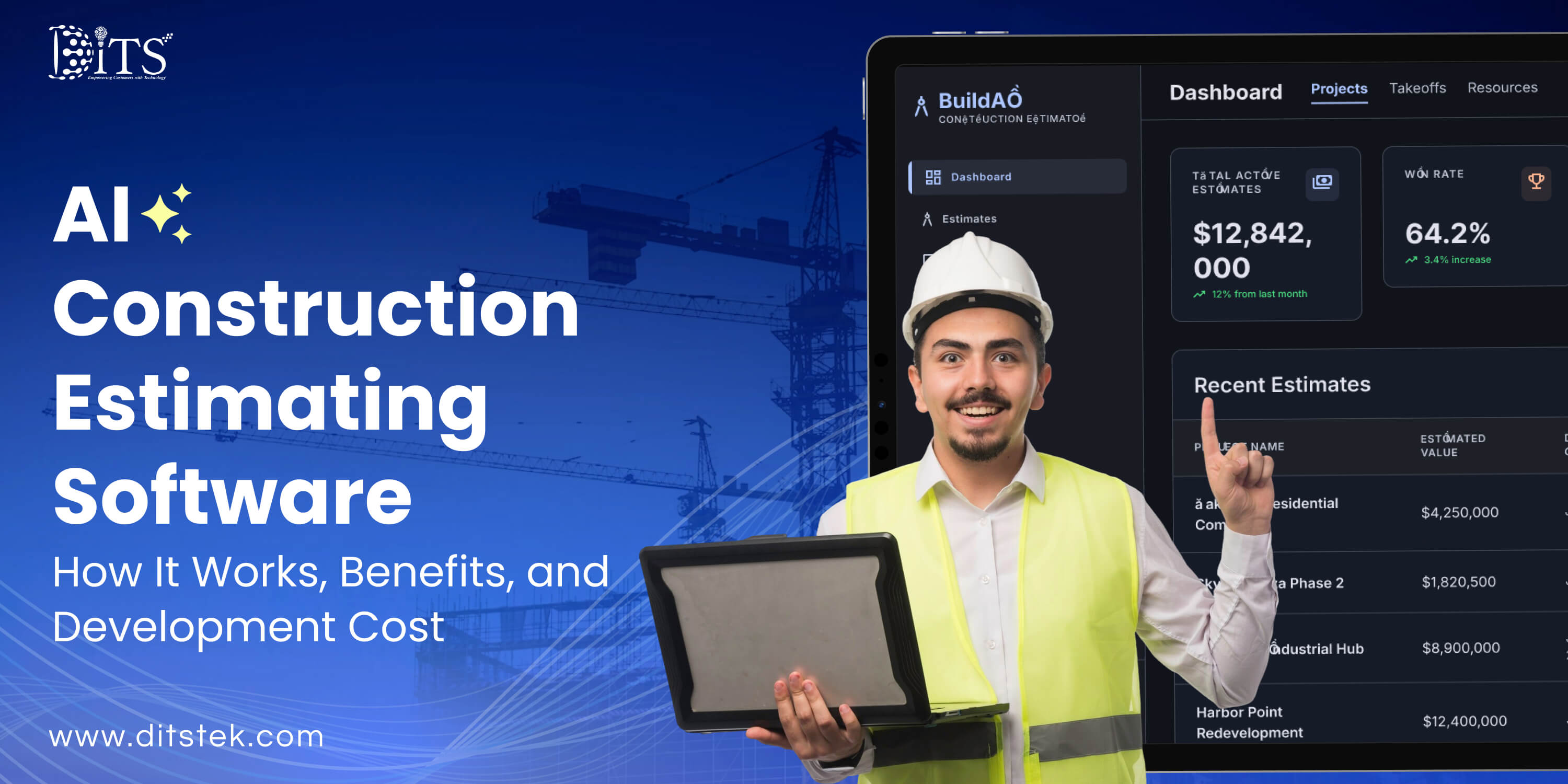
Key Takeaways
- AI construction estimate software offers support to not only the construction firms but also contractors, builders and developers.
- With AI powered software, they provide robust blueprint analysis, accurate cost prediction, reporting, bid comparison, and so on.
- The AI construction estimating software development time is usually several months because of the intricate complexities.
- The businesses will get an advantage via seamless material management, mitigating bidding errors, enhancing resource planning, and handling labor cost fluctuations.
Construction estimating is the real challenge in project planning. The industry operates under extremely tight margins and timeframes that affect every business decision. It covers everything from commercial to residential infrastructure, which requires sound decision-making to amplify profits.
The constant fluctuations in material prices and extremely tight bidding deadlines are responsible for generating inaccurate estimates. To solve this challenge, AI for construction estimating plays a pivotal role. Access with features like smart cost prediction and automation helps construction enterprises, builders/developers, and contractors create precise estimates without delay.
What Is AI Construction Estimating Software?
Construction estimating software uses AI technology to automate and provide more accurate information for estimating construction costs. It can analyze large volumes of construction project data to provide cost estimates, so there is no reliance solely on project data.
The global construction estimating software market size is expected to reach $2.62 billion by 2030, with a CAGR of 10.2% (from 2025-30)
Using AI for construction estimating allows a contractor, builder, or developer to accurately predict the amounts of materials needed, labor, and equipment costs, as well as the types of risk associated with their project.
AI for construction estimating software also allows contractors, builders, and developers to obtain accurate cost estimates based on historical projects and continuously learns from trends to provide reliable bidding and budget estimates.
As a reliable AI software development company, we will help you build software catering to your industry needs.
How AI Works in Construction Estimating?
AI in construction estimating takes project info, like drawings and old cost data, and turns it into solid, number-based cost guesses. This speeds up bidding and lets estimators work more confidently.
- The software first gathers all key project details – scope, place, deadlines, materials, labor, and equipment needs. Then, it looks at digital drawings and blueprints, spotting things like walls, floors, fixtures, and structural bits.
- Next, it automates the measurement of those quantities directly from the plans. This saves time and reduces mistakes compared to doing it manually.
- For material and labor costs, the AI draws on big cost databases, supplier prices, what happened in past jobs, and what's happening in the market now. So it comes up with much sharper estimates there.
- It doesn’t just guess, though; the software spots potential issues too – maybe materials will get pricier, or there might be design tweaks. Based on these red flags, it suggests backup funds to cover them.
- When everything's crunched, out pops a full estimate for estimators to check over, fine-tune, okay, and send off to whoever needs it.
The best part? The system gets smarter each time. Learning from real costs, bid results, and any early misjudgments helps it nail predictions for future bids.
Need Smarter Cost Estimation For Construction Projects?
Build AI-powered estimating platforms that reduce manual effort, improve forecasting accuracy, and streamline preconstruction workflows efficiently.
AI Construction Estimating Software vs Traditional Estimating Software: A Quick Comparison
Go through the table below and view the clear difference between the two.
| Area of comparison | Traditional Estimating Software | AI Construction Estimating Software |
| Speed | Slow, as it needs lots of manual input | Quick, as it automates the data analysis |
| Accuracy | Less, as it depends on the estimator's experience | More, by using historical data and cost patterns |
| Automation | Handle basic calculations | Handles quantity takeoffs to estimate |
| Cost prediction | Sticks to manually updated databases | Real time forecasting of material, labor, overhead costs |
| Risk analysis | Lower due to reviewing risk factors manually | Higher, identifies potential risks like price changes and labor shortages |
| Data usage | Limited | Extensive |
| Integration Capability | Basic tools | Advanced tools like CRM, ERP, etc. |
| Scalability | Struggles with complex projects | Scales well with enterprise level workflow |
Key Features of AI Construction Estimating Software
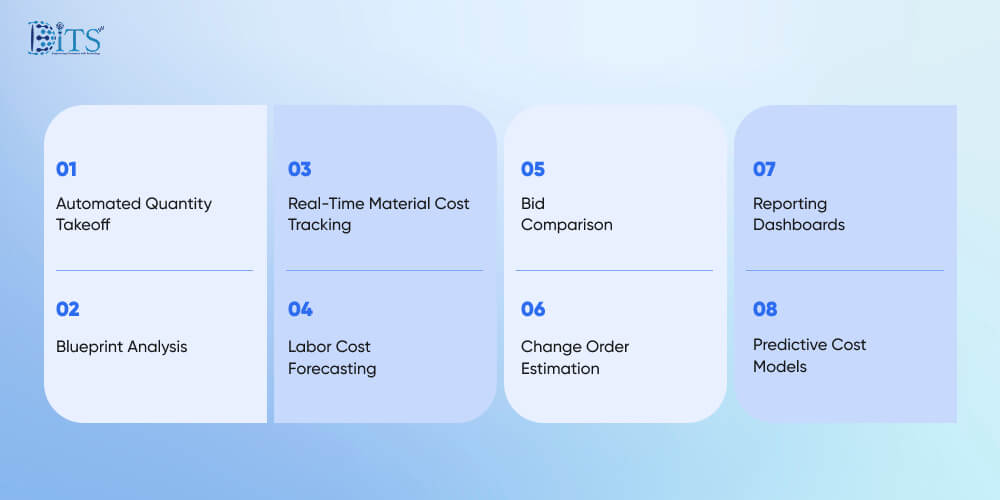
Explore the extensive set of characteristics; the software exhibits which accelerates the entire process to the next level.
Automated Quantity Takeoff
AI construction estimating software helps make building projects smoother and cheaper. First off, it automates measuring quantities directly from drawings and digital plans. This cuts down on tedious math, helps estimates get done faster, and lowers mistakes.
Blueprint Analysis
Another useful thing is how well the software can read blueprints. It figures out things like walls and structural pieces by looking at construction drawings. That way, the people making estimates don't have to sift through everything themselves.
Real-Time Material Cost Tracking
The software keeps an eye on material costs too. Linked up with supplier info, it checks prices in real time. So contractors can work with the latest numbers when they're putting together their budgets.
Labor Cost Forecasting
For labor costs, the system looks at past projects and current jobs to estimate what the next one will require. Factoring in details like the job size and its location helps here. Contractors then have solid numbers when planning their workforce needs.
Bid Comparison
When it's time to actually make bids, AI helps contractors weigh their options. The software considers all sorts of factors, i.e., costs, timeline, profit, and picks out the best bid options.
Change Order Estimation
Estimating and managing a change to the project requirements is accomplished by an automatic evaluation of the impact on the project’s labor, materials, schedule, and total cost. This accelerated response to modifications in the scope of work is achieved through the continuous analysis of project data.
Reporting Dashboards
Provide stakeholders access to real-time project estimate information, cost breakdowns, bid performance, and budget forecasts. This also makes faster decisions by providing access to actionable insights.
Predictive Cost Models
AI uses both historical project data and current market trends to predict project costs before construction begins. This will enable project teams to anticipate budget changes and improve financial planning.
Benefits of AI Construction Estimating Software
Witness the potential advantages below that leads to amplified cost savings and profit margins.
Quicker Estimates
AI calculation produces quantities, costs, and analysis much faster so teams can respond to bids in a shorter time frame.
More Accurate Costs
With historical data of prior projects, material pricing; labor costs; and market trends, estimates can be created more accurately. Thus making overrunning budgets and unexpected additional expenditures less likely.
Fewer Bidding Errors
Errors occur in manual estimating from missed items, incorrect calculations, and outdated prices. AI identifies inconsistencies preventing costly errors from happening before a bid is submitted.
Higher Profit Margins
Accurate estimating assists contractors in not underbidding projects and providing for the risk. Ultimately leading to improved profit margins and greater overall financial success.
Improved Resource Planning
With labor, equipment and material requirements identified much earlier in the planning process through AI, teams can allocate resources more effectively preventing shortages or excessive use.
Greater Risk Awareness
AI will identify cost risks related to the fluctuation of material prices, the availability of labor, the complexity of the project and scheduling issues. All will allow for more proactive plans to mitigate these risks.
Quicker Decision Making
With real time data, automated calculations, and detailed cost assessments, participants in the project can review their options and quickly decide what is best.
Use Cases of AI Construction Estimating Software
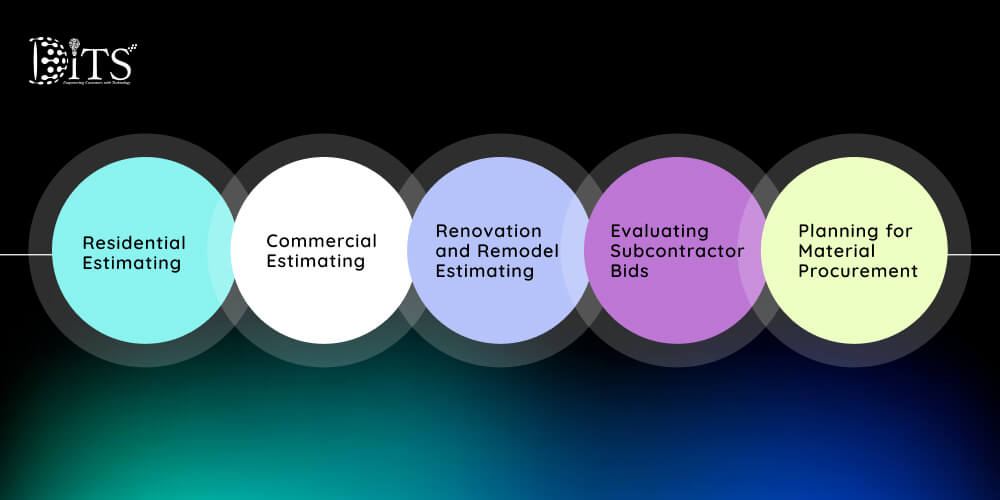
Get a glimpse of the use cases as it automates workflows, analyzes vast projects, predict material costs and quickly updates estimates.
Residential Estimating
Contractors and builders of new homes, apartments, and residential developments can take advantage of artificial intelligence for estimating costs. The software helps in cost calculation of various things like equipment, labor for residential projects thereby fastens the bidding process.
Commercial Estimating
With new offices, retail centers, hotels and manufacturing plants, AI has become an important part of generating accurate cost estimates for large commercial projects. AI can quickly evaluate the numerous elements involved in determining the overall cost of a project and produce a detailed cost estimate for creating a successful project.
Renovation and Remodel Estimating
AI has the ability to assess existing buildings, building specifications and material requirements in order to create a cost estimate for renovation/new construction. This helps contractors stay within budget and limit the chance for unanticipated costs.
Evaluating Subcontractor Bids
Construction companies will often receive multiple bids from various subcontractors for the same project. AI can review subcontractor bids based on price, length of time to complete the work, if the work covers the full scope of the project, and risk factors to provide the team with one method on how to best choose from which subcontractor to use.
Planning for Material Procurement
AI can identify the amount of material needed and help you monitor market pricing, so you can buy materials in a cost-effective manner. This will help you keep your material waste at a minimum.
How to Build AI Construction Estimating Software?
Below is step-by step process mentioned that goes behind the actual product development.
Requirement Analysis
To start off, understand the business goals, the estimating processes, the roles of users, the kinds of projects, and the existing issues. This step helps clarify what problems the software will address and how it'll work within everyday operations.
Data Assessment
Next, assess the available data like old estimates, true costs, supplier prices, labor fees, plans, and bid records. Having clean, organized, and pertinent data is crucial for creating dependable AI estimating software.
Feature Planning
Figure out which core features to include based on what users need, such as automatic takeoffs, cost forecasts, competition analyses, dashboards, connections with other apps, and approval processes. Setting priorities makes for a sharp, expandable product plan.
UI/UX Design
Make a straightforward and sensible interface for everyone who’ll use the tool, i.e., estimators, contractors, project managers, and key decision-makers. You want to simplify access to detailed cost info, making it easy to review, tweak, and approve..
AI Model Development
Use previous project info, cost databases, blueprints, pricing trends, and more. These models assist in predicting materials costs, manpower needs, potential risks, and estimation changes.
System Integration
Software must be connected to ERP, CRM, BIM, accounting, supplier databases, and project management systems to ensure seamless data flow between all those systems while eliminating duplicate manual entries across those systems.
Read more: AI integration services
Testing and Validation
Software needs to be tested to ensure accuracy, performance, usability, security, and reliability of the integration of the software. Estimates must be compared to actual project data to determine the quality of the estimates.
Deployment
Software will be deployed to a preferred environment (hosted in the cloud, hosted on-premise, or hybrid) and can be implemented in phases to allow teams to adapt to this change while minimizing interruptions to operations.
Continuous Improvement
After deployment, the system must be monitored for performance, user feedback, accuracy of estimates and changes in market data. The AI model will continue to improve as it learns from previously completed projects and the actual costs for those completed projects.
Ready To Transform Construction Estimating With AI?
Build future-ready estimating software that improves efficiency, accuracy, and profitability across construction project lifecycles.
Cost to Build AI Construction Estimating Software
AI construction estimating software development costs can greatly vary based upon the requested level of functionality, degree of customization, and overall complexity of the business requirements/processes. In general, if you are looking for a basic platform, your costs will be relatively small; however, if you need an enterprise-level platform with advanced artificial intelligence features and integrations into other platforms, expect much more significant cost.
The average cost ranges between $10000-$150000, depending on the project requirements.
Read more: AI Software development cost
Future of AI Construction Estimating Software
The future of construction estimating is bright. Advanced technologies such as predictive analytics, connected project data, and generative AI will all play crucial roles in how we estimate the cost of construction projects.
Project estimators will have access to a wealth of information when using software. It will provide insights on bidding, budgeting, and preconstruction processes that will help with estimating the cost of construction. Generative AI assistants will help automatically summarize relevant document sections, answer questions related to construction costs, and provide information needed to perform the functions of an estimator quickly.
Predictive risk modelling will begin to play more significant roles in establishing potential risk factors for budget overruns, labor shortages, or schedule delays before those risks manifest. Over time, AI construction estimating tools will provide opportunities for automated bid suggestions that will assist contractors with establishing competitive and profitable bids.
Read more: Enterprise AI solutions
Bottom Line!
AI construction estimating software has become essential for any modern construction business as this software becomes a solution for today's construction industry challenges. Rising costs of materials, shortening project timelines, and increased competition have forced builders and contractors to look for quicker, smarter, and more reliable methods of preparing construction estimates.
AI for construction estimating will help the construction industry reduce manual data entry errors, increase the accuracy of their estimates, giving businesses enhanced control, greater clarity, and greater confidence in the accuracy of all their project estimates.
FAQs
How much does it take to build AI construction estimating software?
The AI construction estimating software development cost ranges from $10000-$150000, depending upon the complexities involved.
How long does it take to develop AI for construction estimating?
AI for construction estimating software takes around several months to get developed. For MVP it is , for prototype it is; for custom it is
What are the challenges in building AI for construction estimating?
User adoption, complicated workflows, seamless integration with the legacy systems, and data security are some of the common challenges in developing AI construction estimate software.
Which are the necessary Integrations for AI construction estimating software?
CRM, ERP, project management tools, document management systems, and accounting software are the necessary integrations.
How does AI improve construction estimating?
AI-powered construction estimating software accurately analyzes historical costs, project data, labor trends etc. for swift and precise estimates.

Dinesh Thakur
21+ years of IT software development experience in different domains like Business Automation, Healthcare, Retail, Workflow automation, Transportation and logistics, Compliance, Risk Mitigation, POS, etc. Hands-on experience in dealing with overseas clients and providing them with an apt solution to their business needs.
Recent Posts
AI-powered dispatch scheduling reduces transportation costs by optimizing routes, vehicle utilization, driver schedules, and delivery operations for greater efficiency.
AI integration connects AI with existing systems and workflows, while AI adoption focuses on using AI effectively to drive measurable business outcomes.
Automated document processing helps reduce cargo insurance claim delays by streamlining document handling, validation, and claims workflows.