How does Modern Chronic Care Management Software Support Smarter Patient Prioritization with Algorithmic Triage?
Table Of Content
Published Date :
16 Sep 2026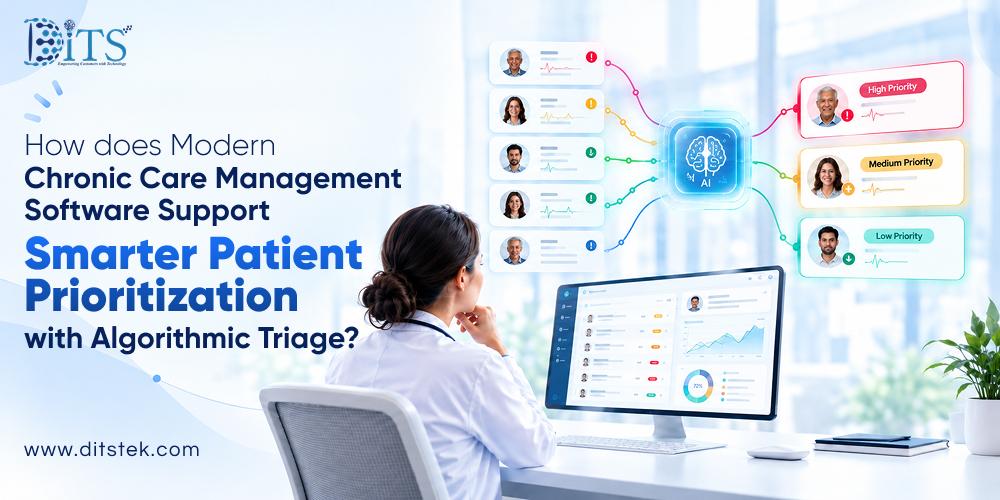
Key Takeaways
- Modern chronic care management software uses algorithmic triage to analyze signals that are clinical, utilization, engagement, and monitoring, and help care teams determine who needs help from them first.
- The smarter prioritization becomes more helpful if it results in some coordinated action. The common visibility of patient risks, interventions, follow-up, and need for escalation on the part of physicians, nurses, specialists, and care coordinators eliminates the fragmentation care.
- Algorithmic triage ensures more proactive chronic care by analyzing signals like missed visits, adherence issues, post-discharge holes, and concerning remote monitoring patterns.
- Outcome tracking closes the loop between prioritization and outcomes. The modern chronic disease management software helps providers understand care gap closure, readmission trends, patient risks, and clinical outcomes.
How do care teams know which chronic care patients need attention first?
This is where legacy platforms demonstrate some of their limitations. They were created for documentation purposes to record the encounter, update care plans, and document the healthcare provider's activity. There was no focus on identifying changing patient risk, prioritizing the right intervention, and so on.
Modern chronic care management software employs a more proactive approach. By using patient information and algorithmic triage, care providers can identify patients at risk and focus on them, making care results oriented.
Ready to Make Patient Prioritization More Proactive?
Assess how your current chronic care workflows, risk signals, and patient data can support smarter algorithmic triage.
Where Legacy Chronic Care Systems Fall Short in Patient Prioritization?
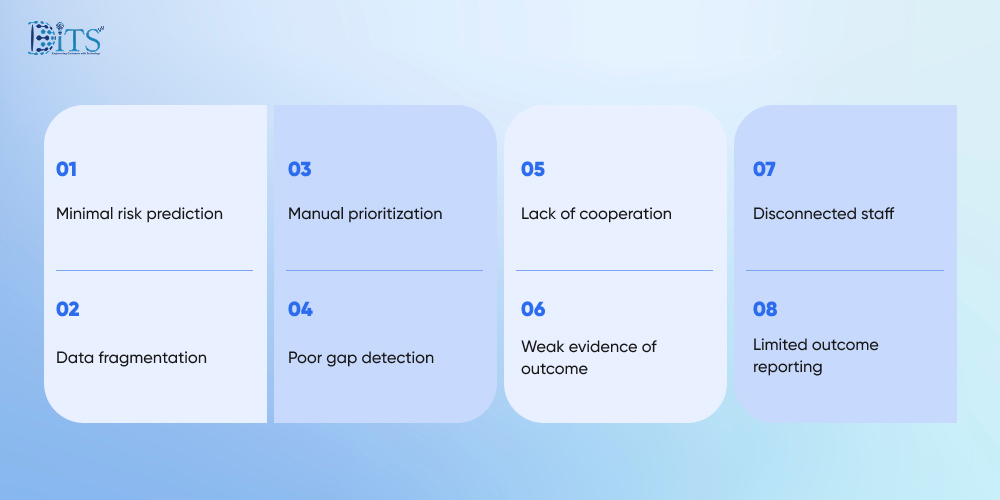
Many legacy chronic disease management software can handle large amounts of patient information, but don't indicate to teams which patients need the most urgent care. These systems were created mainly around documentation rather than a continual process of evaluating risks, resulting in the manual way of prioritization.
Some constant problems faced within the field of chronic care include the following:
Minimal risk prediction: Any abrupt changes in the patient’s condition or utilization trends might not be detected early, making it impossible to intervene accordingly.
Data fragmentation: Information about patients is often stored in multiple locations, making it difficult to grasp.
Manual prioritization: The most common way of prioritization is analyzing patient lists, evaluating charts, and making inferences based on the physician's personal opinion.
Poor gap detection: There is often no possibility to see whether a patient is overdue for screenings or follow-ups.
Lack of cooperation: Physicians and nurses are not able to agree within the framework of the information they have received from one another.
Weak evidence of outcome: Unfinished screenings and overdue follow-ups, medication evaluations, and missing care procedures easily go unnoticed in a timely manner.
Disconnected staff: Healthcare professionals such as doctors, nurses, specialists, and care managers are disregarding aspects of patient risk and care procedures.
Limited outcome reporting: Conventional systems record information about the completion of actions but do not generate evidence of their impact on patients’ compliance, use of medical services, or health outcomes.
These gaps impede the timely initiation of medical interventions and complicate proactive action in chronic disease management. For healthcare professionals working to achieve predefined goals in value based care, the objective is not just to collect more information but to apply it to make timely and right decisions.
How Smarter Patient Prioritization Improves Care Coordination
A high risk patient identification process would be of little value in a fragmented workflow where physicians, nurses, specialists, and care coordinators have different perspectives on the patient's path within their respective silos. This could delay follow-up activities, result in redundant work, or cause confusion about who will take charge of what.
Better prioritization of patients makes a huge impact on care coordination through the following aspects:
- Who needs to be prioritized
- The reason why this patient has been prioritized
- Who will handle the next task
- What interventions have been made so far
- Escalation or additional follow-up requirements
For instance, prioritizing a diabetic patient based on lab trends and a missed follow-up appointment can allow physicians to analyze clinical risk, the care coordinator to schedule the next follow-up, and the nurses to address other patient needs.
In essence, better prioritization leads to more effective coordination, as all parties involved will be working towards the same goal of patient risk identification, intervention, and follow-up management.
How Algorithmic Triage Supports Proactive Risk Based Care?
Not all patients suffering from chronic diseases need similar treatment simultaneously. The difficult task is to determine which patients require extra attention prior to the moment when unfavorable indicators are seen after missed next visits, decreased participation in treatment sessions and/or deterioration of their health.
With the help of algorithmic triage the healthcare specialists can know which patients should be prioritized and what risk factors, utilization and other indicators should be considered, namely:
- Missed appointments
- Problems with adherence
- Low level of engagement
- Missed post discharge visit
- Unpleasant tendencies seen in remote patient monitoring
- Outstanding activities mentioned in care plans
If any of these indicators signal risk, an appropriate response from the medical team may be provided, such as visiting the patient, checking medication, or doing follow-up activities.
For instance, discharged patients who lack follow-ups and are showing risks on remote patient monitoring may be moved up in the list of highest priority patients, allowing the team to take measures much earlier than planned.
Thus, the concept of risk-based care becomes more proactive. Algorithmic triage per se does not ensure greater compliance with treatment plans or the avoidance of readmissions. However, algorithms enable caregivers to detect future risks and direct resources to those places where they are needed most efficiently.
Is Your Chronic Care Platform Ready for Smarter Prioritization?
Identify gaps across workflows, data, integrations, risk assessment, and outcome tracking and determine where modernization can create the most value.
How Outcome Tracking Makes Algorithmic Triage More Effective?
The process of algorithmic triage cannot be said to be completed after a patient has been flagged and that an intervention has been implemented. It is also essential for the care teams to find out what happened afterward and learn to improve their future prioritization process.
Modern chronic care management tools can link patients’ priorities to outcomes, enabling healthcare providers to evaluate whether interventions have delivered value.
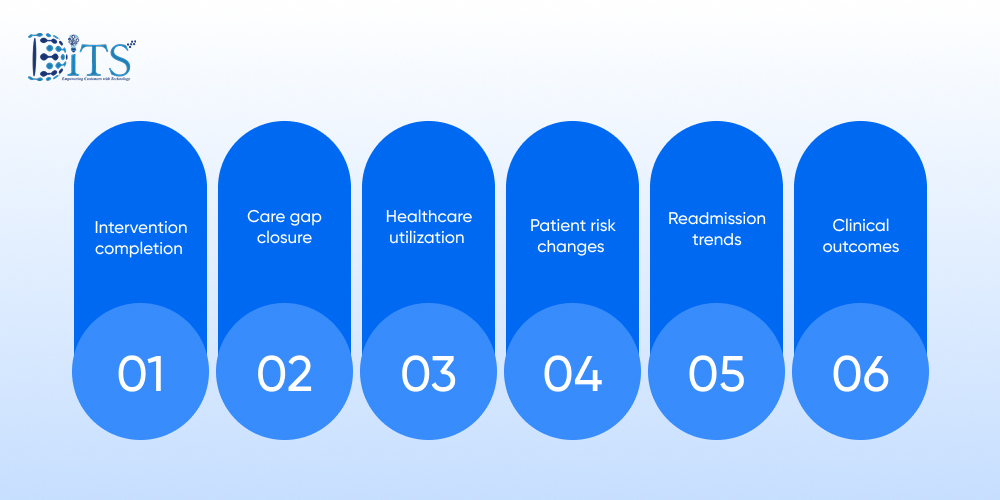
The most important outcomes to track are:
Intervention Completion
- Indicates whether the actions defined as a total of outreach, medication review, follow-up, or escalation were accomplished.
- Makes it possible to see potential delays in care delivery, starting with a patient being prioritized.
Care Gap Closure
- Looks at whether overdue screenings, no-shows, or unanswered referrals were resolved.
- Helps the teams identify repeated gaps in care.
Healthcare Utilization
- Measures shifts in the frequency of hospital and emergency department visits, as well as other utilization patterns.
- Determines whether interventions are affecting avoidable care needs.
Patient Risk Changes
- Determines if a patient's risk level has increased, stayed the same, or improved with intervention.
- Helps in understanding whether the current prioritization and care plans need to be modified.
Readmission Trends
- Determines if high-risk patients and patients who have been recently discharged are readmitted to hospitals.
- Help assess post-discharge follow-up care plans.
Clinical Outcomes
- Monitors specific disease-based measures such as blood pressure, glucose, or symptom patterns.
- Fosters linkage between interventions and patient health improvements.
Modern chronic disease management software identifies these patterns in patients and helps organizations optimize triage and resource utilization.
How AI Is Advancing Chronic Care Management?
The growing use of AI in healthcare is helping chronic care teams identify patient risks earlier, prioritize interventions, and improve care coordination using clinical, utilization, engagement, and remote monitoring data.
However, successful adoption depends on data readiness, system integration, governance, and clinical oversight. Healthcare organizations need to assess where AI can create measurable clinical and operational value before embedding it into care workflows.
These priorities are also shaping conversations at HIMSS, where DITS is joining healthcare and technology leaders to explore how AI, interoperability, automation, virtual care, and connected systems can support more efficient and coordinated care delivery.
Through its participation at HIMSS, DITS is gaining deeper insight into evolving healthcare technology priorities. This perspective helps DITS support organizations in making better-informed technology decisions around real clinical and operational needs.
How to Determine the Right Technology Approach for Chronic Care Prioritization?
Enhancing patient prioritization does not always require overhauling the entire chronic care management system. Depending on how the system performs in risk assessment, prioritization workflow, data transfer, and outcome measurement, one can identify the most suitable approach for improvement.
Healthcare institutions need to consider the following before making decisions:
- Existing technology capabilities: Review the platform's capabilities, including risk scoring, automated prioritization, alerting, and outcome tracking.
- Care delivery workflows: Review the fit of the prioritization mechanism with the existing clinical and operational processes, or whether a major redesign of workflows is warranted.
- Data maturity: Assess completeness, timeliness, standardization, and accessibility of patient data for the efficacy of the algorithms to perform their triage task accurately.
- Systems integration requirements: Identify whether existing systems like the EHR or telemonitoring applications, or laboratories, or patient portals need to interface in real time.
- Risk model complexity: Determine whether the organization can use common scoring models or needs to develop its own risk criteria.
- Reporting requirements: Assess if current technologies can give the results, usage, and value-based care reports required by medical and commercial teams.
- Scalability: Confirm that technology can handle more patients, new chronic disease programs, and changing treatment techniques.
In some instances, either modernization or integration may be enough, and in others, custom medical software development may be needed for complex risk assessments, health pathways, various escalation rules, and robust interoperability.
The choice should be based on the importance of clinical needs and business objectives, the readiness of the data, and the prospects for scaling the current system.
- Chronic care workflow assessment: Assessment of the existing processes allows to define the manual and weak points of the prioritization process.
- Patient prioritization and risk workflow evaluation: Evaluation of the patient risk identification, ranking, and routing process.
- Data and integration readiness assessment: Making sure that any clinical, utilization, engagement, and remote monitoring data are available for precise algorithmic triage.
- Algorithmic triage solution planning: Highlighting risk factors, prioritization logic, escalation rules, governance needs, and implementation requirements.
- Legacy platform modernization: Upgrading and modernizing legacy systems while points that deliver value are not replaced.
- Custom care management workflows: Creating workflows for the care pathways, risk models, and intervention processes specific for the organization.
- Care gap workflow automation: Creating alerts, task assignments, calls, and follow-ups for the identified care gaps.
Build a Chronic Care Platform Around Your Care Model
From workflow analysis and algorithmic triage planning to legacy modernization, custom workflows, and EHR integration, DITS can help you plan the right technology approach.
How Ditstek Supports Chronic Care Technology Modernization?
When modernizing chronic care technology, it’s important to first identify how current processes, data, and systems are hindering patient prioritization efforts. At Ditstek, we begin by assessing business, workflow, and technology gaps before recommending the right solution.
Our services include:
Workflow Analysis: Analyze current care models to identify human dependencies, process bottlenecks, and points where prioritization fails.
Data Readiness Assessment: Determine whether the data you already have from clinical records, healing processes, engagement, and off-site monitoring can be used for algorithmic triage.
Algorithmic Triage Solution Planning: Identify criteria for risk determination, prioritization, escalation rules, authority requirements, etc.
Revamping Legacy Platforms: Ensure obsolete tools are upgraded and, if necessary, expanded in capability, since there is no need to improve every system if they already work well.
Custom Workflow Creation: Create unique work processes tailored to your specific treatment paths, risk models, and intervention processes.
Custom healthcare software development: We develop custom healthcare software specifically suited to the organization’s chronic care model and other factors.
EHR Integration: Integrate chronic care management solutions with clinical and operational solutions for improved collaboration.
Contact us and get advice from our healthcare technology consultants on the right approach to modernize your chronic care platform.
FAQs
What is algorithmic triage in chronic care management?
Algorithmic triage relies on certain signals that reflect patient risk, utilization, and engagement. Such triaging allows for quicker prioritization and focusing on chronic care patient populations.
What benefits does chronic care management software provide?
Chronic care management software makes it easier to collect and visualize patient data. With it, healthcare providers can see changing patterns of risk and make use of them to prioritize care delivery.
Can algorithmic triage assist in readmission management?
Yes. Algorithmic triage can help with readmission management in terms of identification of post-discharge risks, missed follow-ups, and concerning patient signals. Based on such information, providers can prioritize further actions and make timely decisions.
Why is outcome tracking important in algorithmic triage?
With the help of outcome tracking, it will be easier to find out if there are any changes in the risks or utilization or care gap closure or readmissions and clinical outcomes after interventions.
How can a custom healthcare software development company support chronic care modernization?
A reliable custom software development company helps healthcare businesses in simplifying their workflows, technology gaps and data readiness with the right kind of approach. It involves everything from IT consulting, modernization, development, integration, and so on depending on the business requirements.

Nidhi Thakur
With more than 19 years of experience - I represent a team of professionals that specializes in the healthcare and business and workflow automation domains. The team consists of experienced full-stack developers supported by senior system analysts who have developed multiple bespoke applications for Healthcare, Business Automation, Retail, IOT, Ed-tech domains for startups and Enterprise Level clients.
Recent Posts
Explore how intelligent document processing for insurance helps businesses automate document workflows, reduce processing costs, improve accuracy, and strengthen operational efficiency across insurance functions.
Discover how automated medical claims processing reduces delays, manual rework, claim denials, and administrative costs while improving reimbursement speed and operational efficiency.
Learn how to build medical billing software with essential features, integrations, security, and development costs.