Home Care Software Development Cost: What Agencies Should Know Before Building a Custom Platform
Table Of Content
Published Date :
31 Jul 2026
Key Takeaways
- The cost of custom home care software depends on platform scope, user roles, integrations, compliance requirements, automation, and scalability, making careful planning essential before development begins.
- Core features such as caregiver mobile apps, scheduling, billing, electronic visit verification (EVV), family portals, dashboards, and third-party integrations have the greatest impact on both development complexity and overall project cost.
- Agencies should budget for hidden expenses including data migration, API integrations, compliance testing, cloud hosting, staff training, and ongoing maintenance to avoid unexpected costs after deployment.
- Building a minimum viable product (MVP) with essential workflows first allows agencies to control costs, validate operations, and add advanced capabilities such as AI automation and analytics in future phases.
- AI can improve home care operations by automating caregiver scheduling, predicting missed visits, detecting billing exceptions, assisting documentation, and identifying potential care risks while reducing manual administrative work.
- A consulting-first development approach that prioritizes workflow discovery, compliance, and scalable architecture helps agencies build a custom platform that supports long-term operational efficiency and business growth.
Running a home care agency nowadays is not like it used to be, a decade ago. Agencies are updating caregiver schedules, trying to stay compliant with regulations, handling billing, and keeping patients and their families updated. The day-to-day operational demands are increasing.
Home care agencies are experiencing that off the shelf tools don’t work in accordance with their workflows. So, they start looking at custom software solutions, that match their exact workflow. But before they consider a development project there’s one question they ask: what is the home care software cost?
The home healthcare software space is booming, because demand for in-home care continues to increase with our aging population. Mordor Intelligence reports that the home healthcare software market was valued at USD 4.51 billion in 2025 and is expected to grow at a CAGR of 12.74%. They also project it could reach USD 9.27 billion by 2031.
This growth basically shows how important the right technology is now. Not only for efficiency, but also for delivering better care and staying competitive.
Still, building custom software is a serious investment, and the final price can swing a lot depending on different variables. In this post we’ll go through development costs, the main factors that affect pricing, hidden expenses, and some practical guidance.
What is Custom Home Care Software Development?
Custom home care software development is basically building a platform that matches the way an agency delivers care and manages day to day caregiver operations. It’s about designing a system that fits the current workflows, plugs manual gaps, and keeps space for future growth.
Two agencies might both offer in-home care, but their processes can be very different. One might only need visit tracking and straightforward invoicing. Another may require multi-branch scheduling, careful caregiver skill matching, payer specific billing rules, and automated care alerts.
So that’s why custom home care software development should begin with workflow discovery first, before starting with any design or coding.
Want To Reduce Development Costs Without Compromising Quality?
Prioritize the right features, integrations, and development roadmap to build a secure, scalable platform within your available budget.
Average Home Care Software Cost to Build a Custom Platform
The cost to build a custom home care platform depends on the scope of development. Like, a basic MVP with client and caregiver profiles, records scheduling, and visit notes will usually cost less than a whole agency management system with EVV, billing, family access, integrations dashboards and AI automation.
For practical planning, home care software pricing depends on platform scope, modules, integrations, compliance needs, and automation level.
| Platform Type | Typical Cost Range | What Agencies Usually Get |
| Basic MVP Platform | $35,000 to $70,000 | Client profiles, caregiver records, basic scheduling, visit notes, simple admin panel, limited reporting |
| Mid-Level Home Care Platform | $70,000 to $150,000 | Caregiver mobile app, scheduling, billing, dashboards, role-based access, basic integrations, secure cloud setup |
| Advanced Custom Platform | $150,000 to $500,000+ | EVV, family portal, payroll or EHR integration, AI automation, advanced analytics, multi-location support, compliance-heavy workflows |
Key Factors That Impact Home Care Software Development Cost
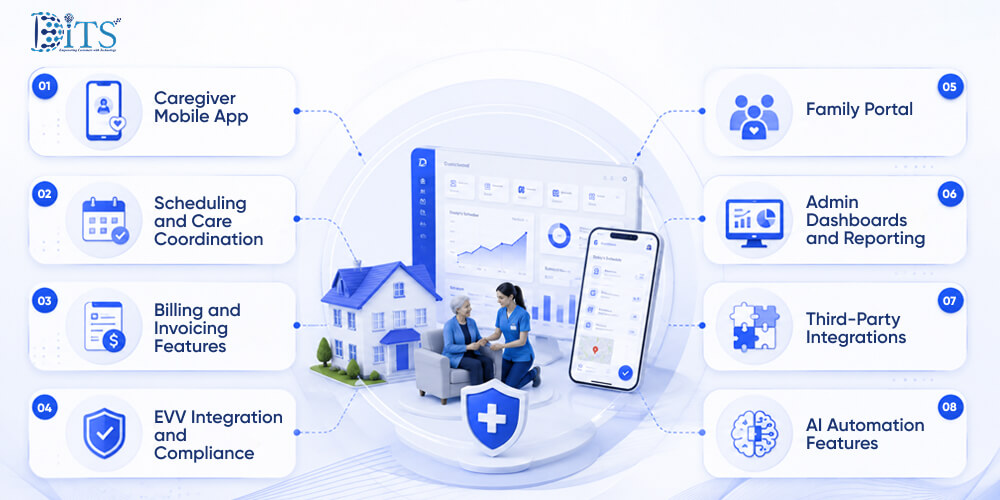
The home care software cost usually goes up when the software needs to cope with more people, more rules, more data, or more decisions. Here are the common factors that shape the cost of home care software development.
Caregiver Mobile App
A caregiver app can be simple or highly detailed. That difference changes cost quickly.
A basic app may include:
- Daily schedule
- Client address and care instructions
- Check-in and check-out
- Visit notes
- Task completion
- Basic notifications
A more advanced caregiver app might need offline access, GPS location tracking, mileage logs, photo uploads, digital approvals, incident write ups, and near live chats with coordinators.
Scheduling and Care Coordination
Scheduling is often the heart of a home care platform. It also becomes one of the biggest cost drivers.
Agencies may need the system to manage:
- Caregiver availability
- Client preferences
- Skills and certifications
- Location-based matching
- Shift swaps
- Missed visit alerts
- Overtime rules
- Recurring care plans
For a small agency, a simple calendar view may work well. For a larger agency, scheduling may need automation, conflict detection, caregiver matching, and route-aware planning.
Billing and Invoicing Features
Billing can look simple from the outside, but it can get complicated quickly. Private pay, insurance-based billing, hourly care, live in care, mileage, overtime, cancellations, and adjustments all add to the overall cost of development.
A billing module may include:
- Service hour calculation
- Invoice generation
- Payment status tracking
- Payroll export
- Rate card management
- Client-level billing rules
- Billing reports
When billing data comes straight from approved visits, the agency cuts down on duplicate entry, and disputes around the invoice. For a lot of agencies, that’s exactly where home care agency software cost becomes easier to justify, since quicker invoicing really helps the cash flow.
EVV Integration and Compliance
EVV, the electronic visit verification can add more cost to development, because there’s location data involved, time windows, caregiver identity, visit logs, and then the compliance reporting side.
Usually, common EVV requirements look like this:
- GPS based check-in and check-out
- Time and attendance records
- Client and caregiver verification
- Visit exception handling
- Audit ready reports
- Integration with billing or payer systems
If the EVV documentation is even a little off, the issue often shows up later in billing cycles audits or leads to reimbursement delays. A consulting-led development partner like DITS can do a compliance map first, before writing the code. Fixing EVV issues after launch is usually more expensive than putting the safeguards in place up front.
Family Portal
A family portal can make the agency look more transparent and professional, but it should be planned carefully. Families usually do not need access to everything. They need the right updates at the right time.
A useful family portal may include:
- Visit summaries
- Care notes
- Medication or activity updates
- Messages from care teams
- Upcoming schedule visibility
- Payment or invoice access
- Emergency contact details
The cost depends on how much information the portal is showing, who can access it, and if updates happen manually or automatically.
For agencies serving older adults, senior care software development should focus on clarity, trust, and simple communication rather than overloading families with clinical-style screens.
Admin Dashboards and Reporting
Dashboards are valuable when they help leaders make faster decisions. They become costly when every department asks for “just one more report” without a clear business reason.
Good dashboards usually track:
- Visit completion
- Missed or delayed visits
- Caregiver workload
- Client status
- Billing progress
- Revenue trends
- Service gaps
- Compliance exceptions
That is where DITS usually suggests starting, with role-based dashboards, so that coordinators, billing teams, and other staff can see what really matters to them.
Third-Party Integrations
Integrations are one of the most common culprits behind budgets that seem to “creep up” fast. Connecting with payroll, accounting, CRM, EHR, payment gateways, telehealth tools, or even reporting platforms takes real planning, because every system treats data a bit differently.
Typical integration needs include:
- Payroll software
- Accounting platforms
- EHR or EMR systems
- CRM tools
- Payment systems
- EVV platforms
- Communication tools
In healthcare software development, integration work should never be treated as a small technical task. It affects data accuracy, workflow continuity, and staff adoption.
AI Automation Features
AI automation increases development cost when the platform needs to reduce manual effort, identify patterns, and support faster decisions. In home care, this can help coordinators manage repetitive tasks such as shift reminders, missed visit alerts, caregiver follow-ups, documentation, and billing exception checks.
Practical AI integration in home care software may support:
- Smarter caregiver scheduling
- Missed visit prediction
- Care risk alerts
- Documentation assistance
- Workload forecasting
- Family update reminders
- Billing exception detection
In home care, AI in healthcare becomes useful when it reduces manual reminders, flags missed visits, detects billing exceptions, and helps managers spot care risk patterns earlier.
Hidden Costs Agencies Should Plan For
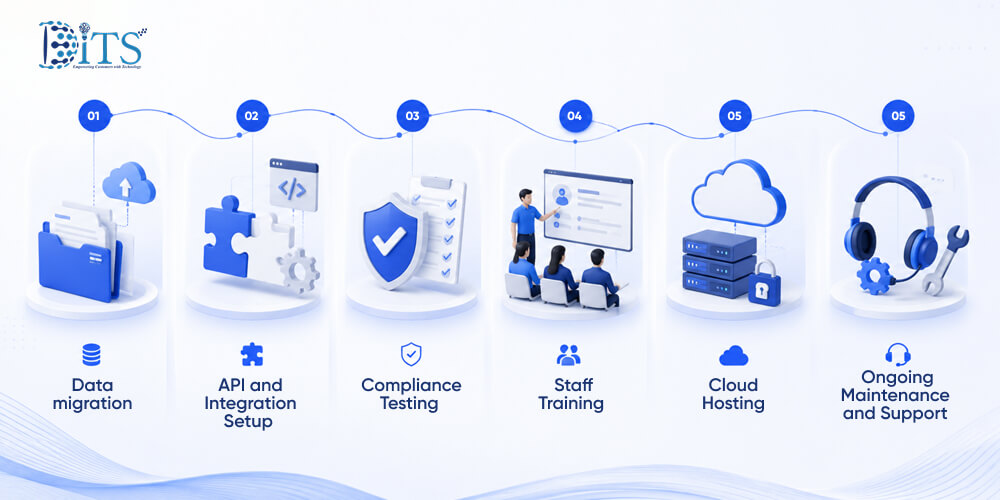
These hidden factors can increase home care software cost more than agencies expect.
Data Migration
Most agencies already have data sitting in spreadsheets, legacy systems, billing tools, scheduling software, or paper-based records. Moving that data into a new custom platform takes planning.
Migration may include:
- Client profiles
- Caregiver records
- Care plans
- Visit history
- Billing data
- Family contacts
- Compliance documents
The cost depends on how clean the existing data is. If records are duplicated, outdated, or stored in different formats, the work to migrate ends up going up that adds to the cost.
API and Integration Setup
Integrations get underplayed because they sound technical, but also simple. “Just connect payroll.” “Just connect billing.” Then in development that “just” can turn into several weeks, maybe more, depending on what shows up.
API setup includes things like data mapping, authentication, error handling, syncing rules, testing, and security checks.
Both API and integration set up adds to the overall cost of development.
Compliance Testing
Home care platforms handle sensitive client and caregiver information. Security, access control, audit logs, encrypted storage, consent handling, and permissions should be considered during development.
If the platform involves EVV, billing, care documentation, or remote patient monitoring, then compliance testing becomes even more critical.
All these things add to the overall cost that is difficult to predict at the beginning.
Staff Training
Training is not always included in the initial development quote, but agencies should plan for it. A practical training plan may include role-based sessions, short user guides, recorded walkthroughs, and support during the first few weeks after launch. Home care agencies should ask the development partner about the cost of training.
Cloud Hosting
Custom home care software needs secure hosting, backups, monitoring, performance management, and sometimes separate environments for development, testing, and production. These costs continue after launch.
Cloud cost depends on user volume, data storage, traffic, security requirements, and system architecture.
Ongoing Maintenance and Support
Agencies change workflows, payer rules evolve, staff request improvements, integrations need updates, and security patches must be applied.
Maintenance may include:
- Bug fixes
- Performance improvements
- Feature updates
- API changes
- Security patches
- Compliance updates
- User support
- Code quality reviews
These maintenance and support services also add to the overall cost that development partners don’t discuss during their consulting stage.
At DITS, ongoing support is treated as part of the platform’s long-term health. We also use AI in software development and QA testing to support code quality, testing coverage, and faster customization where it makes business sense.
How DITS Helps Home Care Agencies Build Cost Efficient Custom Platforms
At DITS, custom home care software development really starts with consulting. We first dig into how the agency handles scheduling, caregiver communication, billing, EVV, reporting, family updates, and compliance. That process helps us sort must-have workflows from the “nice to have” pieces that can wait, a bit.
Our team supports agencies in setting up an MVP with the right backbone; features like client records, caregiver profiles, visit tracking, check-in check-out, basic billing, and admin reporting. After the platform shows real value, it can then be broadened with family portals, dashboards, integrations, and practical automation.
DITS also helps agencies plan AI integration around practical use cases such as caregiver matching, billing alerts, documentation support, and workload forecasting.
We even use AI for software development, QA, code quality checks, and customization, while also helping agencies bring automation into everyday operations where it truly makes sense.
The goal is straightforward: minimize rework, keep development cost under control, and build a platform that can support business growth over time.
Ready To Build Your Home Care Software Platform?
Partner with experienced healthcare software developers to design, build, and launch a secure custom platform tailored to your agency's needs.
Conclusion
Home care software development cost depends on how much the platform needs to solve. A simple MVP with scheduling and visit tracking will cost far less than a full system with caregiver apps, billing workflows, EVV, family portals, dashboards, integrations, and AI automation.
For agency leaders, the best route to home care software development is to consult a strategic development partner like DITS. A well-planned custom system shouldn’t turn into another software burden. It should smooth daily operations, reduce those manual follow ups, and give leadership clearer visibility into how the agency is performing.
That’s where the right development partner matters. Not by stacking more features on top. But by helping the agency build what it genuinely needs, not just what sounds good on paper.
FAQs
How much does custom home care software development cost?
Custom home care software development usually lands somewhere between $35,000 and $500,000+, depending on the features you want, how many integrations are needed, compliance needs, platform complexity, and how much automation you expect.
What features affect home care software cost the most?
In most cases the caregiver mobile app, scheduling logic, billing workflows, EVV, a family portal, admin dashboards third-party integrations, and AI automation have the strongest pull on the development cost.
Does a caregiver mobile app increase development cost?
Yes, it typically increases cost, because you need mobile UX, strong backend connectivity, check-in check-out journeys, notifications, security work, testing cycles, and continuing updates afterward.
Is AI automation necessary for home care software?
AI automation is not required in phase one, but it can be useful later, for caregiver matching, missed visit alerts, billing exceptions, documentation support, and care risk signals, if you decide to scale up.
How can home care agencies reduce software development costs?
Home care agencies can reduce development costs by starting with an MVP, prioritizing must-have workflows, planning integrations early, and adding advanced features in later phases.
How does DITS help agencies plan custom home care software development?
DITS helps agencies plan custom home care software development through workflow consulting, MVP planning, caregiver app development, EVV and billing workflows, integrations, AI automation, and long-term platform scaling.

Nidhi Thakur
With more than 19 years of experience - I represent a team of professionals that specializes in the healthcare and business and workflow automation domains. The team consists of experienced full-stack developers supported by senior system analysts who have developed multiple bespoke applications for Healthcare, Business Automation, Retail, IOT, Ed-tech domains for startups and Enterprise Level clients.
Recent Posts
Explore how intelligent document processing for insurance helps businesses automate document workflows, reduce processing costs, improve accuracy, and strengthen operational efficiency across insurance functions.
Discover how automated medical claims processing reduces delays, manual rework, claim denials, and administrative costs while improving reimbursement speed and operational efficiency.
Learn how to build medical billing software with essential features, integrations, security, and development costs.