Improve Healthcare Facilities and Plant Operations Management with CMMS
Table Of Content
Published Date :
14 Jan 2026
Healthcare facilities today operate under pressure that rarely lets up. Hospitals and care centers are expected to deliver services while managing complex infrastructure behind the scenes. Power systems, medical equipment, and safety mechanisms all have to work in sync.
There is a direct and measurable link between facilities, patient safety, and revenue. A delayed procedure due to equipment failure disrupts schedules, increases risk exposure, and erodes patient trust.
Many healthcare organizations are still relying on manual logs, spreadsheets, or outdated tools to manage this complexity. This is why modern facility management software becomes essential for healthcare facilities.
This blog shares the role of CMMS in asset management, smoother workflows, and long-overdue system modernization across healthcare facilities.
Role of Healthcare Asset Management
In a healthcare environment, assets are the backbone of daily operations. When visibility into these assets is unclear, problems tend to surface at the worst possible time.
This is where structured healthcare asset management becomes essential. Service providers need to know what assets they own, where they are located, how they are performing, and when they are likely to fail.
Poor asset oversight often shows up as rising downtime, missed compliance checks, and inflated operating costs. A centralized healthcare asset management software approach creates a single source for asset history, condition, and lifecycle, allowing teams to plan maintenance easily.
Modernize Your Healthcare Facility Operations!
See how a custom CMMS can reduce downtime, improve compliance, and bring control back to your facility operations.
Common Operational Challenges Caused By Legacy Systems
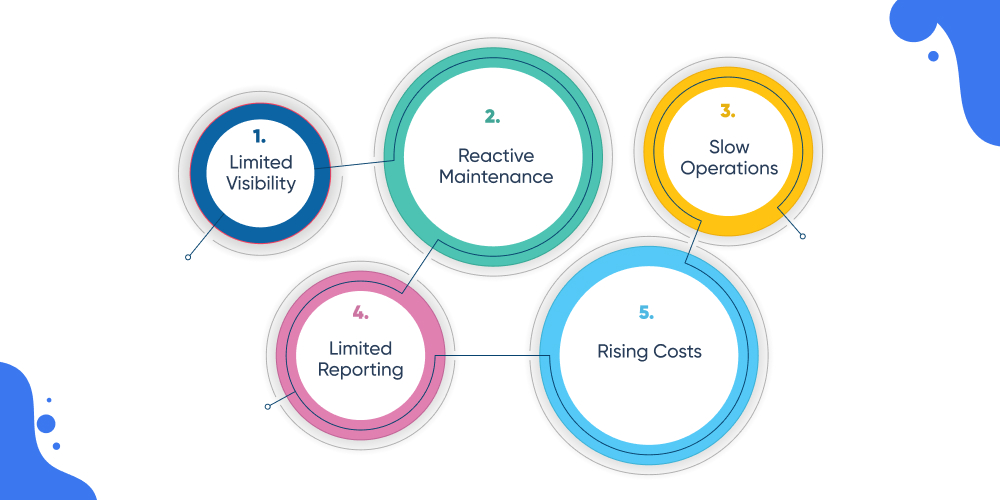
Limited Visibility
In many healthcare facilities, asset information is scattered across spreadsheets, emails, and standalone tools maintained by different teams. This lack of a unified view makes it difficult to track maintenance history, warranties, or the current condition of assets.
Reactive Maintenance
Without structured preventive schedules, maintenance teams are forced to respond only after equipment breaks down. This reactive approach leads to emergency repairs, unplanned downtime, and higher overtime costs. Over time, it also shortens asset lifespan and increases the risk of failures during critical patient-care moments.
Slow Operations
Maintenance requests, procurement approvals, and compliance sign-offs often move through emails or paper-based processes. These manual workflows create delays, reduce accountability, and slow down issue resolution. When approvals stall, minor maintenance tasks can quickly turn into larger operational problems.
Limited Reporting
Legacy systems struggle to generate accurate, real-time reports. Maintenance logs are incomplete, compliance documentation is inconsistent, and audit preparation becomes a last-minute scramble. Leadership lacks clear visibility into facility performance, making proactive risk management difficult.
Rising Costs
Poor data visibility leads to inefficient labor utilization, unnecessary asset replacements, and higher maintenance spending. Costs increase gradually, often without a clear explanation, until budgets come under pressure. At that point, it becomes clear that outdated systems are no longer sustainable.
How Modern CMMS Supports Healthcare Operations
A modern Computerized Maintenance Management System is a centralized operational platform that connects assets, people, and processes into one controlled environment.
At its core, a CMMS replaces fragmented tools with structured workflows and reliable data. Maintenance requests, asset records, compliance documentation, and technician activities all live in one system. The real value shows up when systems move from legacy setups to cloud-based platforms that teams can access in real time.
Key ways a modern CMMS supports healthcare operations include:
- Transitioning from paper-based and disconnected systems to a single digital source of truth that stays updated automatically
- Enabling mobile access so technicians can receive work orders, update task status, and log issues directly from the field
- Providing real-time visibility into maintenance backlogs, asset health, and operational risks across facilities
- Supporting automation that reduces manual coordination between facilities, procurement, and compliance teams
For healthcare organizations managing multiple buildings or campuses, this level of coordination changes how work gets done.
More importantly, a CMMS becomes the backbone for asset intelligence and workflow automation. It connects maintenance activity with performance data, turning routine operations into a predictable, measurable process.
Modern CMMS as Healthcare Asset Management Engine
A modern CMMS acts as a central intelligence layer for assets, giving facilities teams a clear picture of what is happening across buildings, systems, and equipment at any given moment.
At the center of this capability is a centralized asset registry. Every asset, whether it is clinical equipment or plant infrastructure, is recorded with its full lifecycle details. Installation dates, service history, performance trends, and compliance records are no longer scattered. They are accessible in one place, when needed.
Key ways a CMMS strengthens asset management include:
- Full lifecycle tracking that allows teams to understand how assets perform over time and where maintenance efforts deliver the most value
- Preventive and condition-based maintenance scheduling that reduces unexpected breakdowns and extends equipment lifespan
- Real-time monitoring of asset performance and downtime, helping teams act before small issues escalate
- Integrated inventory and spare-parts tracking to avoid delays caused by missing critical components
- Data-backed insights that support smarter replacement planning and more accurate capital budgeting
This is where medical device asset management software capabilities become especially important. Medical devices require precise maintenance, clear documentation, and reliable uptime. A CMMS ensures these assets are maintained on schedule and aligned with compliance expectations, without relying on manual follow-ups.
CMMS Automating Healthcare Facility Workflows
Once asset data is centralized, the next bottleneck becomes clear very quickly. In many healthcare facilities, maintenance work still depends on emails, phone calls, and informal follow-ups. This is exactly where a modern CMMS starts to change daily operations.
Automation removes friction from routine facility processes and replaces it with structured, trackable flows that teams can rely on. This is where many healthcare leaders begin to see the difference between basic tools and genuine healthcare facility management software.
Automation does not just save time. It creates reliability. And reliability is what facility teams need when margins are tight and expectations are high.
Build a Future-Ready CMMS for Your Healthcare Facility!
Let’s design a secure, scalable maintenance and asset management system tailored to your environment.
Legacy Modernization For Healthcare Plant Operations
Healthcare plant operations were not built for stagnation. Yet many organizations still depend on aging systems that struggle to keep up with today’s operational, compliance, and security demands.
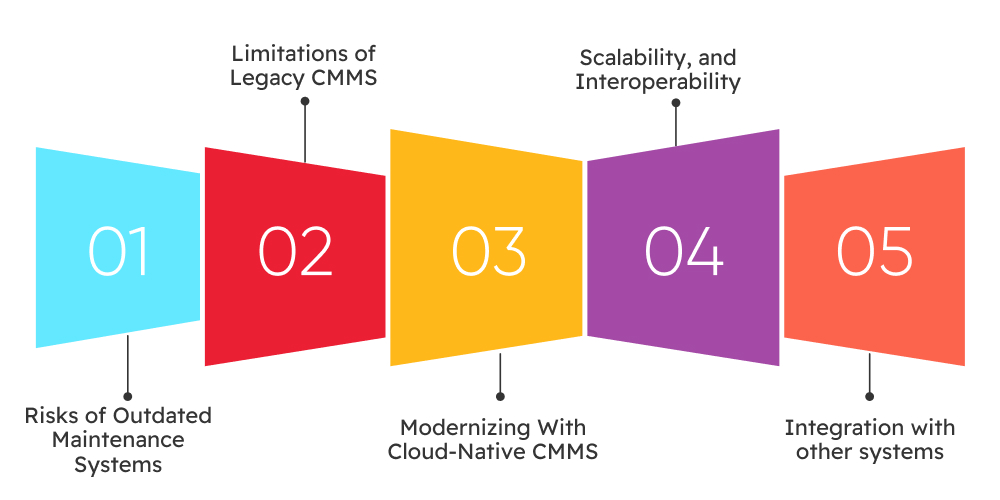
Risks of Outdated Maintenance Systems
Legacy platforms often lack visibility, scalability, and real-time control. As facilities grow or regulations tighten, these systems become harder to manage and more expensive to maintain. Downtime increases, data accuracy drops, and security gaps start to appear. For leadership, this creates blind spots that are difficult to defend during audits or incident reviews.
Limitations of Legacy CMMS
Older CMMS tools were designed for static environments. They struggle with mobile access, multi-location operations, and modern reporting needs. Updates are slow, integrations are limited, and customization becomes costly over time. Teams end up working around the system instead of with it.
Modernizing With Cloud-Native CMMS
Modernization replaces rigidity with flexibility. Cloud-native CMMS platforms scale with operational needs, support remote access, and adapt faster to regulatory change. This shift is not about replacing software for the sake of it. It is about enabling long-term operational resilience through structured healthcare software modernization.
Scalability, and Interoperability
A modern CMMS supports secure access, role-based controls, and system interoperability. It connects smoothly with building systems, compliance tools, and operational platforms, including hospital facility management software environments that demand uptime and accuracy.
Integration with Other Systems
Modernization does not need to mean disruption. With the right approach, legacy data can be migrated, workflows preserved, and teams trained gradually. Operations continue while the foundation underneath becomes stronger and more reliable.
Business Benefits of Modern CMMS in Healthcare
When healthcare organizations modernize maintenance and asset operations, the results extend well beyond the facilities team. A modern CMMS creates measurable business impact that leadership can see, track, and justify.
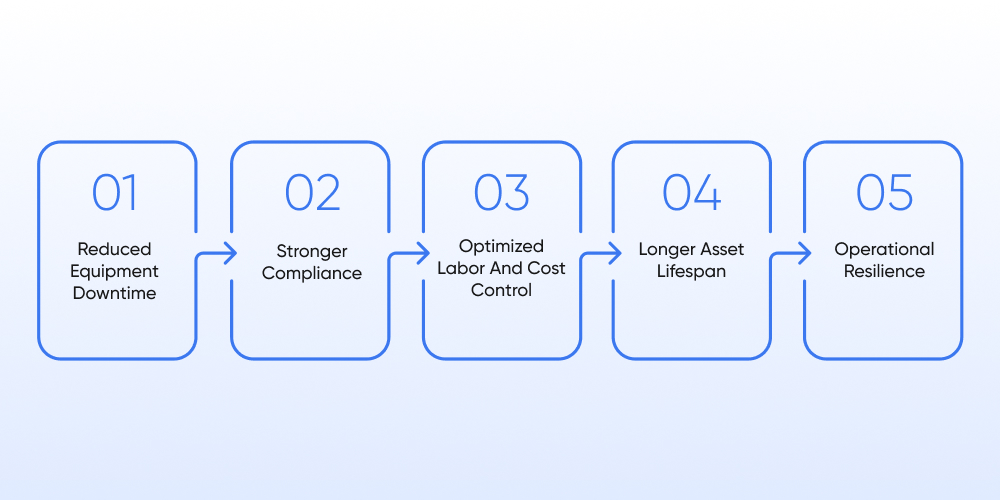
Reduced Equipment Downtime
Preventive and condition-based maintenance significantly reduce unexpected equipment failures. Critical systems stay available when needed, and emergency repairs become the exception rather than the norm. This stability directly supports patient care continuity and staff productivity.
Stronger Compliance
Accurate maintenance logs, inspection records, and automated reporting simplify compliance. Audits become structured reviews instead of stressful cleanups. Teams can demonstrate adherence to regulations with confidence, backed by reliable data from facility maintenance and asset management software CMMS platforms.
Optimized Labor And Cost Control
With clearer work priorities and automated workflows, maintenance teams spend less time on coordination and more time on value-driven tasks. Labor hours are used efficiently, overtime drops, and operational costs become easier to manage.
Longer Asset Lifespan
Consistent maintenance extends asset life and reduces premature replacements. Performance trends and historical data help leadership plan capital investments based on real usage, not guesswork. Over time, budgets become more predictable and defensible.
Operational Resilience
Facilities that run on modern systems respond faster to issues and adapt better to change. Whether managing growth, regulatory updates, or unexpected disruptions, a CMMS supports stability when it matters most.
At this stage, many organizations also see value in aligning facility operations with broader digital initiatives such as healthcare software development, ensuring systems work together rather than in isolation.
Key Features To Look for in Healthcare CMMS
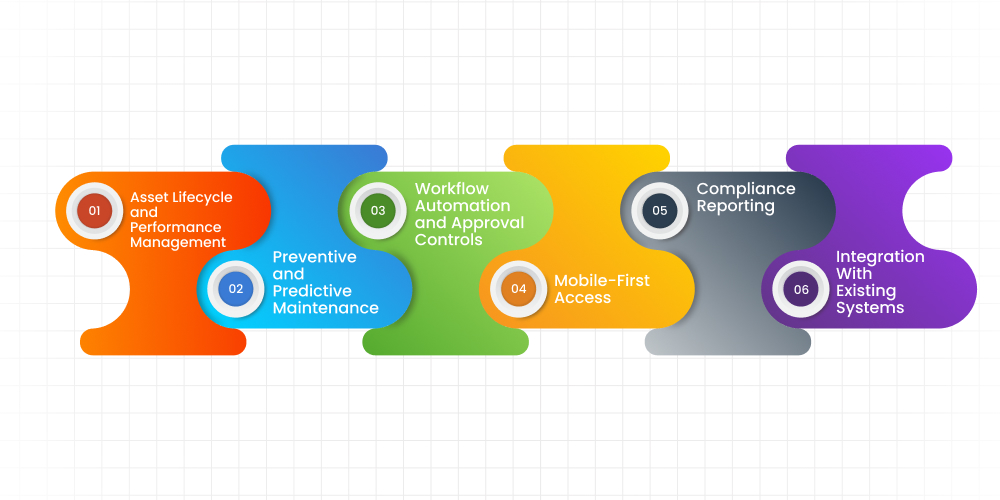
Choosing the right CMMS is not about feature volume. It is about relevance. Healthcare facilities operate under unique pressure where reliability, compliance, and speed matter every day. The right platform should support these realities without adding complexity.
Asset Lifecycle and Performance Management
A strong CMMS should track assets from installation to retirement, capturing service history, usage patterns, and performance trends. This level of visibility helps facilities teams prioritize maintenance and helps leadership plan replacements with confidence. Platforms designed as healthcare asset management software excel at connecting operational data with long-term planning.
Preventive and Predictive Maintenance
Preventive maintenance reduces breakdowns, while predictive insights help teams act before failures occur. Together, they shift maintenance from reactive firefighting to planned execution. This approach is especially important for clinical equipment and infrastructure that cannot afford downtime.
Workflow Automation and Approval Controls
Automated workflows keep work moving without constant follow-ups. Maintenance requests, procurement approvals, and compliance checks follow predefined paths, reducing delays and improving accountability. This is where modern facility management solution companies for healthcare differentiate themselves by aligning software with real operational flows.
Mobile-First Access
Technicians should not be tied to desks. Mobile access allows them to receive tasks, update job status, and log issues directly from the field. This improves response times and keeps data accurate at the source.
Compliance Reporting
Healthcare audits demand precision. A CMMS should provide clear audit trails, inspection records, and export-ready reports. When compliance data is always available, audits stop being disruptive events.
Integration With Existing Systems
A healthcare-ready CMMS must integrate smoothly with legacy platforms, building systems, and operational tools. This includes compatibility with broader healthcare facility management software environments where interoperability is critical.
Behind the scenes, platforms built by experienced teams often embed intelligence into development and quality processes. At DITS, for example, AI is used across software development, quality assurance, code consistency, and customization, ensuring systems remain scalable, reliable, and tailored to healthcare operations without adding operational risk.
Plan Your Healthcare CMMS Modernization!
Get guidance on migrating from legacy systems without disrupting daily operations.
How DITS Helps Healthcare Organizations Transform Facility Operations
Healthcare facilities do not need another generic tool. They need systems that fit their operational reality, compliance obligations, and growth plans. This is where DITS takes a different approach, focusing on practical transformation rather than surface-level upgrades.
DITS brings deep experience in healthcare asset management and CMMS development, designing platforms that align with real facility workflows instead of forcing teams to adapt to rigid software. Every solution is tailored around how hospitals and care centers actually operate, from asset tracking to maintenance approvals.
Legacy system modernization is handled with care and minimal disruption. Existing data, processes, and integrations are preserved where possible, while outdated components are upgraded to support scalability and security.
DITS also integrates intelligence throughout the development lifecycle. AI is used selectively in software development, quality assurance, code quality monitoring, and customization.
For healthcare leaders looking to move beyond basic maintenance tools toward structured, future-ready operations, this combination of domain expertise and disciplined execution makes a measurable difference.
Conclusion
For healthcare leaders, facility operations sit at the intersection of patient safety, regulatory confidence, and financial performance.
A modern CMMS shifts maintenance from reactive problem-solving to structured operational control. With better asset visibility, automated workflows, and reporting, leadership gains predictability. Investments become easier to justify, compliance becomes easier to prove, and facilities teams operate with clarity.
When aligned with broader initiatives such as Remote Patient monitoring, staff efficiency, and clinical system integration, modern facility management software becomes part of a larger digital strategy rather than an isolated tool. The outcome is not just better maintenance, but safer environments, smoother operations, and long-term resilience.
FAQs
What Is Healthcare Asset Management In CMMS?
Healthcare asset management within a CMMS focuses on tracking, maintaining, and optimizing medical and facility assets throughout their lifecycle. Using healthcare asset management software, organizations gain visibility into asset condition, maintenance, and compliance, helping reduce downtime and improve planning accuracy.
How Does CMMS Automate Healthcare Facility Workflows?
A CMMS automates work orders, approvals, and task assignments using predefined rules and role-based access. This reduces manual coordination and improves response times across departments. Solutions such as hospital facility management software ensure maintenance, procurement, and compliance workflows move without delays.
Why Is Legacy Modernization Important In Hospital Maintenance Systems?
Legacy systems limit visibility, scalability, and security. Modernizing them through Healthcare Software Modernization enables cloud access, better integrations, and reliable reporting while preserving critical data and workflows. This reduces operational risk and supports long-term growth.
Can CMMS Integrate With Existing Healthcare And Building Systems?
Yes. A healthcare-ready CMMS is designed to integrate with clinical platforms, building systems, and workforce tools such as a healthcare staff management app. This interoperability allows facilities, operations, and clinical teams to work from consistent and reliable data.
How Does CMMS Improve Compliance And Audit Readiness In Healthcare?
CMMS platforms maintain structured maintenance logs, inspection records, and audit trails. Using facility maintenance and asset management software cmms, healthcare organizations can demonstrate compliance quickly and accurately, reducing audit stress and regulatory exposure.

Nidhi Thakur
With more than 19 years of experience - I represent a team of professionals that specializes in the healthcare and business and workflow automation domains. The team consists of experienced full-stack developers supported by senior system analysts who have developed multiple bespoke applications for Healthcare, Business Automation, Retail, IOT, Ed-tech domains for startups and Enterprise Level clients.
Recent Posts
Explore how intelligent document processing for insurance helps businesses automate document workflows, reduce processing costs, improve accuracy, and strengthen operational efficiency across insurance functions.
Discover how automated medical claims processing reduces delays, manual rework, claim denials, and administrative costs while improving reimbursement speed and operational efficiency.
Learn how to build medical billing software with essential features, integrations, security, and development costs.