Top 10 Medical Device Integration Companies in USA
Table Of Content
Published Date :
16 Jun 2026
Hospitals are no longer dealing with isolated monitors, pumps, imaging systems, and patient records. They need connected clinical environments where device data moves into the right system without nurses retyping numbers or IT teams chasing broken interfaces. That is one reason the global medical device connectivity market is expected to reach USD 7.4 billion by 2028, according to Markets and Markets.
For healthcare businesses, this shift is not just about buying another tool. It is about safer data flow, cleaner EHR records, faster clinical decisions, and less pressure on already stretched care teams. In this listicle, we will look at the top medical device integration companies in USA and compare how they support hospitals, clinics, and digital health businesses through connected devices, interoperability, and secure healthcare software development.
Why Healthcare Businesses are Looking for Medical Device Integration
The demand for medical device integration vendors is growing because healthcare teams are under pressure from both sides. They need better patient visibility, but they also need to reduce administrative load.
In many facilities, device data still moves through manual steps. Staff may record vitals, enter readings into the EHR, check device alerts separately, and then update reports again. It works, but it is slow and prone to gaps, especially in ICUs, emergency departments, and remote care programs.
Good integration helps solve this in a practical way. It brings device data closer to clinical decisions. It also gives healthcare leaders better visibility into patient trends, device usage, and operational bottlenecks.
There is another quiet benefit too. When device data is captured correctly, it supports analytics, quality reporting, and AI in healthcare use cases. But that only works when the data foundation is reliable. Poor integration leads to poor insights.
What a Medical Device Integration Platform Should Include?
A medical device integration platform should kinda bring together device connectivity, data normalization, secure exchange, monitoring and then workflow delivery, all in one go.
| Capability | Why it matters |
| Device compatibility | Supports monitors, pumps, imaging devices, wearables, and other clinical equipment |
| EHR connectivity | Moves device data into patient records and care workflows |
| Standards support | Helps with HL7, FHIR, DICOM, APIs, and structured exchange |
| Security controls | Protects patient data through encryption, access rules, and audit trails |
| Alert management | Reduces noise and routes the right alerts to the right teams |
| Scalability | Supports growth across departments, sites, and care models |
| Reporting and analytics | Turns raw device data into useful operational and clinical insight |
Also, the platform has to be maintainable. Sounds boring I know, but it matters a lot. Hospitals cannot really afford those fragile integrations that crack every time a device, an EHR, or a workflow changes.
How we Selected These Companies?
This list is not based on sponsorship, paid placement, or one narrow ranking factor. We selected these companies by looking at how well they fit the real needs of healthcare businesses planning medical device integration.
The main filter was healthcare relevance. Each company needed some clear connection to healthcare software, EHR workflows, medical device software, remote patient monitoring, interoperability, IoT, or connected care systems. General software companies were considered only when their healthcare experience made them relevant to this topic.
We also looked at practical integration capability. That includes support for EHR connectivity, APIs, HL7, FHIR, data exchange, device-connected applications, dashboards, cloud platforms, and secure healthcare architecture. A company did not need to offer every service, but it needed to bring something useful to medical device integration projects.
To keep the list balanced, we included different types of partners. Some companies are stronger in custom healthcare software development. Some are better for medtech product engineering. Others fit connected care, IoT, or system integration projects. This gives healthcare buyers a more realistic view instead of pushing one type of vendor as the “best” for everyone.
We also avoided ranking companies only by size or brand recognition. Bigger companies are not always the right fit for a startup, a specialty clinic, or a healthcare business with very specific workflows. The final selection gives weight to service fit, healthcare focus, integration experience, scalability, and the kind of business each company is best suited for.
Need Better Connectivity Across Healthcare Devices And Systems?
Enable seamless data exchange between medical devices, EHR platforms, and healthcare applications for improved clinical workflows.
Top 10 Medical Device Integration Companies in USA
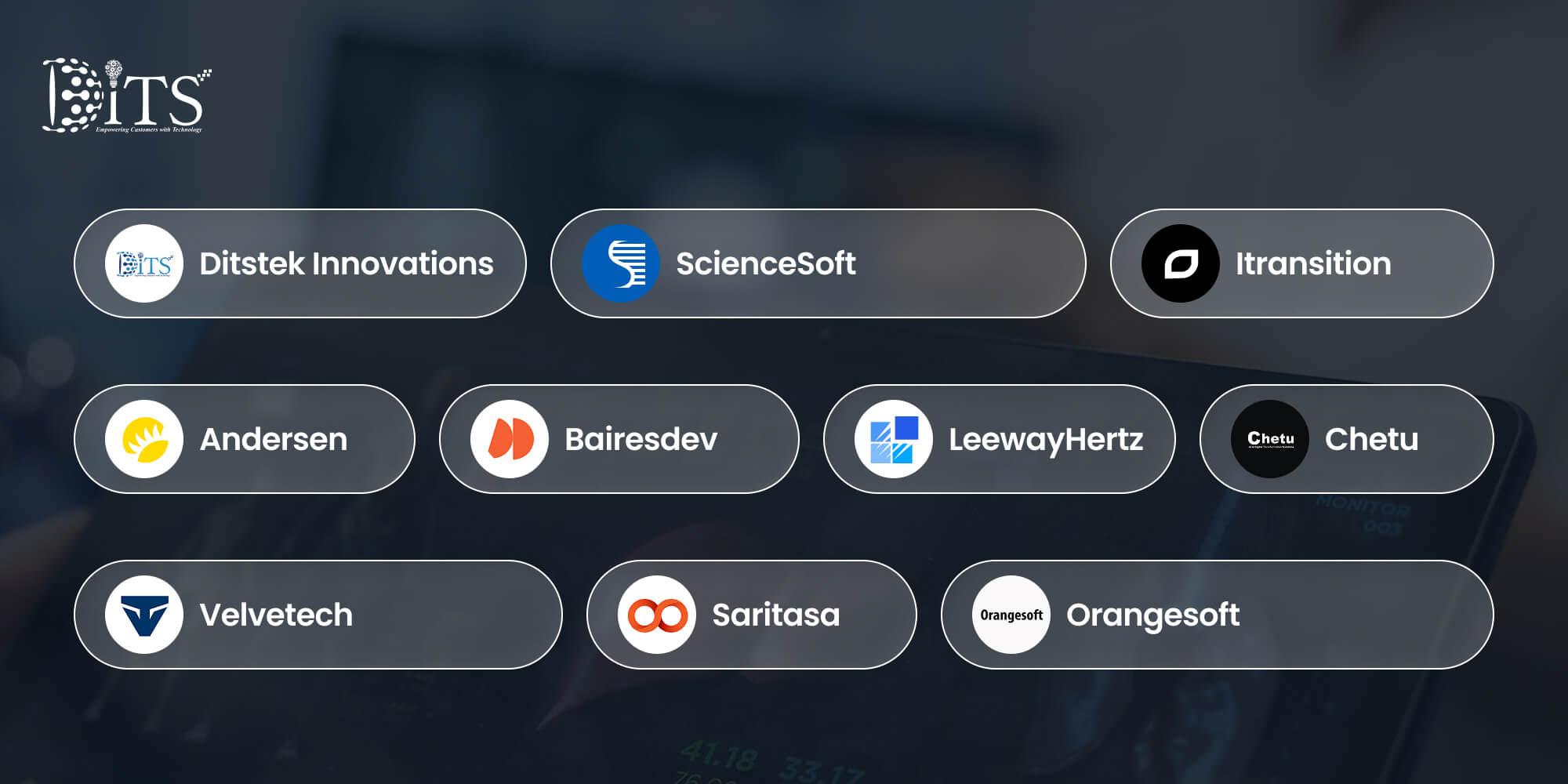
The companies below include a mix of custom development partners, healthcare software engineering firms, and integration-focused providers. Some are better suited for hospitals. Some fit medical device manufacturers. Some work well for digital health businesses building connected products.
The right choice depends on your device environment, EHR setup, compliance needs, budget, and how much customization you need.
1. Ditstek Innovations
Ditstek Innovations is pretty much a strong fit for healthcare companies that want custom integration work, not so much a rigid product that does everything the same way. They operate across healthcare software development, EHR integration, remote patient monitoring, IoT enabled healthcare systems and also patient-facing digital platforms, so it feels more flexible in practice. Because of that it is relevant for providers, medtech firms, and healthcare startups who need device data to flow into real workflows.
DITS delivers custom healthcare software development services that follow international standards and rules, including HIPAA, HITECH, PIPEDA, CCPA and FDA requirements. Over the last nine years, they’ve delivered more than 50 healthcare software solutions for clients around the world, and they also finished 50+ AI driven healthcare projects.
What makes DITS different, is this kind of fast momentum: they can produce a solid prototype in just 14 days and then bring a minimum viable product, or MVP within 12 to 14 weeks. Its support extends beyond deployment, with long-term maintenance and ongoing assistance provided for years after launch.
With a 95% client retention rate, DITS has built a reputation as a trusted partner for healthcare businesses looking to develop reliable and scalable healthcare solutions.
Best suited for: healthcare businesses, clinics , hospitals, and medtech companies that need custom medical device integration, EHR connectivity , and connected care platforms.
Min project size: $5,000+
Hourly rate: < $25 / hr
Employees: 50 - 249
Locations: Sahibzada Ajit Singh Nagar, India
Year founded: 2017
2. ScienceSoft
ScienceSoft, a healthcare software consulting and development firm , with experience in system integration, EHR connectivity, patient portals, telehealth, analytics , and healthcare application modernization. For medical device work, their real value seems to be in stitching separate healthcare systems into a single workable environment, you know, one place where everything can communicate, and not just coexist.
This type of partner makes sense when a healthcare organization already has several systems in place and needs them to talk to each other. That may include an EHR, lab software, billing tools, patient apps, medical devices, and analytics platforms. ScienceSoft’s healthcare integration services mention HL7 and FHIR, which are often part of medical device and EHR data exchange.
Best suited for: Healthcare organizations that need broad software integration across EHRs, medical devices, patient apps, and internal systems.
Min project size: $5,000+
Hourly rate: $50 - $99 / hr
Employees: 250 - 999
Locations: McKinney, TX
3. Itransition
Itransition works with healthcare providers, medtech companies, and health software vendors. Its medical device software development services are especially relevant for businesses building device-connected applications, SaMD products, monitoring tools, and data-driven healthcare platforms.
The company is a pretty good fit when the work needs both engineering depth and a healthcare context, like you know, the whole ecosystem. For instance, a medical device manufacturer might need a secure cloud platform, plus a mobile application and a clinician dashboard, data visualization too, and then also EHR integration around the same device. Most of the time it is not some single feature, click and done kind of project.
Itransition’s broader healthcare services also cover interoperability, healthcare analytics, telemedicine, and enterprise healthcare systems. That gives it a decent fit for businesses that want medical device data to support larger digital health workflows.
Best suited for: Medtech businesses, healthcare startups, and providers building connected medical device software or larger digital care platforms.
Min project size: $25,000+
Hourly rate: $25 - $49 / hr
Employees: 1,000 - 9,999
Locations: Decatur, GA+11
Year Founded: 1998
4. Andersen
Andersen provides healthcare software development services for hospitals, clinics, digital health companies, and medical technology businesses. The company works across EHR and EMR systems, telemedicine, patient portals, healthcare analytics, and custom medical software.
For medical device integration, Andersen can be relevant when a business needs development support around connected care, device data exchange, and digital healthcare workflows. Its profile fits companies that do not just need an integration engine, but also need software design, engineering, testing, and long-term product support.
A practical use case could be a remote monitoring platform that collects readings from patient devices, shows risk trends to clinicians, and syncs selected information with an EHR. That kind of work needs more than APIs. It needs workflow thinking, security, and careful user experience design.
Best suited for: Healthcare companies that need engineering teams for custom platforms, EHR integrations, telehealth products, or connected device workflows.
Min project size: Undisclosed
Hourly rate: Undisclosed
Employees: 1,000 - 9,999
Locations: Seattle, WA
5. Bairesdev
BairesDev is a pretty big software development company, and it has healthcare experience across custom software, cloud applications , data platforms, and what they call enterprise engineering. It is not really a medical device-only vendor, though it can still be helpful for healthcare organizations that want serious development bandwidth and scalable engineering teams.
This becomes even more relevant for larger integration work. Like, medical device data may need to flow through cloud infrastructure, dashboards, analytics tooling, mobile apps, and EHR systems too, and all those handoffs tend to matter. A company like BairesDev can support the technical build, especially when the healthcare business already has a clear product direction and needs execution at scale.
The best fit is usually not a small plug-and-play integration. It is larger software delivery, where device data is one part of a broader healthcare platform.
Best suited for: Healthcare enterprises and digital health companies that need scalable software engineering teams for connected healthcare platforms.
Min project size: $50,000+
Hourly rate: $50 - $99 / hr
Employees: 1,000 - 9,999
Locations: San Francisco, CA+5
Year founded: 2009
6. LeewayHertz
LeewayHertz does custom software development, healthcare platforms, automation, analytics, and enterprise tech. When it comes to medical device integration, they might be a strong match for healthcare organizations that want to craft connected applications , build data platforms dashboards, or set up AI supported healthcare workflows that feel more streamlined and useful day to day.
Its relevance is strongest where device data needs to feed into intelligent systems. For example, remote monitoring data may be used to flag patient risk, support clinical triage, or power operational dashboards. That does not mean AI solves everything. In fact, without clean medical device data integration, AI models can become unreliable very quickly.
LeewayHertz may suit organizations that want more than basic connectivity and are planning data-driven healthcare products.
Best suited for: Healthcare businesses planning connected platforms, AI-supported workflows, and custom data-driven applications.
Min project size: $10,000+
Hourly rate: $50 - $99 / hr
Employees: 50 - 249
Locations: Gurugram, India
7. Chetu
Chetu is a custom software development company with healthcare and medical software experience. It supports EHR integration, patient portals, telemedicine, healthcare CRM, medical billing systems, and connected healthcare applications.
Chetu may work well for businesses that need a practical development partner, especially if the work is really integration-heavy inside healthcare software. You might see things like syncing device data with patient records, spinning up provider dashboards, building mobile apps for connected devices, or linking up third-party healthcare platforms all in one go.
Their broad service approach can be handy when the project brushes up against several areas at once. A lot of medical device work does. For example, a remote monitoring tool might cover patient onboarding, device pairing alerts, clinician review, billing assistance and then reporting, too.
Best suited for: Healthcare businesses that want custom medical software development, with EHR, portal, telehealth, and device related integration support.
Min project size: $10,000+
Hourly rate: Undisclosed
Employees: 1,000 - 9,999
Locations: Clearwater, FL+3
8. Velvetech
Velvetech builds bespoke healthcare software, mobile applications, IoT systems and connected platforms, they kind of cover the whole stack. Their history with IoT and software engineering makes them a solid option for medical device connectivity work, mostly because they can help when device information has to be captured, run through processing, then shown via simple user friendly applications.
That tends to be valuable for medtech companies and healthcare providers who are working with wearable devices, remote sensing tools, or any kind of connected equipment. The tricky bit is usually not just taking the data in. The real challenge is turning that data into something actionable for patients, clinicians, admin teams, and even support staff.
Velvetech might be a good fit when the effort requires mobile apps, cloud connection, dashboards, and back end engineering for connected health devices.
Best suited for: Medtech organizations and healthcare operators building connected applications, wearable integrations, and IoT-enabled healthcare ecosystems.
Min project size: $25,000+
Hourly rate : $50 - $99 / hr
Employees : 50 - 249
Locations: Sunny Isles Beach, FL+1
Year founded: 2004
9. Saritasa
Saritasa does custom software development, mobile apps, IoT solutions, and systems integration. Their IoT background means they tend to be pretty relevant for healthcare orgs that need medical device connectivity setups, involving sensors, connected equipment, dashboards and cloud platforms.
It could work well for companies that want to build practical connected systems, instead of buying a big enterprise healthcare platform. For instance, a healthcare operator might want a custom dashboard that pulls data from devices across multiple locations. Meanwhile a device company may need a patient-facing app, plus backend monitoring tools.
Saritasa’s strong point is more on the custom engineering side so it can be handy when the project has odd requirements, or doesn’t quite match a standard integration platform.
Best suited for: Healthcare businesses and device companies that need custom IoT, mobile, and cloud based integration solutions.
Min project size: $50,000+
Hourly rate: $100 - $149 / hr
Employees: 50 - 249
Locations: Newport Beach, CA+4
Year founded: 2005
10. Orangesoft
Orangesoft is a software development company with healthcare, telemedicine, and digital health experience. It works on custom web and mobile applications, patient platforms, remote care tools, and healthcare product development.
As a replacement for a purely platform-based vendor, Orangesoft fits well in a service-based list because it can support custom development around connected healthcare products. This may include mobile apps for connected devices, patient monitoring platforms, clinician dashboards, EHR-related workflows, and secure backend systems.
It is a sensible choice for healthcare startups or mid-sized businesses that need product development support, not just integration consulting. The company’s fit is strongest when medical device data has to become part of a patient or provider-facing digital product.
Best suited for: Healthcare startups, medtech businesses, and digital health companies building custom connected care products.
Min project size: $25,000+
Hourly rate: $50 - $99 / hr
Employees: 50 - 249
Locations: Warszawa, Poland
Quick Comparison of the Top Medical Device Integration Companies
| Company | Best fit | Core strength |
| Ditstek Innovations | Healthcare businesses needing custom integration | EHR, device, IoT, and remote monitoring software |
| ScienceSoft | Providers with multiple healthcare systems | HL7, FHIR, EHR, and system integration |
| Itransition | Medtech and digital health companies | Medical device software and healthcare interoperability |
| Andersen | Healthcare companies needing engineering support | Custom healthcare platforms and integrations |
| BairesDev | Larger healthcare enterprises | Scalable software engineering and cloud systems |
| LeewayHertz | Data-driven healthcare platforms | AI-supported healthcare and analytics |
| Chetu | Healthcare businesses needing broad development support | EHR, portals, telehealth, and APIs |
| Velvetech | Connected health and IoT projects | Wearables, IoT, mobile apps, and dashboards |
| Saritasa | Custom IoT and cloud-connected systems | Device connectivity and practical dashboards |
| Orangesoft | Digital health and medtech startups | Healthcare apps, RPM, and product development |
Ready To Modernize Healthcare Systems Through Integration?
Develop future-ready healthcare ecosystems with connected devices, automated workflows, and seamless interoperability across care environments.
Conclusion
Medical device integration is no longer some side project for healthcare organization, its present everywhere in the business. You end up dealing with documentation that feels heavier, patient monitoring that has to stay reliable, staff workload that can quietly grow, and care coordination that either flows or stumbles. Then there’s the whole question of data quality , like where that information comes from and how it is used across clinical systems.
So the right partner should grasp devices not just in theory, but also EHR workflows, the compliance expectations, security requirements, and the actual day to day realities of healthcare operations. Some vendors on this list work better for custom platforms, while others match larger integration efforts or more connected care needs. The “smart” decision depends on what you have right now, how your device environment is set up, and where you want to go long term.
In the end, a reliable and experienced integration partner should make clinical data easier to use, not more complicated to manage.

Nidhi Thakur
With more than 19 years of experience - I represent a team of professionals that specializes in the healthcare and business and workflow automation domains. The team consists of experienced full-stack developers supported by senior system analysts who have developed multiple bespoke applications for Healthcare, Business Automation, Retail, IOT, Ed-tech domains for startups and Enterprise Level clients.
Recent Posts
Automated document processing helps reduce cargo insurance claim delays by streamlining document handling, validation, and claims workflows.

Automated document processing helps reduce cargo insurance claim delays by streamlining document handling, validation, and claims workflows.
Discover how chronic care management software uses algorithmic triage to identify patient risk, prioritize care, and improve care team efficiency.