Cost to Build Barcode Scanning System for a Warehouse
Table Of Content
Published Date :
23 Feb 2026
Key Takeaways:
- The cost to build a barcode scanning system for a warehouse typically ranges from $60,000 to $120,000 for small setups and can exceed $300,000+ for mid to enterprise operations.
- Hardware alone can cost anywhere between $10,000 and $120,000+, based on the number of devices.
- Custom software development usually falls between $40,000 and $150,000+ depending on workflow customization, ERP/WMS integration, and reporting needs.
- Hidden costs like training, rollout downtime, and future expansion can significantly impact the overall investment.
- The real driver of cost is not size alone, but workflow complexity, integration depth, and long-term scalability goals.
For most business owners, warehouse inefficiencies show up steadily in forms like inventory numbers that never align and orders that ship late for no clear reason. Extra manpower added just to keep things moving.
Over time, these small issues start affecting customer trust, margins, and growth. That’s usually when leadership begins evaluating the cost to build a barcode scanning system for a warehouse.
A well-designed barcode setup brings visibility into stock movement and helps leadership make decisions based on real data. But costs vary widely, and without clarity, it’s easy to under build or overspend.
This blog is written for decision-makers who want practical insight, clear cost drivers, and realistic expectations before investing in a barcode scanning system.
What Is Warehouse Barcode Scanning System?
A barcode scanning system for a warehouse is a structured setup that tracks every movement of goods using scannable codes and connected software. When items arrive, move, or leave the facility, they are scanned and instantly recorded in the system eliminating the need for manual entries.
From a business lens, this system acts as a real-time control layer. It connects physical stock with digital records, ensuring inventory levels, order status, and item locations stay accurate throughout the day. Most modern warehouses pair scanning tools with an inventory management system with barcode scanner capabilities, allowing leadership to see stock health without waiting for end-of-day reports.
This setup also integrates seamlessly with Warehouse Management, fulfilment and accounting workflows, creating a single source of truth that operations teams can rely on.
Ready to Evaluate Your Warehouse Gaps?
Discover where inefficiencies are increasing costs and how barcode automation can improve visibility and control.
Why Warehouse Businesses are Investing in Barcode Scanning Systems?
Warehouse investments usually get approved only when the pain is visible. Rising fulfilment costs and inventory write-offs that are hard to explain. Customers ask uncomfortable questions about delivery accuracy. Manual processes tend to hide these issues until scale exposes them. Barcode-driven operations can change that equation.
Leaders see immediate value because scanning removes dependency on tribal knowledge. A product scanned at receiving is the same product verified at picking and confirmed at dispatch. That consistency improves inventory accuracy, speeds up order cycles, and supports compliance audits.
There’s also a strategic angle. Real-time data enables tighter coordination with upstream and downstream partners. Visibility improves planning, forecasting, and customer commitments.
In short, barcode systems reduce operational noise and give leadership confidence in the numbers they see.
Read Portfolio: Cloud POS & Retail ERP for 650+ Store Operations
Key Components That Drive Total Cost
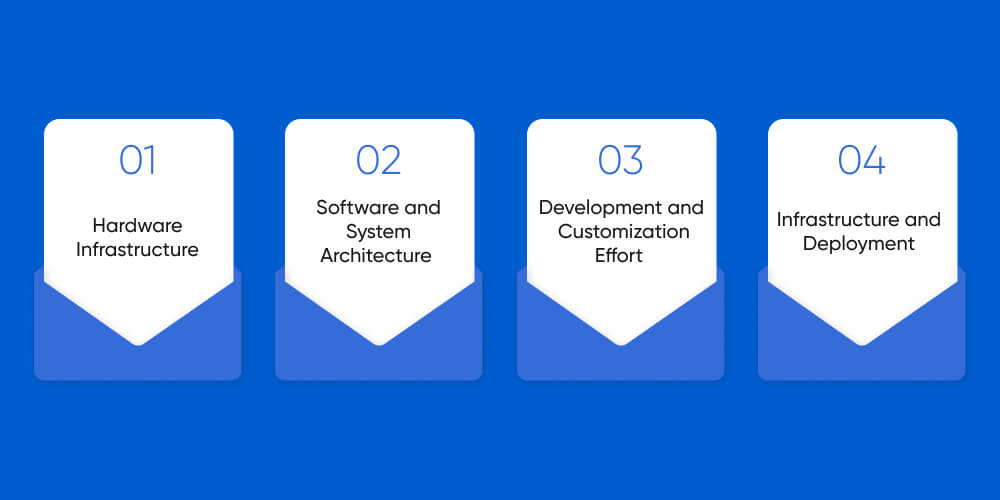
When executives ask why pricing varies so much between vendors, the answer usually sits in the components. A barcode initiative isn’t one expense. It’s a stack of decisions, each influencing long-term cost and flexibility.
Hardware Infrastructure
Hardware is often the first visible cost and the easiest to underestimate. Scanner quality alone can change productivity outcomes.
Typical investments include:
- Handheld or fixed scanners based on warehouse layout
- Mobile devices or rugged terminals for floor teams
- Barcode printers and industrial-grade labels
Low-cost devices may save money upfront, but frequent failures slow operations and increase replacement costs within months. Leaders who’ve been through this once rarely repeat the mistake.
Software and System Architecture
This is where cost structure becomes strategic. The scanning application can be off-the-shelf or purpose-built, depending on workflow complexity.
Most warehouses connect scanning tools to an inventory management software with barcode scanner functionality, ensuring every scan update stock levels in real time. Integration with WMS, ERP, and reporting dashboards adds value but also affects budget. The deeper the integration, the higher the upfront cost, but the stronger the operational payoff. For example, with a free online barcode scanner, the cost will be low, but the integration will be superficial as well. While a custom solution will have stronger integration.
Development and Customization Effort
No two warehouses operate the same way. Layouts, picking logic, batching rules, and exception handling differ widely.
Customization typically covers:
- Workflow mapping aligned to real floor activity
- Custom validation rules to prevent incorrect picks
- Interfaces designed for speed, not aesthetics
This is where systems either help staff or slow them down. Well-designed logic reduces training time and error rates almost immediately.
Infrastructure and Deployment
Infrastructure decisions quietly shape long-term spend. Cloud deployments offer flexibility and faster scaling, while on-premises setups may appeal to regulated environments.
Key considerations include security controls, access permissions, uptime expectations, and future expansion readiness. Cutting corners here often leads to rework within a year.
Need Accurate Budget Projection Today?
Receive a structured cost breakdown based on your operations, transaction volumes, and integration complexity.
Cost to Build a Barcode Scanning System for a Warehouse
The Cost to Build a Barcode Scanning System for a Warehouse depends largely on scale, process complexity, and how tightly the system must integrate with existing operations.
For a small to mid-sized warehouse with basic inbound, picking, and dispatch workflows, costs typically fall in a controlled range. These setups focus on essential scanning, limited integrations, and minimal customization. They work well for businesses transitioning from spreadsheets or semi-manual tracking.
Mid-scale warehouses see costs rise as transaction volumes increase. More users, more scanning points, and deeper system integration demand additional development effort. At this stage, leadership often expects near real-time reporting, exception handling, and tighter controls to reduce revenue leakage.
Enterprise-grade environments represent a different bracket altogether. Multiple locations, high SKU counts, and complex fulfilment logic push costs higher. However, these investments often replace fragmented systems and manual reconciliation, delivering measurable ROI within predictable timelines.
The key takeaway is this: cost escalates with ambition. Clear scope definition keeps budgets aligned with business value.
Total Project Cost Ranges (End-to-End)
| Scale of Operation | Software & Integration | Infrastructure & Deployment | Estimated Total |
|
Small Warehouse (5–15 staff, 1 location) |
Custom: $40k-$70k SaaS: $10k-$40k/yr |
$10,000 - $25,000 | $60,000 - $120,000 |
| Mid-Sized Warehouse (15–50 staff, high SKU) | $70,000 - $150,000 | $25,000 - $60,000 | $130,000 - $300,000 |
| Enterprise / Multi-Site (Large scale operations) | $150,000 - $350,000+ | $50,000 - $150,000 | $300,000 - $600,000+ |
Hidden and Overlooked Costs
This is where many projects lose financial discipline. Not because of poor intent, but because certain costs don’t show up in initial estimates. They surface later, usually when operations are already live.
Training Costs
Training is a common example. Even intuitive systems require onboarding. If scanning workflows are not aligned with real floor behavior, training takes longer and productivity dips. That temporary slowdown has a real cost, especially in high-volume environments.
Maintenance Costs
Maintenance is another quiet factor. Software updates, device replacements, and ongoing support add up over time. When these are not planned upfront, budgets start stretching in year two or three. The same applies to system upgrades as business needs evolve.
Implementation Downtime
Implementation downtime also deserves attention. During rollout, warehouses may run parallel processes for weeks. That duplication impacts throughput and staff efficiency.
Expansion Costs
Finally, expansion costs are often underestimated. Adding new warehouses, users, or regions requires more than just extra licenses. Configuration, testing, and coordination all require investment.
How Barcode Scanning Reduces Operational Costs Over Time
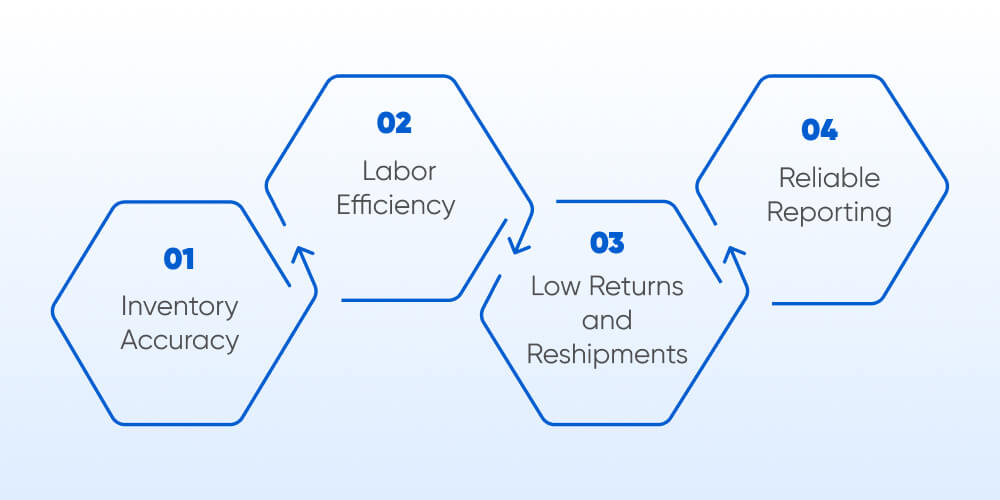
The real value of a scanning initiative shows up after the system settles into daily use. Once teams stop double-checking stock and reconciling errors manually, cost savings begin to compound.
Inventory Accuracy
Inventory accuracy improves first. When every item movement is captured through a barcode scanning system for a warehouse, leadership gains confidence in stock numbers without waiting for cycle counts or month-end corrections.
Labor Efficiency
Labor efficiency follows closely. Pickers spend less time searching, supervisors spend less time resolving exceptions, and new staff ramp up faster. One mid-sized operation we’ve seen reduced picking errors by over 30 percent within the first quarter. And guess what? Customer complaints dropped almost immediately.
Low Returns and Reshipments
Returns and re-shipments also decline. Accurate picks mean fewer wrong deliveries and fewer costly reversals. Nobody likes costly surprises, especially when they come with express shipping fees and unhappy clients.
Reliable Reporting
On top of that, reporting becomes reliable. With consistent data flowing into the inventory management system with barcode scanner, decision-makers can spot trends early and adjust before small issues turn expensive.
Why Choose DITS As Development Partner
Warehouse systems succeed when technology aligns tightly with operations. At DITS, our approach starts with understanding how your warehouse actually runs, not how a generic system expects it to run. We design barcode solutions around real movement patterns, staff behavior, and growth plans, ensuring the system supports the business instead of slowing it down.
What sets DITS apart is how we build. We integrate AI into our software development lifecycle to accelerate development, strengthen quality assurance, maintain clean code standards, and enable faster customization without compromising stability.
Our experience spans AI software development, AI chatbot development, operational platforms, and enterprise software, which helps us design barcode solutions that fit seamlessly into larger digital ecosystems. The focus is always the same: lower risk, predictable costs, and systems that scale without rework.
Planning Barcode System Investment Soon?
Speak with solution experts to understand budget range, architecture approach, and implementation roadmap clarity.
Conclusion
Investing in a barcode solution is not about ticking a technology checkbox. It is about gaining control, reducing operational uncertainty, and creating a warehouse foundation that supports growth instead of resisting it. When leaders understand the true cost to build a barcode scanning system for a warehouse, decisions become clearer and far more strategic.
A well-planned implementation delivers visibility, consistency, and confidence across operations. It strengthens fulfillment, supports broader warehouse management goals, and integrates smoothly into end-to-end supply chain management initiatives. More importantly, it removes the daily friction that quietly drains time and margins.
The smartest investments are not the cheapest ones. They are the ones designed for how your business runs today and where it plans to go tomorrow. With the right scope, partner, and execution mindset, a barcode scanning initiative becomes less of a cost and more of a competitive edge.
FAQs
How long does it take to build a barcode scanning system for a warehouse?
For a standard warehouse, implementation typically takes 6 to 12 weeks. This includes requirement analysis, system design, development, testing, and rollout. More complex operations with integrations or multiple locations may require additional time, but phased deployment can reduce disruption.
Is a barcode scanning system suitable for small or mid-sized warehouses?
Yes. Even smaller warehouses benefit from improved accuracy and reduced manual effort. The key is right-sizing the system so you only pay for what you actually need today, while keeping room to scale as volumes grow.
Can a barcode scanning system integrate with existing ERP or inventory tools?
Absolutely. Most modern systems are designed to integrate with ERP, order management, and accounting platforms. Proper integration ensures data flows smoothly and eliminates duplicate entries or reconciliation issues.
How does DITS support businesses in building barcode scanning systems?
DITS provides end-to-end development, from process analysis to system design, development, testing, and deployment. We focus on building solutions that align with real warehouse workflows rather than forcing businesses to adapt to rigid software.
Does DITS offer customization and long-term support after deployment?
Yes. DITS delivers fully customized barcode solutions and provides ongoing support, enhancements, and performance optimization. We also use AI across development, quality assurance, and code maintenance to ensure scalability, reliability, and faster customization as business needs evolve.

Dinesh Thakur
21+ years of IT software development experience in different domains like Business Automation, Healthcare, Retail, Workflow automation, Transportation and logistics, Compliance, Risk Mitigation, POS, etc. Hands-on experience in dealing with overseas clients and providing them with an apt solution to their business needs.
Recent Posts
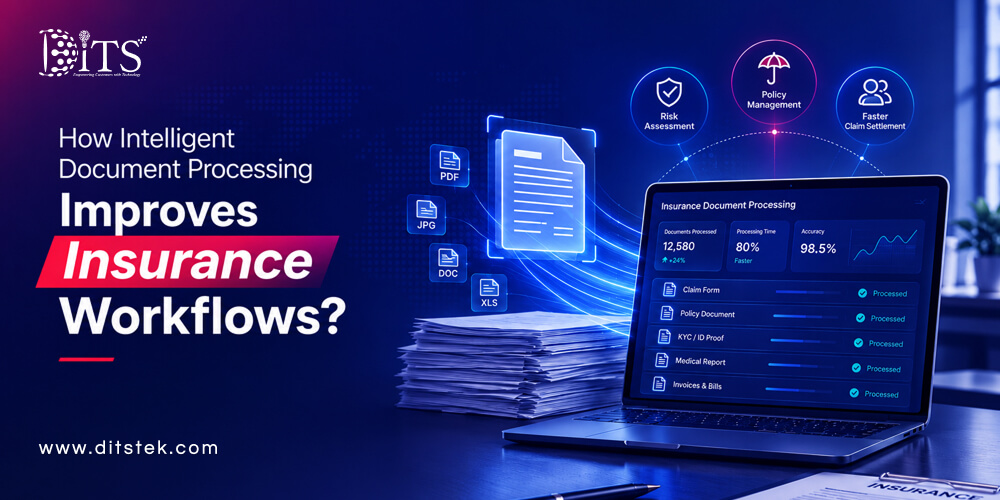
Explore how intelligent document processing for insurance helps businesses automate document workflows, reduce processing costs, improve accuracy, and strengthen operational efficiency across insurance functions.

Discover how automated medical claims processing reduces delays, manual rework, claim denials, and administrative costs while improving reimbursement speed and operational efficiency.
Learn how to build medical billing software with essential features, integrations, security, and development costs.