DITS Logo
Connect With Us

Chronic Care Management Software Solutions & Consultation for Better Chronic Disease Control

Siloed care systems, manual workflows, and limited visibility across EHRs, RPM platforms, and patient data can slow coordination and make chronic care programs harder to scale. DITS helps healthcare organizations modernize, integrate, and automate their care management technology to improve interoperability, streamline operations, and support stronger long-term decisions.

View Our Care Solutions

Chronic Care Technology Consulting for Assessment, Integration and Modernization

When chronic care technology no longer supports how care teams need to work, the issue becomes operational, not just technical. DITS helps organizations pinpoint where systems, data, and workflows are holding performance back, then define the right path forward.

  • Chronic Care Technology & Platform Evaluation

    Assess CCM architecture, workflows, integrations, scalability, and technical debt to identify modernization priorities. DITS helps determine what to retain, improve, integrate, or replace across your care management platform modernization roadmap.

  • Clinical Interoperability Review

    Review EHRs, RPM platforms, APIs, HL7/FHIR interfaces, and connected systems to improve chronic care EHR integration, strengthen clinical data interoperability, and create more reliable information flow across care teams and applications.

  • AI & Automation Readiness Review

    Evaluate where AI chronic care management and chronic care workflow automation can improve patient prioritization, task routing, documentation, alerts, and outreach while maintaining appropriate governance, integration, and human oversight.

  • Population Health Technology Evaluation

    Assess data integration, cohort management, risk stratification, and longitudinal records to support population health & multi-chronic management, improve care-gap visibility, and strengthen scalable population health data engineering.

  • Technology Roadmap & Prioritization

    Turn assessment findings into a phased technology roadmap that ranks modernization, integration, automation, and platform initiatives by business impact, risk, cost, and implementation effort, helping teams invest where value and urgency are highest.

  • Data Governance & Clinical Data Strategy

    Define how clinical and operational data should be structured, governed, accessed, and shared across chronic care systems. DITS helps improve data quality, consistency, interoperability, and readiness for analytics, automation, and AI-driven decision support.

Fix What’s Holding Chronic Care Back

Identify the system, workflow, and integration gaps limiting performance, then define the right path for care management platform modernization and operational improvement.

Find the Gaps

Chronic Care Management Software Solutions Built Around Real Clinical Workflows

Chronic care operations often face manual handoffs, inconsistent patient data, limited EHR connectivity, and workflows that struggle to scale. DITS addresses these gaps with chronic care management software solutions that combine integration, automation, and interoperable data to improve coordination and efficiency.

  • Patient Enrollment & Eligibility Workflows

    Manual intake, eligibility checks, and consent processes can delay enrollment and increase administrative effort. DITS uses workflow automation, payer APIs, configurable rules, and EHR integration to streamline qualification, onboarding, and enrollment across chronic care programs.

  • Personalized Care Planning

    Static or isolated care plans make it difficult to adapt treatment workflows as patient needs change. DITS connects EHR data, diagnoses, medications, risk profiles, and patient history to support dynamic care plans within digital chronic care management solutions.

  • Care-Team Coordination

    Care managers, nurses, and physicians often work across separate systems, creating missed handoffs and duplicated effort. DITS builds shared task queues, role-based access, escalation logic, and integrated workflows that improve coordination across multidisciplinary care teams.

  • Patient Engagement & Communication

    Low engagement and inconsistent follow-up can weaken chronic care outcomes. DITS integrates portals, mobile apps, SMS, email, reminders, surveys, and event-driven communication workflows to support more consistent patient engagement across the care journey.

  • Medication & Appointment Management

    Medication, scheduling, and follow-up data often sit across separate systems. Through chronic care EHR integration, APIs, and synchronized workflows, DITS helps connect medication records, appointments, reminders, and follow-up activities within a unified care process.

  • Clinical Alerts & Escalation Workflows

    Unfiltered alerts can overwhelm care teams and delay attention to higher-risk patients. DITS applies configurable thresholds, RPM data, rules engines, and patient-prioritization logic to route relevant alerts and escalations to the appropriate care team.

  • Chronic Care Analytics & Reporting

    Siloed data makes it difficult to track care gaps, patient trends, and program performance. DITS uses population health data engineering, normalized data models, dashboards, and analytics pipelines to create clearer visibility across multi-chronic populations.

  • Billing & Documentation Support

    Manual time tracking and duplicated documentation can slow billing and increase compliance risk. DITS integrates care logs, audit trails, EHR data, billing workflows, and revenue-cycle systems to support more accurate documentation and efficient CCM operations.

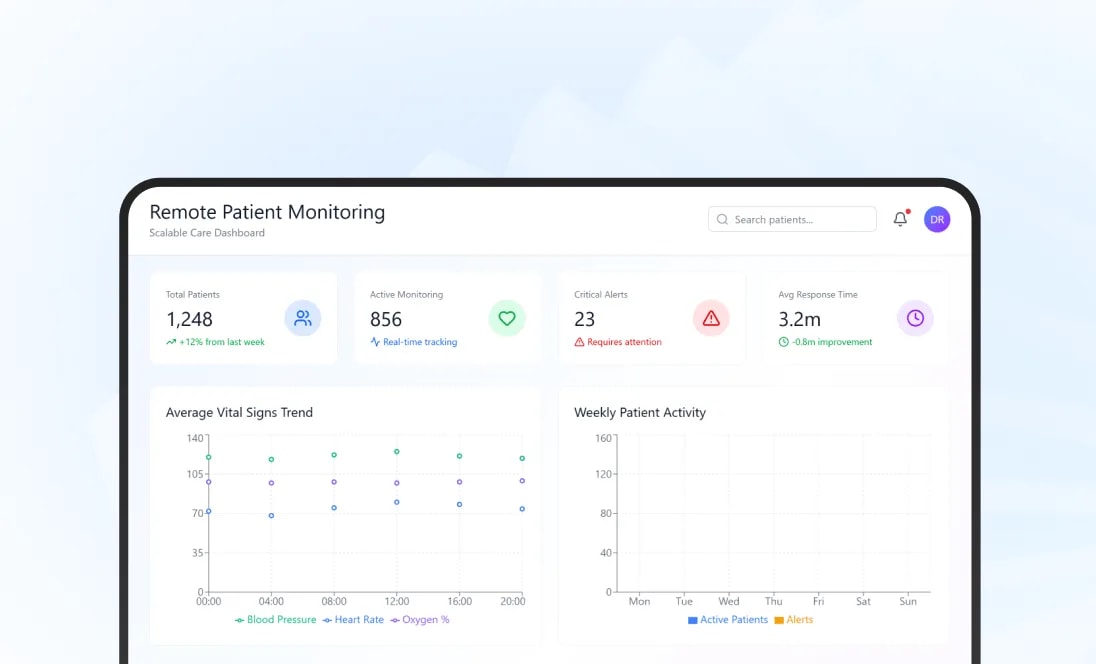
Remote Patient Monitoring Software for Scalable Care

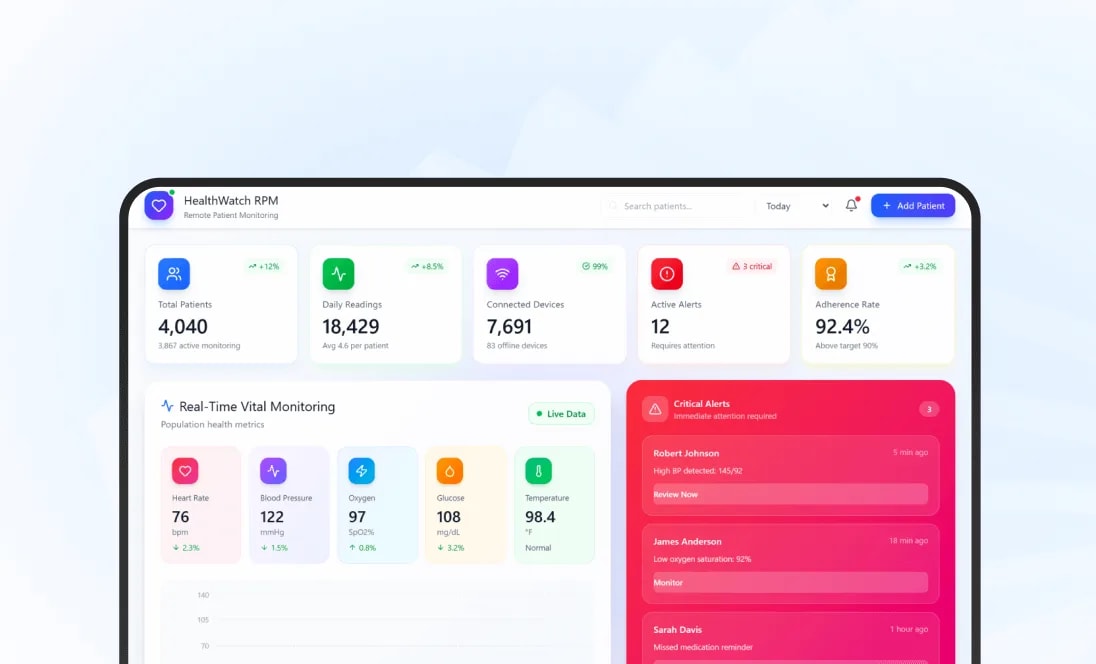
DITS transformed a single-client RPM MVP into a multi-tenant care platform with IoT device integration, automated vital capture, threshold monitoring, escalation workflows, secure communications, and billing automation while preserving historical patient data.

View Portfolio
Remote Patient Monitoring Software for Scalable Care

SaaS Remote Patient Monitoring & Public Health Platform

DITS re-architected a healthcare SaaS and RPM platform to improve EHR interoperability, backend performance, security, IoT connectivity, and public health workflows through FHIR integration, cloud scalability, automated reporting, and optimized APIs.

View Portfolio
SaaS RPM & IoT Platform for Public-Health Programs

Telehealth & Remote MSK Recovery Platform

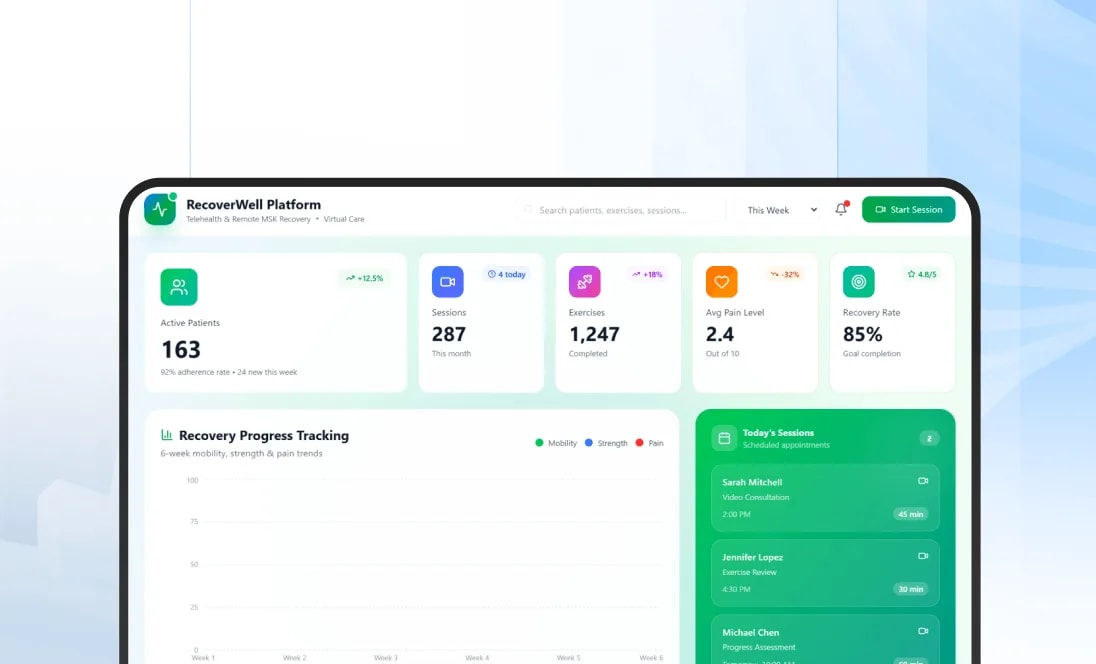
DITS developed a HIPAA-compliant digital rehabilitation platform combining virtual physical therapy, personalized recovery plans, wearable integration, remote patient monitoring, automated alerts, and progress dashboards. The platform helps providers extend care beyond the clinic while improving adherence and visibility across recovery journeys.

View Portfolio
Telehealth & Remote MSK Recovery Platform

Behavioral Health EHR Platform

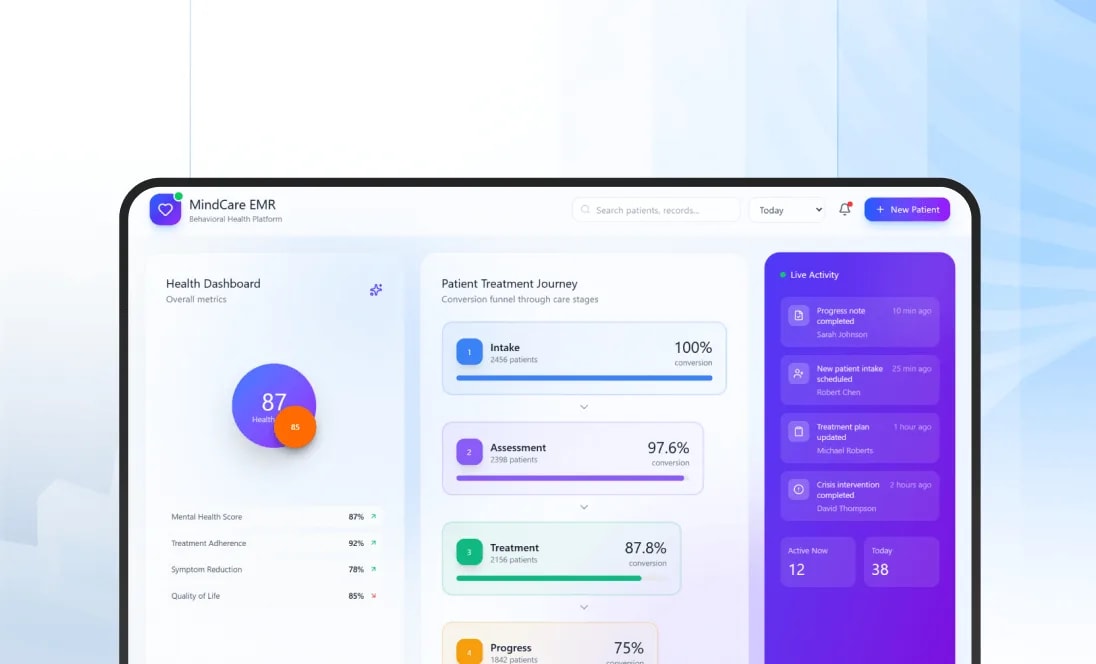
DITS modernized a large-scale behavioral health EHR supporting multi-agency care delivery, clinical documentation, billing, communication, and HL7-based data exchange. The platform strengthens data integrity, configurable workflows, and care coordination across complex behavioral health operations.

View Portfolio
Cloud-Based EMR & Behavioral Health EHR Platform

Cloud-Based Fitness & Wellness Platform

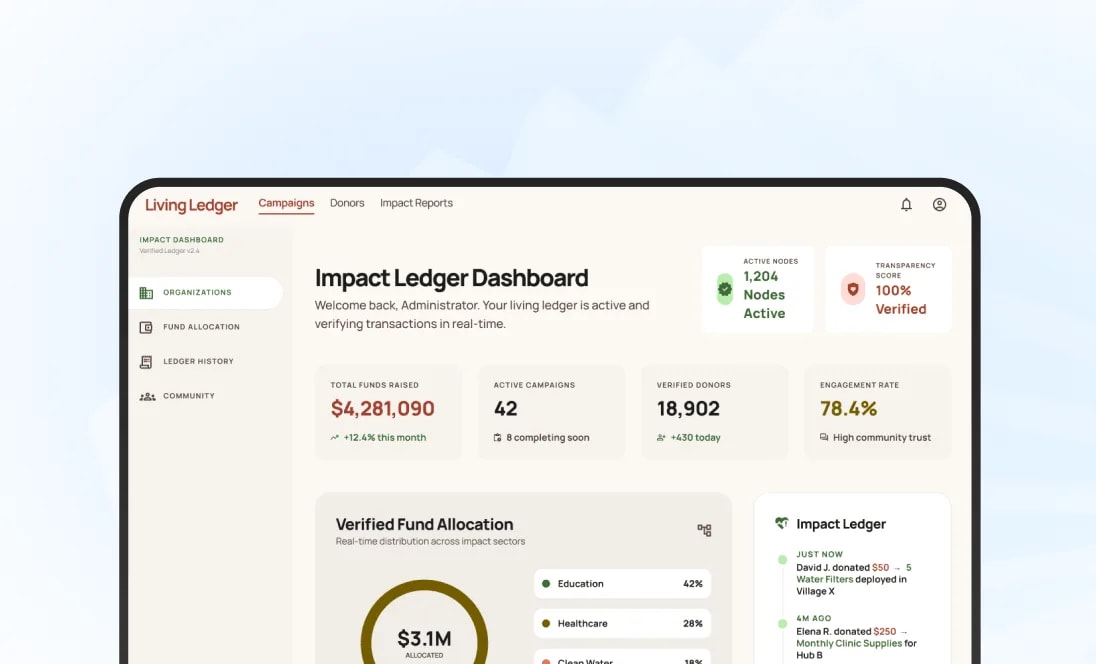
DITS built a cloud-based wellness platform that connects virtual coaching, personalized fitness and nutrition plans, trainer workflows, progress tracking, live sessions, and subscription management. The solution brings member engagement and operational workflows into one scalable digital environment.

View Portfolio
Cloud-Based Fitness & Wellness App Development

Modernize Chronic Care Platforms for Scalability and Continuity

Aging care platforms can limit scalability, slow innovation, and increase maintenance risk as operational demands grow. DITS modernizes critical technology layers across architecture, cloud, performance, and workflows to improve resilience, continuity, and long-term platform value.

  • CCM/RPM Platform Modernization

    Modernize aging CCM and RPM platforms across architecture, workflows, monitoring logic, device connectivity, and data exchange. DITS improves maintainability, interoperability, and scalability while preserving critical care operations throughout the CCM/RPM modernization journey.

  • Legacy Platform Modernization

    Replace outdated frameworks, unsupported dependencies, and tightly coupled components through targeted chronic care management software modernization. DITS preserves stable business logic while reducing technical debt, security risk, maintenance effort, and barriers to future enhancements.

  • Cloud & Architecture Modernization

    Move rigid care platforms toward cloud-ready, modular architectures using containerization, microservices, CI/CD pipelines, infrastructure automation, and observability. This supports cloud migration, stronger resilience, flexible scaling, and more efficient release cycles.

  • Data & API Modernization

    Upgrade legacy APIs, databases, schemas, and data flows to improve performance, reliability, and system interoperability. DITS modernizes core data layers, so chronic care platforms can integrate more easily, scale efficiently, and support future analytics and automation.

  • Performance & Scalability Improvement

    Optimize application services, database queries, caching, infrastructure resources, and high-volume data processing to improve responsiveness and reliability. DITS strengthens care management platform modernization so chronic care environments can support growing users, devices, and workloads.

  • User Experience & Workflow Modernization

    Redesign complex care-team and patient workflows using role-based interfaces, streamlined navigation, configurable forms, task automation, and responsive design. This reduces workflow friction, improves usability, and supports more efficient chronic care workflow automation.

Chronic Care System Integration Services for Seamless Workflow Connectivity

Integration should do more than move data between systems. DITS connects EHRs, RPM platforms, hospital applications, devices, APIs, and intelligent agents while strengthening data mapping, synchronization, security, architecture, and governance to create smoother, more reliable chronic care operations.

  • EHR, EMR & FHIR Integration

    Connect chronic care platforms with clinical systems through APIs, HL7/FHIR interfaces, interface engines, and bidirectional synchronization. DITS also handles data mapping, validation, terminology alignment, and error handling to improve chronic care EHR integration and data consistency.

    • RPM, IoMT & Device Integration

      Bring remote-monitoring platforms, wearables, and connected devices into clinical workflows using secure APIs, event-driven pipelines, device gateways, and real-time syncing. This helps turn device data into actionable alerts, tasks, and care-team workflows.

      • Agentic Workflow Integration

        Integrate AI agents into care-management workflows to support patient prioritization, task routing, documentation, follow-ups, and exception handling. DITS designs agentic flows with human approval points, system permissions, context access, and governed handoffs between AI and care teams.

        • IoMT Integration

          Connect wearables, monitoring devices, gateways, and clinical systems through secure APIs and event-driven pipelines. DITS enables real-time data ingestion, normalization, EHR synchronization, and threshold-based alerts to support faster clinical review and responsive chronic care.

          • API & Integration Architecture

            Replace brittle point-to-point connections with scalable integration layers, middleware, service orchestration, and secure API architectures. DITS designs reusable interfaces that simplify system connectivity, reduce integration debt, and support future chronic care platform expansion.

            • Data Mapping, Sync & Interoperability

              Standardize how patient, clinical, device, and operational data moves across systems. DITS manages schema mapping, transformation rules, master data alignment, synchronization logic, and interoperability standards to reduce duplication and improve longitudinal patient visibility.

              • Security, Access & Data Governance

                Protect integrated care environments through role-based access, authentication, encryption, consent controls, audit trails, and governed data-sharing policies. DITS helps ensure integrations support secure, traceable, and controlled use of sensitive clinical data.

                • Hospital & Enterprise System Integration

                  Connect care-management workflows with scheduling, billing, labs, pharmacy, CRM, analytics, and broader hospital systems. This enables hospital care management software integration that reduces manual handoffs and improves continuity across clinical and administrative processes.

                  Improve Chronic Care Integration Across Your Healthcare Ecosystem

                  Strengthen chronic care management software integration across EHRs, RPM platforms, devices, APIs, and hospital systems to improve data flow, interoperability, and workflow continuity.

                  Get Started

                  Essential Features for Scalable Chronic Care Management

                  Modern chronic care platforms need more than basic functionality. They should reduce administrative effort, improve care visibility, support multi-program delivery, and give teams the control needed to manage growing patient populations efficiently.

                  • Enrollment & Eligibility Management

                    Streamline onboarding, qualification, consent, and payer validation within structured digital workflows. This helps reduce manual intake effort and creates a cleaner entry point into chronic care management services.

                  • Configurable Care Plan Templates

                    Standardize care delivery with condition-specific templates, goals, interventions, and review schedules while allowing care teams to personalize plans as patient needs evolve.

                  • Care Plan Maintenance

                    Keep care plans current through structured reviews, intervention updates, progress tracking, and change histories, helping teams maintain continuity across long-term and multi-chronic care.

                  • Patient Registry & Cohort Management

                    Segment patients by condition, risk, provider, location, or care program to improve caseload visibility, targeted interventions, and Population Health & Multi-Chronic Management.

                  • Role-Based Access & Permissions

                    Control access by role, facility, care team, or responsibility to protect sensitive information while giving users the data and functions required for their work.

                  • Consent & Authorization Management

                    Capture and manage patient consent, enrollment approvals, communication preferences, and program authorizations in one place to strengthen documentation quality and operational control.

                  • Documentation & Service Logging

                    Record care activities, interactions, staff time, notes, and service details consistently, helping teams improve documentation accuracy and support smoother downstream billing and reporting processes.

                  • Multi-Program Care Management

                    Manage CCM, RPM, behavioral health, transitional care, and related services within one configurable environment, reducing platform sprawl and supporting more scalable digital chronic care management solutions.

                  AI-Driven Chronic Care for Better Prioritization and  Efficiency

                  AI creates the most value when it helps care teams prioritize attention, reduce manual effort, and act on patient data faster. DITS applies AI chronic care management across prioritization, decision support, documentation, and workflow orchestration with governance and human oversight built in.

                  Patient Prioritization

                  Use clinical signals, RPM trends, care gaps, and engagement data to identify patients who may need earlier attention. Patient-prioritization agents help care teams focus resources where timely intervention can have the greatest operational and care impact.

                  Risk & Exception Identification

                  Apply rules, predictive models, and anomaly detection to surface missed activities, threshold breaches, and emerging risks. This helps teams move from reactive review to earlier, more focused intervention across chronic care workflows.

                  Care-Team Decision Support

                  Combine longitudinal patient data, recent events, care-plan context, and risk indicators to give clinicians a clearer view of what requires follow-up, escalation, or review. Strong clinical data interoperability improves the quality of these decisions.

                  Documentation Assistance

                  Use AI to summarize interactions, structure notes, extract key details, and prepare documentation drafts. This reduces repetitive administrative effort while keeping clinical review, approval, and accountability with authorized care teams.

                  Intelligent Workflow Routing

                  Use AI and chronic care workflow automation to route tasks, alerts, follow-ups, and escalations based on urgency, condition, and staff role. Agentic workflows coordinate actions across systems while preserving human checkpoints for higher-risk decisions.

                  Billing Support

                  Maintain structured time logs, service records, and billing-ready documentation to reduce manual reconciliation and support more efficient revenue-cycle workflows.

                  Configurable Forms & Clinical Templates

                  Create assessments, questionnaires, checklists, and specialty-specific forms without extensive redevelopment, giving care teams greater flexibility as workflows and service models change.

                  Audit History & Activity Tracking

                  Track user actions, record changes, care-plan updates, and workflow activity to improve traceability, accountability, and governance across chronic care operations.

                  Compliance-Ready Chronic Care Technology Across Global Markets

                  DITS helps healthcare organizations design chronic care platforms around the privacy, health-data, and digital-health requirements relevant to the markets they serve.

                  • USA

                    HIPAA · HITECH · FDA

                  • UK

                    UK GDPR · Data Protection Act 2018 · MHRA

                  • Canada

                    PIPEDA · PHIPA · HIA

                  • Australia

                    Privacy Act / APPs · My Health Records Act · TGA

                  • South Africa

                    POPIA · National Health Act · SAHPRA

                  • UAE / Dubai

                    UAE ICT in Health Fields Law · DHA Health Data Requirements · UAE PDPL

                  DITS Technology Capabilities Modernization, Automation, and Scale

                  DITS combines cloud, data, automation, AI, product engineering, and connected-system capabilities to strengthen chronic care technology from the underlying architecture to day-to-day execution. The focus stays on improving scalability, interoperability, operational efficiency, and long-term technology value.

                  • Cloud, Data & Connected Systems

                    Modernize cloud infrastructure, data pipelines, APIs, and system architecture to improve resilience, scalability, and information flow across chronic care environments. DITS connects applications and data foundations, so platforms can support growing workloads, analytics, and evolving care models.

                  • Workflow Automation

                    Redesign high-friction workflows using rules engines, event-driven orchestration, APIs, and automated handoffs. DITS reduces repetitive effort across care operations while improving process consistency, execution speed, and visibility without removing necessary human review.

                  • AI

                    Apply AI to practical chronic care use cases such as prioritization, risk identification, documentation, analytics, and decision support. DITS combines data engineering, machine learning, generative AI, and governance to turn clinical and operational data into usable intelligence.

                  • Agentic AI

                    Build governed agents that can retrieve context, coordinate tasks, interact with connected systems, and manage multi-step workflows. DITS designs agentic flows with permissions, escalation paths, auditability, and human check-points, so autonomy improves execution without weakening control.

                  • Product Engineering

                    Support chronic care product development through DITS-led delivery, client-led Agile, SDLC, and AIDLC practices. We align discovery, architecture, build, validation, and release with client priorities to improve delivery speed, quality, governance, and long-term product scalability.

                  • IoT & Connected Operations

                    Connect RPM devices, wearables, gateways, applications, and clinical platforms through secure device APIs, event-driven pipelines, and real-time data ingestion. DITS turns connected-device data into monitored, actionable workflows instead of leaving it isolated at the device layer.
                  Automate High-Friction Care Workflows

                  Use chronic care workflow automation to reduce repetitive tasks, manual handoffs, and follow-up delays while keeping critical decisions under human control.

                  Discuss with Our Consultants

                  Strengthen Chronic Care with Population Health & Multi-Chronic Management

                  Managing chronic care at scale requires more than individual patient workflows. DITS helps healthcare organizations connect population-level data, identify care gaps, analyze cohorts, and coordinate multi-chronic care so teams can prioritize resources, improve visibility, and strengthen program performance.

                  • Multi-Chronic Condition Management

                    Coordinate care across patients managing multiple conditions through unified care views, shared goals, and condition-aware workflows. This helps reduce conflicting interventions, improve continuity, and give care teams a clearer picture of overall patient complexity.

                  • Care-Gap Identification

                    Surface missed follow-ups, overdue screenings, incomplete interventions, and other care gaps across patient groups. DITS helps turn these gaps into actionable work queues so teams can address issues earlier and improve consistency of care delivery.

                  • Cohort Analytics

                    Compare utilization, engagement, outcomes, and care patterns across conditions, providers, locations, or patient segments. This helps organizations identify trends, measure program performance, and prioritize improvements using population-level evidence.

                  • Population-Level Performance Monitoring

                    Track chronic care performance across large patient populations using operational, clinical, and engagement metrics. This gives leaders clearer visibility into where care delivery is performing well, where resources are strained, and where intervention is needed.

                  Technology Stack for Scalable Chronic Care Platforms

                  Front-End & Experience

                  • React
                  • Angular
                  • Next.js
                  • Flutter
                  • React Native

                  Business Value from Smarter Chronic Care Technology Investments

                  DITS helps healthcare organizations turn modernization, integration, automation, and data improvements into stronger productivity, lower operating friction, better scalability, and more sustainable chronic care operations.

                  • Lower Administrative Burden

                    Reduce repetitive documentation, manual handoffs, and duplicate data entry so care teams can handle more work with less operational effort.

                  • Improve Decision Visibility

                    Give leaders and care teams more consistent access to clinical, operational, and device data, making it easier to identify gaps, prioritize action, and monitor performance.

                  • Scale More Efficiently

                    Support growing patient volumes, care programs, and locations without increasing staffing, infrastructure, and administrative complexity at the same rate.

                  • Strengthen Care Continuity

                    Improve the flow of information across clinicians, coordinators, patients, and systems so critical updates, follow-ups, and care activities are less likely to be missed.

                  • Reduce Technology Overhead

                    Eliminate redundant tools, brittle integrations, and manual workarounds that raise maintenance costs and slow everyday operations.

                  • Accelerate Time to Action

                    Bring clinical, operational, and monitoring data together so teams can identify issues sooner, reduce decision delays, and respond faster to changing patient and program needs.

                  Why Do Healthcare Organizations Work with DITS on Chronic Care Technology

                  DITS combines strategic guidance with engineering depth to help healthcare organizations improve scalability, interoperability, and operational continuity across chronic care environments.

                  • Smarter Prioritization

                    We focus modernization, integration, and automation efforts on the areas with the strongest operational impact, helping organizations reduce risk and direct investment toward higher-value technology improvements.

                  • Governed AI

                    AI and automation are introduced with clear permissions, escalation rules, and human oversight, helping care teams improve efficiency without weakening control or accountability.

                  • Flexible Architecture

                    DITS builds modular, integration-ready platforms that support CCM/RPM modernization, connected devices, analytics, and future care models without repeated large-scale redesign.

                  • Operational Continuity

                    Technology improvements are planned around critical workflows and dependencies, helping organizations modernize without disrupting ongoing care delivery or creating unnecessary operational risk.

                  • Engineering Depth

                    Recommendations are grounded in architecture, security, data, and interoperability, giving healthcare organizations a clearer path from technology strategy to practical implementation.

                  Move Your Chronic Care Technology Forward

                  Identify where modernization, integration, automation, or platform improvements can remove operational friction and support more scalable care delivery. DITS helps turn those priorities into a practical technology roadmap aligned with business and clinical needs.

                  Talk to our Experts

                  Questions Asked by Healthcare Leaders

                  Look beyond licensing to duplicate data entry, manual reconciliation, integration maintenance, and legacy dependencies. A care management platform modernization review can help identify where technology is increasing cost or slowing operations.