Cost of Custom Transportation Management Application Development
Table Of Content
Published Date :
22 Jan 2026
Transportation management software sounds like a smart investment. And it is. Until the budget conversation starts.
From route planning and fleet tracking to carrier integrations and real-time analytics, a Transportation Management Application does a lot behind the scenes. But what does it actually cost to build one? And more importantly, what are you paying for?
For many logistics-driven businesses, software costs feel like a black box. One vendor quotes low. Another quotes high. The cost of transportation management application development depends on how complex your operations are, the features you need on day one, and how scalable you want the system to be as volumes grow. A basic solution for internal tracking looks very different from an enterprise-grade software managing thousands of shipments daily.
In this blog, we break down the real cost drivers, feature-wise pricing, and smart budgeting tips so you can plan your TMS investment with clarity.
What Is Transportation Management Application Development?
Transportation management application development is the process of building software that helps businesses plan, execute, track, and optimize the movement of goods from origin to destination.
In simple terms, it’s about giving logistics teams one centralized system to manage shipments, carriers, routes, drivers, costs, and delivery performance all in real time.
A transportation management application replaces manual coordination, spreadsheets, and disconnected tools with automated workflows. It allows businesses to plan routes efficiently, monitor shipments as they move, manage carrier relationships, track freight costs, and respond quickly when delays or disruptions happen.
These applications are commonly used by logistics providers, fleet operators, manufacturers, retailers, and enterprises that handle frequent or large-scale transportation operations. Depending on business needs, a TMS can be built as a web platform, mobile app, or a combined system with dashboards for managers and mobile access for drivers.
Modern transportation management applications often include features like real-time tracking, route optimization, load planning, carrier integration, reporting, and analytics. When developed as a custom solution, the system is designed around specific operational workflows rather than forcing teams to adapt to generic software.
At its core, transportation management application development focuses on improving visibility, reducing transportation costs, increasing delivery reliability, and giving businesses better control over their logistics operations.
How Scalable Is Your Current Setup?
Assess whether your existing transportation technology can support growth without rising complexity, manual workarounds, or margin pressure.
What Factors Influence the Cost of Transportation Management Application Development?
Cost rarely depends on a single factor. It builds up layer by layer, shaped by how your business actually runs. And this is where many estimates go wrong.
Take a regional transporter running 40 trucks. On the surface, it looks straightforward. But in practice, each vehicle may follow different routes, billing structures, and client contracts. What seems “simple” on paper quickly demands more logic under the hood. And building that logic takes time.
Operational complexity is the first cost driver. More routes, more locations, more exceptions to manage. Then come user roles. Dispatchers, drivers, finance teams, and managers all interact with the system differently. Each role needs its own interface, permissions, and workflows.
Customization plays a big role too. If your processes align with standard industry models, development stays efficient. But if your business has evolved its own workflows over the years, the software has to adjust to you, not the other way around.
The real risk? Rushing this phase. Teams that skip proper planning often pay twice; once to build, and again to correct what was overlooked. Investing time upfront usually saves far more than it costs later.
Cost Breakdown By Development Phases
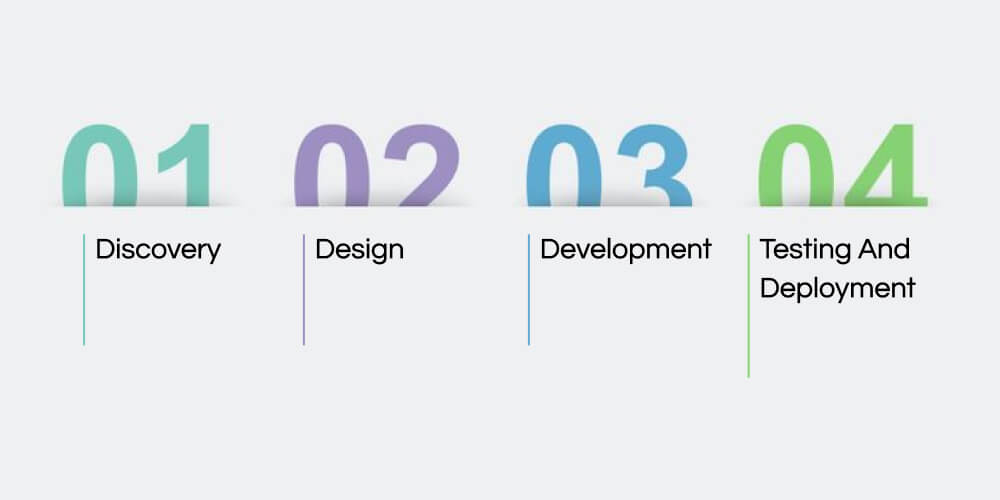
This is where most budget conversations get fuzzy. Everyone talks about “the build,” but that’s only one part of the journey. The real cost forms in stages, each with its own purpose and price tag.
Discovery
It usually starts with discovery. Two to four weeks of workshops, interviews, and process reviews. Dispatchers walk through real days. Finance flags reporting gaps. Operations teams point out where delays quietly stack up.
This phase typically costs between $5,000 and $15,000, depending on complexity. It may feel optional. It isn’t. Skipping discovery often leads to rework later, which costs far more than doing it right upfront.
Design
Next comes design. Not just screens, but flow. Who clicks what. When. And why. This is where confusion gets eliminated before it reaches users.
Design usually runs alongside early development and spans 3 to 5 weeks. Costs often land between $8,000 and $20,000, depending on how many user roles and workflows are involved. Good design reduces training time and support tickets later. That payoff is easy to underestimate.
Development
This is the largest slice of the budget. Core logic, integrations, dashboards, mobile access, and business rules all come together here.
For mid-sized transportation operations, development typically runs 3 to 6 months. Costs usually range from $40,000 to $120,000, depending on feature depth, integrations, and scalability requirements. This is where scope discipline matters most. Every added rule has a ripple effect.
Testing And Deployment
Testing runs in parallel with development. Real scenarios. Real data. Real edge cases. Bugs surface. Fixing them early keeps timelines intact.
Deployment follows quietly. Data migration. User access. Go-live support. Together, testing and deployment usually cost between $7,000 and $20,000. It’s not the flashiest phase, but it’s where stability is earned.
Estimated Cost of Transportation Management Application By Development Phase
| Development Phase | Typical Timeline | Estimated Cost Range |
| Discovery | 2–4 weeks | $5,000 – $15,000 |
| Design | 3–5 weeks | $8,000 – $20,000 |
| Development | 3–6 months | $40,000 – $120,000 |
| Testing And Deployment | 2–4 weeks | $7,000 – $20,000 |
| Total Estimated Cost | 4–7 months | $60,000 – $175,000 |
Feature Scope Impact on Development Cost
Feature scope is one of the biggest cost drivers in transportation management application development. Simply put, the more the system does, the more time it takes to build, test, and maintain.
A basic transportation management application may cover essentials like shipment creation, route assignment, and status tracking. These features form the foundation and keep development costs predictable.
As soon as you expand the scope, costs begin to rise. Real-time GPS tracking, route optimization, automated alerts, and performance dashboards add complexity. Each feature requires backend logic, integrations, and thorough testing to ensure accuracy under real-world conditions.
Advanced features increase costs further. Multi-carrier management, freight billing and auditing, dynamic pricing rules, document management, and analytics demand custom workflows and deeper data handling. These aren’t plug-and-play additions. They are built around how your business actually operates.
User experience also affects feature scope. Role-based dashboards for dispatchers, drivers, finance teams, and managers require separate interfaces and permissions. Mobile access for drivers adds another layer of development and testing.
The key takeaway is balance. Overloading the first version with every possible feature often inflates cost without immediate value. Many businesses reduce risk and budget overruns by launching with a focused feature set, then expanding as operational needs grow.
Technology Choices That Influence Cost
Technology decisions shape not just the first invoice, but the next five years of operations. What looks like a technical call early often becomes a business constraint later.
Cloud infrastructure plays a central role. Simple cloud setups keep initial costs lower and work well for stable operations. More advanced, high-availability environments cost more upfront but reduce downtime risk. That matters when missed deliveries or system outages directly affect revenue.
Integrations add another layer. Connecting with ERP, accounting, or fleet systems takes planning. Legacy platforms increase effort because data structures are rarely clean. Every integration introduces testing cycles that quietly increase timelines.
Mobile-first platforms also raise costs. Not because mobile is optional, but because drivers operate in unpredictable conditions. Weak signals. Old devices. Offline moments. Building for those realities requires extra testing and refinement.
Some businesses also invest in sensor-driven visibility. That’s where IoT solutions come into play. Real-time signals improve awareness, but they expand scope and data handling needs. The rule remains simple. Choose technology that supports growth tomorrow, not shortcuts that limit you later.
Custom Transportation Management Application Development Vs Off-The-Shelf TMS
Off-the-shelf tools look cheaper. At first. That’s how they’re sold.
Licensing fees seem manageable until user counts rise. Custom workflows rarely fit as promised. Teams adapt by building workarounds. Soon, spreadsheets reappear. Shadow processes take hold. Visibility drops.
Custom transportation management application development costs more upfront. But it aligns with how the business actually runs. No forced logic. No unused modules. Just workflows designed around real operations.
Ownership shifts control back to leadership. Updates happen on your timeline. Data stays accessible. You’re not dependent on vendor roadmaps or sudden pricing changes.
That freedom compounds over time. Less friction. Fewer compromises. And often, a faster return than expected once inefficiencies disappear.
Ready to Build the Right TMS?
Align software architecture with real transportation workflows using a phased, cost-controlled development approach built for long-term stability.
Estimated Cost Ranges Based On Business Size
Small fleets with straightforward needs typically invest between $40,000 and $70,000. These systems focus on visibility, dispatch control, and basic reporting. They replace manual coordination without overengineering.
Mid-sized logistics firms usually land between $80,000 and $150,000. More users. More business rules. More integrations. These platforms support growth without constant process redesign.
Enterprise platforms go higher. Sometimes $250,000 or more. But they consolidate systems, reduce operational risk, and support multi-region scale. Cost rises with complexity, not ambition.
Numbers vary by scope. But budget shocks almost always come from unclear requirements, not inflated pricing.
Estimated Cost Ranges Table
| Business Size | Typical Operation Profile | Estimated Cost Range |
| Small Fleet | Single-region operations with basic dispatch, tracking, and reporting needs | $40,000 – $70,000 |
| Mid-Sized Logistics Company | Multi-user platform with integrations, reporting, and workflow automation | $80,000 – $150,000 |
| Enterprise Transportation Network | Multi-region, high-volume operations with advanced integrations and scalability | $250,000+ |
Hidden Costs Businesses Often Overlook
Data migration is one. Old records are rarely clean. Cleaning and mapping them takes time. That effort is real and unavoidable.
Training is another. Even intuitive software needs onboarding. Teams need time to adapt. Productivity dips briefly before improving. Planning for this avoids frustration.
Maintenance also deserves attention. Systems evolve. Compliance rules change. User expectations grow. Budgeting for updates prevents rushed fixes and technical debt.
Choosing the right partner helps here. Teams experienced in transportation and logistics software know where these costs hide and how to control them before they surface.
How to Control and Optimize Development Cost
Start small. Build core workflows first. Resist the urge to include everything on day one.
A phased rollout reduces risk. An MVP delivers value early and creates momentum. Teams learn what works. Adjustments happen before costs escalate.
At DITS, we integrate AI into software development, quality assurance, code quality, and customization. This helps identify issues early, maintain consistency, and reduce rework as systems evolve. That discipline leads to more predictable timelines and budgets.
Planning beats pressure. Every time. Rushed builds almost always cost more in the long run.
Why Choose DITS For Transportation Management Software Development
Choosing a development partner is choosing a team that understands how transportation businesses actually function. At DITS, our work begins with operational clarity. Before a single feature is defined, we study how dispatch teams coordinate, how drivers operate on the ground, and how finance teams track cost and revenue.
This business-first approach allows us to design platforms that feel natural to use, not forced. The result is software that teams adopt quickly because it reflects how they already work, just without the friction.
Our experience across transportation and logistics gives us a practical view of real-world constraints. Delayed handovers. Manual billing gaps. Poor visibility during exceptions. These are not theoretical problems, and our solutions are built to address them directly.
When communication and coordination need improvement, we also build contextual tools powered by AI chatbot development, helping teams and customers access updates quickly without adding operational load.
Most importantly, DITS does not push one-size-fits-all platforms. Every transportation operation has its own complexity, and we design systems that scale with the business rather than constrain it. That focus on alignment, stability, and long-term value is why clients choose us not just to build software, but to strengthen their operations.
What Will Your TMS Really Cost?
Get a realistic cost breakdown aligned to your operational complexity, feature scope, and long-term scalability goals before committing capital.
Conclusion
Custom transportation management application development is not just a technology expense. It is a strategic decision that directly affects margins, visibility, and control. For business owners, CEOs, and CIOs, the real question is not how much the software costs, but what inefficiencies it removes and what risks it reduces over time. Precise requirements, the proper feature scope, and the right technology prevent budget surprises and ensure long-term value.
When built around real operational workflows, a custom TMS becomes an asset that scales with the business, not a constraint that slows it down. With the right development partner like DITS and a phased, disciplined approach, the investment moves beyond software and becomes a foundation for operational stability and sustainable growth.

Dinesh Thakur
21+ years of IT software development experience in different domains like Business Automation, Healthcare, Retail, Workflow automation, Transportation and logistics, Compliance, Risk Mitigation, POS, etc. Hands-on experience in dealing with overseas clients and providing them with an apt solution to their business needs.
Recent Posts
Automated document processing helps reduce cargo insurance claim delays by streamlining document handling, validation, and claims workflows.
Automated document processing helps reduce cargo insurance claim delays by streamlining document handling, validation, and claims workflows.
Discover how chronic care management software uses algorithmic triage to identify patient risk, prioritize care, and improve care team efficiency.