With more than 20 years of experience - I represent a team of professionals that specializes in the healthcare and business and workflow automation domains. The team consists of experienced full-stack developers supported by senior system analysts who have developed multiple bespoke applications for Healthcare, Business Automation, Retail, IOT, Ed-tech domains for startups and Enterprise Level clients
Imagine booking a doctor’s appointment without sitting in a crowded waiting room, driving across town, or rearranging your entire day. Telemedicine apps have made this possible, transforming how patients connect with healthcare providers across the world. Behind this seamless experience are skilled telemedicine app developers and telehealth app developers who design the platforms that make virtual care simple, secure, and accessible.
These developers are not just writing code. They are building digital bridges between patients and healthcare professionals. From real-time video consultations and remote patient monitoring to secure medical record sharing, modern telemedicine platforms are powered by specialized telemedicine software developers who understand both healthcare technology and strict data security requirements.
The demand for digital healthcare is growing rapidly. Hospitals, healthcare startups, and wellness platforms are actively looking to hire telemedicine app developers who can create reliable telehealth systems that work smoothly across devices and locations. Whether it’s helping rural patients reach specialists, enabling mental health consultations from home, or supporting chronic disease monitoring, telemedicine technology is reshaping healthcare delivery.
But building a successful telemedicine platform requires more than a standard mobile app team. It requires experienced app developers who understand healthcare compliance, real-time communication technology, and secure patient data management.
In this blog, we will explore what telemedicine software developers do, the key features they build, the skills to look for, and how businesses can hire telehealth app developers in as little as 48 hours to launch secure and scalable telemedicine platforms.
Telemedicine Apps Market Overview
What started as a niche service is now a multi-billion-dollar industry, poised to hit $460 billion by 2030. The pandemic may have sped things up, but telemedicine was always going to be big. And why wouldn’t it be? Who really wants to sit in a waiting room when you can see a doctor from your couch? This rapid expansion is also increasing the demand for skilled telemedicine app developers who can build secure and scalable telehealth platforms.
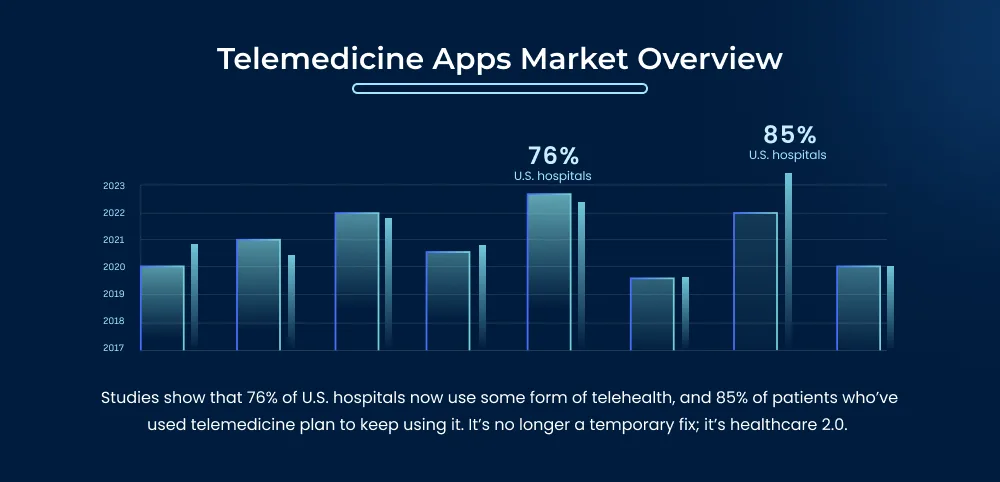
Healthcare providers have quickly embraced this shift. Studies show that 76% of hospitals in the United States now use some form of telehealth, and about 85% of patients who have tried telemedicine say they plan to continue using it.
Major platforms such as Teladoc Health and Amwell have already proven the scale of the opportunity. Teladoc alone reported 22.4 million virtual visits in 2025, showing just how quickly patients are embracing digital healthcare services.
But the real momentum is coming from health startups building specialized platforms. New telemedicine apps now focus on areas like mental health therapy, chronic disease management, remote patient monitoring, and women’s healthcare. These innovations rely heavily on skilled telemedicine software developers who understand both healthcare workflows and modern mobile technologies.
What’s fueling the rapid growth of the telemedicine app market? Technology is the engine behind this growth. Today’s telemedicine apps integrate artificial intelligence, wearable devices, and real-time patient monitoring systems. Smartwatches and connected health devices can track heart rate, sleep patterns, and blood oxygen levels, giving doctors real-time insights into patient health.
As a result, healthcare providers are expanding their use of remote monitoring tools. In fact, nearly 59% of U.S. healthcare providers now use telemedicine technologies to manage chronic conditions remotely.
For businesses entering the digital healthcare space, this surge in adoption creates a clear opportunity. Companies that hire telemedicine app developers early can build secure telehealth platforms, improve patient access to care, and position themselves in one of the fastest-growing segments of the healthcare industry.
Need a custom telemedicine solution? Get in touch with our experienced developers today!
Key Responsibilities to Expect When You Hire Telemedicine App Developers
Telemedicine app developers are software engineers who design and build digital platforms that allow patients and healthcare providers to interact remotely. Their work goes far beyond creating a basic mobile application. They develop secure, reliable systems that support virtual consultations, remote patient monitoring, digital prescriptions, and real-time medical data sharing.In simple terms, telemedicine developers combine mobile app development, cloud infrastructure, and healthcare technology to create platforms that make virtual care possible.
Because telemedicine platforms handle sensitive health information, developers must also follow strict healthcare regulations such as HIPAA and interoperability standards like FHIR. This ensures patient data remains protected while allowing healthcare systems to communicate securely.
Let us explore key roles and responsibilities of telemedicine app developers -
Imagine walking into a healthcare app that feels like a warm hug instead of a confusing maze. That’s the magic developers create! They design intuitive interfaces that cater to both tech-savvy users and those who still struggle to turn on their smartphones. Think of it as creating a virtual clinic that’s not only functional but also friendly. The goal? To make every patient feel like they’re chatting with an old friend rather than navigating a bureaucratic nightmare.
2. Integrating AI and Advanced Healthcare Technologies
Ever wondered how a conversational chatbot can answer your health queries at 2 AM? Well, that’s possible with AI. Developers are the masterminds behind these intelligent features. They’re constantly on the hunt for the latest tech trends, like machine learning and data analytics, to enhance the app’s capabilities.
3. Ensuring Healthcare Compliance and Patient Data Security
In a world where data breaches are the new horror stories, developers are like digital bodyguards for patient information. They take compliance seriously—HIPAA, GDPR—you name it. Implementing rock-solid encryption and secure authentication processes, they protect sensitive health data like it's the crown jewels. After all, no one wants their private medical history making headlines, right?
4. Enabling Interoperability with Healthcare Systems
Healthcare is like a puzzle, and developers are the ones making sure all the pieces fit together. Interoperability is the name of the game, allowing various systems like EHRs, billing platforms, and lab tests to communicate seamlessly. A mind-boggling 60% of healthcare organizations struggle with this, but developers are here to change that! They ensure that when you hop on your telemedicine app, everything from your medical history to lab results is at your fingertips. Talk about a game-changer!
5. Improving Telehealth Apps Through User Feedback
Think of developers as the curious cats of the tech world. They’re always asking for feedback, what works, what doesn’t, and what could be better. This relentless pursuit of improvement means that your app is constantly evolving based on real user experiences. So, when a new feature drops, you can bet it’s tailored to meet your needs. It’s like having a personal concierge at your service!
6. Building Tools That Support Healthcare Providers
Behind every great telemedicine app is a support team for healthcare providers. Developers don’t just create tools; they empower doctors to manage their practices more effectively. Whether it’s scheduling, patient management, or billing, they make sure the tech is easy to navigate. Think of it this way: when healthcare providers feel supported, patients benefit too. It’s a win-win!
Not everyone is a tech whiz, and that’s okay! Developers often weave educational resources into the app to help patients navigate their healthcare journey. From interactive guides to quick FAQs, they ensure users feel informed and confident when using the app. Remember, knowledge is power and when patients understand how to use telemedicine effectively, they’re more likely to embrace it.
Take your healthcare services digital. Let’s develop your telemedicine app today!
Telemedicine platforms require a mix of software engineering expertise, healthcare technology knowledge, and strong security practices. When businesses plan to hire telemedicine app developers, they should evaluate both technical capabilities and familiarity with healthcare systems.
Below are the key skills that experienced telehealth app developers should bring to the table.
Technical Skills Telemedicine App Developers Should Have
1. Mobile App Development Expertise
Telemedicine platforms must work smoothly across smartphones, tablets, and web browsers. Developers should have strong experience in mobile frameworks such as Flutter, React Native, Swift, or Kotlin to create reliable cross-platform applications.
This expertise ensures patients and healthcare providers can access the platform easily, whether they are using Android devices, iPhones, or desktop systems.
2. Real-Time Communication Technology
Video consultation is the backbone of telemedicine platforms. Skilled developers should understand real-time communication technologies that enable high-quality video, voice, and messaging within the app.
Technologies such as WebRTC are widely used to build secure and low-latency video consultation features between doctors and patients.
3. Healthcare Compliance Knowledge
Healthcare software must follow strict regulatory guidelines to protect patient information. Developers should understand regulations like HIPAA and GDPR when building telemedicine platforms.
Compliance expertise helps ensure that sensitive patient data is stored, processed, and transmitted securely.
4. Experience with Healthcare Data Standards
Telemedicine apps often need to connect with hospital systems, labs, and insurance platforms. Developers should be familiar with healthcare interoperability standards such as FHIR and HL7.
These standards allow telehealth platforms to exchange patient data safely between different healthcare systems.
5. Strong Backend and Cloud Development Skills
A telemedicine app relies heavily on backend infrastructure to manage appointments, patient records, messaging, and analytics. Developers should have experience with backend technologies such as Node.js, Python, or Java, along with cloud platforms like AWS or Azure.
A scalable backend ensures the telemedicine platform can support thousands of users without performance issues.
6. Data Security and Encryption Expertise
Patient health information is extremely sensitive. Telemedicine app developers must implement secure authentication systems, end-to-end encryption, and strong access controls to prevent unauthorized access.
Security practices such as multi-factor authentication, encrypted data storage, and secure APIs are essential components of a reliable telehealth platform.
7. User Experience and Healthcare Workflow Understanding
A successful telemedicine app should be simple for both patients and doctors to use. Developers must understand healthcare workflows such as appointment scheduling, consultation processes, and prescription management.
This knowledge helps them design platforms that reduce administrative workload for doctors while providing a smooth experience for patients.
8. Integration Capabilities
Telemedicine platforms rarely work in isolation. They need to integrate with electronic health record systems, payment gateways, wearable devices, and pharmacy systems.
Developers with strong API integration skills can ensure that the telemedicine platform communicates seamlessly with other healthcare technologies.
Professional Skills to Evaluate When Hiring Telemedicine App Developers
1. Strong Portfolio
Take a peek at their portfolio. Have they developed apps that are similar to what you envision? A diverse and successful portfolio is a good indicator of their versatility and expertise. Ask them to showcase projects that highlight their ability to create user-friendly, innovative, and secure applications. A great developer should be proud to share their past work!
2. Communication Skills
Communication is the backbone of any successful project. You want developers who can articulate their ideas clearly and listen to your vision. A good developer will keep you updated on progress and be open to your feedback. After all, it’s your app, and you should be in the driver’s seat!
3. Post-Launch Support
Launching your app is just the beginning; the real work starts afterward. Make sure your telemedicine app developers offer ongoing support and maintenance. This means bug fixes, feature updates, and assistance with user feedback. You don’t want to be left in the lurch after launch; a reliable team will help you navigate any challenges that come your way.
4. Budget and Transparency
While you want to stay within budget, remember that the cheapest option isn’t always the best. Look for developers who provide clear, transparent pricing with no hidden fees. They should be able to outline how your budget will be allocated and what you can expect at each stage of development.
5. Client Testimonials and Reviews
Check out client testimonials and online reviews. They can offer invaluable insight into the developer’s work ethic, reliability, and overall quality. A developer with happy clients is a good sign they’ll treat you well too!
How to Hire Telemedicine App Developers in 48 Hours
Here is a step-by-step process to help you hire telemedicine app developers within 48 hours.
1. Define Your Telemedicine App Requirements
Before starting the hiring process, clearly define what you want to build. Telemedicine platforms can vary widely depending on the target audience and healthcare services offered.
For example, your app may include features such as:
Video consultations between doctors and patients
Appointment scheduling and reminders
E-prescriptions
Secure patient records
Remote patient monitoring
Payment and insurance integration
Having a clear list of features helps developers understand the scope of the project and allows you to find specialists who have experience building similar healthcare software solutions.
2. Look for Healthcare Development Experience
Not every mobile developer is suited for telemedicine software. Healthcare applications require a strong understanding of regulatory standards, medical workflows, and patient data security.
When evaluating candidates, prioritize developers who have previously built telehealth or healthcare platforms. Experience with compliance frameworks such as HIPAA and GDPR is especially important.
Developers familiar with healthcare ecosystems can deliver secure and compliant telemedicine platforms much faster.
3. Evaluate Technical Expertise
Once you identify potential candidates, assess their technical capabilities. Telemedicine apps rely on several technologies that support secure communication and real-time data exchange.
Key technologies to look for include:
Cross-platform mobile development frameworks
Backend technologies such as Node.js or Python
Cloud infrastructure platforms like AWS or Azure
Real-time communication tools such as WebRTC
Healthcare interoperability standards like FHIR
Developers with strong technical foundations can build reliable telemedicine platforms that scale with user demand.
4. Review Portfolio and Past Projects
A developer’s portfolio can reveal a lot about their experience and capabilities. Review past healthcare projects to see whether they have built applications involving video consultations, patient management systems, or remote monitoring tools.
Successful projects demonstrate their ability to handle complex healthcare workflows and build user-friendly digital health platforms.
5. Conduct a Quick Technical Interview
Even when hiring quickly, it is important to validate a developer’s expertise through a short technical discussion. Ask questions related to:
Telemedicine architecture design
Healthcare data security practices
API integration with hospital systems
Handling real-time video consultations
This step helps ensure the developer has both technical and healthcare domain knowledge.
6. Start with a Dedicated Development Team
One of the fastest ways to launch a telemedicine project is by hiring a dedicated development team instead of individual freelancers. Dedicated teams typically include developers, designers, QA engineers, and project managers who already work together.
This approach reduces onboarding time and allows development to start immediately.
7. Ensure Post-Development Support
Telemedicine apps require continuous updates, security patches, and performance improvements. Before finalizing the hiring process, confirm that the development team provides ongoing maintenance and support.
Reliable post-launch support ensures that your telehealth platform remains secure, stable, and compliant with evolving healthcare regulations.
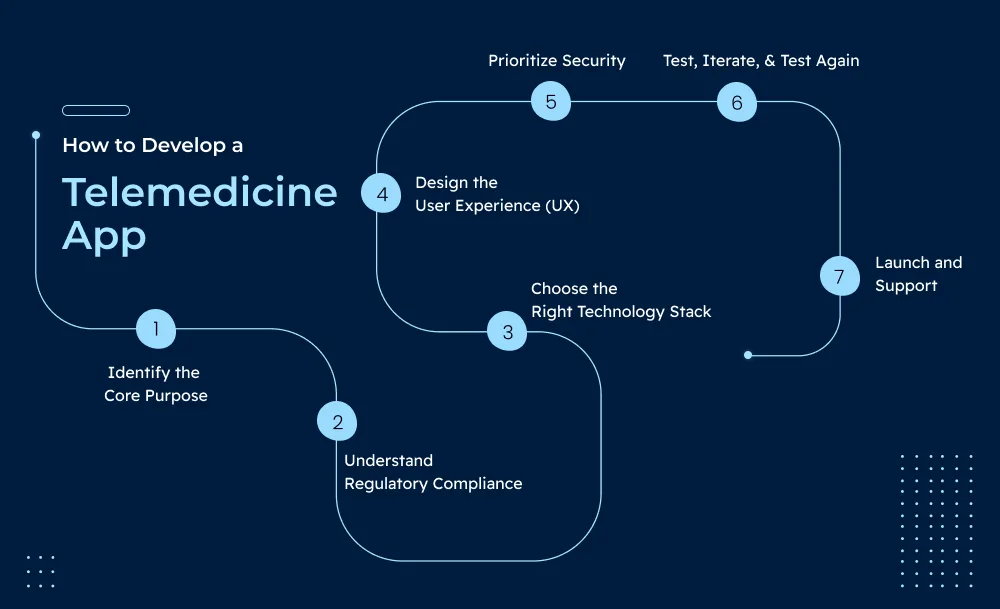
Developing a telemedicine app may seem like a daunting task, but in reality, it’s a series of well-thought-out steps, each carefully designed to meet the needs of both patients and healthcare providers. If you’re thinking about entering the world of telemedicine development, here’s how you can build an app that’s secure, reliable, and, most importantly, effective.
Step 1: Identify the Core Purpose
The first question to ask is: Why are you building this app? Is it to improve access to general healthcare services, provide specialist consultations, or maybe support mental health care? The key here is to nail down the core purpose of your app. The clearer you are about what your app will do, the easier it will be to design its features. Think about what problems it will solve and how it will improve users' lives.
Step 2: Understand Regulatory Compliance
Telemedicine is highly regulated. From HIPAA in the U.S. to GDPR in Europe, data privacy is not just a feature; it’s a legal requirement. Before you even start writing a single line of code, make sure you’re familiar with the relevant healthcare regulations. Compliance is non-negotiable, and getting it wrong could lead to hefty fines or, worse, a loss of patient trust.
Step 3: Choose the Right Technology Stack
The technology behind your app will be the engine that drives its performance. Are you looking to build a native app for iOS and Android, or would a cross-platform framework like Flutter or React Native suit your needs better? The decision you make here will affect everything from your app’s scalability to its ability to integrate with existing systems like Electronic Health Records (EHR). This is where choosing the right software development team can make or break the success of your app.
Step 4: Design the User Experience (UX)
In healthcare, user experience is everything. If patients or doctors can’t easily navigate your app, they won’t use it. It’s that simple. Your interface needs to be intuitive, responsive, and designed with empathy. Think about it, someone using your app might be in pain or anxious about their health. The last thing they need is a complicated sign-in process or confusing menus. Make the experience as seamless and stress-free as possible.
Step 5: Prioritize Security
This is where many apps fall short. Telemedicine apps handle sensitive medical data, and that data needs to be protected. Encryption, multi-factor authentication, and secure data storage are all must-haves. A security breach doesn’t just compromise data; it erodes trust that is a vital currency in the healthcare world.
Step 6: Test, Iterate, and Test Again
No app is perfect on the first try. Rigorous testing both by developers and real-world users will help you identify bugs, improve performance, and optimize the user interface. Gather feedback from both healthcare professionals and patients to ensure the app meets their needs. This iterative process is key to building a reliable and trusted telemedicine solution.
Step 7: Launch and Support
Launching your app is one thing, but ongoing support and updates are what keep it relevant. Whether it’s adding new features, enhancing security, or adapting to new healthcare regulations, your app will need continuous improvement to thrive in the ever-evolving world of digital health.
Connect with patients anytime, anywhere. Build your telemedicine app now!
Talk to us today!
Conclusion
Whether you’re an established healthcare provider looking to expand your services or a startup aiming to revolutionize patient care, understanding the nuances of telemedicine apps is crucial.
Think of it this way: telemedicine is like having a doctor in your pocket, ready to help you 24/7. But here’s the kicker, building that app is no small feat. You need a team that knows the ropes, gets the ins and outs of the healthcare industry, and is passionate about making a difference.
That’s where DITS steps in. As a leading healthcare software development company, we’ve got a squad of telemedicine app developers who are seasoned pros in this space. Our mission? To create cutting-edge solutions that not only meet your needs but also transform the patient experience.
What makes us stand out?
Expertise that matters: Our developers aren’t just tech whizzes; they understand the complexities of healthcare. They’re here to ensure your app is intuitive, user-friendly, and fully compliant.
Tailored solutions: We don’t believe in one-size-fits-all. Your app will be customized to fit your unique vision and requirements.
Commitment to innovation: We stay on top of the latest trends and technologies, ensuring your app remains ahead of the curve.
So, if you’re ready to take the leap into telemedicine, let’s chat! With DITS by your side, you won’t just build an app; you’ll create a powerful tool that connects patients and providers in ways that were once unimaginable.
Frequently asked questions
Ah, the million-dollar question! While there’s no one-size-fits-all answer, building a robust telemedicine app typically takes anywhere from 3 to 6 months. It all boils down to your app's complexity, features, and whether you want custom elements. Think of it like cooking a gourmet meal: the more intricate the dish, the longer it takes to prepare. But don’t worry, your telemedicine app developers will keep you in the loop every step of the way!
Nidhi Thakur
With more than 20 years of experience - I represent a team of professionals that specializes in the healthcare and business and workflow automation domains. The team consists of experienced full-stack developers supported by senior system analysts who have developed multiple bespoke applications for Healthcare, Business Automation, Retail, IOT, Ed-tech domains for startups and Enterprise Level clients