How MVP Product Development Consultant Drives Early Wins
Table Of Content
Published Date :
04 Feb 2026
Speed matters in digital product development, but clarity matters more. Many promising digital products fail not because the idea was weak, but because execution moved in the wrong direction. Features pile up, timelines stretch, budgets burn, and finally, the leadership loses confidence. This is where an experienced MVP product development consultant plays their role. Instead of rushing blindly, the focus shifts to building just enough to learn, validate, and move forward with confidence.
For business owners and senior leaders, early product wins are about proving demand, showing internal progress, and reducing risk before serious capital is committed. Whether the product involves advanced software, data-driven systems, or operational platforms, the right guidance can mean the difference between momentum and months of rework.
This blog shares how structured MVP thinking drives those early wins that executives actually care about.
What Early Product Wins Mean in Complex Digital Products
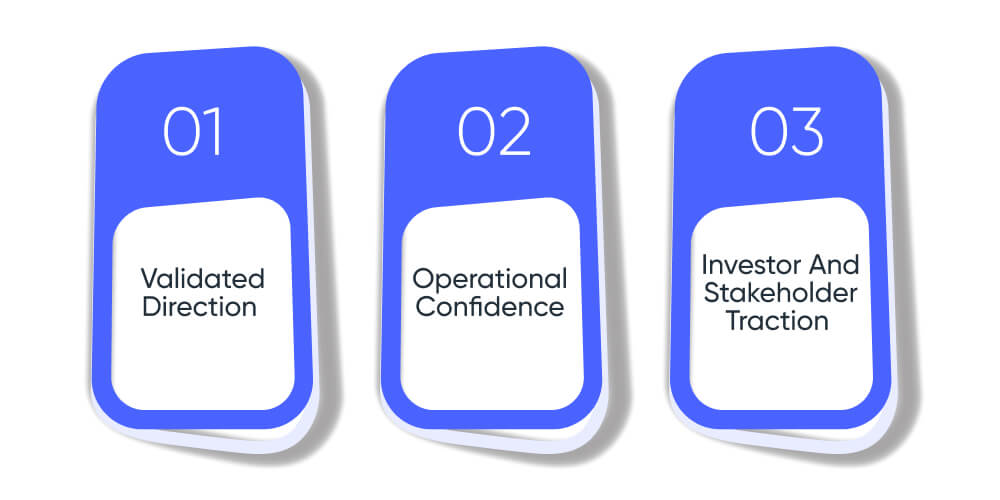
Early product wins look different when software carries risk, regulatory exposure, or operational dependency. For leadership teams, early wins usually show up in three ways.
Validated Direction
Teams confirm that the core problem is real and worth solving. Users engage, and workflows make sense. This is where MVP in product development earns its place as a decision-making tool.
Operational Confidence
Internal teams figure out what would really work for product development and launch. Product, technology, and business leaders align around what is working and what is not. It makes decision-making more accurate and faster.
Investor and Stakeholder Traction
Even modest usage data or early pilot results can unlock funding, approvals, or green lights for the next phase. Momentum builds up for the further stages of product engineering and testing.
Is Your MVP Direction Truly De-Risked?
Validate assumptions early and gain leadership confidence before committing budget, timelines, and technical resources to full-scale development.
Why Early Product Wins Are Harder in AI, IoT, and Healthcare
Early success becomes harder when products move beyond simple applications and into environments where data, devices, regulations, and operations intersect. AI-driven platforms, connected systems, and healthcare solutions carry higher expectations and far less room for error. A small misstep here does not just slow progress. It can stall the entire initiative.
Technical complexity is the first barrier. AI models depend on data quality and availability. IoT systems rely on sensors, connectivity, and real-world conditions that rarely behave as planned. Healthcare platforms must integrate with existing systems that were never designed for speed or flexibility. Each dependency adds friction, and friction delays validation.
Then there is privacy and compliance. Both are non-negotiable, especially in healthcare. In enterprise and logistics environments, downtime affects revenue and customer trust. Leaders become cautious, approvals take longer, and teams hesitate to release anything unfinished. Without a structured MVP product development process, projects drift, trying to solve everything safely and ending up solving nothing quickly.
This is precisely where disciplined MVP thinking and involvement of a product development consultant become essential.
Role of MVP Product Development Consultant
When products involve advanced software, connected systems, or regulated workflows, execution needs a strong focus and eye for detail. A strong MVP product development consultant brings structure to uncertainty and converts broad ideas into focused, testable initiatives that leaders can evaluate early.
The role starts with translation. Business objectives and operational constraints are converted into a narrow product scope that can be built and tested quickly. Teams agree on the few signals that truly indicate success. That clarity alone often cuts weeks out of planning cycles.
There is also a critical alignment function. Product teams think in features, engineers think in systems, and executives think in outcomes. The consultant connects these perspectives so that delivery does not drift away from business intent and objectives. This approach is common in mature IT consulting services, but here it is applied with speed and accountability.
The result is a product that moves forward with purpose and gives leadership something concrete to react to early.
Need Clarity Before Scaling Your Product?
Reduce uncertainty, validate market fit, and support smarter investment decisions with disciplined MVP product development.
Business Outcomes of Early Product Wins Across Industries
Early product wins are not abstract milestones. For leadership teams, they translate directly into clearer decisions, tighter financial control, and stronger organizational confidence. When the MVP product development process is executed with discipline, outcomes show up faster and with far less noise.
The first visible impact is decision clarity. Executives review real data, pilot results, and operational feedback. Teams know what deserves further funding and what should be stopped early. Nobody enjoys writing off sunk costs later, and early validation helps avoid that scenario.
There is also a noticeable shift in internal momentum. Cross-functional teams rally around tangible progress. Product roadmaps stabilize. Delivery confidence improves. In many organizations, these early wins help with budget approvals or leadership sponsorship that had been stuck for months.
From a market perspective, even limited launches create credibility. Early customers engage, partners pay attention, and sales conversations move from vision to proof. This is often where structured MVP development services deliver value, by turning uncertainty into motion that leadership can measure and trust.
How to Choose MVP Product Development Consultant
Selecting the right partner at this stage is less about comparison and more about strategic fit. An effective MVP product development consultant should demonstrate the ability to think beyond delivery and operate comfortably in uncertainty, where assumptions still outweigh evidence.
Look for teams that have guided products through early ambiguity, not just built finished platforms. The consultant should be able to explain how they reduce scope without reducing value, and how learning is built into every release. If conversations jump too quickly to features and timelines, that is usually a warning sign.
Business alignment matters just as much as technical depth. A strong partner connects product decisions to revenue impact, operational efficiency, or risk reduction. This is where the difference between a consultant and a typical MVP product development agency becomes clear. One advises and challenges. The other simply executes instructions.
Finally, assess how execution is supported. Teams that offer a structured MVP product development service typically bring repeatable frameworks, clear success metrics, and cross-functional expertise. That combination is what turns early effort into early wins, without locking the business into premature scale decisions.
Why Choose DITS For MVP Product Development
Choosing a partner for early-stage product execution is ultimately a trust decision. At this stage, businesses are not looking for volume delivery. They are looking for clarity, control, and outcomes they can justify to boards, investors, and internal stakeholders. This is where DITS approaches MVP development work differently.
At DITS, we treat MVP engagements as strategic initiatives. Our team focuses on identifying the smallest product scope that can validate direction, reduce uncertainty, and make business decisions convenient. Every feature, workflow, and integration is evaluated through a business lens before being approved for development.
DITS integrates AI into software development, quality assurance, code consistency, and customization workflows to improve speed without sacrificing reliability. AI is not added as a feature for marketing value. It is embedded into how products are built, tested, and refined, to ensure faster feedback cycles and high-quality releases. In addition, we offer AI software development services to businesses seeking to harness the power of artificial intelligence to improve productivity and efficiency.
DITS also brings depth across software, connected systems, and enterprise environments. Whether the initiative touches data-driven platforms, operational systems, or industry-specific workflows, the focus remains the same. Deliver early proof, minimize risk, and enable informed scale decisions. That balance is what turns MVP efforts into credible business wins.
Are You Building the Right MVP First?
Align product scope with business outcomes and avoid costly rework by validating demand, feasibility, and priorities upfront.
Conclusion
Early product success is usually the result of disciplined choices. Across AI-led platforms, connected systems, healthcare technology, and enterprise software, the pattern is consistent. Teams that validate early move forward with confidence. Teams that delay learning attract unnecessary risks.
This is where MVP in product development proves its long-term value. It gives leadership real signals, momentum, and direction. When guided by the right structure and intent, MVP initiatives stop being experimental and start becoming strategic assets.
For organizations serious about protecting investment while accelerating outcomes, early wins are the foundation for everything that follows.
FAQs
What does an MVP product development consultant actually do for businesses?
An MVP product development consultant helps leadership teams turn product ideas into focused, testable solutions that reduce uncertainty early. The role is not just about building software, but about guiding scope decisions, validating assumptions, and ensuring that early development effort produces insights executives can act on with confidence.
Is MVP development only relevant for startups?
No. While startups often rely on MVPs to conserve runway, enterprises also benefit significantly. Large organizations use MVPs to validate new digital initiatives, test modernization strategies, and reduce risk before committing to large-scale rollouts. This approach is especially valuable in regulated or operationally complex environments.
How do DITS MVP development services support early product wins?
DITS MVP development services are designed to help businesses move from idea to validation without unnecessary complexity. The focus is on defining the right MVP scope, aligning technology with business goals, and delivering early proof points that leadership teams can review, measure, and build upon.
Can DITS MVP development services support AI, IoT, or enterprise platforms?
DITS MVP development services support a wide range of product initiatives, including data-driven software, connected systems, and enterprise platforms. Each engagement is structured to validate technical feasibility, user adoption, and business impact early, before scaling decisions are made.
How long does it typically take to see results from an MVP-led approach?
Timelines vary by product complexity, but most well-scoped MVP initiatives begin delivering usable insights within a few weeks. The real value is not just speed to launch, but speed to learning, which helps leadership make smarter investment decisions earlier in the product lifecycle.

Dinesh Thakur
21+ years of IT software development experience in different domains like Business Automation, Healthcare, Retail, Workflow automation, Transportation and logistics, Compliance, Risk Mitigation, POS, etc. Hands-on experience in dealing with overseas clients and providing them with an apt solution to their business needs.
Recent Posts
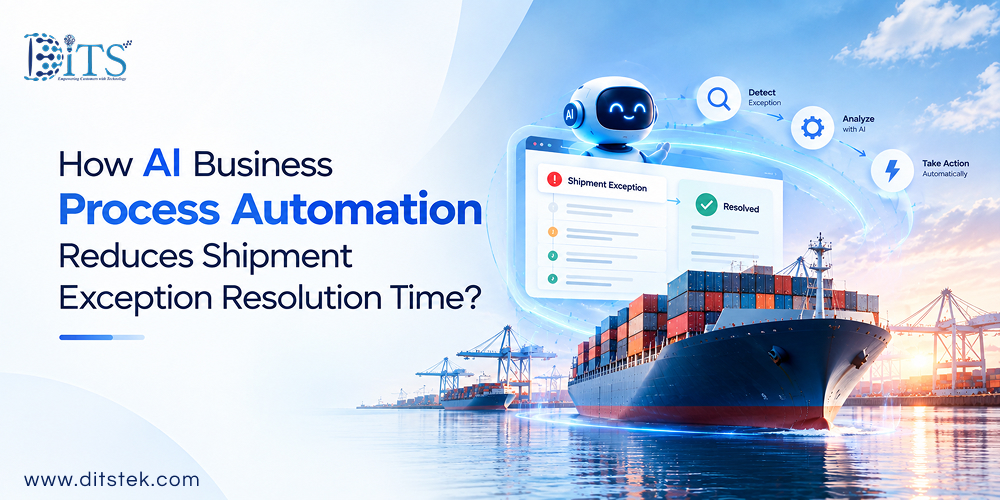
Automated document processing helps reduce cargo insurance claim delays by streamlining document handling, validation, and claims workflows.

Automated document processing helps reduce cargo insurance claim delays by streamlining document handling, validation, and claims workflows.
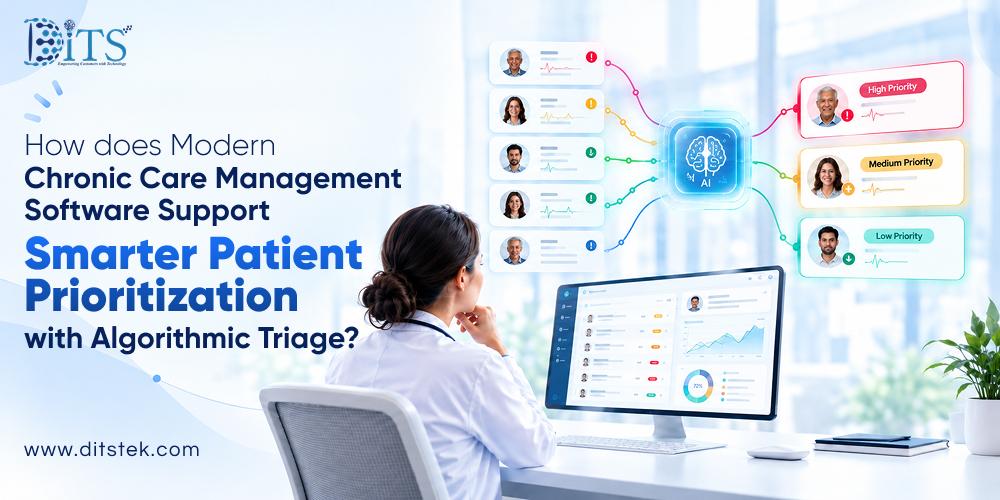
Discover how chronic care management software uses algorithmic triage to identify patient risk, prioritize care, and improve care team efficiency.