How a Mobile App Testing Company in Dubai Ensures App Quality
Table Of Content
Published Date :
09 Feb 2026
Mobile applications have become the backbone of how modern businesses operate, sell, and scale. From customer engagement to internal workflows, a single app failure can disrupt operations, damage trust, and create costs nobody planned for. And that is exactly why testing has become a crucial safeguard for business.
In markets like Dubai, where users expect speed, security, and flawless performance, quality standards are unforgiving. A delayed response, a security flaw, or a crash during peak usage can undo months of investment. This is where a mobile app testing company in Dubai plays a critical role, not just validating features, but protecting business outcomes.
This blog explains how structured testing practices ensure application quality and security, and why leadership teams increasingly rely on specialized testing partners to launch apps with confidence, not crossed fingers.
App Quality and Security in Today’s Mobile Ecosystem
App quality today is measured less by how many features ship and more by how reliably those features perform under real business pressure. A sales app that slows down during peak hours or a customer portal that behaves differently across devices does not just frustrate users. It quietly erodes confidence. And confidence, once lost, is hard to rebuild.
Security expectations have risen just as sharply. Mobile apps now handle sensitive customer data, internal workflows, and payment information. One overlooked vulnerability can invite compliance issues, legal exposure, and reputational damage that lingers far longer than the original defect. Nobody wants that call from legal on a Monday morning.
This is why businesses increasingly treat quality and security as strategic priorities, not engineering details. Structured software quality assurance testing services help organizations identify risks early, validate real-world usage scenarios, and close gaps before users ever see them. The result is predictable performance, stronger protection, and fewer unpleasant surprises after launch.
Where Are Your Hidden App Risks?
Uncover critical quality, performance, and security gaps before they impact revenue, compliance, or customer trust post-launch.
Role of Mobile App Testing Company in Dubai
Building an app internally is one thing. Making sure it works flawlessly in the hands of real users across devices, networks, and usage patterns is another challenge entirely. This is where a specialized testing partner steps in, not as a vendor, but as a risk filter for the business.
A mobile app testing company in Dubai brings local market awareness into the testing process. Device preferences, network conditions, compliance expectations, and user behavior in the region differ from global averages. Testing aligned to these realities prevents blind spots that generic test cycles often miss.
Beyond execution, these teams operate with a business lens. They focus on what actually impacts revenue, adoption, and brand trust, such as checkout flows, data security, and performance during peak traffic. The goal is not to find every possible bug, but to eliminate the ones that could most harm the business.
App Quality Through Structured Testing Processes
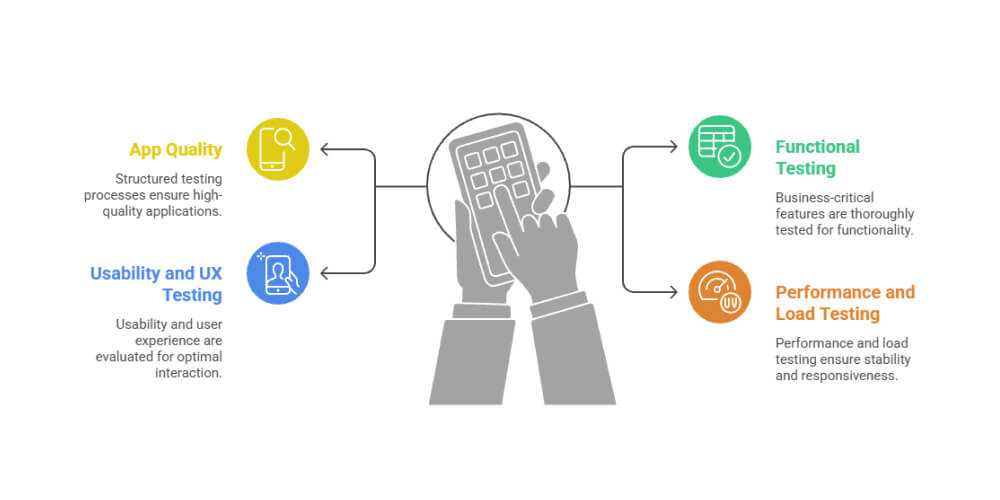
Quality does not happen by accident. It is the result of disciplined testing, aligned with how the business actually uses the app. A seasoned mobile app testing company in dubai approaches quality assurance as a layered process, not a one-time activity before launch.
Functional Testing For Business-Critical Features
Every app has a few workflows that matter more than everything else. Order placement, onboarding, reporting dashboards, payment validation. These flows are tested end to end to ensure they behave exactly as intended across operating systems and device models. When these paths work consistently, downstream issues are reduced automatically.
Usability and UX Testing
Here’s the part many teams underestimate. An app can work perfectly and still fail if users find it confusing. Testing focuses on navigation clarity, screen responsiveness, and task completion time. Small refinements here often translate into higher adoption and fewer support tickets. And yes, executives notice those metrics.
Performance and Load Testing
Traffic spikes are not hypothetical scenarios. Campaign launches, seasonal demand, or internal rollouts create real pressure. Structured load testing simulates hundreds or thousands of concurrent users to ensure the app stays stable when it matters most. Because slow apps cost money, even when they do not crash.
Strengthening App Security With Advanced Testing Practices
Security issues rarely announce themselves early. They surface after deployment, often when users are active and data is already exposed. That is the worst possible timing. A structured security testing approach helps businesses stay ahead of these risks instead of reacting to them.
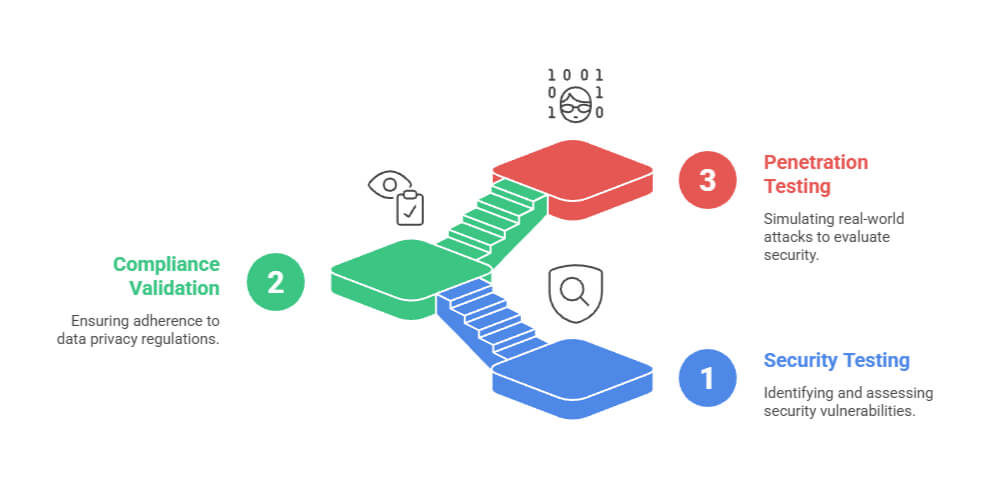
Security Testing and Vulnerability Assessment
Testing teams simulate real-world attack scenarios to uncover weak authentication flows, exposed APIs, insecure data storage, and session handling flaws. These are not theoretical risks. They are the same gaps attackers actively look for. Fixing them before launch avoids regulatory trouble and protects customer trust.
Compliance and Data Privacy Validation
Apps operating in Dubai must meet strict expectations around data handling and user privacy. Security testing validates encryption, access controls, and data flow paths to ensure sensitive information is stored and transmitted safely. This becomes especially critical for apps built through custom application development, where business logic is unique and cannot rely on generic safeguards.
Penetration Testing and Risk Analysis
This is where assumptions get challenged. Ethical hackers attempt controlled break-ins to assess how the app responds under pressure. Weak points are documented, prioritized, and resolved based on business impact. A capable mobile app testing company in dubai does not aim for theoretical perfection. It focuses on reducing real, measurable risk.
Can Your App Handle Peak Demand?
Stress-test your application against real traffic, devices, and network conditions to ensure stability when usage spikes.
Automation and Manual Testing: A Balanced Approach
Speed matters, but context matters more. Relying only on automation can create a false sense of security, while manual testing alone slows delivery. The most effective testing strategies balance both, based on risk, timelines, and business priorities.
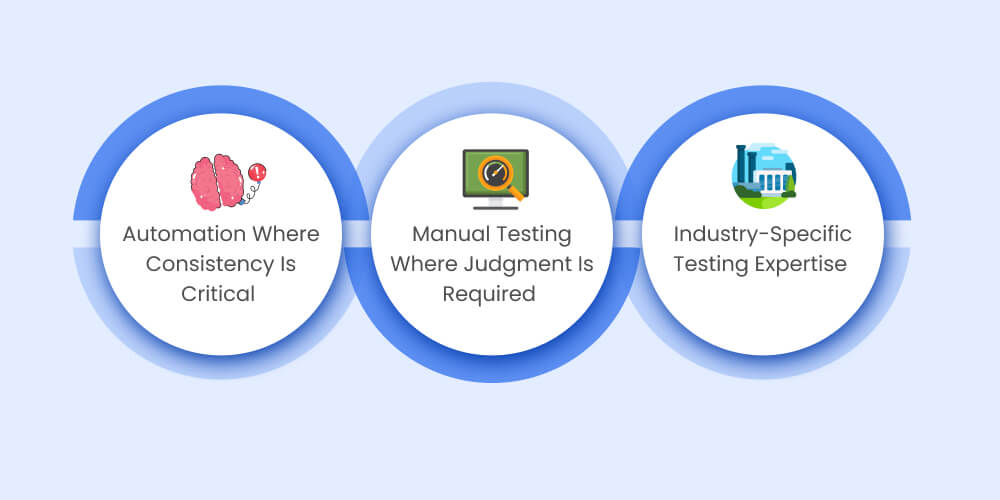
Automation Where Consistency Is Critical
Automated tests are ideal for repetitive checks such as regression testing, core workflows, and multi-device validation. They run faster, reduce human error, and support frequent releases. This becomes especially valuable for teams working with MVP development services, where rapid iterations must not break existing functionality.
Manual Testing Where Judgment Is Required
Some issues cannot be scripted. Visual inconsistencies, confusing user journeys, or unexpected behavior during real usage need human evaluation. Testers step into the user’s shoes, validate assumptions, and uncover gaps automation simply cannot detect.
At DITS, AI is integrated into software development and quality assurance to improve test coverage, maintain code quality, and adapt testing scenarios as applications evolve. It is not about replacing people, but enabling smarter decisions at scale.
Industry-Specific Testing Expertise
Not all applications fail in the same way. A retail app struggles under flash sales, a healthcare platform cannot afford data leaks, and an enterprise system breaks when integrations misfire. This is why industry context matters as much as technical skill.
A mobile app testing company in dubai designs test strategies around sector-specific risks rather than generic checklists. For example, fintech apps are stress-tested for transaction accuracy and latency under load, while logistics platforms are validated against real-time data sync and location accuracy. The tests mirror how the business actually operates, not how it looks on paper.
Teams with exposure to multiple industries also recognize patterns faster. They know where issues typically surface and what shortcuts tend to backfire. That experience shortens testing cycles and improves decision-making.
This is also where collaboration with an AI software development company adds value. Intelligent testing models help identify risk clusters early, prioritize high-impact defects, and improve long-term reliability. The payoff is simple. Fewer production issues and calmer post-launch operations.
Business Benefits of Partnering With a Mobile App Testing Company in Dubai
For leadership teams, testing is not about finding bugs. It is about protecting timelines, revenue, and brand reputation. When done right, the business impact is tangible and measurable.
A mobile app testing company in dubai helps organizations move faster without increasing risk. Releases become predictable. Stakeholders stop worrying about last-minute surprises. Product teams gain clarity on what is ready and what is not.
Key business advantages typically include:
- Reduced post-launch defects, which lowers support and maintenance costs over time
- Faster time-to-market through structured test cycles and early risk detection
- Higher user adoption driven by stable performance and intuitive experiences
- Stronger customer trust, especially in apps handling sensitive data
- Clear reporting that supports executive decision-making, not just technical fixes
There is also a less visible benefit. Teams spend less time firefighting and more time improving the product. And that shift changes how businesses scale.
Need Confidence Before Your Next Release?
Get structured testing insights that support faster launches, stronger security, and executive-level clarity on release risk.
Why Choose DITS For Mobile App Testing In Dubai
Choosing the right testing partner is about trust, clarity, and business alignment. DITS brings a structured, outcome-driven approach to mobile app testing that fits the pace and expectations of the Dubai market. The team does not test in isolation. Every test case is mapped to real user behavior, operational risk, and business impact.
The focus is not just on identifying defects, but on preventing issues that can impact revenue, customer trust, and operational stability. Testing strategies are designed around real-world usage, ensuring critical workflows perform consistently across devices, platforms, and network conditions.
What makes DITS a reliable partner is its integration of AI into testing and quality assurance processes. This allows faster detection of high-risk issues, better test coverage, and continuous code quality improvement as applications evolve. The team works closely with product and engineering stakeholders, providing clear insights instead of technical noise.
For businesses working with a mobile app testing company in dubai, DITS offers something critical. Confidence. Confidence that the app will perform, stay secure, and support growth without constant firefighting.
Conclusion
Mobile apps rarely fail because of one big mistake. They fail due to a series of small, overlooked issues that surface at the worst possible moment. Slow response times, inconsistent behavior across devices, or a security gap that slipped through testing. For business leaders, these are not technical problems. They are operational and reputational risks.
Partnering with a capable mobile app testing company in dubai changes that equation. It brings structure, foresight, and accountability into the release process. Quality becomes predictable. Security becomes proactive. And launches stop feeling like educated guesses.
At a time when applications directly influence customer trust and revenue flow, testing is no longer optional or secondary. It is a strategic investment in stability, growth, and peace of mind. And for most organizations, that is a trade-off worth making.
FAQs
Why Is Mobile App Testing Important For Business Applications?
Mobile app testing helps businesses avoid costly failures such as crashes, security breaches, and poor user experience. Proper testing ensures critical workflows work as expected, reduces post-launch maintenance costs, and supports smoother user adoption, especially for customer-facing and enterprise apps.
How Does Mobile App Testing Improve App Security?
Mobile app testing identifies vulnerabilities in authentication, data storage, APIs, and access control. Security-focused testing helps prevent data leaks, unauthorized access, and compliance issues, which are common risks for apps handling sensitive business or customer information.
When Should Businesses Start Mobile App Testing?
Businesses should begin mobile app testing as early as the development phase and continue through updates and releases. Early testing reduces rework, improves development speed, and ensures quality and security are built into the app rather than added later.
Can DITS Handle Testing For Enterprise And Customer-Facing Apps At Scale?
Yes. DITS works with both internal enterprise applications and customer-facing mobile apps that serve large user bases. Testing strategies are designed to handle high traffic volumes, multiple integrations, and complex user roles. This ensures applications remain stable during peak usage, large rollouts, or regional expansions, where failures often carry higher business impact.
How Does DITS Align Testing Outcomes With Business Goals?
Testing at DITS is structured around business priorities rather than isolated defect counts. Test cases focus on revenue-impacting workflows, customer experience touchpoints, and operational reliability. Reporting is clear, actionable, and aligned with executive decision-making, helping leadership teams understand readiness, risk exposure, and release confidence at a glance.
Is DITS Suitable For Long-Term Testing And Support Engagements?
Absolutely. Many businesses engage DITS beyond a single release cycle. Ongoing testing support helps maintain quality as features evolve, integrations expand, and user expectations grow. This long-term approach reduces regression issues, supports faster updates, and keeps applications reliable as business demands change.

Dinesh Thakur
21+ years of IT software development experience in different domains like Business Automation, Healthcare, Retail, Workflow automation, Transportation and logistics, Compliance, Risk Mitigation, POS, etc. Hands-on experience in dealing with overseas clients and providing them with an apt solution to their business needs.
Recent Posts
AI triage in healthcare helps prioritize patients, improve access, streamline care decisions, and enhance patient engagement with smarter workflows.

AI-powered dispatch scheduling reduces transportation costs by optimizing routes, vehicle utilization, driver schedules, and delivery operations for greater efficiency.
AI integration connects AI with existing systems and workflows, while AI adoption focuses on using AI effectively to drive measurable business outcomes.