Digital Transformation in Travel and Tourism
Table Of Content
Published Date :
04 Dec 2025
The impact of digital technologies is seen in almost every industry all over the world, and the travel and tourism sector is not an exception. The travel industry has moved on from merely relying on manual bookings, physical documentation, and face-to-face interactions to operating with fast, digital systems that are driven by data.
For companies, this transition is not just an upgrade of convenience. It is changing the Revenue model, customer expectations, operational efficiency, and even the whole competitive environment. As the process continues, the understanding of its impact becomes even more important for travel brands, service providers, and destination managers who are keen on making their operations future-proof.
In this blog, we shall analyze how digital transformation is changing the travel industry and what businesses need to do to get ready for the next global tourism phase.
Looking to Build Smarter Travel Tech Systems?
Explore how modern platforms, automation, and integrations can strengthen your operational backbone and create frictionless traveler experiences.
What is Digital Transformation In Travel And Tourism
In simple terms, digital transformation in the travel and tourism industry is the shift from scattered, manual habits to connected tools that work together.
These advancements are not limited to large hotel groups or major airlines. The small travel agencies, tour operators, and even boutique accommodation providers extract enormous value, as the alteration removes the daily friction that drains time and energy. It makes processes more efficient, saves time, and improves productivity, leading to more satisfied customers and higher profits.
With the digital transformation in the travel industry being a continuous process, the early adopters of the technology get to enjoy the benefits of smoother operations, happy customers, and even improved revenue much earlier than their competitors.
Core Areas Where Digital Transformation In Travel And Tourism Creates Impact
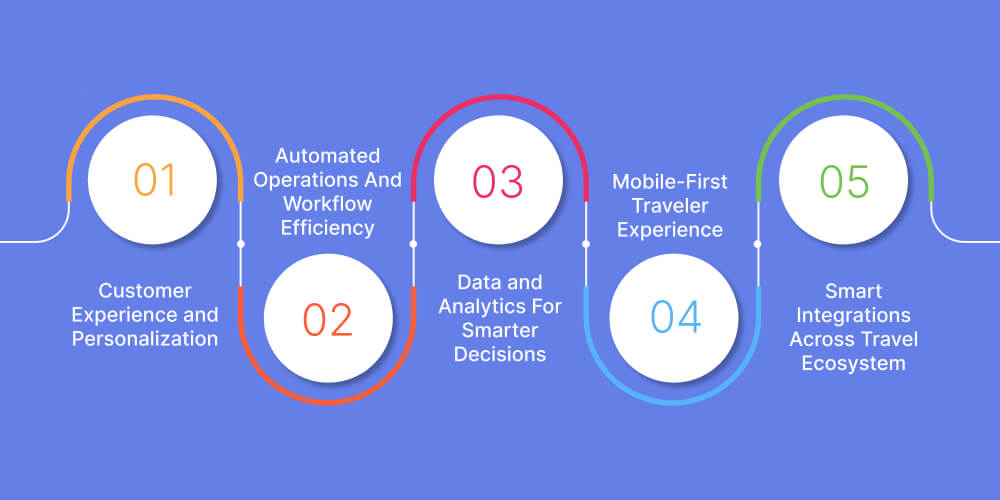
Digital transformation shows up in different corners of the travel business. It may start with a service like quicker responses for customers. Other times it may begin with a small system that cleans up and streamlines chaotic workflows. As the digital transformation in travel industry moves forward, here are some areas where feel a significant difference.
Customer Experience And Personalization
Travelers expect more than basic package options. They want trips shaped around their interests, timelines, and habits. Digital tools help teams understand what customers search for and how they make decisions. These insights allow travel companies to recommend plans that feel thoughtful. It improves trust and makes booking decisions easier for customers.
Automated Operations And Workflow Efficiency
Simple tasks used to slow everyone down. Tasks like manual confirmations, double checks, and routine communication often consume entire workdays. With automation and workflow services, these tasks run automatically in the background. It lightens the load on employees and makes operations steadier during peak seasons.
Data and Analytics For Smarter Decisions
Real data and analytics play a vital role in detecting customer behavior and the performance of operations in any industry. Travel companies now rely on analytics to map customer behavior, identify slow-performing packages, and forecast demand. When decisions are guided by clean data, planning becomes easier for companies, and they can set the pricing more strategically.
Mobile First Traveler Experience
Most customers manage their travel plans on their phones. They browse options, adjust itineraries, ask questions, and track bookings through mobile channels. Travel companies now have their apps on which customers and create accounts and access all their services. In addition to booking flights, buses and hotels, they can also ask questions and plan their trip.
Some companies also offer AI chatbot services to answer their customers queries. A clean mobile experience reduces support calls and makes people feel more in control of their journey. DITS offers AI chatbot development services to help travel companies answer customer queries and offer better customer services.
Smart Integrations Across Travel Ecosystem
Travel businesses rarely work alone. They rely on hotels, airlines, transport partners, and local operators. Integrations help these systems talk to each other without constant manual effort. It keeps information consistent and prevents miscommunication that could disrupt a customer’s trip.
Cloud Computing For Operational Efficiency
Cloud platforms help travel companies access information instantly without depending on local servers. Teams can update bookings, view reports, and manage operations from anywhere. It also keeps data organized during peak traffic periods, when on-premise systems often slow down. Cloud adoption has quietly become one of the strongest foundations of digital transformation in travel and tourism today.
Artificial Intelligence For Enhanced Customer Experiences
AI-powered tools learn customer behavior patterns and improve recommendations over time. They help businesses predict what travelers may want next, shorten response times, and offer more relevant options. Things like dynamic pricing, smart itinerary suggestions, and quick support responses become possible through these models.
DITS provides AI software development services for travel companies to help them predict customer behavior and plan their packages and prices accordingly. This enables travel firms to attract potential customers and offer better services.
IoT For Seamless Travel Experiences
Travel companies use IoT to improve their operational efficiency, security, and create personalized customer experiences. Hotels and Airlines use IoT-enabled tags on luggage to track it in real time. IoT systems also monitor weather conditions to provide real-time alerts about potential risks and weather conditions. IoT also enables automatic check-ins, booking confirmations, and tracking parking spaces which lets hotels and travel firms offer real time updates to customers about these things.
DITS offers IoT software development services to travel companies to automate their processes and adjust their services according to real time updates. This helps them offer better services to their customers which in turn improve customer satisfaction and their revenue as well.
Biometric Technology For Security
Airports and immigration centers now rely on RFID, biometric verification to speed up identity checks. Facial recognition, fingerprint scanning, and secure authentication methods make the process safer and quicker. Travelers move through checkpoints faster, and security teams get reliable tools that reduce manual errors.
Want to Accelerate Your Digital Shift in Tourism?
Discover strategic guidance and tech capabilities that help travel brands automate, integrate, and scale with confidence in a competitive market.
Steps For Businesses To Start Digital Transformation in Travel and Tourism
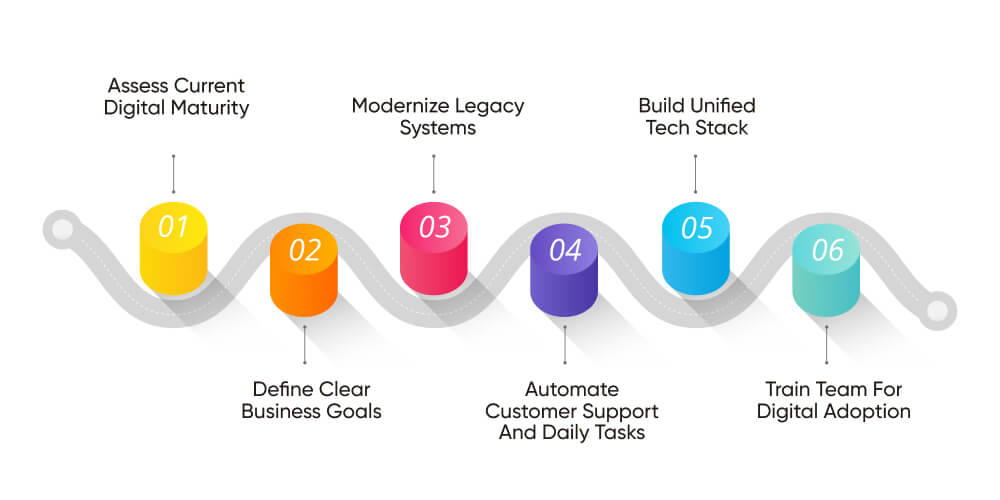
Most travel companies know they need to modernize, but the real challenge is figuring out where to begin. Here are the steps travel firms can follow to start using digital technologies for modernizing their processes and operations.
Assess Current Digital Maturity
Before jumping into new tools, it's essential to look at how the operations run today. Where do delays usually happen? Which tasks drain the most time? Once the root cause is clear, the solution becomes much easier to plan.
A quick audit like this helps travel companies avoid wasted investments and shows you which areas deserve attention first.
Define Clear Business Goals
Technology for the sake of technology does not help anyone. Businesses need to determine what they really want to achieve. Faster customer responses? Fewer errors? Higher repeat bookings? When the goals are clear, picking the right tools becomes simple. Travel companies start solving real problems that impact their revenue and daily operations.
Modernize Legacy Systems
Old systems tend to resist change. They slow things down, break during peak season, and make integrations tougher than they should be. Updating outdated platforms, even gradually, frees a business from these limitations.
This is also where companies often look for legacy modernization services to upgrade their existing systems that match their present needs and goals.
Automate Customer Support And Daily Tasks
If your team spends hours replying to repetitive questions, sending confirmations, or manually checking status updates, automation can help save time and resources. Simple automated flows can handle follow-ups, alerts, availability checks, and even parts of itinerary building. Once the automation speeds up processes, customer experience improves automatically.
Build Unified Tech Stack
Travel companies often use scattered tools that do not communicate well. They may have separate systems for bookings, CRM, payments, marketing, and partner coordination. When they do not connect, mistakes grow, and work slows.
A unified stack makes the entire journey, from the first inquiry to the final payment, cleaner and easier to manage. It also gives leaders a clear view of performance, something that becomes crucial as the business scales.
Train Team For Digital Adoption
Digital tools work only when people use them confidently. Set aside time for simple training sessions. Short, practical walkthroughs focused on the tasks employees perform daily. When teams start to feel comfortable with new tools, adoption becomes smooth and easier.
Real Examples of Digital Transformation in Travel And Tourism
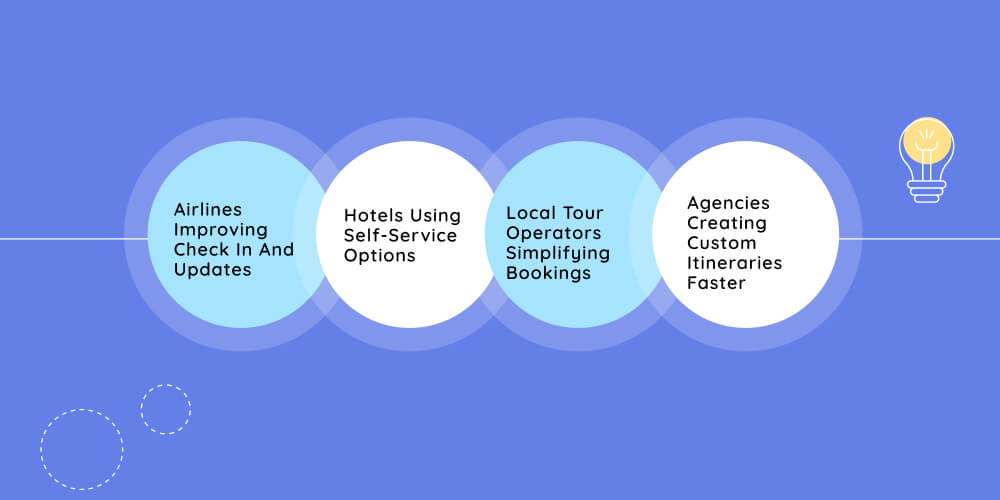
Real change becomes easier to understand when you see how it plays out in everyday work. Many travel businesses do not start with massive projects. They fix one problem, then another, and before they know it, the entire workflow feels lighter. Below are a few practical examples that show how this shift unfolds in real environments.
Airlines Improving Check In And Updates
Several mid-sized airlines introduced simple digital check-in tools that reduced airport congestion and cut customer complaints almost overnight. Instead of long lines, travelers received quick mobile prompts and real-time updates.
Staff members said the pressure during peak hours dropped noticeably because fewer people needed manual help. A small change, but it turned chaotic mornings into manageable ones.
Hotels Using Self-Service Options
Many boutique hotels started offering digital room keys and online check-in links. Guests walked straight to their rooms without waiting at reception. One hotel manager shared how this freed up the front desk to focus on special requests rather than paperwork. Since the process became smoother, reviews improved, and check-in errors fell sharply.
Local Tour Operators Simplifying Bookings
A regional tour operator replaced spreadsheets with an innovative booking dashboard. Customers could see availability instantly, and staff no longer had to double-check every slot manually. It also helped them sync information with transportation partners using simple integrations supported by IoT development services. The company later mentioned that this tiny upgrade saved them hours every single week.
Agencies Creating Custom Itineraries Faster
Travel agencies that previously took half a day to prepare a personalized itinerary now complete the same task in minutes with the help of guided digital flows. The system makes suggestions for activities according to the customer's likes and dislikes.
Agents fine-tune the particulars, quickly send the confirmations and go on to the next customer. There is a big increase in productivity and customers feel more appreciated because the communication is quicker and more precise.
How Much Does it Cost for Digital Transformation in Travel and Tourism
The cost for Digital Transformation (DX) in Travel and Tourism can vary widely based on the scale and complexity of the project, ranging from small, targeted initiatives to full-scale enterprise overhauls. Ditstek Innovations confirms that for smaller, targeted digital initiatives, their services begin at a minimum of approximately $30,000. These projects are typically focused on achieving immediate, high-impact results. For larger, full-scale enterprise overhauls, the investment can naturally escalate.
Below is an estimated cost breakdown based on project scale and key technology initiatives typical in the travel and tourism sector.
| Business Size / Project Scale | Estimated Cost Range (USD) | Common Initiatives & Scope |
| Small-Scale / Targeted Digitization | $30,000 – $60,000+ | Basic website upgrade, small-scale cloud migration (hosting), basic automation (e.g., chatbot for FAQs), initial Mobile App Development (MVP for a single feature), basic CRM implementation. |
| Mid-Sized Transformation | $60,000 – $100,000+ | Development of custom Mobile Booking Apps, integration of ERP/CRM systems for better operations, implementation of advanced Data Analytics Platform for personalization, contactless check-in systems (using IoT/QR codes). |
| Large Enterprise / Full-Scale Overhaul | $60,000 – $1 Million+3 | End-to-end platform development, advanced AI/ML for dynamic pricing and hyper-personalization, full system integration across departments, implementation of robust Cybersecurity & compliance infrastructure. |
Key Challenges Businesses Face and How to Overcome Them
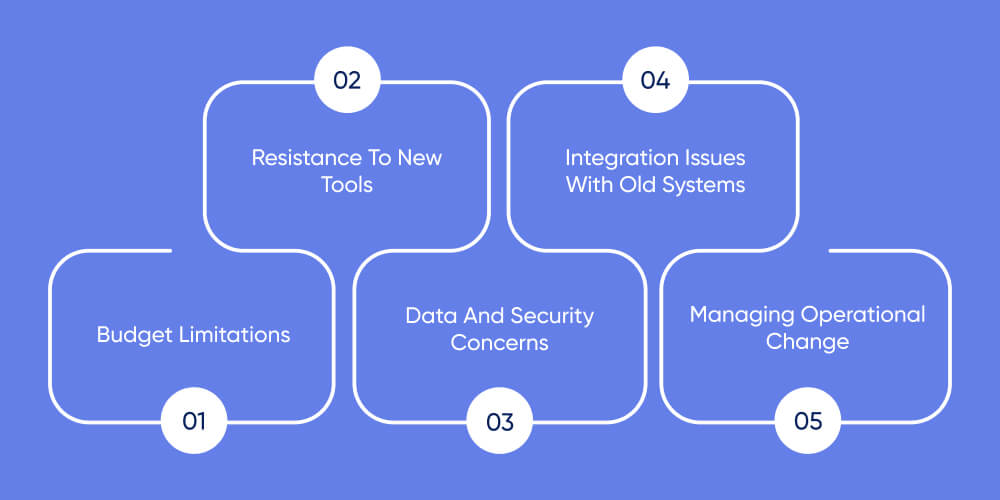
Digital change sounds exciting until you actually begin. That is when the hidden challenges show up. Most of these issues are common across travel companies, regardless of size. The good part is that they all offer clear, practical solutions that keep the transformation moving.
Budget Limitations
Small and mid-sized travel businesses often worry about the investment needed for new systems. The fear is understandable. Nobody wants to pour money into tools that may not deliver results.
A smarter approach is to start with the areas that create the most friction. Fix one process, measure the impact, and then move to the next. This steady pace prevents financial surprises and builds confidence across the team.
Resistance To New Tools
People are used to routines. When you introduce a new system, even a better one, some hesitation is natural. It usually comes from fear of making mistakes or slowing down work. Short, friendly training sessions help shift this mindset. Show your team how the tool makes their day easier. Once they see the benefit, adoption follows quickly.
Data And Security Concerns
Travel companies handle sensitive information daily. Customer IDs, payment details, travel plans. Moving from manual systems to digital platforms can raise concerns about privacy.
The solution is to choose tools that follow strong security standards and offer clear access controls. This keeps information safe while giving staff the clarity they need.
Integration Issues With Old Systems
One of the biggest obstacles is connecting new platforms with older ones. Legacy systems often limit flexibility and cause slowdowns. Many businesses work around this by upgrading outdated components step by step, instead of replacing everything at once. Partners who specialise in product engineering services can also help bridge these gaps with cleaner, long-term solutions.
Managing Operational Change
Digital transformation is not only a technical shift. It changes how teams work, communicate, and solve problems. Some businesses struggle with the transition because they try to change too much at once. A phased rollout works better. Adjust one workflow, observe how the team responds, and then move forward. This pace keeps operations steady and avoids unnecessary stress.
Are You Ready to Modernize Your Travel Operations?
Unlock tailored digital transformation insights designed to streamline workflows, elevate customer experience, and future-proof your travel business.
Why Choose DITS For Custom Travel Software Development
Travel companies rarely find one-size-fits-all software that fits their daily challenges. Each business has its own way of managing bookings, talking to customers, handling partner updates, and coordinating internal tasks. That is where DITS becomes a strong digital transformation consulting services for travel businesses.
We build solutions that match how your team actually works instead of forcing you to adapt to rigid tools. Whether you need smoother itinerary planning, smarter partner integrations, faster communication flows, or better reporting, we create tools that make these things feel natural.
Another reason businesses choose us is our use of AI inside the development cycle. At DITS, we use AI to improve code quality, automate testing, and customise solutions faster, which helps businesses get systems that grow smoothly with them.
DITS also focuses on scalability. As your company grows, your tools should grow with you. We build platforms that support new routes, new services, and new partnerships without causing disruptions. And if you want to expand your tech stack later, our solutions integrate easily with existing systems, third-party services, and future upgrades.
Support matters just as much as development. Our IT Consultants stays with you beyond launch, helping refine features, improve performance, and explore automation opportunities through advanced capabilities. This long-term approach gives you a reliable tech partner who understands the travel domain and continues to innovate with you.
Conclusion
Digital change in the travel world is not a dramatic overnight shift. It is a series of small, thoughtful steps that slowly turn chaos into order. When systems start talking to each other, when customers get answers without waiting, and when teams stop fixing the same mistakes every week, the impact becomes hard to ignore.
Companies that embrace modern tools early find themselves more prepared for demand spikes, unexpected disruptions, and shifting customer habits. They operate with calm, predictable workflows that make growth feel achievable. And as digital transformation in travel and tourism continues to shape customer expectations, staying still becomes the biggest risk of all.
For companies looking to automate more steps, improve coordination, or build stronger digital foundations, partners like DITS offer the clarity and technical depth needed to move forward. With expertise in workflow automation services and other advanced solutions, we help businesses create systems that not only support their operations today but also grow with them tomorrow.
FAQs
What Is Digital Transformation In Travel And Tourism?
It is the shift from manual, disconnected processes to smart digital systems that help travel businesses work faster and serve customers better. It can include modern booking tools, automated workflows, integrated communication channels, and data-driven decision-making. The goal is to remove repetitive tasks and improve the overall travel experience for both customers and teams.
How Does Digital Transformation Improve Daily Operations?
It reduces errors, shortens response times, and gives teams real-time visibility into bookings, schedules, and customer needs. When information flows smoothly, staff can focus on meaningful tasks instead of spending hours fixing avoidable mistakes or updating spreadsheets.
Which Areas Should Travel Companies Modernize First?
Most businesses start with the areas that create daily friction. This could be booking management, customer communication, itinerary planning, or availability updates. Even one well-executed improvement can create an immediate positive shift in operations.
How Much Does Custom Travel Software Cost?
Costs depend on the features you need, integration requirements, and the complexity of your workflows. A simple platform with core functions may cost significantly less than a fully customized system with advanced automation and analytics. A discovery session usually helps define the exact scope and budget.
What Makes DITS A Reliable Technology Partner?
DITS blends industry understanding with strong engineering experience. We integrate AI into our development process to improve quality, speed, and customization. Our team builds systems that reflect real travel operations, support business growth, and integrate smoothly with existing tools. We also offer ongoing guidance, maintenance, and IoT development services for businesses expanding their digital capabilities.

Dinesh Thakur
21+ years of IT software development experience in different domains like Business Automation, Healthcare, Retail, Workflow automation, Transportation and logistics, Compliance, Risk Mitigation, POS, etc. Hands-on experience in dealing with overseas clients and providing them with an apt solution to their business needs.
Recent Posts
Discover how chronic care management software uses algorithmic triage to identify patient risk, prioritize care, and improve care team efficiency.
Explore how intelligent document processing for insurance helps businesses automate document workflows, reduce processing costs, improve accuracy, and strengthen operational efficiency across insurance functions.
Discover how automated medical claims processing reduces delays, manual rework, claim denials, and administrative costs while improving reimbursement speed and operational efficiency.