How a Clinical Trial Management System Improves Efficiency and Compliance
Table Of Content
Published Date :
12 Dec 2025
Clinical studies move fast, yet small gaps slow everything down. A single compliance slip can trigger a warning letter. A lost consent form can invalidate months of data.
Operational pressure on clinics and research sites is at an all-time high. Staff are burning out trying to reconcile patient schedules with protocol amendments while auditors scrutinize every timestamp. These are not just administrative headaches, but existential threats to the study itself. Clinics feel this strain daily.
On top of that, regulators expect clean, consistent records. Not almost right. Fully audit-ready. It becomes tough when operations rely on scattered files or manual tracking that can’t keep pace with growing study demands.
That’s often when teams begin asking what is a clinical trial management system and whether it can bring the control they need. This is why many clinics are rethinking how they run trials. When processes are organized, timelines move smoothly, and compliance becomes less stressful.
In short, effective systems protect your operations from costly surprises and keep studies on track. This blog shares why many healthcare businesses now consider digital systems as an operational safety net. And guess what? It pays off in the long run.
Get a Custom CTMS Blueprint for Your Clinic!
Understand exactly which workflows can be automated and what ROI a tailored system can deliver.
Importance of Effective Clinical Trial Management
Smooth trial management shapes the entire outcome of clinical trials. When tasks move in the right order, teams communicate better, patients show up as planned, and data stays reliable.
But when things fall out of sync, even minor issues can snowball. A missing signature delays monitoring. An outdated document triggers a compliance concern. A slow approval cycle quietly pushes timelines back.
Effective trial management creates stability. It gives everyone clarity on what needs to be done, when, and by whom. It also reduces the risks that typically cause stress during audits. When the process runs well, the entire trial moves faster, costs stay predictable, and operational confidence grows.
What Is Clinical Trial Management System
At its core, a clinical trial management system is the control room that keeps a study on track. Instead of teams juggling spreadsheets, scattered emails, and disconnected tools, a CTMS brings everything into one structured environment where nothing slips between the cracks.
It coordinates the moving parts of a trial in a way people simply cannot do manually at scale. Task assignments, patient visits, protocol updates, site performance, financials, and regulatory records all flow through one system.
The result is a study that behaves more predictably. Teams are able to see issues before they escalate. Leaders can see patterns that were previously invisible. Decisions move faster because the facts are finally visible.
For clinics running multiple trials, this clarity becomes transformative. Operations stop reacting to problems and start directing the study with intention. Instead of chasing information, leaders work with a unified view that keeps momentum steady and compliance intact. When executives talk about operational maturity in research environments, this is the kind of system that makes it possible.
Key Operational Challenges Without a CTMS
When organizations run clinical trials without a CTMS, critical documents are scattered across shared drives, emails, and physical binders. This fragmented environment creates specific and predictable operational friction:
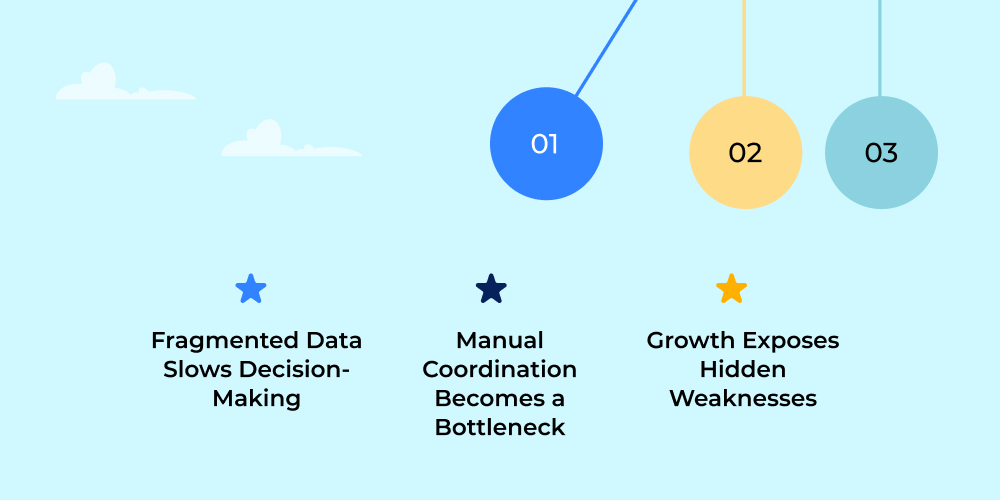
Fragmented Data Slows Decision-Making
When a clinic runs trials without a structured system, information scatters fast. Teams lose time searching for updates instead of acting on them. A protocol amendment waits in someone’s inbox, and documents live in too many places to track reliably. The result is a slow erosion of operational control.
Manual Coordination Becomes a Bottleneck
Every approval depends on someone noticing the request. Every task requires reminders. As studies scale, this manual workflow collapses under its own weight. Financial tracking drifts, sponsor conversations become tense, and compliance becomes challenging for organizations.
Growth Exposes Hidden Weaknesses
Small inefficiencies look manageable until a portfolio expands. Then the gaps multiply. Some teams attempt temporary fixes, but those often add more confusion. Others turn to Legacy Modernization Services only after a serious delay forces change.
Without a coordinated system guiding the work, trials lose accuracy, momentum, and leadership confidence. And recovering from that loss is far more expensive than preventing it.
Eliminate Hidden Bottlenecks With a Free Workflow Audit!
Identify gaps in scheduling, documentation, or compliance before they slow down your trials.
How CTMS Improves Efficiency For Clinical Operations
A robust CTMS provides the infrastructure required to scale research successfully. The primary value lies in enforcing efficiency through automation.
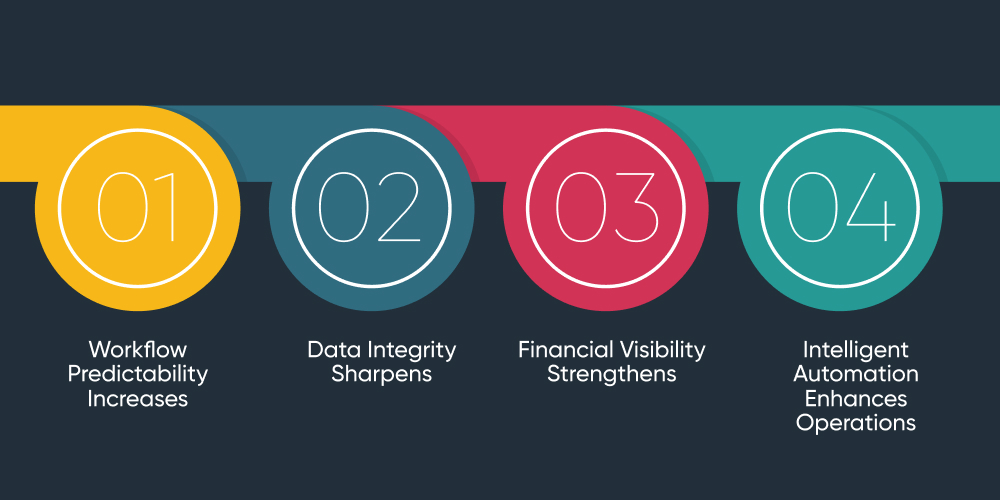
Workflow Predictability Increases
Efficiency improves when work moves with rhythm, not interruption. A strong CTMS brings that rhythm by routing every task, visit, and approval through a central system. Teams stop chasing updates and start executing with focus.
Data Integrity Sharpens
A built-in clinical trial data management system organizes information as it enters the workflow, not afterward. This produces cleaner data, more reliable analytics, and faster decisions at the leadership level. It replaces assumptions with clarity.
Financial Visibility Strengthens
Instead of reconciling costs at the end of the month, leaders see real-time spending trends. Budget drift becomes easier to prevent, and conversations with sponsors become more grounded and confident.
Intelligent Automation Enhances Operations
DITS supports clinics by integrating selective automation through AI Software Development where it makes operational sense. This helps teams reduce routine workload, identify bottlenecks earlier, and maintain consistent code quality within custom CTMS modules.
As these advantages layer together, the study gains a pace that manual systems cannot match. Operations move with direction, accuracy, and momentum.
How a CTMS Strengthens Compliance
In a trial, being compliant just means that everything must be tracked and recorded. Every step an organization takes, every choice it makes, and every change it implements must be put into the system so it can be checked later.
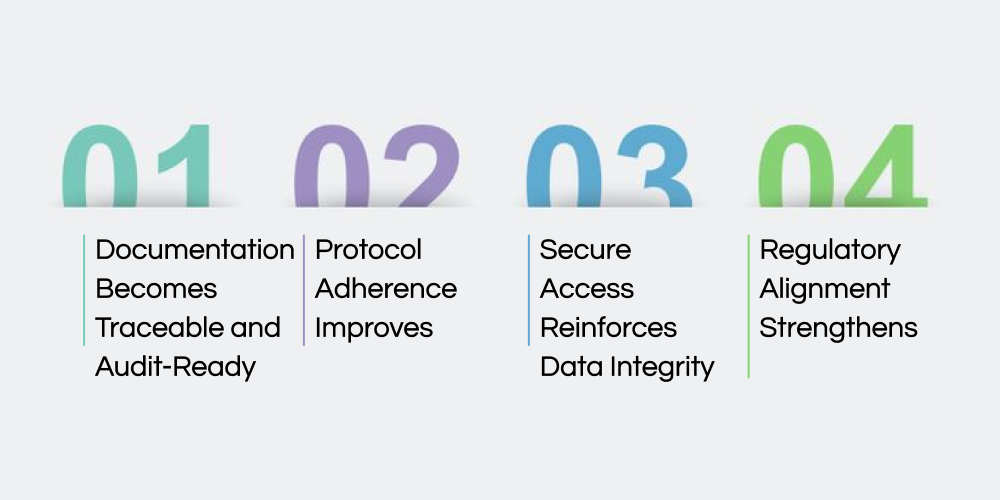
Documentation Becomes Traceable and Audit-Ready
Regulators expect transparent, consistent documentation, and a CTMS brings that discipline into everyday operations. Version control, access tracking, and structured repositories turn scattered files into a reliable clinical trial document management system. When auditors arrive, the evidence is already organized, not assembled at the last minute.
Protocol Adherence Improves
Deviation risks usually surface when teams rely on memory or fragmented reminders. A CTMS monitors timelines, visit windows, overdue tasks, and pending approvals in real time. This reduces surprise findings and helps investigators stay aligned with study requirements.
Secure Access Reinforces Data Integrity
Role-based permissions ensure that only authorized users handle sensitive records. It reduces accidental changes and protects the chain of custody for all trial data. For clinics handling complex studies or multiple sites, this prevents internal inconsistencies that often trigger regulatory flags.
Regulatory Alignment Strengthens
The system supports structured workflows built around ICH-GCP expectations. Instead of chasing compliance at the end of the process, teams follow a consistent framework from day one. When leadership reviews the study, they see a controlled environment instead of an improvised one.
DITS enhances this foundation by enabling selective integrations tailored to each clinic’s environment. For example, IoT Development can support remote patient monitoring in decentralized studies, keeping data accurate and compliant across different locations.
A solid compliance framework does more than satisfy regulators. It protects timelines, strengthens sponsor trust, and creates operational confidence that carries through the entire study.
Build a CTMS That Fits Your Workflow, Not the Other Way Around!
Chat with our healthcare IT consulting experts and design a solution purpose-built for your trials.
Real-Life Use Cases For Clinics and Healthcare Organizations
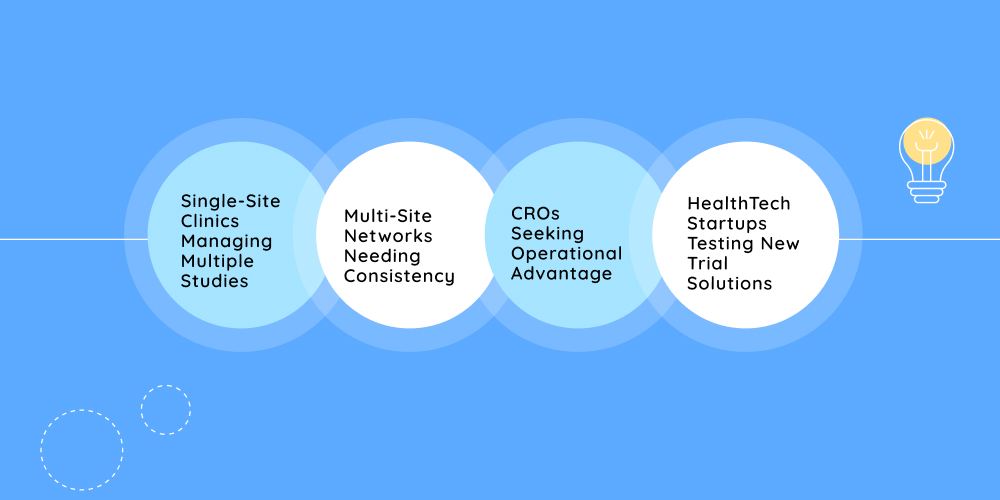
Until now, we have explained how CTMS helps organizations improve efficiency and strengthen compliance. Let us now explore some real use cases where CTMS helped clinics and healthcare businesses in multiple ways.
Single-Site Clinics Managing Multiple Studies
Smaller research centers often feel the strain first. One study runs smoothly, but add a second or third and the pressure multiplies. A CTMS reshapes this dynamic by giving teams a single operational view.
Recruitment, scheduling, documentation, and oversight fall into a predictable rhythm. Leaders finally see the impact clinical trial management system decisions have on day-to-day execution, especially when timelines tighten.
Multi-Site Networks Needing Consistency
When several locations participate in the same trial, inconsistency becomes the enemy. Each site works differently, collects data differently, and reports progress at different speeds. A CTMS unifies these moving parts, turning scattered sites into a coordinated research operation. Executives get real-time visibility without chasing updates across teams.
CROs Seeking Operational Advantage
Contract research organizations run on performance. Faster monitoring cycles, fewer deviations, and cleaner data elevate their reputation. Many CROs enhance these capabilities with digital tools built around CTMS workflows. Some deploy AI Chatbot Development solutions for automated pre-screening, allowing patients to engage with the study before a coordinator steps in. It reduces manual workload and improves participant matching accuracy.
HealthTech Startups Testing New Trial Solutions
Some emerging companies want to validate new modules or features without building a large platform upfront. DITS supports these groups using MVP Development, creating focused pilot solutions that test specific functions like payments, visit tracking, or monitoring workflows. Once validated, these prototypes evolve into full-scale systems aligned with CTMS operations.
Across all these scenarios, the pattern remains clear. When trial operations become structured and predictable, organizations unlock the capacity they did not realize they had. Sponsors notice it. Patients feel it. And leadership sees the long-term value almost immediately.
Choosing Right Clinical Trial Management System
Choosing a CTMS is a matter of strategy rather than shopping. The optimum solution is that which not only suits the intricacies and the size of your present operation but also enables the future expansion.
Essential Features to Evaluate
It is necessary to look beyond the attractive dashboards and ensure that the system really meets the core requirements:
- Interoperability: Is the CTMS capable of sharing information with the current systems of your facility, such as EMR/EHR, EDC, and eConsent platforms, without any difficulties? The creation of data silos leads to inefficiency.
- Configuration vs. Customization: Is the vendor offering the option of setting up the system in a way that perfectly replicates your protocol workflows, or is it a strict solution that cannot be changed and is the same for all?
- Security and Compliance: Vendor, does he explicitly follow international standards and put up a strong security system?
Small Clinic Considerations vs. Large Research Sites
Typically, large university or pharmaceutical research networks require a vast number of features and great scalability. For organizations still using older systems, the process of integrating a new platform may be complicated.
In such cases, our Legacy Modernization Services facilitate the transfer and connection of valuable historical trial data to the new CTMS without any discontinuity. A clinical trial management system in a complicated environment is one that can unify data from various sources.
Support, Scalability, and Integration
The importance of excellent vendor support and the ability of the system to scale should always be kept in mind. The CTMS that you have should be capable of handling the increase of volume that comes with the doubling of your study load in three years without breaking down or getting slow.
How DITS Can Support Clinical Trial Operations
At DITS, we understand that generic, off-the-shelf CTMS platforms often fail because they don't match the highly specific, custom workflows of healthcare organizations. That’s why our IT consulting services focus on designing custom, scalable CTMS solutions that fit your clinical, operational, and regulatory needs perfectly.
We leverage our decades of experience in the Healthcare industry to provide solutions that are custom-built, compliant, and optimized for your operational environment:
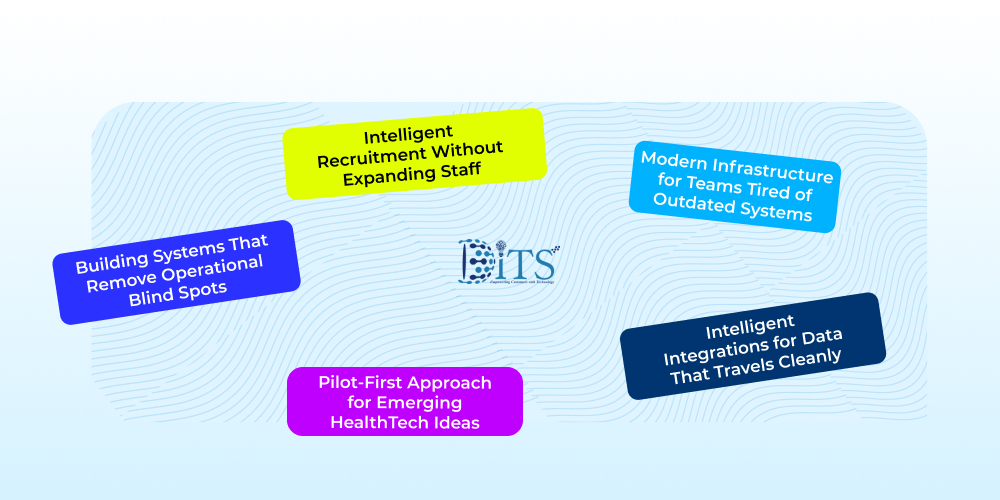
Building Systems That Remove Operational Blind Spots
Many clinics struggle with the same hidden problem: too many tools, not enough coordination. Instead of layering more software on top of an already congested workflow, we design CTMS solutions that cut through complexity and create a single operational truth.
Intelligent Recruitment Without Expanding Staff
Most trials lose weeks to slow or mismatched recruitment. DITS addresses this gap with subtle, high-impact technology. Through AI Chatbot Development, we create automated pre-screening assistants that sit on your website and filter potential participants before coordinators step in. It reduces manual screening hours and lifts enrollment efficiency without hiring more staff.
Modern Infrastructure for Teams Tired of Outdated Systems
Some clinics still depend on decade-old technology that cannot keep pace with current compliance demands. When those systems start dictating your operations instead of supporting them, our Legacy Modernization Services transition you to a secure, cloud-ready architecture while protecting all historical data.
Pilot-First Approach for Emerging HealthTech Ideas
Not every organization wants a massive platform on day one. Some want proof that a new process works. For those teams, DITS offers MVP Development tailored for clinical environments. We build focused trial modules that validate specific functions, including payments, monitoring workflows, or site management. Once proven, they expand naturally into full systems.
Intelligent Integrations for Data That Travels Cleanly
Decentralized studies and hybrid trials need more than dashboards. They need real-time data that moves cleanly from patients to investigators. When clinics want wearables or monitoring devices connected directly to their CTMS, our IoT Development teams build secure pathways that maintain data integrity and compliance across every step.
Modernize Your Clinical Trial Systems Without Disrupting Ongoing Studies!
Upgrade outdated workflows, migrate legacy data safely, and streamline operations with a CTMS designed around your clinical environment.
Conclusion
The modern clinical trial environment requires an elevated level of administrative and regulatory performance. The CTMS is the strategic investment that makes this performance possible.
By moving away from fragmented, manual processes, organizations gain critical advantages: dramatic improvements in efficiency, superior data quality, and the non-negotiable assurance of compliance.
Adopting a CTMS is a declaration that your research organization prioritizes speed, accuracy, and patient safety above all else. The decision to implement or upgrade your CTMS defines your organization's capacity for the future of clinical research.
FAQs
What Does A CTMS Actually Do?
A CTMS keeps trial operations organized, traceable, and predictable. It centralizes scheduling, documentation, financial tracking, and study oversight so teams no longer rely on scattered tools or manual updates. Leaders use it to maintain control over timelines, reduce operational friction, and keep regulatory requirements on track without constant intervention.
How Does A CTMS Improve Compliance?
Compliance strengthens when processes stop relying on memory and makeshift systems. A CTMS enforces structured workflows, protects document history, controls data access, and maintains audit-ready records. For clinics handling multiple trials, this consistency reduces deviation risks and keeps regulatory reviews straightforward.
Is A CTMS Useful For Smaller Clinics?
Single-site clinics often experience the fastest gains because manual coordination consumes most of their day. A CTMS lightens that workload, brings clarity to scheduling, and improves documentation accuracy. It also scales naturally as their study volume grows.
Can A CTMS Integrate With Our Existing Systems?
Most organizations need their CTMS to connect with EMRs, ePRO tools, or monitoring devices. Integrations are possible when planned correctly, and this is where DITS often steps in. With experience in custom engineering and secure data mapping, we help clinics link systems without creating new friction points.
How Much Customization Do Clinics Usually Need?
It depends on how complex the workflow is. Some teams need only a streamlined system, while others require tailored modules or automated features. DITS provides custom enhancements, including selective AI-driven automation, so the system fits your processes rather than forcing new ones.

Nidhi Thakur
With more than 19 years of experience - I represent a team of professionals that specializes in the healthcare and business and workflow automation domains. The team consists of experienced full-stack developers supported by senior system analysts who have developed multiple bespoke applications for Healthcare, Business Automation, Retail, IOT, Ed-tech domains for startups and Enterprise Level clients.
Recent Posts
Explore how intelligent document processing for insurance helps businesses automate document workflows, reduce processing costs, improve accuracy, and strengthen operational efficiency across insurance functions.
Discover how automated medical claims processing reduces delays, manual rework, claim denials, and administrative costs while improving reimbursement speed and operational efficiency.
Learn how to build medical billing software with essential features, integrations, security, and development costs.