What is AI as a service (AIaaS) and its Business Benefits
Table Of Content
Published Date :
15 Dec 2025
Modern enterprises are rapidly moving from resource-heavy, in-house AI development toward consumption-based AI models that deliver faster results with lower risk. AI as a Service (AIaaS) has emerged as the most practical way for businesses to adopt artificial intelligence without investing heavily in infrastructure, talent, or long implementation cycles. For companies evaluating AI adoption, working with the right AI as a Service company or experienced AI service providers helps bridge the gap between ambition and execution.
This guide explains how AIaaS works, why leading AI as a Service companies are accelerating business transformation, and what decision-makers must consider, from core components and real-world use cases to cost structures, risks, and partner selection, so organizations of any size can adopt AI confidently and strategically.
What is AI as a Service (AIaaS)?
AI as a Service (AIaaS) refers to delivering artificial intelligence capabilities through cloud-based platforms, APIs, and ready-to-use models, allowing businesses to adopt AI without building complex systems from scratch. Instead of investing in expensive infrastructure and specialized talent, organizations can access machine learning, natural language processing, computer vision, and analytics on demand through trusted AI service providers.
Unlike traditional AI development, which requires long timelines and high upfront costs, AIaaS enables faster deployment, flexible scaling, and pay-as-you-use pricing. Compared to standard SaaS tools, AIaaS offers deeper intelligence and customization. Partnering with an experienced AI as a Service company or reliable AI as a Service companies helps businesses turn data into actionable insights while maintaining agility and cost control.
Why Businesses Are Adopting AIaaS Today
Businesses across industries are increasingly turning to AI as a Service (AIaaS) to overcome the practical barriers of adopting artificial intelligence at scale. Building and maintaining in-house AI capabilities demands significant investment, long hiring cycles, and constant infrastructure upgrades, challenges that slow innovation and increase risk. Partnering with a trusted AI software development company allows organizations to focus on outcomes rather than complexity.
Key reasons driving AIaaS adoption include:
1. Rising cost and complexity of in-house AI teams
Recruiting data scientists, ML engineers, and maintaining compute infrastructure is expensive. AI service providers offer ready expertise without long-term overhead.
2. Need for faster AI experimentation and deployment
Businesses need to test, iterate, and deploy AI quickly. Leading AI as a Service companies enable rapid prototyping and faster go-live cycles.
3. Demand for scalable, pay-as-you-use AI capabilities
AI workloads fluctuate. AIaaS companies provide flexible scaling and cost-efficient pricing aligned with actual usage.
4. Shortage of AI talent and infrastructure challenges
An experienced artificial intelligence services company removes talent gaps and infrastructure constraints, accelerating AI adoption with lower risk.
Ready to Operationalize AI Without Heavy Investment?
Explore how AI as a Service can align with your business priorities, data maturity, and growth roadmap through a structured consultation.
Core Components of AI as a Service
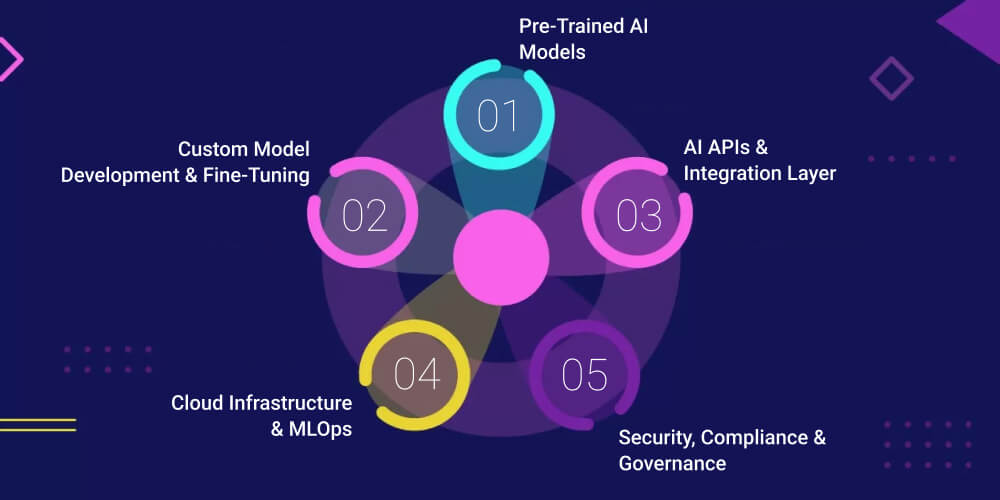
AI as a Service (AIaaS) is delivered through a structured ecosystem that allows businesses to consume AI capabilities without managing infrastructure, talent, or operational risk internally. A mature AI as a Service company typically offers the following components.
Pre-Trained AI Models
AI as a Service platforms provide ready-to-use models for NLP, computer vision, recommendations, and speech recognition, enabling businesses to deploy proven AI capabilities quickly without building algorithms from scratch.
Custom Model Development & Fine-Tuning
AIaaS also supports custom model development, where models are trained or fine-tuned using proprietary, industry-specific data to deliver higher accuracy, contextual intelligence, and outcomes aligned with unique business processes.
AI APIs & Integration Layer
A robust API and integration layer allows AI capabilities to connect seamlessly with existing ERP software, CRMs, mobile applications, data pipelines, and enterprise software development without disrupting ongoing operations or workflows.
Cloud Infrastructure & MLOps
AIaaS includes scalable cloud infrastructure and MLOps frameworks for automated deployment, monitoring, version control, and performance optimization, ensuring models remain reliable, efficient, and continuously improving at scale.
Security, Compliance & Governance
Security and governance frameworks ensure data privacy, role-based access control, auditability, and compliance with regulations such as GDPR, HIPAA compliance, or industry-specific standards, reducing operational and regulatory risks.
AIaaS vs In-House AI vs Traditional Software
Businesses evaluating AI adoption often struggle to choose between AI as a Service, building AI internally, or relying on traditional software. This comparison highlights how each approach differs in cost, speed, scalability, and operational responsibility, helping decision-makers select the model that best aligns with their growth, budget, and innovation goals.
Cost Comparison
AI as a Service (AIaaS) follows a pay-as-you-use model, reducing upfront investment, while in-house AI demands high spending on talent and infrastructure, and traditional software often incurs long-term licensing and customization costs.
Time-to-Value
AIaaS enables rapid deployment using pre-built models and APIs, in-house AI requires months of research and development, and traditional software delivers predictable outcomes but lacks the speed needed for AI-driven innovation.
Scalability and Flexibility
AIaaS scales instantly with demand through cloud infrastructure, in-house AI scaling depends on hiring and hardware expansion, while traditional software scaling is slower and often constrained by rigid architectures.
Risk and Maintenance Ownership
With AIaaS, vendors handle model updates, infrastructure, and compliance risks; in-house AI shifts all responsibility to internal teams; traditional software places maintenance burdens on IT without adaptive intelligence improvements.
Ideal Scenarios for Each Approach
AIaaS suits businesses seeking fast, flexible AI adoption; in-house AI fits organizations with deep AI maturity and long-term budgets; traditional software works for stable, rule-based processes requiring minimal intelligence.
Business Benefits of AI as a Service
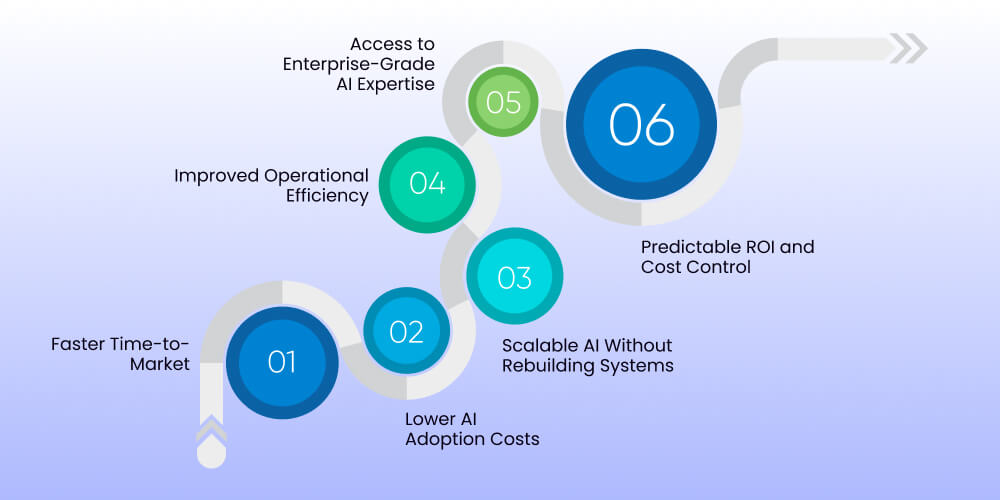
AI as a Service (AIaaS) helps businesses adopt artificial intelligence without the complexity of building, maintaining, or scaling AI systems internally. It delivers measurable business value by reducing cost, time, and operational risk while enabling faster innovation.
Faster Time-to-Market
AIaaS allows organizations to launch AI-driven features in weeks instead of months by leveraging ready-to-use models and APIs. This speed helps businesses respond faster to customer expectations, market changes, and competitive pressures.
Lower AI Adoption Costs
By eliminating the need for upfront infrastructure and long-term AI hiring, AIaaS converts capital-heavy investments into manageable operational expenses. Businesses can adopt AI without committing to expensive in-house teams or platforms.
Scalable AI Without Rebuilding Systems
AIaaS solutions scale smoothly as data volumes, users, or use cases grow. Companies can expand AI usage without reengineering existing systems, ensuring continuity while supporting future business growth.
Improved Operational Efficiency
AIaaS automates repetitive and data-heavy processes such as analysis, classification, and forecasting. This reduces manual effort, minimizes errors, and allows teams to focus on strategic and revenue-driving activities.
Access to Enterprise-Grade AI Expertise
Businesses gain access to continuously upgraded models, security standards, and industry best practices maintained by AI service providers, avoiding dependency on scarce AI talent and ongoing internal retraining.
Predictable ROI and Cost Control
With usage-based pricing, AIaaS aligns spending directly with value delivered. Organizations gain better budget control, clear ROI tracking, and confidence that AI investments scale only when business outcomes justify them.
Want an AI Strategy Built for Business Outcomes?
Translate AI ambition into execution with a clear roadmap covering cost control, scalability, compliance, and measurable performance gains.
Real-World AIaaS Use Cases by Industry
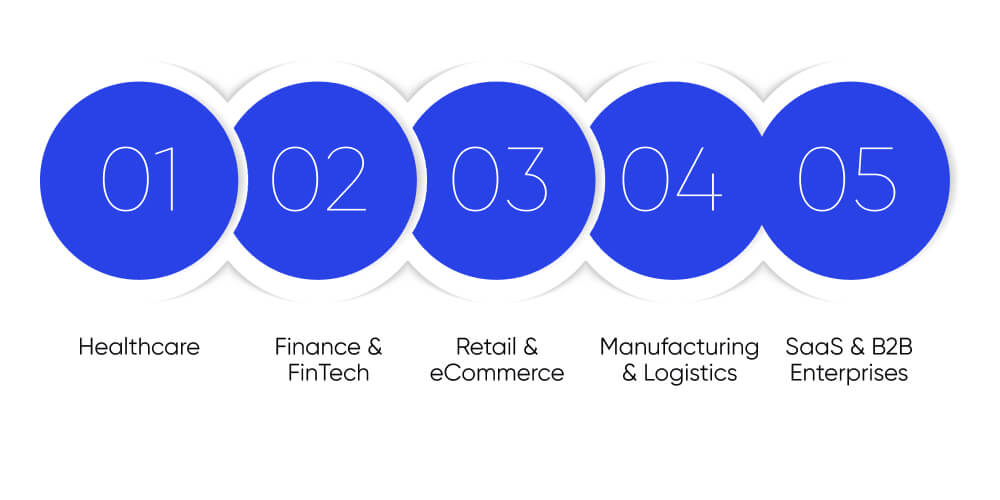
AI as a Service enables organizations across industries to adopt artificial intelligence quickly without building complex systems in-house. By leveraging scalable AI capabilities, businesses can improve decision-making, automate operations, and enhance customer experiences with minimal risk.
Healthcare
AIaaS supports clinical decision systems, patient engagement platforms, and diagnostics automation by analyzing medical data in real time. This improves care quality, reduces administrative workload, and enables faster, data-backed clinical decisions.
Finance & FinTech
Financial institutions use AIaaS for fraud detection, credit risk scoring, and personalized financial insights. These solutions improve security, ensure regulatory compliance, and deliver smarter, real-time financial services to customers.
Retail & eCommerce
Retailers apply AIaaS for demand forecasting, personalized recommendations, and inventory optimization. This helps reduce stockouts, improve customer experience, and maximize revenue during seasonal or high-demand periods.
Manufacturing & Logistics
AIaaS enables predictive maintenance, supply chain intelligence, and operational forecasting. Businesses can reduce downtime, optimize logistics routes, and make proactive decisions using real-time operational data.
SaaS & B2B Enterprises
SaaS and B2B companies use AIaaS to build AI agents, automate workflows, and power customer support agents. This improves productivity, reduces support costs, and enhances product differentiation.
Cost Structure of AI as a Service
Understanding AIaaS cost models helps businesses plan budgets effectively while maximizing value. Flexible pricing structures allow organizations of all sizes to adopt AI based on usage, scale, and specific business objectives.
Pay-Per-Use vs Subscription Models
Pay-per-use pricing charges based on actual AI consumption, ideal for variable workloads. Subscription models offer predictable monthly costs, suitable for businesses with steady AI usage and long-term operational needs.
Factors Affecting AIaaS Pricing
Pricing depends on model complexity, data volume, API usage, security requirements, customization level, and integration scope. Advanced models, real-time processing, and compliance needs typically increase overall AIaaS costs.
Budget Planning for Startups, SMBs, and Enterprises
Startups benefit from low-entry, usage-based plans, while SMBs balance scalability and cost control. Enterprises require structured budgeting for high-volume usage, governance, and multi-department AI adoption.
Cost Optimization Strategies
Businesses can optimize AIaaS costs by selecting the right pricing model, monitoring usage, retiring unused models, and aligning AI workloads with business priorities to ensure measurable ROI and sustainable AI adoption.
Key Challenges & Risks of AIaaS (And How to Mitigate Them)
While AI as a Service accelerates AI adoption, businesses must understand its risks to ensure secure, compliant, and reliable outcomes. Identifying these challenges early helps organizations build mitigation strategies that protect data, performance, and long-term flexibility.
Data Privacy and Compliance Risks
AIaaS platforms process sensitive business and customer data, creating compliance exposure. Mitigation requires strong encryption, access controls, regional data hosting, and alignment with regulations such as GDPR, HIPAA, or SOC 2.
Vendor Lock-In Concerns
Relying on a single AIaaS provider can limit flexibility and future migration options. Businesses should mitigate this risk by choosing providers that support open APIs, portable models, and multi-cloud or hybrid deployment strategies.
Model Bias and Accuracy Issues
Pre-trained AI models may reflect biased or incomplete data, impacting decision accuracy. Regular model audits, bias testing, human-in-the-loop validation, and continuous fine-tuning help maintain fairness and reliability.
Integration Complexity
Integrating AIaaS with existing ERP, CRM, or legacy systems can slow deployment. Using standardized APIs, middleware layers, and phased integration plans reduces disruption and accelerates operational alignment.
Governance and Accountability Gaps
Without clear AI governance, businesses risk uncontrolled model usage and inconsistent outcomes. Defining ownership, approval workflows, monitoring KPIs, and audit trails ensures accountability and responsible AI adoption.
Exploring AIaaS Partners for Long-Term Growth?
Evaluate how the right AI as a Service partner can support secure deployment, continuous optimization, and enterprise-scale adoption.
How to Choose Right AIaaS Partner
Selecting the right AIaaS partner directly impacts performance, security, scalability, and return on investment. Businesses should evaluate partners beyond technology, focusing on strategic alignment, transparency, and long-term support capabilities.
Industry Expertise and Use-Case Understanding
An experienced AIaaS partner understands industry-specific workflows, data challenges, and compliance needs. This reduces experimentation time and ensures AI solutions are aligned with real business problems, not generic implementations.
Customization vs Off-Shelf Balance
The right partner offers configurable AI services, balancing speed and customization. Businesses benefit from reusable pre-trained models combined with tailored fine-tuning to match unique operational and data requirements.
Security and Compliance Readiness
Strong AIaaS partners embed security by design, offering certifications, compliance frameworks, data governance policies, and regular audits to protect sensitive information and meet regulatory obligations across regions.
Scalability and Long-Term Support
AI adoption grows over time; partners must support scaling workloads, adding new models, performance optimization, and continuous improvements without disrupting existing systems or increasing operational complexity.
Transparency in Pricing and SLAs
Clear pricing models, usage visibility, and well-defined SLAs prevent unexpected costs. Transparent partners align AIaaS pricing with business outcomes, ensuring predictable ROI and long-term financial control.
Future of AI as a Service
AI as a Service is rapidly evolving from an experimental capability into a foundational business layer. Organizations adopting AIaaS early are positioning themselves for scalable automation, intelligent decision-making, and continuous innovation across digital ecosystems.
Rise of Agentic AI and Autonomous Workflows
AIaaS is moving toward agentic AI systems that execute tasks autonomously, coordinate across tools, and adapt dynamically. This enables businesses to automate complex business workflows automation with minimal human intervention.
Multi-Model and Multi-Cloud AI Strategies
Future-ready businesses adopt multiple AI models across cloud providers to optimize performance, reduce dependency risks, and ensure flexibility. AIaaS simplifies managing diverse models within unified operational frameworks.
AIaaS as a Core Digital Transformation Layer
AIaaS is becoming central to digital transformation, embedding intelligence into applications, processes, and platforms. It acts as a connective layer that enhances productivity, personalization, and real-time decision-making.
Shift from AI Experimentation to AI-Driven Operations
Organizations are moving beyond pilots toward operational AI. AIaaS enables production-ready deployments that drive measurable outcomes, cost optimization, and consistent value across departments.
Why DITS is the Right AIaaS Partner
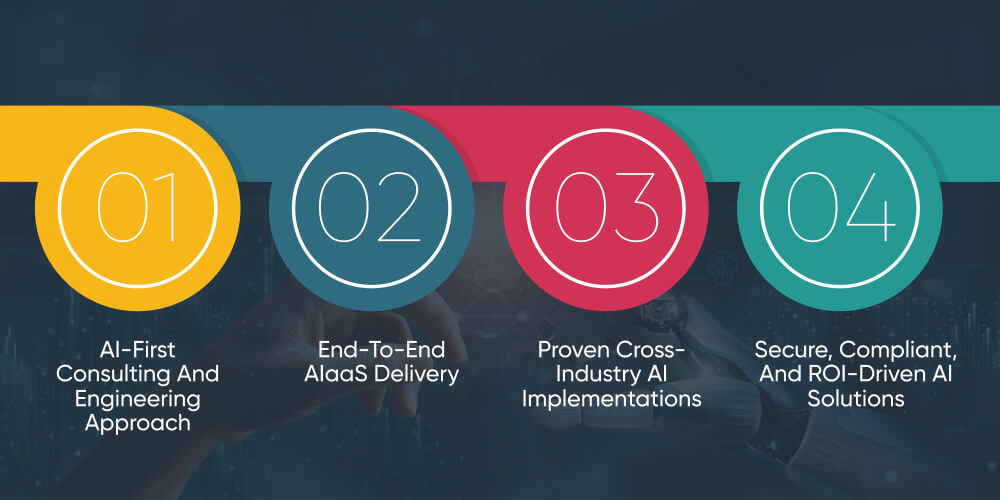
Choosing the right partner determines how effectively AIaaS delivers business impact. DITS combines strategic consulting, advanced engineering, and industry expertise to help organizations adopt AI with confidence and measurable ROI.
AI-First Consulting and Engineering Approach
DITS aligns AI strategy with business objectives, ensuring AIaaS initiatives solve real operational challenges, accelerate decision-making, and integrate seamlessly into existing digital ecosystems.
End-to-End AIaaS Delivery
From use-case identification to deployment and scaling, DITS manages the entire AIaaS lifecycle. This reduces risk, shortens timelines, and ensures continuous optimization as business needs evolve.
Proven Cross-Industry AI Implementations
DITS delivers AIaaS solutions across healthcare, finance, retail, logistics, edtech, insurance, and SaaS. This cross-domain expertise enables faster adoption, regulatory alignment, and higher success rates.
Secure, Compliant, and ROI-Driven AI Solutions
Security, compliance, and value realization are built into every solution. DITS ensures data protection, regulatory adherence, and clear ROI tracking to support long-term, responsible AI adoption.
Looking to Scale AI With Predictable ROI?
Assess where AI as a Service can drive efficiency, automation, and decision intelligence across your operations without long-term infrastructure risk.
Conclusion: Is AIaaS Right for Your Business?
AI as a Service offers a practical path for organizations seeking intelligent automation without heavy upfront investment. With the right strategy and partner, AIaaS becomes a scalable growth engine rather than a technical experiment.
Who Should Adopt AIaaS Now
Businesses facing data overload, operational inefficiencies, or rapid scaling needs benefit most from AIaaS. It is especially valuable for organizations lacking in-house AI expertise or infrastructure.
How to Start Small and Scale Confidently
Begin with a focused use case, validate outcomes, and expand gradually. AIaaS allows controlled experimentation while maintaining flexibility, cost visibility, and performance governance.
Strategic Next Steps for AI-Driven Growth
Assess high-impact processes, define success metrics, and partner with experienced AIaaS providers. A structured roadmap ensures AI adoption delivers sustainable business value and long-term competitive advantage.
FAQs
1. What is AI as a Service (AIaaS) and how does it work?
AI as a Service provides artificial intelligence capabilities through cloud platforms and APIs. Businesses can use AI models, automation tools, and analytics without building or maintaining complex AI infrastructure internally.
2. Which businesses benefit the most from AIaaS?
AIaaS benefits startups, SMBs, and enterprises across healthcare, finance, retail, logistics, manufacturing, and SaaS that want faster AI adoption without high upfront investment or long development cycles.
3. How is AIaaS different from traditional AI development?
Traditional AI development requires dedicated teams, infrastructure, and long timelines. AIaaS offers ready-to-use, scalable AI solutions with faster deployment, lower costs, and flexible usage-based pricing.
4. Is AIaaS secure and compliant for sensitive business data?
Trusted AIaaS providers implement strong encryption, access controls, and compliance measures such as GDPR, HIPAA, and SOC 2 to protect sensitive business and customer data.
5. How much does AI as a Service typically cost?
AIaaS pricing depends on usage volume, model complexity, integrations, and security needs. Most providers offer pay-per-use or subscription pricing for predictable and controlled spending.
6. How can DITS support AIaaS adoption for businesses?
DITS offers end-to-end AIaaS services, including strategy, customization, deployment, and scaling, helping businesses adopt secure, compliant, and ROI-driven AI solutions aligned with real operational goals.

Dinesh Thakur
21+ years of IT software development experience in different domains like Business Automation, Healthcare, Retail, Workflow automation, Transportation and logistics, Compliance, Risk Mitigation, POS, etc. Hands-on experience in dealing with overseas clients and providing them with an apt solution to their business needs.
Recent Posts
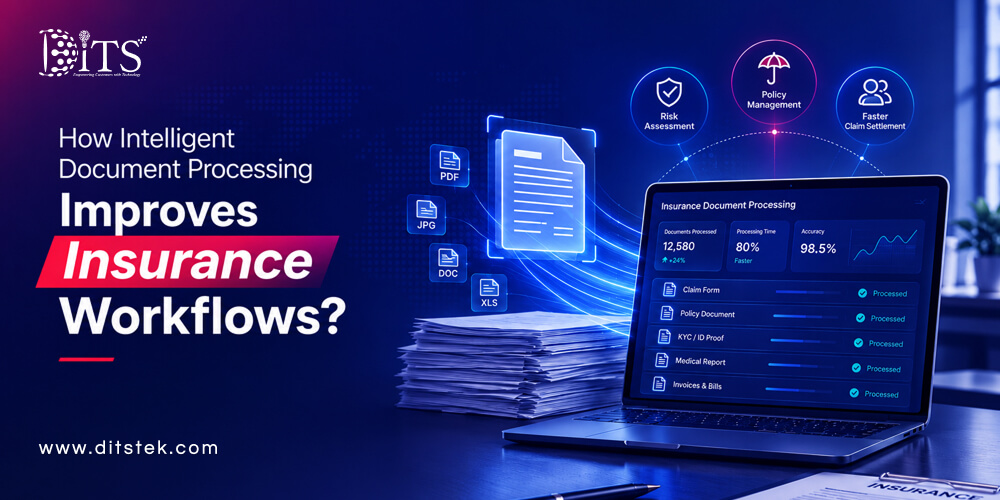
Explore how intelligent document processing for insurance helps businesses automate document workflows, reduce processing costs, improve accuracy, and strengthen operational efficiency across insurance functions.
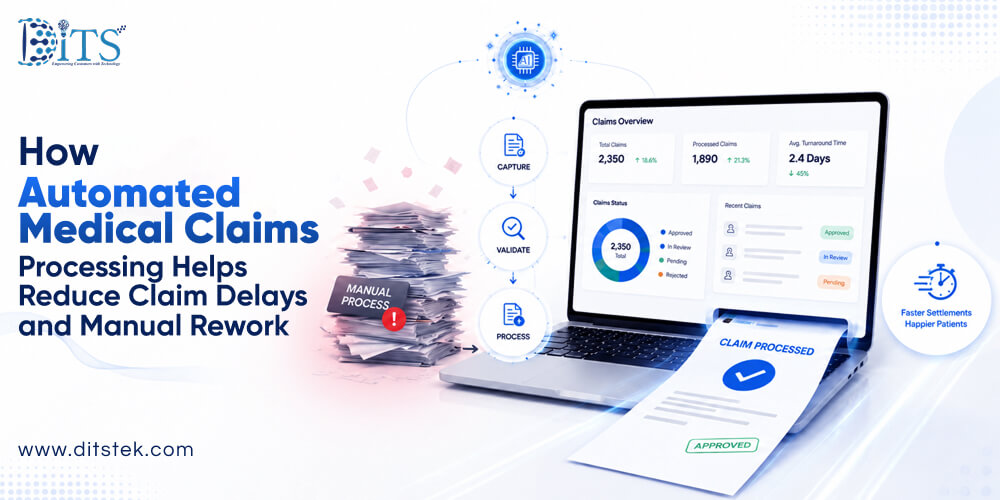
Discover how automated medical claims processing reduces delays, manual rework, claim denials, and administrative costs while improving reimbursement speed and operational efficiency.
Learn how to build medical billing software with essential features, integrations, security, and development costs.