Teams Depend on Manual Coordination
Calls, email, spreadsheets, shared files, and individual knowledge often become the unofficial operating system when applications do not support the complete workflow.
We help mid-market and enterprise organizations modernize how work moves across people, systems, data, and operational environments. Our operations modernization services combine operational transformation consulting, business operations modernization, integration, automation, application modernization, data, cloud, connected systems, and AI to improve performance without introducing technology the business does not need.
Discuss Your Modernization PrioritiesEffective operations modernization services begin by understanding where work is slowing down, breaking apart, or becoming expensive to manage. Through operational transformation consulting, we map workflows, systems, information, decisions, and dependencies before deciding what should actually change.
Calls, email, spreadsheets, shared files, and individual knowledge often become the unofficial operating system when applications do not support the complete workflow.
ERP, CRM, finance, operations, field applications, devices, and reporting platforms may all perform useful functions while requiring employees to move information between them manually.
Business teams develop workarounds because existing systems cannot accommodate new rules, products, locations, customers, suppliers, or operating requirements quickly enough.
Managers may know something went wrong only after a customer complains, a deadline is missed, inventory is incorrect, equipment fails, or financial reconciliation exposes the issue.
Older business applications may still contain valuable logic while limiting integration, automation, analytics, mobile workflows, reporting, cloud adoption, and AI readiness.
Processes that worked for one team or location can become increasingly difficult to manage as transactions, employees, customers, facilities, assets, and partners increase.
Local workarounds and inconsistent operating practices make reporting, governance, automation, training, and enterprise scaling more difficult.
New tools may add functionality without addressing the workflow, system dependencies, data, ownership, or adoption issues responsible for the original business problem.
Successful business operations modernization should create a measurable difference in how work gets done. Our operations modernization services connect workflow, technology, data, automation, and operating-model improvements around the outcomes leadership actually needs.
Remove repetitive entry, reconciliation, tracking, follow-ups, approvals, and status checks where technology can handle predictable activities more effectively.
Reduce unnecessary waiting between teams, applications, decisions, approvals, and operational events.
Allow information to move more reliably between departments so processes do not break when responsibility crosses organizational boundaries.
Give managers clearer information about activity, workload, bottlenecks, exceptions, capacity, assets, financial workflows, and service performance.
Connect relevant operational data with dashboards, alerts, analytics, and appropriate decision support so teams spend less time assembling information manually.
Design workflows and systems that support higher transaction volumes, more users, additional locations, new partners, or broader service models without equivalent growth in overhead.
Improve applications, APIs, integration, data, infrastructure, and user experiences that make ordinary business change increasingly difficult.
Improve workflows and data foundations before introducing AI so intelligent capabilities support a reliable operating model rather than another disconnected experiment.
DITS supported a South African fashion retailer operating more than 650 stores, where disconnected applications and spreadsheet-based processes affected reconciliation, asset visibility, infrastructure continuity, and operational accountability. We connected POS and centralized operations with automated banking workflows, asset management, support ticketing, reporting, and controlled financial processes. The published portfolio reports financial reports and bank reconciliations becoming available within the same business day.
Explore Portfolio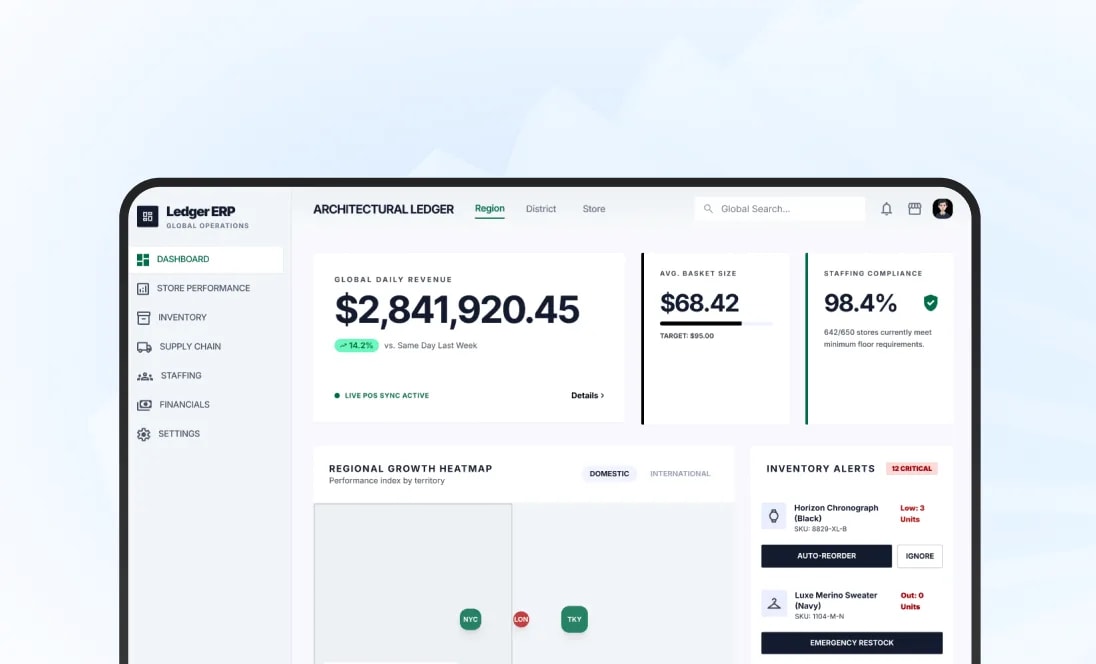
A freight-forwarding environment depended on repeated data entry, fragmented documents, manual coordination, and limited visibility into clearance progress. DITS introduced OCR, centralized document management, configurable workflow orchestration, role-based tasks, integrations, dashboards, and automated deployment. The published project reports 80% faster data entry, 40% shorter clearance cycles, 50% fewer status-inquiry tickets, and 85% faster client onboarding within that implementation.
Read Full Portfolio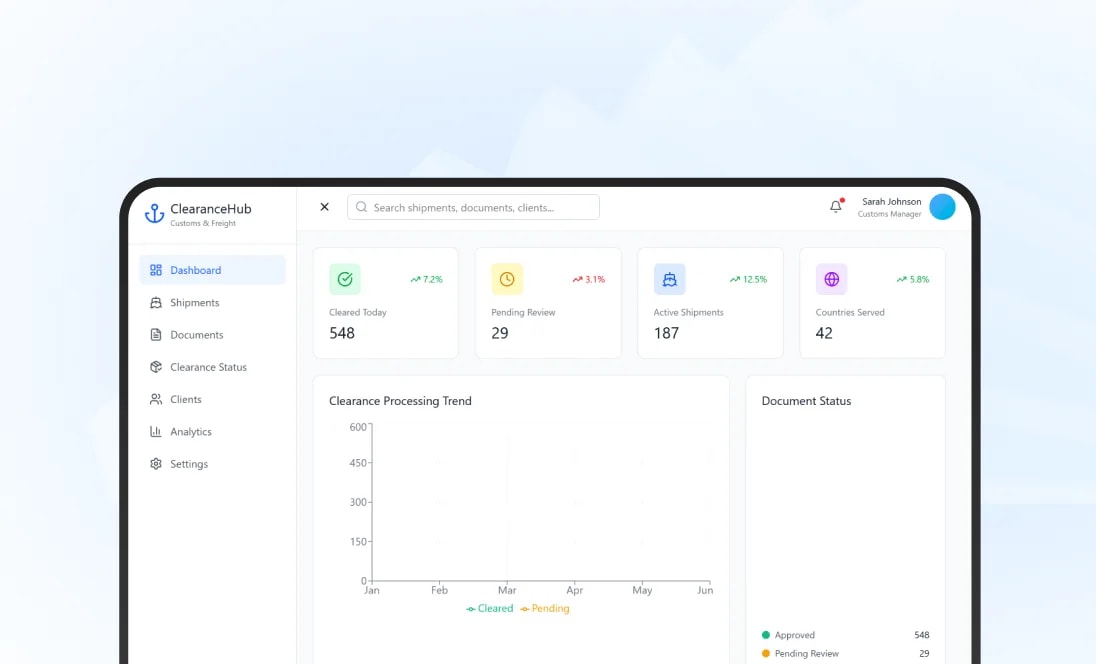
We built a cloud-based asset-management environment for a UK industrial maintenance business that previously relied on MS Access and Excel for equipment tracking and reporting. The modern platform introduced real-time alarms, predictive trend analytics, automated reporting, centralized collaboration, and role-based access. The portfolio reports a 65% reduction in manual workflows, an 80% increase in reporting efficiency, and 50% more preventive interventions within that engagement.
Explore Portfolio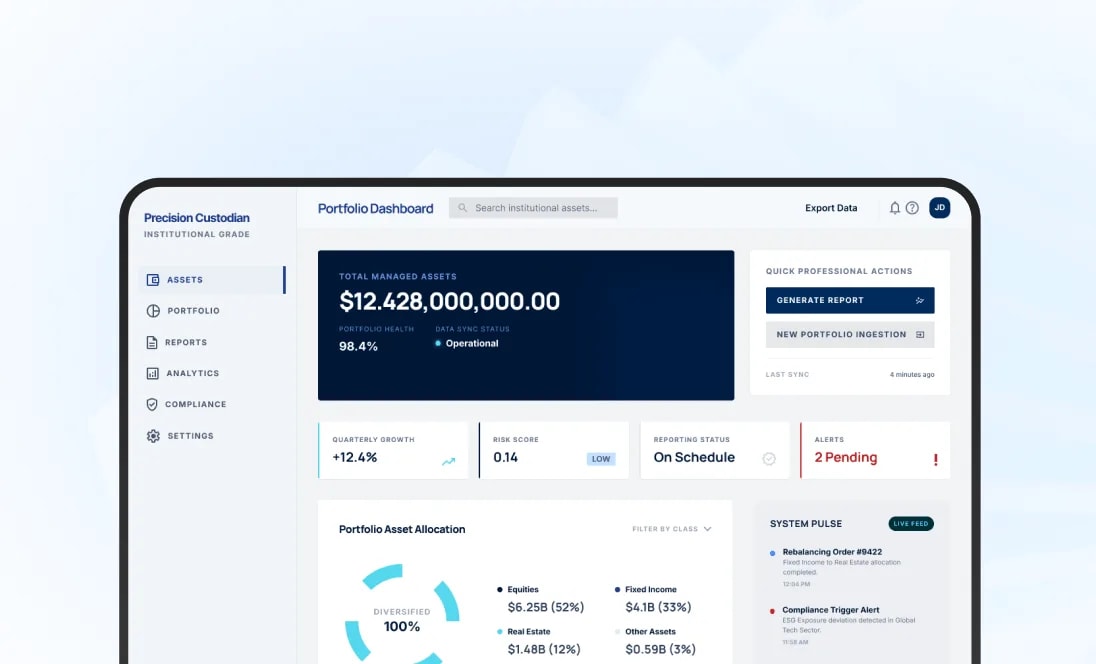
DITS also transformed a monolithic IoT tracking environment into a cloud-native ecosystem supporting real-time GPS data, telemetry, video intelligence, alerts, geofencing, device management, and integrations. The published portfolio reports a 75% reduction in deployment time alongside global scalability and evolution into a SaaS- and hardware-integrated IoT platform.
Read Full Portfolio
Our operations modernization services connect business-process improvement with engineering execution. Depending on the constraint, enterprise operations modernization can combine workflow redesign, systems, data, integration, automation, digital products, and connected operational technology.
Map how requests, information, decisions, approvals, tasks, and exceptions currently move, then redesign the stages creating unnecessary effort or delay.
Improve operational applications through architecture modernization, re-engineering, cloud, APIs, user experience, performance, testing, or selective replacement.
Connect ERP, CRM, finance, HR, operations platforms, partner systems, databases, third-party services, and custom applications.
Automate repetitive activities, routing, notifications, approvals, data movement, validation, reconciliation, and exception handling.
Connect operational information into governed dashboards, analytics, reporting, alerts, and decision-support environments.
Create role-specific workspaces that give employees, managers, partners, customers, or suppliers the information and actions required for their workflow.
Combine software with devices, equipment, telemetry, IoT, and operational events where physical and digital workflows need to work together.
Introduce AI, agents, predictive models, document intelligence, and decision support after the required workflow, integration, data, and governance foundations are understood.
Digital operations modernization should make the underlying operating environment easier to manage and evolve. Our operations modernization services connect applications, data, cloud, APIs, digital workflows, user experiences, and automation around actual operational requirements.
Move important processes from email, spreadsheets, documents, and individual trackers into structured systems with ownership, status, and auditability.
Improve or replace restrictive applications where usability, architecture, performance, integration, or maintainability affects daily work.
Expose useful business capabilities through controlled interfaces so systems can exchange information without manual re-entry or fragile workarounds.
Use appropriate events, integrations, messaging, or APIs where teams need information before a batch report or end-of-day reconciliation.
Give managers role-specific visibility into activity, exceptions, workload, service conditions, financial processes, assets, or other relevant measures.
Modernize infrastructure where availability, scale, deployment, geographic reach, or system flexibility depends on a more suitable cloud environment.
Extend operational processes to employees working in stores, warehouses, vehicles, plants, customer sites, or other distributed environments.
Enterprise operations modernization requires more than improving individual systems. We use digital operations modernization to understand how information crosses ERP, CRM, finance, operational platforms, and analytics before defining the integration or modernization path.
Connect operational activity with finance, purchasing, inventory, fulfillment, billing, master data, and other ERP-dependent functions.
Ensure customer, sales, onboarding, service, and account information can move into the operational workflows responsible for delivery.
Connect transactional activity with billing, payment, reconciliation, financial controls, and reporting without unnecessary spreadsheet intervention.
Modernize or integrate specialized platforms used for inventory, scheduling, field service, logistics, maintenance, claims, assets, production, or other industry workflows.
Bring information from separate enterprise systems into governed data environments that support operational reporting and decision-making.
Connect suppliers, customers, marketplaces, carriers, financial institutions, vendors, and other external participants through reusable integration patterns.
Create appropriate authentication, roles, permissions, and governance across connected operational environments.

Operational technology modernization becomes important when assets, devices, equipment, facilities, or field environments generate information that remains disconnected from enterprise processes. We connect these environments with digital operations modernization where better visibility and coordination can improve operations.
Bring relevant equipment status, condition, location, usage, or performance information into applications used by operational teams.
Connect appropriate devices, sensors, gateways, and cloud services where physical activity needs to generate digital events.
Turn significant operating conditions into structured alerts, assignments, acknowledgment, escalation, and follow-up workflows.
Connect asset condition with inspection, maintenance, technician, parts, scheduling, and reporting processes where appropriate.
Unify location, telemetry, driver, route, maintenance, incident, and operational information around distributed vehicles or equipment.
Give field teams access to relevant tasks, asset information, forms, documentation, updates, and reporting from the point where work occurs.
Combine device, application, and workflow information to help managers identify conditions requiring intervention.
Connect physical operations with ERP, maintenance, inventory, finance, customer-service, analytics, or other enterprise applications.
Legacy operations transformation should protect useful business logic and operating knowledge while removing the constraints that make the environment difficult to change. Our operations modernization services compare multiple intervention paths rather than assuming the safest answer is always replacement.
Keep systems or components that continue delivering their business function reliably where replacement would add little operational value.
Address reliability, security, performance, deployment, observability, testing, documentation, or support issues that create current operational risk.
Connect useful applications with modern APIs, services, data environments, or workflow platforms when isolation is the primary problem.
Improve priority employee, manager, partner, or customer workflows while retaining backend capabilities that still create value.
Restructure modules, databases, interfaces, or architecture that make important operational change disproportionately difficult.
Move applications or workloads to more suitable platforms where infrastructure or runtime limitations prevent progress.
Replace constrained components in controlled phases while the wider operating environment continues functioning.
Choose a rebuild when the value of preserving the existing platform no longer justifies its cost, risk, limitations, and ongoing complexity.
Our intelligent operations consulting starts with the workflow, decision, or information gap that is restricting performance. We use AI as part of enterprise operations modernization where it can improve information processing, prioritization, prediction, or execution within a governed operating model.
Extract, classify, summarize, validate, and route information from forms, invoices, reports, contracts, submissions, and other document-heavy processes.
Give employees controlled access to organizational procedures, operational knowledge, product information, policies, records, and other approved sources.
Bring relevant context, patterns, recommendations, or comparisons into the workflow before accountable people make important decisions.
Use agents for bounded activities such as retrieving information, preparing work, updating systems, routing tasks, and coordinating approved multi-step workflows.
Help teams identify cases, assets, requests, transactions, or workflow conditions that deserve attention first.
Use appropriate historical and real-time information to support forecasting, maintenance, demand, risk, or other validated operational decisions.
Keep consequential financial, safety, regulatory, customer, and business decisions under appropriate human oversight.
Measure quality, exceptions, access, behavior, and operational results rather than assuming an AI workflow remains reliable after deployment.
Effective digital operations modernization depends on systems exchanging information reliably. Our business operations modernization approach treats integration as part of the workflow rather than as a separate backend exercise.
Connect custom software, SaaS platforms, ERP, CRM, finance applications, portals, and other business-critical systems.
Create governed interfaces that allow applications and external partners to exchange information more reliably.
Move operational data between systems, data platforms, analytics environments, and downstream applications with appropriate validation.
Connect suppliers, customers, logistics partners, payment providers, banks, vendors, marketplaces, and service ecosystems where operations cross organizational boundaries.
Bring connected assets and IoT environments into digital workflows where physical events need to trigger business actions.
Use events or messaging where operations need downstream systems to react when important business conditions change.
Track failures, retries, latency, unavailable systems, invalid data, and other issues that can silently interrupt cross-system workflows.
Enterprise operations modernization depends on trustworthy operational information. Our intelligent operations consulting improves how data is captured, connected, governed, visualized, and used before organizations depend on it for automation or AI.
Combine information from relevant applications, business units, transactions, devices, and external systems.
Identify duplicate, incomplete, inconsistent, delayed, or poorly structured information that limits operational reliability.
Give users the operational information relevant to their responsibility rather than overwhelming every role with the same reporting environment.
Surface deviations, delays, failures, thresholds, and unresolved work requiring management or specialist attention.
Understand throughput, workload, turnaround, utilization, patterns, bottlenecks, and other measures relevant to the selected workflow.
Apply forecasting or predictive models where the historical data and operating process support a defensible decision use case.
Improve data accessibility, structure, lineage, context, and integration so AI initiatives are not built on unreliable operational information.
Frontend Technologies
Our operations modernization services start with how the organization actually operates. Operational transformation consulting becomes stronger when industry context helps us understand the workflows, assets, regulations, customers, users, and system dependencies surrounding the problem.
Connect POS, inventory, banking, reconciliation, assets, support, finance, customer accounts, reporting, and multi-location workflows.
Improve transportation, customs, documents, warehouse, fleet, tracking, carrier, billing, partner, and exception workflows.
Connect equipment information, maintenance, operational applications, reporting, assets, enterprise systems, and appropriate IoT environments.
Modernize scheduling, patient and provider administration, claims, billing, clinical-support workflows, reporting, integration, and connected-care environments.
Improve transaction, reconciliation, reporting, approval, lending, claims, payment, and other controlled financial workflows.
Connect claims, policy, customer, provider, document, approval, payment, and operational reporting environments.
Connect distributed employees, equipment, mobile workflows, inspections, maintenance, alerts, scheduling, and operational reporting.
Modernize applications used to run complex multi-tenant workflows, configurations, permissions, customers, integrations, reporting, and service operations.
Our business operations modernization methodology keeps the business objective ahead of engineering. Operational transformation consulting continues through implementation so recommendations do not lose their original operating context once technology work begins.
Clarify the business ambition, operating model, pain, risk, users, constraints, and result leadership expects.
Understand the complete workflow across people, information, applications, decisions, approvals, assets, systems, and external stakeholders.
Identify the operational constraints where improvement can create meaningful value relative to effort, dependency, risk, and feasibility.
Test process designs, architectures, integration assumptions, automation approaches, prototypes, or pilots before committing to wider transformation.
Integrate, modernize, automate, connect, build, or improve the capabilities required by the validated solution.
Support users, process owners, governance, training, operating procedures, and transition into the changed environment.
Evaluate operational, business, user, financial, and technical outcomes against an agreed starting point.
Continue improving workflows, applications, data, integration, automation, intelligence, and the operating model as requirements change.

We evaluate enterprise operations modernization against the business condition that justified the initiative. Successful operations modernization services should improve how work, information, decisions, systems, and exceptions move through the organization.
Measure repeated entry, reconciliation, administration, status checking, document handling, and avoidable human coordination.
Track how long work takes to move through key stages and where queues, waiting, approvals, or handoffs create delays.
Determine whether teams can identify workload, bottlenecks, exceptions, financial conditions, asset status, and service activity sooner.
Assess whether the organization can support additional transactions, customers, locations, products, partners, or services without proportional growth in overhead.
Track whether reporting, operational dashboards, and downstream processes depend on more consistent and timely information.
Measure manual transfers, failed exchanges, integration effort, partner onboarding, and system-to-system dependencies.
Determine whether applications, workflows, integrations, and reporting can evolve faster and with lower risk after modernization.
Track system reliability, exception handling, continuity, failure recovery, and the organization's ability to respond when operating conditions change.
Assess whether operational workflows and data have become structured and connected enough to support future intelligent capabilities responsibly.
Our operations modernization services connect consulting thinking with engineering execution. DITS combines workflow understanding, modernization, integration, automation, connected systems, data, product engineering, and AI so clients can move from operational uncertainty to controlled transformation.
We examine workflows, users, information, systems, decisions, exceptions, and business priorities before recommending a technology path.
A request for new software may actually require better integration. An automation request may require process redesign. An AI request may require cleaner data first.
DITS evaluates process improvement, configuration, reuse, integration, automation, modernization, AI, and new product engineering before committing major investment.
Recommendations remain tied to expected effects on productivity, cost, revenue, service, scalability, resilience, visibility, or operational risk.
Our teams work across established business applications, cloud platforms, APIs, SaaS, data systems, mobile experiences, and connected operational technology.
Our intelligent operations consulting focuses on where intelligence genuinely improves information, workflow execution, decisions, or capacity—not where AI merely makes the solution sound more advanced.
You do not need to decide whether the answer is business operations modernization, integration, automation, operational technology modernization, AI, or a new platform before speaking with us. Bring the workflow, system, data, visibility, or scalability problem, and our operational transformation consulting team will evaluate the options and define the strongest path forward.
Assess Your Operations