Infrastructure Limits Growth
Applications may continue operating reliably until additional users, transactions, locations, data volumes, or integrations expose capacity and performance constraints.
We help enterprises move beyond aging infrastructure and restrictive application environments through cloud modernization services built around business priorities. Our cloud migration and modernization services and cloud modernization consulting combine applications, architecture, infrastructure, data, integration, security, DevOps, and cloud-native engineering to modernize what matters without moving or rebuilding technology unnecessarily.
Organizations rarely need cloud modernization services simply because infrastructure is old. Through cloud modernization consulting, we identify where applications, infrastructure, delivery practices, data, and dependencies are limiting scalability, resilience, integration, engineering speed, or future business capability.
Applications may continue operating reliably until additional users, transactions, locations, data volumes, or integrations expose capacity and performance constraints.
Moving an application to cloud infrastructure may change where it runs without solving tightly coupled architecture, difficult deployments, poor scalability, or legacy dependencies.
Manual environments, infrastructure changes, deployment processes, and limited automation can make ordinary releases slow and risky.
Legacy applications and databases may lack the APIs, events, or integration patterns required by new products, partners, analytics, or operational workflows.
Teams can spend significant effort maintaining servers, environments, backups, patching, capacity, deployments, and monitoring instead of improving business-critical systems.
Disaster recovery, failover, backups, scaling, and incident response may rely on manually maintained processes that become difficult to manage as the environment grows.
Uncoordinated migrations and over-provisioned environments can move infrastructure expenditure to cloud without changing the application or operating model enough to capture stronger value.
Analytics, automation, and AI initiatives become harder when data remains inaccessible, integrations are fragile, workloads cannot scale predictably, or the application estate lacks suitable interfaces.
Effective cloud migration and modernization services should change what the organization can do after the transition. Our approach to enterprise cloud transformation connects cloud decisions to business agility, resilience, scalability, integration, operational visibility, engineering productivity, and future technology capability.
Create technology foundations that make it easier to introduce new products, workflows, integrations, markets, and digital capabilities.
Allow appropriate workloads to expand or contract based on actual usage rather than continually designing infrastructure around anticipated peaks.
Improve redundancy, recovery, monitoring, fault handling, and operational practices where availability directly affects business operations.
Combine cloud infrastructure with CI/CD, automated environments, testing, observability, and deployment practices that reduce manual release effort.
Use APIs, messaging, events, integration services, and cloud platforms to make applications and information easier to connect.
Give engineering and business teams better information about performance, reliability, infrastructure, workloads, exceptions, and service health.
Modernize workloads so cloud investment is aligned with utilization, performance, operating effort, and future value rather than treating migration itself as the return.
Create stronger data access, scalable compute, modern APIs, integration, governance, and platform capabilities where AI has a validated business use case.
Our cloud modernization consulting begins by asking what the business expects the environment to support next. Enterprise cloud transformation requires clarity around applications, workloads, dependencies, architecture, data, people, economics, security, and operating responsibilities before the migration approach is selected.
Clarify whether the priority is scale, resilience, cost, release speed, product growth, integration, global expansion, data, AI, or another measurable business requirement.
Identify which applications and workloads deserve migration or modernization and which can remain where they are without restricting the business.
Map databases, external services, APIs, shared infrastructure, identity, scheduled processes, integrations, and downstream consumers before moving the workload.
Understand whether applications can move largely unchanged or whether architecture, code, data, integrations, or deployment practices need to change first.
Identify relevant access, privacy, encryption, audit, regulatory, recovery, and data-location requirements before defining the target environment.
Determine who will own infrastructure, platforms, deployments, observability, incidents, governance, security, and optimization after migration.
Compare migration and operating options according to workload behavior, investment, licensing, infrastructure, engineering effort, risk, and expected business value.
Prioritize workloads so early migrations reduce risk, validate assumptions, and create reusable patterns rather than moving the most complicated system first without evidence.
Our cloud modernization services do not assume every application needs the same destination. A legacy to cloud migration should compare several paths according to business value, application condition, risk, dependencies, and what the organization expects from the workload after migration.
Keep the workload where it is when the current environment remains stable, economical, and aligned with future business requirements.
Move the workload largely unchanged when speed, infrastructure exit, or data-center strategy matters more than immediate application transformation.
Move compatible virtualized workloads with minimal architectural change where infrastructure relocation solves the immediate constraint.
Move applications onto managed cloud platforms, containers, databases, or runtime services where the organization can reduce operational burden without extensive redevelopment.
Change selected code and application components when technical debt prevents the workload from benefiting sufficiently from cloud capabilities.
Move the underlying business capability to a stronger product or platform when continuing to modernize the existing system provides poor long-term economics.
Remove applications and infrastructure that no longer support meaningful business capability rather than migrating unnecessary technology into the new environment.
Our cloud modernization services can target one workload or a wider technology estate. DITS combines application cloud modernization, infrastructure, architecture, data, integration, DevOps, security, and continuous engineering according to the business constraint behind the programme.
Assess workloads, applications, infrastructure, dependencies, security, data, integrations, costs, and business criticality before prioritizing modernization.
Refactor, replatform, rearchitect, containerize, or selectively rebuild applications where existing structures restrict the value cloud can provide.
Replace manually managed infrastructure with more scalable, repeatable, observable, and governable cloud foundations where appropriate.
Move restrictive architectures toward modular, service-oriented, event-driven, or other suitable patterns where clearer boundaries improve change and scale.
Migrate and improve databases, storage, data pipelines, analytical environments, and access patterns around what applications and business teams actually need.
Replace fragile connections with APIs, events, messaging, integration layers, and reusable patterns suitable for increasingly distributed environments.
Automate environments, builds, testing, infrastructure, deployment, monitoring, and releases so engineering practices evolve with the new platform.
Introduce the monitoring, logging, metrics, tracing, alerting, resilience, backup, and recovery capabilities required to operate critical workloads confidently.
Application cloud modernization should improve the application only to the level justified by business requirements. Our cloud application modernization approach can preserve valuable functionality while changing the architecture, runtime, interfaces, and delivery foundations that restrict future progress.
Package appropriate workloads into containers where portability, deployment consistency, scaling, and infrastructure management improve enough to justify the change.
Use managed application services where reducing server management can improve operational efficiency and allow engineering teams to focus on application capability.
Upgrade unsupported or restrictive frameworks where runtime limitations affect security, performance, maintainability, or access to cloud services.
Separate high-change or high-scale capabilities where modular or service-oriented architecture creates measurable value.
Expose useful existing application functionality through governed APIs rather than rebuilding stable business logic unnecessarily.
Improve database connections, caching, data services, persistence patterns, and scalability where data architecture is restricting the application.
Reduce unnecessary server affinity and local dependencies where more portable or elastically scalable workloads require it.
Make performance, errors, dependencies, transactions, and workload behavior visible so cloud operations are easier to understand and improve.

Cloud infrastructure modernization changes how infrastructure is provisioned, secured, scaled, monitored, and operated. Our cloud migration and modernization services avoid treating a VM-for-VM relocation as the end of transformation when the operating model remains unnecessarily manual.
Create suitable account, subscription, network, identity, policy, logging, security, and governance foundations before onboarding significant workloads.
Make infrastructure repeatable and reviewable where automated provisioning can reduce configuration drift and manual environment creation.
Use container platforms where workload portability, scaling, resource management, and deployment patterns justify the operational complexity.
Replace manually operated databases, storage, messaging, or other infrastructure where managed services provide a stronger business and operational fit.
Align compute and infrastructure resources with changing demand rather than permanently provisioning for peak conditions.
Design recovery objectives, backups, replication, restoration, and disaster-recovery procedures around the actual business impact of downtime or data loss.
Monitor availability, utilization, performance, errors, capacity, and dependencies so operations teams can detect problems before they become wider incidents.
Create tagging, ownership, budgets, usage visibility, and optimization processes so cloud cost becomes manageable as the environment grows.
A legacy to cloud migration is not simply an infrastructure move when the application contains years of workflows, rules, data relationships, and integration dependencies. Our cloud modernization consulting identifies what the business must preserve before changing where or how the system runs.
Identify important calculations, rules, conditions, workflows, and application behavior that must survive migration.
Understand databases, interfaces, services, files, networks, jobs, external systems, and operational processes connected to the workload.
Determine which components can move largely unchanged and which require upgrades, replacement, refactoring, or a different target service.
Define how data will be extracted, transformed, validated, reconciled, protected, and transferred without losing historical or operational meaning.
Design how legacy and cloud environments operate together while workloads are migrated progressively.
Plan deployment windows, synchronization, testing, fallback, rollback, and support around business continuity requirements.
Confirm application functionality, integrations, security, performance, data integrity, monitoring, and workflow behavior after the move.
Retire legacy infrastructure only when production behavior, data, dependencies, users, and recovery requirements have been validated.
Cloud-native modernization can create stronger scalability, resilience, and delivery flexibility, but it also introduces new architectural and operational responsibilities. Our cloud modernization services use cloud-native patterns where those benefits justify the additional complexity.
Separate selected business capabilities where independent deployment, ownership, scaling, or resilience creates meaningful value.
Use messaging and events where asynchronous processing, decoupling, responsiveness, or distributed workflows support the application requirements.
Apply functions and serverless services to suitable event-driven, intermittent, or independently scalable workloads.
Move appropriate databases, caching, search, or analytical workloads onto managed services where they improve reliability and reduce administration.
Use orchestration where organizations need portable, independently deployable workloads and have the operational maturity to manage them.
Expose business capabilities through well-managed interfaces that allow products, partners, applications, and automation to connect more easily.
Treat CI/CD, testing, security checks, infrastructure automation, and environment management as part of the application platform.
Design logging, tracing, monitoring, service health, and operational metrics into the architecture rather than adding them only after incidents occur.
Enterprise cloud transformation becomes a broader business initiative when multiple applications, business units, data environments, and teams need to operate through a common cloud foundation. Our cloud modernization consulting connects workload modernization with governance, integration, security, data, and the enterprise operating model.
Understand which applications should migrate, modernize, remain, consolidate, replace, or retire across the wider technology estate.
Create shared infrastructure, network, identity, policy, security, monitoring, and platform capabilities that workloads can use consistently.
Connect cloud and on-premises systems deliberately when business, technical, regulatory, latency, or migration requirements make coexistence necessary.
Use multiple providers where there is a defensible business or technical reason rather than introducing additional complexity by default.
Connect cloud workloads with ERP, CRM, SaaS, legacy systems, external partners, APIs, data platforms, and operational systems.
Create stronger foundations for enterprise reporting, analytics, automation, and AI by improving how data is stored, moved, governed, and accessed.
Establish policies around architecture, security, ownership, costs, access, deployment, monitoring, and approved platform usage.
Define the responsibilities of platform teams, product teams, security, operations, finance, and leadership as cloud adoption expands.
Cloud application modernization should improve production confidence rather than introduce new operational risk. Our cloud infrastructure modernization work considers security, resilience, testing, observability, deployment, recovery, and governance with the target architecture.
Define users, services, roles, permissions, authentication, privileged access, and workload identities around least-necessary access.
Protect sensitive information and credentials through appropriate encryption, key management, and secrets-management practices.
Define appropriate network segmentation, private connectivity, ingress, egress, firewalls, gateways, and service-to-service communication.
Integrate dependency, code, container, infrastructure, and configuration checks into engineering workflows where appropriate.
Design workloads according to required availability, capacity, failover, timeout, recovery, and dependency characteristics.
Align recovery plans with business continuity expectations rather than treating backup availability alone as proof of recoverability.
Monitor infrastructure and application behavior across logs, metrics, traces, dependencies, errors, and relevant business transactions.
Use progressive releases, automated testing, rollback, monitoring, and operational readiness checks around significant modernization changes.
AI can support cloud modernization services by improving analysis, documentation, code understanding, migration planning, and engineering productivity. We use it as an accelerator within application cloud modernization, not as a replacement for architecture, security, or production accountability.
Use AI-assisted analysis to identify application structures, technologies, dependencies, and potential modernization blockers for expert review.
Accelerate investigation of unfamiliar legacy applications when cloud migration depends on understanding undocumented behavior.
Surface potential relationships between modules, services, databases, and external integrations before migration planning.
Create working technical documentation that engineering teams can validate and improve throughout the modernization programme.
Support repetitive code and configuration changes while engineers remain responsible for architecture and production quality.
Assist with regression and integration testing where stronger test coverage helps teams change applications with greater confidence.
Keep architecture, security, data, business continuity, cost, and production decisions with accountable specialists.
Our enterprise cloud transformation methodology keeps the business objective connected to technical execution. Cloud modernization consulting remains part of the programme from initial assessment through adoption, measurement, optimization, and continuous improvement.
Clarify the business priority, application role, workload requirements, constraints, risk, and expected value before defining the cloud direction.
Understand applications, infrastructure, architecture, data, integrations, users, security, operational processes, and dependencies.
Rank workloads and modernization opportunities according to business value, technical condition, risk, dependency, effort, and future importance.
Test architecture, migration, performance, data, security, cost, or deployment assumptions through controlled proofs before scaling the approach.
Migrate, replatform, refactor, rearchitect, integrate, containerize, automate, or rebuild the capabilities required by the validated strategy.
Support engineering teams, users, governance, operating processes, platform ownership, and organizational transition.
Evaluate business, product, technical, operational, and financial outcomes against the agreed pre-modernization baseline.
Continue improving workloads, architecture, infrastructure, data, security, delivery, cost, reliability, and new cloud capabilities as requirements change.

Our cloud modernization services are informed by how applications support the business, not just by their technology stack. The right legacy to cloud migration strategy differs significantly across product, operational, regulated, and real-time environments.
Modernize patient platforms, payer applications, connected-care solutions, administrative systems, interoperability environments, and healthcare SaaS while protecting workflow and information continuity.
Improve product architecture, multi-tenancy, scalability, deployment, integrations, data, observability, and enterprise readiness as products grow.
Modernize claims, policy, enrollment, member, provider, billing, data, and integration environments where legacy technology constrains service and scale.
Move tracking, fleet, dispatch, telemetry, partner integration, and operational platforms toward scalable cloud and real-time architectures.
Modernize POS-connected environments, finance, inventory, customer systems, reporting, asset management, and distributed store infrastructure.
Connect applications, equipment information, IoT, reporting, maintenance, analytics, and enterprise systems through suitable hybrid or cloud environments.
Modernize payments, transaction processing, integration, reconciliation, customer platforms, and high-volume financial workloads with resilience and security in view.
DITS supported a healthcare claims environment where legacy AS/400 infrastructure, batch processing, fragmented applications, manual reporting, and scalability constraints were limiting operations. Our team introduced cloud infrastructure, Spring Boot microservices, an event-driven core, PostgreSQL, AWS services, and more than 400 REST and EDI APIs. The published engagement reports payer onboarding falling from 14–16 months to 3–4 months, real-time KPI reporting, and architecture designed for millions of claims.
Explore Portfolio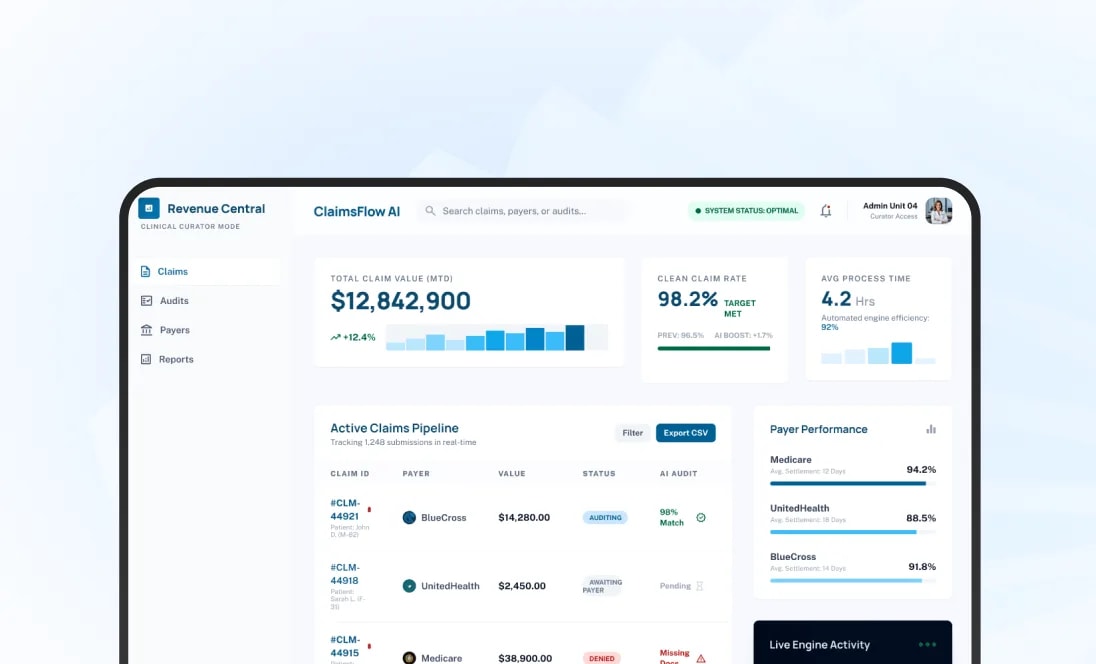
A global IoT platform relied on a monolithic JSP application that restricted updates, deployment, and scalability. We modernized the environment with Spring Boot microservices, Docker, AWS EC2, S3, EKS, Elastic Beanstalk, MQTT/NATS pipelines, and CI/CD. The published portfolio reports a 75% reduction in deployment time and evolution into a globally scalable SaaS and hardware-integrated IoT ecosystem.
Read Full Portfolio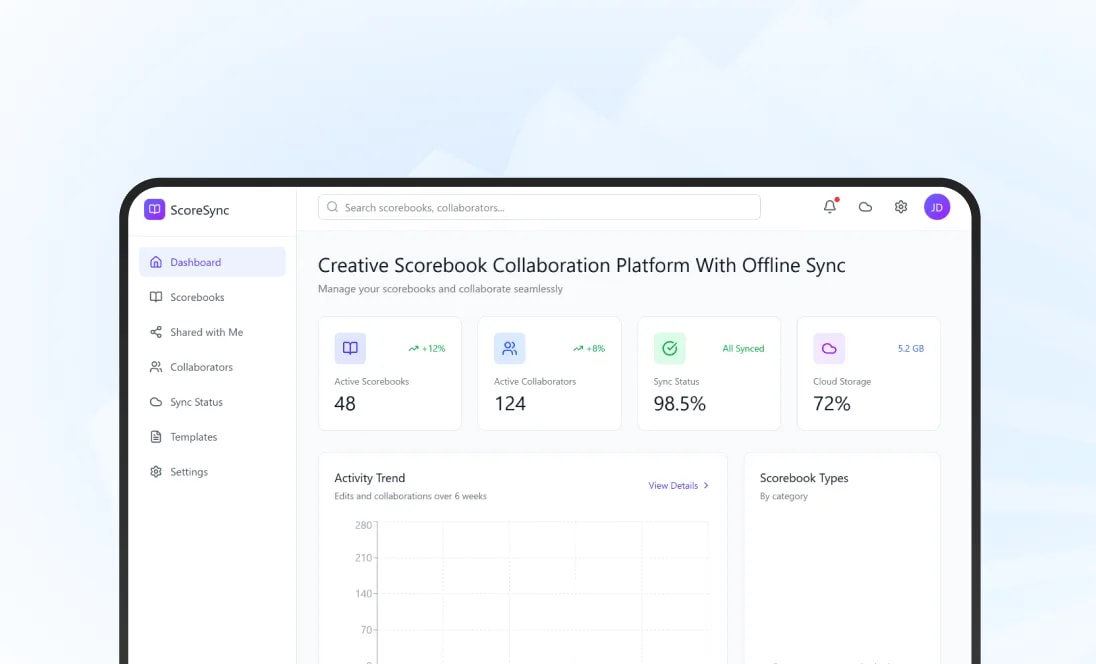
An industrial maintenance organization relied on MS Access, Excel, and manual reporting to manage distributed asset information. DITS developed a cloud-based SaaS platform using Angular, ASP.NET Core, and Azure-connected technology to centralize monitoring, alarms, reporting, collaboration, and asset history. The published project reports an 80% improvement in reporting efficiency, 65% reduction in manual workflows, and complete digitization of legacy records within that engagement.
Explore Portfolio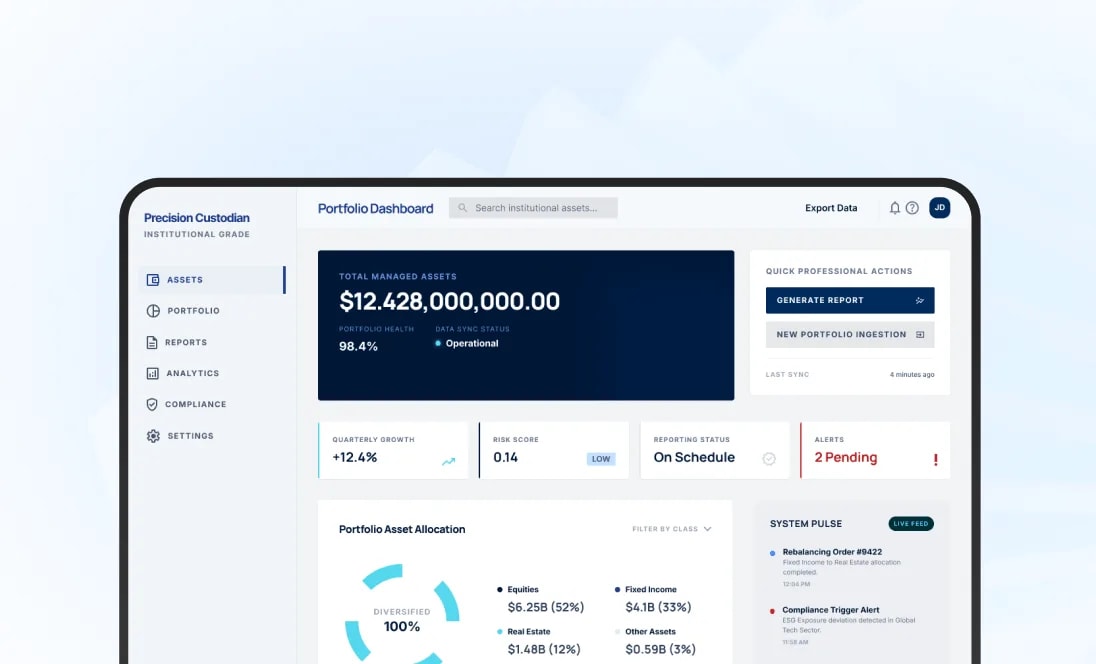
We evaluate cloud application modernization against the business and technical constraint that justified the initiative. Cloud infrastructure modernization should create observable improvement beyond the fact that workloads now run in a different data center.
Measure whether validated application and infrastructure changes reach production faster after modernization.
Track failed deployments, rollbacks, release-related incidents, and the manual effort required to deploy workloads.
Measure availability, recovery, dependency failures, latency, incident frequency, and other relevant reliability indicators.
Evaluate whether workloads can respond to changing transaction, user, data, and compute demand more effectively.
Determine whether teams spend less time managing environments and infrastructure and more time improving business capability.
Measure the effort required to connect new applications, partners, data platforms, channels, or intelligent capabilities.
Track infrastructure utilization, cost allocation, managed-service adoption, support effort, licensing, and other relevant cost drivers against the expected business case.
Assess whether teams have stronger visibility into workloads, dependencies, failures, performance, capacity, and usage.
Evaluate whether cloud, data, APIs, architecture, and integration now make analytics, automation, and AI easier to introduce responsibly.
Our cloud modernization services connect business context with consulting and engineering. DITS combines architecture, applications, cloud, data, integration, DevOps, quality, AI, and continuous ownership so cloud decisions stay connected to the reason the organization needed to change.
We first determine what the current environment is preventing the business from doing before recommending migration, replatforming, cloud-native architecture, or another intervention.
Some applications should remain, some should move largely unchanged, and others need deeper modernization. The decision depends on business value and risk.
Moving infrastructure alone may leave the biggest application constraints untouched. Our teams can address architecture, code, APIs, data, and delivery practices with the cloud foundation.
Older systems often contain workflows, rules, integrations, and operational knowledge that should be understood before migration or replacement.
Hybrid operation, data synchronization, rollback, legacy coexistence, and migration waves matter when business-critical applications cannot simply be switched off.
DITS treats cloud, data, APIs, connected systems, and observability as supporting foundations rather than separate technology projects.
AI can accelerate system understanding, documentation, analysis, and engineering, but experienced teams remain accountable for architecture, security, migration, and production decisions.
Our teams can continue improving performance, architecture, reliability, infrastructure, cost, integrations, data, and product capability after workloads move.