

GPS and Fleet Tracking
Multi-OEM gps tracking software development supports vehicle and asset trackers, Geotab data, camera telematics, geofences, route history, and alerts for movement or critical location exceptions.

This IoT tracking system connects GPS devices, industrial sensors, remote controls, alerts, and analytics in one platform. It helps organizations monitor high-value assets, act on field conditions, and manage diverse equipment across multiple industries.
A US-based IoT provider serves integrators, managed service providers, and enterprises across fleet, waste, utilities, construction, and facilities. Ditstek modernized its live asset platform as the product expanded beyond vehicle tracking into industrial equipment, smart buildings, bins, trailers, and tools. A device-to-cloud layer standardizes data from GPS trackers and sensors, while dashboards, mobile apps, and remote commands turn telemetry into operational action. The platform also supports white-label partners and plain-language analytics. This work brought gps tracking software development together with multi-device integration and controlled access to each customer’s information.

Legacy JSP screens, Java 8, and large tightly coupled methods made enhancements slow and risky. The client needed modernization while active customers continued using the platform.

New industries introduced GPS, BLE, LoRaWAN, DNP3, and other device formats. Each manufacturer required custom parsing, delaying onboarding and complicating consistent telemetry across different assets.

Late warnings could damage compactors or generators, while duplicate alerts overwhelmed operators. Manual dispatch and on-site diagnostics also increased the effort needed to resolve issues.

White-label partners and enterprise customers shared the platform but required strict separation of assets, dashboards, and reports. Different organizations also needed configurable features and permissions.
Customers wanted self-service reports and natural-language questions. Heavy analytics or unsafe AI-generated queries could disrupt live telemetry and expose data beyond a user’s authorized scope.
Faulty GPS positions and speed readings for fixed equipment weakened confidence in reporting. Paper-based installations offered limited evidence that field devices had been configured correctly.
As an IoT application development company, Ditstek modernized the live platform module by module while connecting devices through standardized ingestion. Reliable alerts, tenant-aware access, separate analytics, and mobile tools turned telemetry into action.

Legacy JSP modules moved gradually to Angular, and the backend advanced from Java 8 to Java 11. Refactoring, review gates, and staged releases preserved customer access.

Netty-based device-to-cloud middleware normalizes proprietary TCP/UDP, LoRaWAN, BLE, and DNP3 data. Manufacturer-specific parsers support new models without changing the core telemetry platform or disrupting existing integrations.

Alert rules update immediately when settings change, while database-enforced debounce intervals reduce duplicate notifications. Fixed-asset classification also suppresses irrelevant speed and trip data for stationary equipment.
Tenant scope comes from authenticated JWTs and is enforced across organizations, groups, assets, dashboards, and AI answers. Customer-specific module and field controls support white-label deployments.
Dremio and Apache Superset provide reporting apart from transactional workloads. A separate AI service validates structured query plans, applies access filters, caches results, and logs token usage.
Guided mobile installation verifies connectivity, battery, GPS, and signal quality with photographic proof. Supervisor apps, remote commands, and automated service requests reduce manual field coordination.
The platform brings connected assets, field teams, supervisors, and partners into one operational view. These features cover device onboarding, live monitoring, reliable alerts, remote control, workflow automation, reporting, and mobile access.
Multi-OEM gps tracking software development supports vehicle and asset trackers, Geotab data, camera telematics, geofences, route history, and alerts for movement or critical location exceptions.

The IoT device integration services layer connects cellular GPS units, BLE tags, tire-pressure sensors, LoRaWAN devices, ultrasonic fill sensors, and DNP3 equipment through standardized telemetry.

Live status views use customer-defined thresholds, colors, and icons. Critical alert rules cover communication loss, oil pressure, and resets with timely notifications and action histories.

Remote diagnostics show hardware states and enable authorized Ping, Reset PM, Reboot, and Shutdown commands. DNP3 integration supports generator, pump, and industrial storage tank monitoring.

Fill-level and usage readings automatically raise haul or preventive maintenance requests for on-shift teams. Dashboards track progress, while BLE associations can indicate completed waste collections.

ChirpStack-connected LoRaWAN sensors report leaks, air quality, temperature, and humidity. Configurable floor plans show exceptions, while daily automated reports summarize overall building system health.

BLE gateways track tools, trailers, tire pressure, doors, loads, and temperatures. Association events and range alerts help teams monitor assets moving between different operating sites.
Apache Superset dashboards support scheduled PDF, CSV, and Excel reports. Plain-English questions return authorized KPIs, charts, tables, or maps with saved and reusable reporting views.
Bulk onboarding imports assets from templates, while white-label controls tailor modules and reports. Installer and supervisor apps support verified setup, maps, alerts, and route replay.

The client expanded beyond vehicle tracking into waste, utilities, smart buildings, industrial equipment, and tools, creating new commercial opportunities to serve partners across different verticals.

An embedded team maintained near-monthly production releases for more than 22 consecutive months while modernizing live screens and moving the backend runtime to Java 11.

Standardized device parsers allow new manufacturers and models to join the platform without rewriting core services, supporting faster responses to varied new enterprise customer requirements.

Automated haul and maintenance requests, timely alerts, and remote diagnostics help operators act on sensor data while reducing manual dispatch and unnecessary physical site visits.

Photo-verified installation guides and a mobile supervisor command center help field teams confirm device setup, review fleet conditions, and respond to critical asset exceptions quickly.

Self-service reporting and controlled AI queries reduce reliance on engineering for routine analysis, while tenant isolation protects information within each customer’s authorized operational data view.

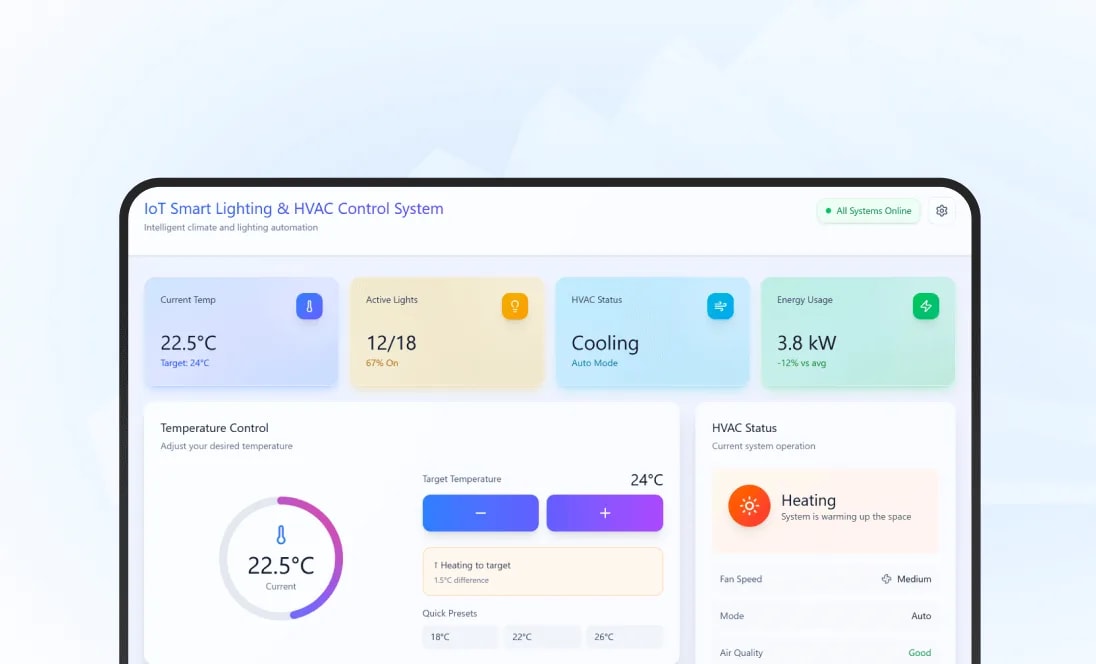
An IoT-powered building management platform that centralizes lighting, air-conditioning, alarms, sensors, trends, and zone controls through browser-based access, helping facility teams reduce manual operations, improve response times, and manage energy-consuming equipment more efficiently.
View Project