Maintenance Consumes The Roadmap
Recurring fixes and specialist dependencies leave your team less capacity for product improvements and operational change.
Our legacy system assessment services clarify what to preserve, improve, or replace. We connect legacy application assessment findings with business priorities. Through an application modernization assessment, DITS helps you compare options, protect critical workflows, and define a practical investment path.
Explore Your Assessment PathAn application portfolio assessment helps us understand where system constraints affect revenue, service delivery, and operating cost. We begin with the situations making change necessary, not the age of your technology.
Recurring fixes and specialist dependencies leave your team less capacity for product improvements and operational change.
Undocumented rules, fragile interfaces, and limited test coverage make releases difficult to predict.
New locations, customers, or acquisitions increase demands on platforms that already require workarounds.
Disconnected data and unclear ownership make it difficult to judge feasibility, investment, or readiness.
Our modernization readiness assessment considers workflows, operating constraints, team capability, and future priorities alongside technical health. DITS connects those findings to the decision your leadership team needs to make. We distinguish valuable business logic from the limitations around it. That helps us compare focused improvements, integration, incremental renewal, replacement, and retention on their business merits. At Ditstek Innovations, the recommendation comes before the delivery commitment. Together, we examine the cost of change, the risk of delay, and the capabilities your next stage requires.
We connect a legacy system audit with stakeholder input and targeted validation. The journey keeps business priorities visible from initial discovery through implementation and ongoing improvement.
We clarify your business objectives, critical workflows, stakeholders, budget constraints, and tolerance for disruption.
Our team reviews system health, dependencies, costs, data, and operational risks within the agreed scope.
DITS compares viable interventions and sequences priorities by value, urgency, feasibility, and dependency.
Together, we challenge assumptions and agree whether a targeted pilot or deeper investigation is needed.
Our engineers implement approved changes under a separate delivery scope, with ownership and transition controls.
We compare implementation results with agreed baselines, success measures, and review periods.
Your changing priorities guide further improvements, supported by continuity of business and system knowledge.
Our application portfolio assessment establishes the wider context. Focused workstreams then examine the applications, technical debt, and operating foundations most relevant to your business decision.
We review architecture, maintainability, performance, supportability, and embedded rules. Your team gains a clearer view of what remains valuable and what restricts change.
Through application rationalization services, we compare retention, consolidation, replacement, and retirement options. Ownership, actual usage, dependencies, and business criticality guide the recommendation.
Our technical debt assessment connects code, testing, architecture, and deployment weaknesses to release delays, support effort, and operational risk.
A cloud readiness assessment examines workload suitability, integrations, data constraints, resilience, and cost assumptions. Cloud adoption must serve the business case.
Our team maps applications, infrastructure, interfaces, and existing controls. Specialist penetration testing, certification, or formal compliance assurance requires a separately agreed scope.
Our technical debt assessment helps distinguish urgent risk from lower-priority cleanup. We translate the findings into choices leadership can evaluate, fund, and sequence without assuming every system needs rebuilding.
We document the critical applications, workflows, dependencies, and information gaps within scope.
Our team explains each material issue, its supporting evidence, business consequence, and recommended response.
DITS compares suitable interventions, indicative effort, cost assumptions, transition needs, and the consequences of deferring action.
Together, we define prerequisites, decision gates, accountable owners, and a first implementation stage.
We agree how to evaluate progress and identify which estimates still require validation.
Our modernization readiness assessment connects architecture, cloud, data, APIs, engineering, DevOps, and quality. We examine how these layers interact, because isolated technical findings rarely explain the full business constraint.
DITS reviews component boundaries, interface contracts, dependency chains, and data flows to understand the effect of proposed changes.
Our team evaluates hosting needs, database dependencies, access controls, recovery expectations, and the operating implications of migration.
We assess release controls, test coverage, observability, and maintainability alongside the effort required to change the system.
Where appropriate, AI can support analysis and documentation. Our experts validate findings under agreed access, confidentiality, and human-review controls.
Outcome: The portfolio reports stronger data integrity and reduced workflow risk, with connected communication and reimbursement workflows.
Business Context: We supported a U.S. behavioral-health software provider serving clinical and administrative teams across multiple agencies. Constraint: A tightly coupled platform made forms difficult to change while staff faced data collisions and lost work. DITS Assessment Findings: Our published project findings identify reporting-access gaps, concurrent-record errors, and dependencies between forms and the core application. Intervention: Our team strengthened access filtering, resolved concurrency issues, introduced autosave, and moved toward layered architecture.
Read our behavioral-health modernization story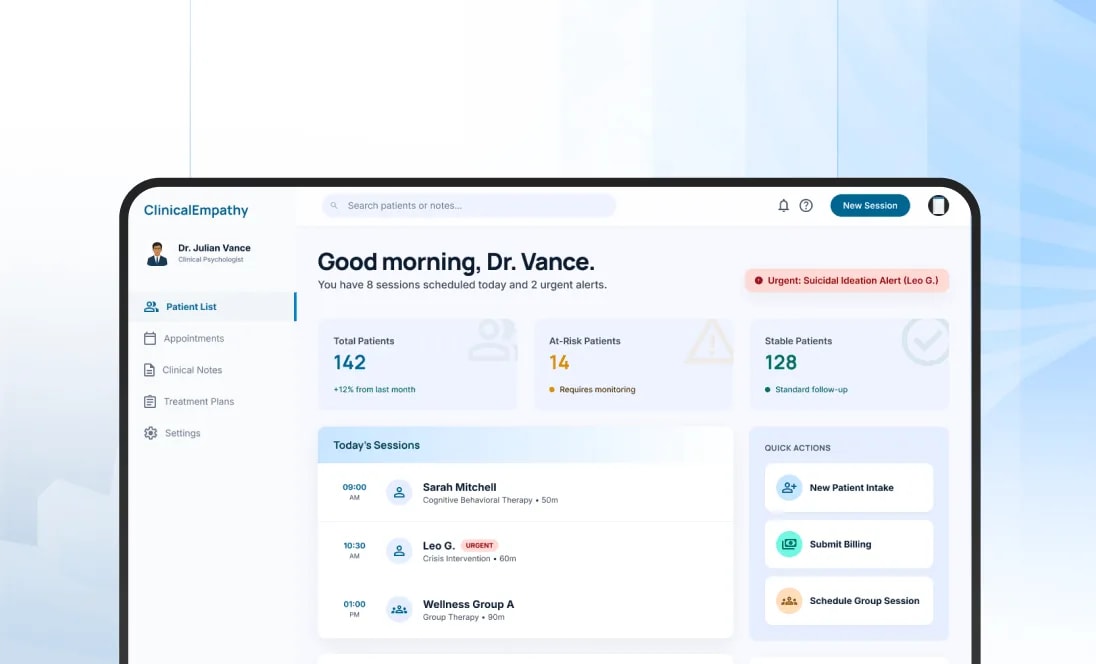
Outcome: The published project reports improved reconciliation accuracy and operational accountability, with financial reports available the same business day.
Business context: Ditstek Innovations supported a South African fashion retailer managing a large network of stores. Constraint: Disconnected systems and spreadsheet-based processes limited reconciliation, asset visibility, and operational oversight. DITS assessment findings: We identified operational bottlenecks around financial reconciliation, infrastructure continuity, and fragmented asset and lease management. Intervention.: Our team connected POS and central operations with bank-statement ingestion, controlled financial records, automated escalation, and asset management.
Read our retail operations transformation story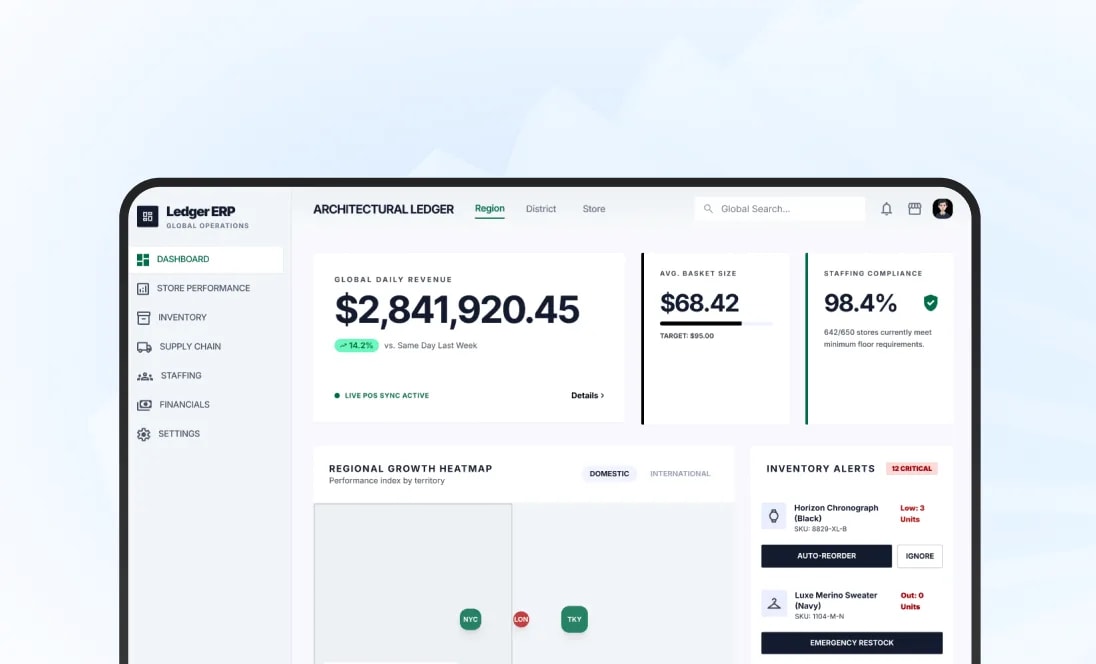
We use an application modernization assessment to connect business judgment with engineering decisions. DITS brings advisory, architecture, delivery, and governance together, with long-term support shaped around your evolving priorities.
Our recommendations address the operating constraint and its commercial impact before selecting technology.
Experienced leaders contribute to consequential decisions and challenge assumptions with your stakeholders.
We connect the recommended path to practical implementation without making delivery an automatic commitment.
Our team considers maintainability, integration, resilience, and the cost of future change.
Expert review remains accountable for recommendations, with tools used within agreed governance.
DITS can support execution, measurement, and further evolution under agreed responsibilities and review points.
Our legacy system assessment services start with the business decision that needs greater confidence. Through a focused legacy application assessment, we help you understand the constraint and define what should happen next, before committing to wider change.
Discuss Your Assessment Priorities