
Small Changes Require Large Releases
A minor product or workflow update can require rebuilding, testing, and deploying large parts of the application because components are too tightly connected.
We help organizations evolve restrictive application architectures without assuming every system needs to be rebuilt. Our application architecture modernization approach combines architecture modernization services, software architecture modernization, cloud, APIs, data, DevOps, and engineering to improve scalability, maintainability, resilience, integration, and the speed of future business change.
Assess Your Application ArchitectureThe need for application architecture modernization usually appears through business symptoms before architecture diagrams. Through application architecture consulting, we assess where tightly coupled systems, dependencies, technical debt, and deployment constraints are making change slower, riskier, or more expensive.
A minor product or workflow update can require rebuilding, testing, and deploying large parts of the application because components are too tightly connected.
Shared databases, common libraries, hidden dependencies, and cross-module business rules make teams uncertain about what might break when an individual area changes.
Some workloads need significantly more capacity than others, but monolithic architecture may force infrastructure teams to scale the complete system together.
Older applications may expose limited APIs, forcing new products, mobile experiences, partners, data platforms, or AI capabilities to depend on custom workarounds.
Large release units and limited automated testing can turn routine deployments into high-risk events requiring extensive coordination and rollback planning.
Multiple engineering teams may work inside the same codebase, database, and release process, creating coordination bottlenecks and unclear technical ownership.
Moving a tightly coupled application onto cloud infrastructure may change where it runs without improving how easily the business can release, scale, integrate, or evolve it.
Organizations may want AI agents, intelligent workflows, analytics, or automation but discover that business capabilities and data remain inaccessible inside the existing application.
Effective software architecture modernization should create a measurable difference in how applications support the business. Our architecture modernization services connect technical change with delivery speed, system reliability, scalability, integration, engineering productivity, and future capability.
Clearer application boundaries reduce the number of unrelated components that teams need to modify and retest for every business requirement.
Services or modules can evolve at different speeds where independent deployment genuinely supports the business and engineering model.
Modern architecture can allow high-volume capabilities to scale independently instead of increasing capacity across an entire platform.
Fault isolation, messaging, redundancy, graceful degradation, and stronger observability can reduce the impact of failures across critical applications.
Well-designed APIs, events, and service interfaces allow other applications to consume business capability without depending on internal implementation details.
Architecture aligned with domain or product responsibilities can give teams clearer control over specific business capabilities.
Architecture becomes valuable when future integrations, features, markets, workloads, and products can be introduced with less disruption.
Modern service boundaries, accessible data, APIs, observability, and scalable infrastructure create a better foundation for new cloud, automation, analytics, and AI capabilities.
Our application architecture consulting starts with the business and application environment rather than a predetermined pattern. Effective enterprise architecture consulting should determine what actually needs to change before recommending microservices, cloud-native services, event-driven architecture, modularization, or another approach.
Understand which business functions depend on the application and which capabilities are most affected by the existing architecture.
Review where requirements change most frequently and which architectural dependencies make those changes disproportionately difficult.
Map modules, databases, integrations, shared libraries, external services, infrastructure, batch processes, and other technical relationships.
Evaluate transaction volumes, workload patterns, latency, throughput, availability, recovery, and other non-functional requirements.
Understand engineering ownership, release responsibilities, specialist skills, and operational maturity before creating an architecture that requires a new delivery model.
Identify how applications share, own, update, and reconcile data before separating services that currently depend on a common database.
Clarify which applications, customers, partners, devices, or internal systems need access to the capability.
Balance expected business value against migration effort, technical risk, ongoing operational complexity, and the organization's capacity to manage change.
Our architecture modernization services compare multiple intervention paths before significant engineering begins. Legacy architecture modernization may mean modularizing the current application, introducing APIs, changing specific boundaries, or selectively adopting microservices, not automatically rebuilding everything.
Keep architecture that continues to perform effectively when additional complexity would create little meaningful business value.
Improve testing, reliability, observability, security, documentation, deployment, or performance before undertaking deeper structural change.
Create clearer internal boundaries inside the existing application where modular architecture can reduce coupling without introducing distributed-system complexity.
Expose valuable capabilities through controlled APIs when integration is the primary constraint but the underlying application still performs its role.
Move runtime or infrastructure foundations where the current platform limits supportability, deployment, scalability, or access to modern services.
Restructure high-risk components and dependencies where maintainability is the core problem.
Change application boundaries and interaction patterns when the existing design prevents scalability, resilience, integration, or independent evolution.
Replace individual components when their architecture, code, or dependencies can no longer support the required business capability economically.
Legacy architecture modernization requires understanding what the current system contains before changing its structure. Our software architecture modernization approach protects valuable business rules, integrations, workflows, and data relationships while progressively removing architecture constraints.
Identify calculations, validations, conditions, workflows, and exceptions embedded inside code, databases, integration logic, and configuration.
Understand how modules, applications, external services, databases, and scheduled processes interact before separating them.
Find logical boundaries where responsibilities can be separated without arbitrarily turning every class or technical layer into a service.
Wrap stable legacy capability behind clearer interfaces where immediate internal re-engineering is unnecessary.
Address shared databases deliberately so new service boundaries do not continue depending on hidden cross-application data coupling.
Move selected capabilities onto modern architecture while the remaining application continues supporting day-to-day operations.
Define how old and new components coexist during transformation, including routing, data synchronization, integration, and rollback.
Retire old components only when business behavior, data, dependencies, and users have been migrated and validated successfully.
Microservices modernization can improve deployment independence, scaling, resilience, and ownership when the application and organization actually need those characteristics. Our application architecture modernization approach avoids turning microservices into a default end state.
Define service boundaries around coherent business capabilities rather than arbitrary technical layers.
Separate services where releasing one capability without redeploying the complete application produces meaningful engineering or business value.
Allow services with materially different workload characteristics to scale according to their own demand.
Design boundaries so failures inside one service do not unnecessarily take down unrelated business capabilities.
Align engineering ownership with defined services where teams can reasonably develop, operate, and support them.
Create explicit interfaces so services interact through controlled contracts rather than hidden internal dependencies.
Use asynchronous communication where decoupling, resilience, throughput, or workflow behavior makes event-driven interaction appropriate.
Make logging, metrics, tracing, service health, dependency monitoring, and operational ownership part of the architecture rather than an afterthought.

A monolith to microservices migration can create value when monolithic constraints are materially affecting the business. Our microservices modernization approach identifies which capabilities benefit from separation and which should remain together.
Map domains, modules, dependencies, data ownership, integration points, deployment constraints, and areas experiencing the most change.
Use business capabilities and domain context to identify boundaries rather than dividing the application according to database tables or code folders.
Choose a capability where separation provides enough value while carrying manageable operational and migration risk.
Create APIs, events, or an abstraction layer that allows the new capability to interact with the existing application cleanly.
Move functionality in controlled stages rather than recreating the entire monolith before users receive any value.
Determine ownership and synchronization before each extracted service becomes operationally independent.
Compare functional behavior, performance, data integrity, security, integration, and operational characteristics against the existing system.
Continue the monolith to microservices migration only where additional separation creates measurable architectural or business value.
Our cloud-native architecture services focus on what the application should become after migration. Effective software architecture modernization considers architecture, deployment, resilience, scalability, data, observability, automation, and cloud operating practices together.
Package suitable applications and services consistently where containers improve portability, deployment, scaling, and infrastructure independence.
Use appropriate managed databases, messaging, storage, identity, monitoring, or platform services when they reduce undifferentiated operational effort.
Apply event-driven or serverless capabilities where workloads and operational requirements make them a better fit than permanently provisioned services.
Design applications so capacity can respond appropriately to workload variation instead of relying entirely on fixed infrastructure.
Introduce redundancy, timeout handling, retry strategies, circuit breaking, fault isolation, and recovery patterns based on actual availability requirements.
Use repeatable infrastructure and environment provisioning to reduce manual differences between environments.
Integrate application, infrastructure, service, and dependency monitoring into the architecture from the beginning.
Architecture decisions should consider workload economics as well as scalability so cloud-native design does not create uncontrolled infrastructure complexity or spending.
Our enterprise architecture consulting considers the application as part of a larger business technology environment. Application architecture consulting becomes more useful when APIs, data, security, cloud, integration, and enterprise dependencies are evaluated together.
Understand which systems provide overlapping capabilities, which are strategically important, and which may eventually be consolidated, replaced, or retired.
Define how applications exchange information through APIs, messaging, events, integration services, or other controlled patterns.
Clarify data ownership, operational stores, analytical needs, synchronization, lineage, and cross-application information dependencies.
Define authentication, authorization, service identity, user roles, and trust boundaries across the modernized environment.
Consider application boundaries, secrets, networks, data protection, dependencies, and threat surfaces as architecture changes.
Determine which shared platform capabilities should support multiple product or business teams without creating another centralized bottleneck.
Align service boundaries with environments, pipelines, infrastructure, testing, release controls, and operating responsibilities.
Document the intermediate states required to move safely from current to target architecture rather than designing only the final diagram.
The effectiveness of application architecture modernization depends heavily on how information moves. Our architecture modernization services address database coupling, APIs, messaging, events, partner integrations, and data ownership alongside application structure.
Identify where multiple modules read and write the same schema before creating service boundaries that would simply recreate monolithic coupling through the database.
Define which capability owns each important business entity and how other services should access or consume that information.
Move away from direct database access or fragile internal dependencies toward governed service interfaces where appropriate.
Use events for relevant business changes where multiple downstream capabilities need to respond independently.
Protect modernized architecture from partner- or vendor-specific behavior through appropriate abstraction and resilience patterns.
Define how information stays accurate when old and new systems operate in parallel during incremental modernization.
Separate operational architecture from analytical use cases where direct reporting against production databases creates performance or coupling issues.
Modern architecture modernization services are incomplete if the target design cannot be operated reliably. Our cloud-native architecture services connect system design with testing, deployment, security, observability, and production ownership.
Protect business behavior through unit, integration, contract, end-to-end, migration, performance, and regression testing appropriate to the architecture.
Give teams repeatable build, validation, security, and deployment pipelines that support the release model created by the target architecture.
Define infrastructure consistently where repeatability, governance, recovery, and environment management make it valuable.
Build authentication, authorization, encryption, secrets management, vulnerability handling, and relevant security checks into delivery.
Monitor logs, metrics, traces, dependencies, errors, and business-critical transactions across distributed environments.
Test failure behavior, dependencies, fallbacks, capacity, recovery, and degradation rather than assuming distributed architecture automatically improves reliability.
Define who responds to incidents, owns each service, approves changes, maintains dependencies, and evolves the platform after implementation.
We can use AI-assisted analysis within legacy architecture modernization to improve understanding of large or poorly documented systems. This supports application architecture consulting by giving architects more context before they recommend structural change.
Use AI-assisted analysis to help explain modules, patterns, dependencies, and implementation areas that deserve deeper technical review.
Surface likely relationships between applications, libraries, interfaces, services, and data for validation by experienced engineers.
Assist teams in locating important application logic when documentation no longer fully explains how production behavior works.
Generate working architecture and technical documentation that teams can verify and improve during discovery.
Use system findings to support comparison of modularization, APIs, refactoring, cloud migration, service extraction, or selective rebuild paths.
AI-generated analysis remains an accelerator. Senior architects and domain specialists remain responsible for architecture decisions, migration sequencing, and production risk.
Backend & Services
Our application architecture modernization methodology keeps the business objective connected to technical decisions from discovery through production. Enterprise architecture consulting and engineering remain connected so target-state diagrams do not become detached from implementation reality.
Clarify the business priority, user environment, application role, growth requirements, risk, and reason architecture change is being considered.
Document current modules, workflows, dependencies, data, integrations, infrastructure, deployment, security, and team ownership.
Identify architecture constraints with the strongest impact on business agility, reliability, scalability, integration, or cost of change.
Use technical spikes, prototypes, performance testing, service extraction, or controlled pilots to validate the proposed architecture before wider transformation.
Refactor, modularize, rearchitect, integrate, migrate, or selectively rebuild the capabilities required by the validated direction.
Align engineering teams, DevOps, ownership, documentation, governance, support, and operating practices with the changed architecture.
Compare technical and business outcomes against the original constraint rather than declaring success when the target architecture is merely deployed.
Continue adjusting service boundaries, data models, infrastructure, integrations, performance, and engineering practices as the platform and business change.

Our architecture modernization services are informed by the operational and product context surrounding the application. The right architecture depends on how users work, how transactions move, how data is shared, and what the business expects to change next.
Modernize multi-tenant applications, APIs, integrations, product modules, data, and deployment architecture where technical debt is slowing roadmap execution or enterprise growth.
Evolve patient platforms, EHR-related systems, revenue workflows, connected-care products, healthcare SaaS, and interoperability environments while protecting data and care continuity.
Modernize claims, enrollment, billing, member, policy, partner, and data architecture where legacy dependencies constrain scale and integration.
Rearchitect tracking, fleet, telemetry, dispatch, device, partner, and operational systems that must support real-time workloads and distributed assets.
Improve architecture supporting stores, inventory, payments, customer workflows, financial reconciliation, digital channels, and enterprise integrations.
Build clear service boundaries around payments, reconciliation, onboarding, transaction orchestration, partner APIs, security, and high-volume financial workflows.
Modernize internal platforms, workflow applications, ERP-connected systems, data exchanges, portals, and business-critical custom applications.
A global tracking platform relied on a monolithic JSP-based system that restricted updates and scaling. DITS introduced Spring Boot microservices, Docker, CI/CD, AWS cloud infrastructure, MQTT/NATS pipelines, and clearer integration patterns. The published portfolio reports a 75% reduction in deployment time and describes the platform's evolution into a scalable SaaS and hardware-integrated IoT ecosystem.
Explore Portfolio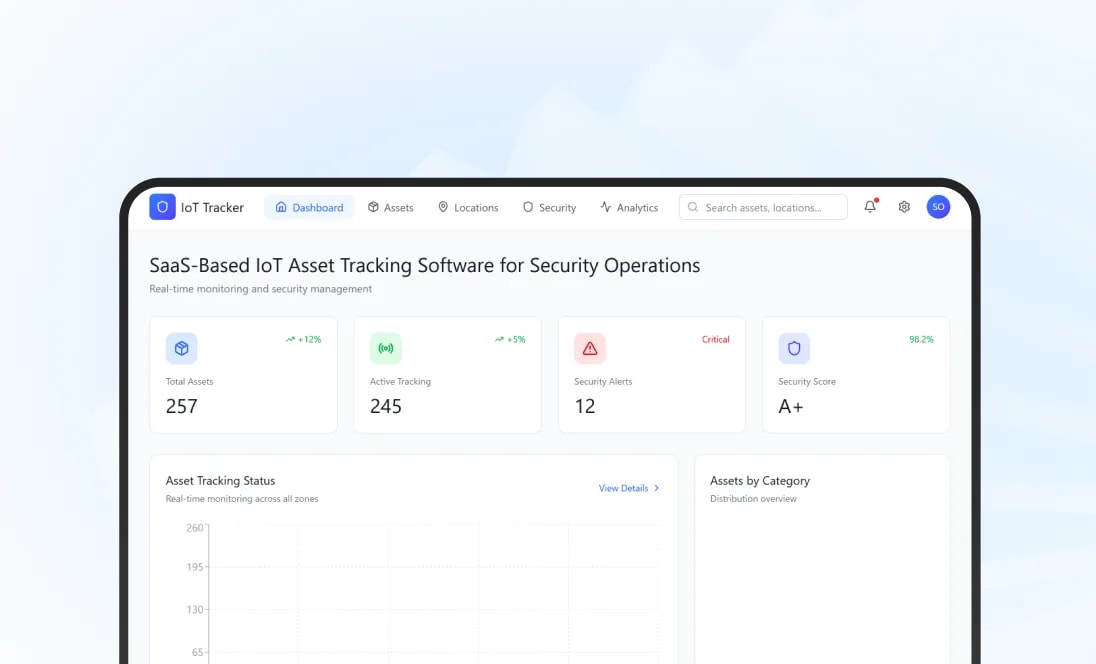
A health-insurance administration environment depended on AS/400 infrastructure, batch updates, fragmented back-office systems, and lengthy partner onboarding. Our team introduced Spring Boot microservices, REST and EDI APIs, cloud infrastructure, an event-driven core, analytics, and integration tooling. The published engagement reports onboarding reduced from 14–16 months to 3–4 months and more than 400 REST and EDI APIs connecting the payer ecosystem.
Read Full Portfolio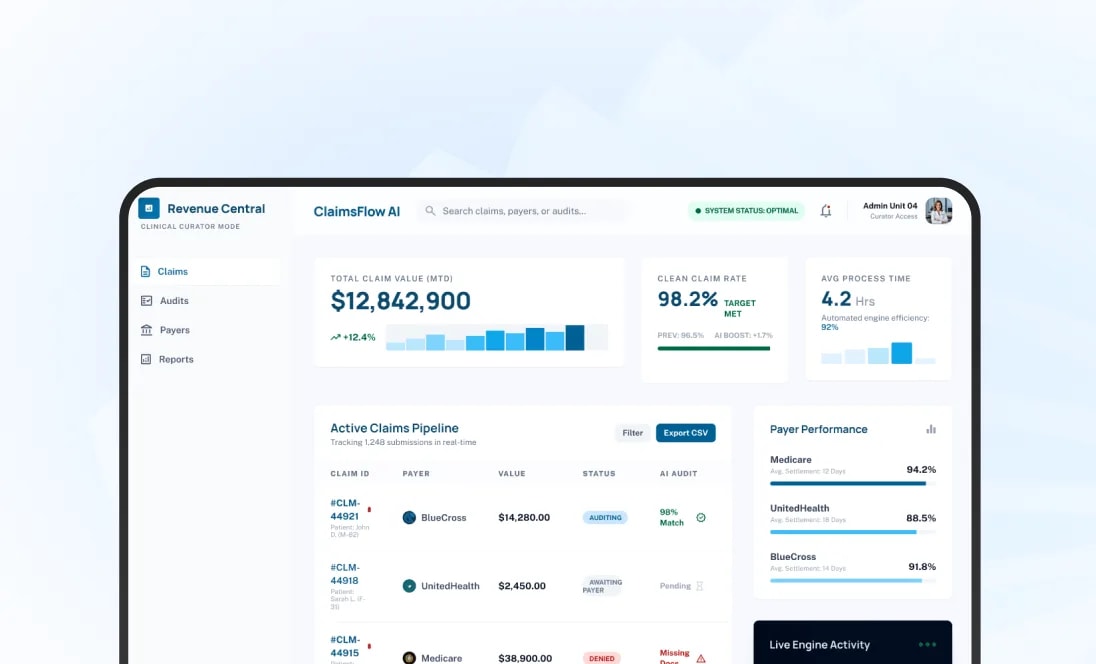
A behavioral-health EHR supporting more than 35,000 daily users across 30+ agencies had a legacy monolithic structure where tightly coupled form dependencies created upgrade risk. DITS moved the platform toward Onion Architecture with dependency inversion and distinct abstraction layers while also addressing data integrity, autosave, storage, billing, and communication.
Explore Portfolio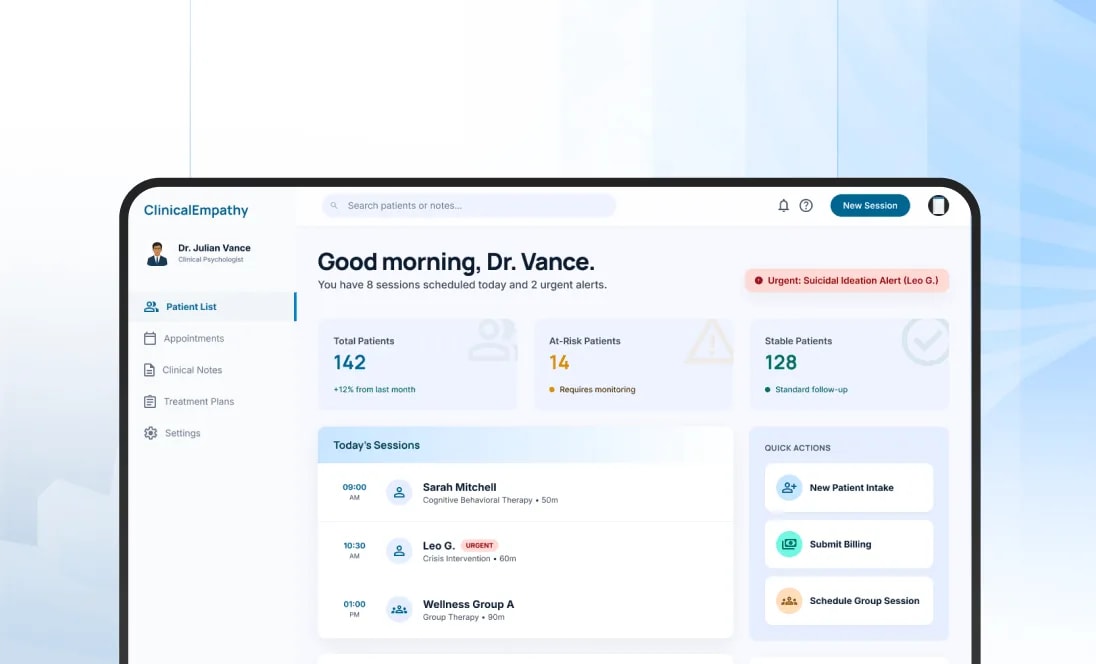
A B2B/B2C fintech platform needed to connect more than 100 fragmented services while allowing new integrations to be introduced without changing the core system repeatedly. DITS designed a microservices-based backend, API abstraction layer, configurable service onboarding, queues, retry logic, multi-tenant access, and operational monitoring. The portfolio reports 80% faster onboarding of new services, 60% fewer failures, and 99.9% uptime within that engagement.
Read Full Portfolio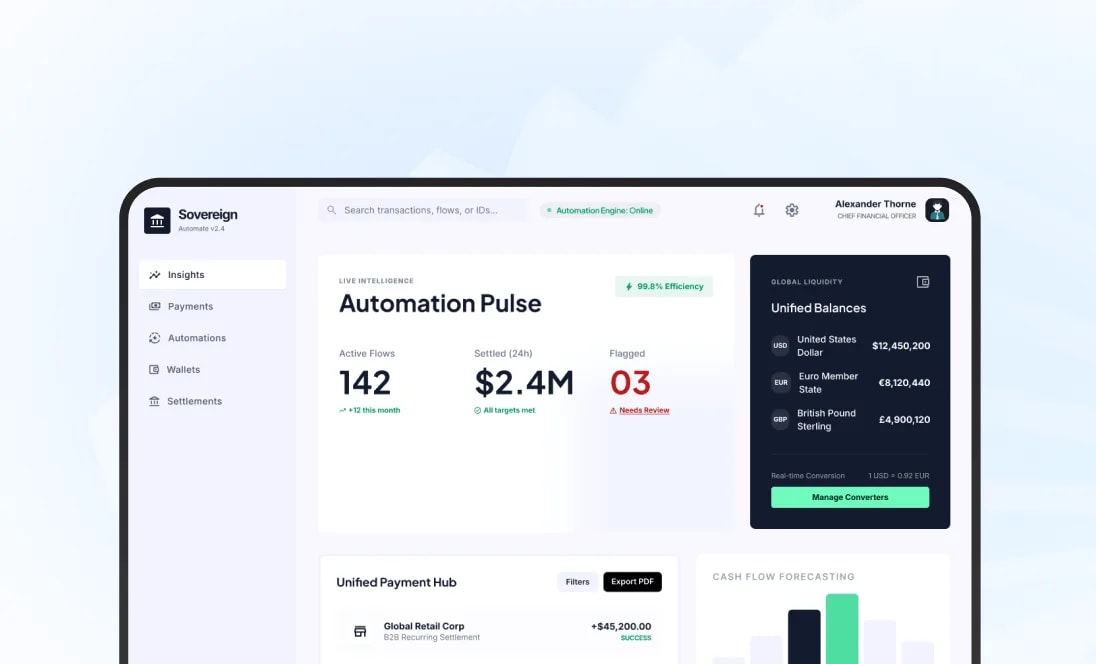
We measure application architecture modernization against the constraint that justified the investment. Successful legacy architecture modernization should improve the organization's ability to operate and evolve the application, not simply result in a more fashionable diagram.
Measure whether teams can change and deploy important capabilities without coordinating unnecessary application-wide releases.
Track whether architecture and delivery improvements allow validated changes to reach production faster.
Monitor regressions, rollback rates, production incidents, and other problems connected with application change.
Evaluate whether high-demand capabilities can support growing users, transactions, data, devices, or workloads reliably.
Track service availability, failure isolation, recovery behavior, latency, and the effect of dependency outages.
Measure how much engineering effort is required to connect new partners, products, channels, or enterprise applications.
Assess whether development teams spend less time navigating architectural dependencies and more time delivering meaningful product or business capability.
Compare the effort required for future features, integrations, compliance changes, and platform evolution after modernization.
Evaluate whether APIs, service boundaries, data access, observability, and infrastructure now make new cloud and intelligent capabilities easier to adopt.
DITS combines application architecture consulting, modernization, engineering, cloud, integration, data, DevOps, and AI. Our role is to determine what architecture change creates enough business value to justify its complexity, and then carry that decision into working software.
We do not begin by recommending microservices, Kubernetes, or another architecture style. We first identify what the existing design is preventing the business or product from doing.
Existing systems often contain business logic, integrations, workflows, and operational knowledge worth retaining through modernization.
A modular monolith, APIs around an existing system, selective service extraction, replatforming, or incremental rearchitecture may be more appropriate than a complete rebuild.
DITS connects architectural direction with engineering, cloud, integration, data, quality, and deployment instead of handing implementation to a disconnected delivery team.
Microservices modernization is recommended where independent scaling, ownership, resilience, or deployment justifies distributed-system complexity.
The route between current and target architecture matters as much as the end state when business-critical systems must remain available.
Testing, CI/CD, observability, security, service ownership, and production support are designed with the application rather than added after rearchitecture.
DITS can support continuous architecture and product evolution as workloads, integrations, customers, data, and business priorities change.