Data Is Trapped Across Business Systems
Information sits across ERP, CRM, operational applications, SaaS platforms, databases, files, devices, and departmental tools without a consistent way to connect the complete business picture.
We help organisations turn fragmented, aging, and difficult-to-use data environments into connected foundations for reporting, operations, analytics, automation, and AI. Our data modernization services combine enterprise data modernization, data platform modernization, architecture, cloud, migration, integration, quality, governance, and engineering around the business decisions the data needs to support.
Discuss Data Modernization PathOrganizations rarely pursue data modernization services simply because a database is old. We assess where legacy data modernization is required because fragmented systems, unreliable pipelines, inaccessible information, slow reporting, or architecture constraints are limiting business decisions and future capabilities.
Information sits across ERP, CRM, operational applications, SaaS platforms, databases, files, devices, and departmental tools without a consistent way to connect the complete business picture.
Teams can calculate the same business metric differently because definitions, transformations, source systems, and reporting logic have evolved independently.
Every new application, customer, partner, business unit, or data source may require substantial custom engineering before its information becomes usable.
Analysts spend time extracting, reconciling, formatting, and validating information before leadership can use it.
Years of ETL logic, stored procedures, scripts, jobs, point integrations, and undocumented dependencies can make even small changes risky.
Application teams may want modern APIs, services, cloud architectures, or independent deployment while shared legacy databases continue creating hidden dependencies.
Batch-oriented architectures may continue producing reports while operational teams increasingly need information closer to the moment when action is required.
Organizations may be ready to explore AI, but inaccessible, inconsistent, poorly governed, or context-poor data prevents intelligent systems from operating reliably.
Effective enterprise data modernisation should improve more than storage technology. Our data modernisation services focus on whether people, applications, analytics, automation, and AI can access trustworthy information faster and use it with greater confidence.
Make relevant business information easier for authorized applications, analysts, operational teams, and decision-makers to consume.
Improve validation, reconciliation, quality controls, definitions, ownership, and traceability so users have greater confidence in what they see.
Replace repeated manual extraction and spreadsheet preparation with dependable pipelines, models, and analytical environments.
Move appropriate information closer to the workflows and people responsible for making operational and strategic decisions.
Create stronger integration and data-access patterns so applications do not rely on duplicate databases, manual transfers, or uncontrolled direct queries.
Build foundations that can accommodate growing users, sources, transactions, events, records, and analytical workloads without continual redesign.
Reduce unnecessary duplication, legacy infrastructure burden, duplicated tooling, inefficient processing, and high-maintenance data workloads where modernization makes economic sense.
Make business information accessible, governed, contextualised, and sufficiently reliable for analytics, automation, machine learning, and generative AI use cases.
We do not start data platform modernisation by choosing a warehouse, lakehouse, cloud service, or database. Our approach to enterprise data modernization starts with what information the organisation needs, where it comes from, how it is used, and what is actually preventing the data estate from supporting the business.
Clarify whether the organization needs better reporting, faster decisions, operational intelligence, application modernization, AI readiness, data consolidation, or another measurable outcome.
Map relevant databases, warehouses, files, pipelines, applications, APIs, third-party systems, analytical workloads, and reporting environments.
Understand which datasets, definitions, measures, calculations, and relationships matter to the people using the information.
Identify upstream sources, transformation logic, downstream reports, applications, integrations, and users before changing a critical data workload.
Assess missing, duplicate, inconsistent, delayed, incorrectly mapped, or poorly governed information that could move into the new platform unchanged if not addressed.
Understand volume, velocity, latency, concurrency, transformation complexity, access patterns, retention, and availability requirements.
Define ownership, security, privacy, access, lineage, quality, retention, and audit requirements around business-critical information.
Compare the value of retaining, optimizing, migrating, consolidating, or redesigning each workload before committing to a major platform programme.
Our data modernization services do not assume every database, pipeline, report, and historical dataset needs to move. A strong data architecture modernization programme determines the treatment of each important workload according to business value, risk, dependencies, quality, and future requirements.
Keep workloads that remain stable, economical, sufficiently scalable, and aligned with business needs.
Remove redundant datasets, pipelines, reports, marts, tables, or tools where duplication creates unnecessary operating complexity.
Connect useful existing information through pipelines, APIs, services, or other controlled patterns where fragmentation is the real constraint.
Move data and workloads to a more suitable platform when the architecture is fundamentally sound and a controlled migration creates enough value.
Adopt managed cloud databases, warehouses, data services, or analytical platforms while preserving useful data models and business logic where practical.
Change schemas, analytical models, domain structures, semantic layers, or storage patterns where the existing design no longer supports required workloads.
Redesign ingestion, processing, storage, serving, governance, and integration where structural limitations prevent scale, real-time information, or new analytical capabilities.
Decommission data assets and processes that no longer support a real business, operational, regulatory, or analytical requirement.
Our data platform modernization work connects architecture, ingestion, transformation, storage, governance, analytics, integration, and operations. Modern data platform services should create a coherent information environment rather than another collection of disconnected tools.
Connect relevant operational applications, databases, SaaS systems, files, APIs, partners, and devices with controlled ingestion patterns.
Build batch, incremental, event-driven, or other appropriate ingestion pipelines according to the data and business latency requirement.
Standardize, cleanse, enrich, reconcile, aggregate, and transform information into structures suitable for downstream use.
Select appropriate relational, warehouse, lake, document, analytical, or other storage patterns based on workload rather than forcing all data into one architecture.
Create analytical and operational structures that preserve business meaning and support reporting, applications, analytics, and intelligent capabilities.
Make approved information available through reports, semantic models, APIs, applications, analytical tools, or other consumption layers.
Embed access controls, quality, lineage, ownership, metadata, retention, and other governance requirements into the platform lifecycle.
Monitor pipelines, workloads, failures, freshness, performance, infrastructure, quality, and cost as part of ongoing platform operations.
Legacy data modernization is not just copying records from an old system into a new one. Our data modernization services preserve important relationships, history, transformations, definitions, and dependencies while changing the technology around them.
Identify legacy databases, flat files, stored procedures, jobs, ETL packages, analytical stores, reporting logic, and other components supporting the current environment.
Understand transformations, calculations, reconciliation rules, reporting definitions, and procedural logic that may be embedded inside database code or pipelines.
Assess completeness, formats, duplicates, anomalies, volumes, relationships, null patterns, historical conditions, and other data characteristics before migration.
Connect source tables and pipelines with the applications, reports, integrations, processes, and people that depend on them.
Correct or explicitly manage data-quality issues rather than moving unreliable information into a newer platform unchanged.
Determine what history needs to remain online, move to lower-cost storage, be archived, or be retired based on business and regulatory requirements.
Run old and new environments together where necessary so teams can compare outputs and reconcile differences before cutover.
Retire legacy data infrastructure only after required information, processing, reporting, and downstream dependencies have been validated.

Cloud data modernisation creates value when the organisation gains better scalability, accessibility, resilience, integration, or analytical capability—not simply because data moves from one hosting environment to another. Our enterprise data modernisation approach determines what should move and what should actually change.
Move suitable transactional and analytical workloads onto managed database services where reducing infrastructure administration creates meaningful value.
Modernize analytical workloads where elastic capacity, managed infrastructure, improved integration, or new analytical capabilities justify the move.
Use object-based storage for appropriate structured, semi-structured, or unstructured information where scale, economics, and processing requirements support the architecture.
Bring analytical storage and warehouse-style consumption closer together where the organization benefits from supporting multiple data and analytical workloads on a governed foundation.
Modernize ingestion and transformation workflows around scalable services, orchestration, observability, and easier integration with cloud applications.
Introduce real-time or near-real-time ingestion where operational decisions genuinely require data faster than traditional batch processing can provide it.
Connect cloud and on-premises information where migration sequencing, application dependencies, regulatory requirements, or operating realities make coexistence necessary.
Monitor compute, storage, data movement, workload usage, and service consumption so increased elasticity does not become uncontrolled cloud-data cost.
Data warehouse modernization should preserve the reporting logic and business information the organization still needs while changing the constraints that prevent the analytical environment from evolving. Our data platform modernization approach can range from controlled migration to architectural redesign.
Inventory schemas, marts, fact and dimension models, reports, users, ETL/ELT jobs, stored procedures, source systems, dependencies, and performance requirements.
Identify unused reports, duplicate marts, redundant transformations, unnecessary historical processes, and overlapping analytical structures before migration.
Retain proven analytical models where they continue meeting business needs instead of redesigning everything for the sake of modernization.
Replace difficult-to-maintain jobs and scripts with more observable, testable, and scalable data pipelines where appropriate.
Improve workload distribution, processing, storage, models, caching, partitioning, and other architecture factors affecting query performance.
Create governed analytical models and data access patterns that reduce dependence on specialist teams for every reporting question.
Evaluate a lakehouse where mixed analytics, data-science, machine-learning, or larger-scale data processing requirements justify a different architecture.
Move domains or workload groups progressively and reconcile outputs rather than turning the complete reporting estate into one high-risk cutover.
Our database modernization services consider the applications, transactions, data structures, licensing, performance, integration, and operating requirements surrounding each database. Legacy data modernization should not replace a database simply because another technology is newer.
Upgrade, replatform, migrate, or restructure relational workloads where supportability, performance, licensing, or scalability requires change.
Use managed services where the organization can reduce infrastructure administration while maintaining required control, reliability, and performance.
Reduce unnecessary database sprawl where multiple overlapping stores increase operating effort, integration complexity, or governance risk.
Refactor schemas where legacy structures prevent application modernization, analytical performance, or clearer domain boundaries.
Separate selected data ownership where modernized applications genuinely require more independent services rather than maintaining one shared database behind distributed code.
Use document, cache, search, analytical, or other database technologies only when workload characteristics justify moving beyond relational patterns.
Address queries, indexing, storage, connection patterns, workload contention, scale, and other factors affecting application or analytical performance.
Plan schema conversion, data movement, reconciliation, testing, cutover, rollback, and downstream application validation as one controlled migration process.
Data architecture modernization defines how information should move, be stored, governed, transformed, and consumed across the enterprise. Our modern data platform services use architecture to reduce complexity rather than introducing another layer of disconnected platforms.
Define where business information originates and which systems remain authoritative for important entities and transactions.
Determine which data requires batch, incremental, streaming, API, file-based, or event-driven ingestion.
Separate transformation, enrichment, validation, aggregation, and calculation responsibilities according to workload requirements.
Choose warehouse, lake, operational, analytical, cache, search, or other patterns according to the use case rather than standardizing everything onto one store.
Create consistent business definitions and consumption models so reports and teams do not continually reconstruct important metrics independently.
Define how applications and platforms consume and exchange data without uncontrolled point-to-point dependencies.
Embed metadata, lineage, data quality, security, privacy, access, retention, and ownership into the architecture.
Plan how BI, operational applications, APIs, analytics, automation, machine learning, and AI will consume information from the modernized environment.
Our modern data platform services connect the data lifecycle to real business consumers. Strong data platform modernization should reduce the effort required to onboard information, maintain pipelines, govern data, answer business questions, and support new analytical use cases.
Create a common foundation that brings relevant sources, pipelines, transformation, storage, access, governance, and analytics together.
Organize trusted datasets around business domains or use cases where clearer ownership and reuse improve analytical delivery.
Create governed representations of business measures, relationships, and definitions for more consistent reporting and analysis.
Expose approved information to applications and workflows through suitable APIs, queries, events, or other controlled access patterns.
Give authorized business users easier access to curated information without sacrificing governance or metric consistency.
Connect streams, events, processing, dashboards, alerts, and workflows where operational action depends on changing conditions.
Use version control, testing, deployment automation, orchestration, monitoring, and operational ownership to make the data platform easier to evolve safely.
Keep improving data models, workloads, pipelines, governance, cost, reliability, and consumption patterns as business priorities change.
Moving data without improving trust creates a newer version of the same problem. Our enterprise data modernization approach connects governance with cloud data modernization so quality, ownership, security, privacy, lineage, and access evolve alongside the technology.
Define accountable owners for important business information and the decisions surrounding its definition, quality, access, and lifecycle.
Create controls around completeness, accuracy, consistency, timeliness, uniqueness, and other quality dimensions relevant to each use case.
Make datasets easier to understand through definitions, descriptions, technical context, business meaning, and ownership information.
Provide visibility into where data originated, how it changed, and which downstream reports, models, applications, or decisions depend on it.
Ensure users, services, analytical tools, and intelligent systems can access only the information required by their legitimate responsibilities.
Apply appropriate handling, retention, masking, deletion, archival, and privacy requirements around sensitive information.
Track schema, model, pipeline, and definition changes so downstream teams are not surprised when trusted data products evolve.
Monitor freshness, failures, quality, volume, schema changes, and processing behavior to identify data problems before users discover them.
Database Technologies
AI readiness is increasingly one reason organizations consider data modernization services, but we do not recommend data architecture modernization solely to support an AI narrative. We first determine which data, workflows, and decisions actually justify intelligent capability.
AI applications need controlled access to relevant operational, analytical, document, or knowledge sources.
Models become less useful when definitions, records, identities, and historical data are inconsistent or poorly understood.
Intelligent systems require appropriate permissions, privacy controls, lineage, and data-use boundaries just as human users do.
Modern platforms may need to support databases, documents, events, logs, and other information types depending on the AI use case.
Search and retrieval experiences depend on how information is prepared, indexed, authorized, updated, and linked to trustworthy source context.
Production AI needs ways to observe output quality, source freshness, usage, exceptions, and changing data conditions.
Modern data foundations should improve AI-assisted decisions without assuming every business decision should become autonomous.

Our enterprise data modernization methodology keeps business context connected to engineering from initial discovery through production. Data platform modernization remains an evolving capability rather than a one-time migration exercise.
Clarify which decisions, workflows, products, reports, or strategic priorities are being constrained by the current data environment.
Understand sources, databases, pipelines, models, transformations, reports, integrations, consumers, quality issues, governance, and dependencies.
Identify the data workloads where modernization can create the strongest value relative to complexity, risk, dependency, and effort.
Test target architecture, migration patterns, pipelines, data models, performance, reconciliation, or analytical use cases before scaling the programme.
Migrate, replatform, integrate, redesign, cleanse, govern, or build the data capability required by the validated strategy.
Support analysts, engineers, business users, platform owners, governance teams, operating processes, and transition into the modernized environment.
Compare data, operational, analytical, financial, and technical outcomes with the baseline established before modernization.
Continue improving architecture, pipelines, governance, analytical models, platform economics, data products, and intelligence as business needs change.
Our data modernization services are shaped by how information supports real workflows. Modern data platform services should therefore reflect the specific operational, analytical, regulatory, and product requirements of the environment rather than use the same architecture everywhere.
Connect patient, provider, payer, operational, device, billing, and reporting information while maintaining appropriate privacy, interoperability, and data-governance controls.
Modernize claims, member, provider, financial, enrollment, integration, and analytical data environments that depend on high-volume information exchange.
Support transaction, payment, market, reconciliation, risk, customer, and reporting data where timeliness, auditability, accuracy, and resilience matter.
Connect transaction, inventory, store, finance, customer, product, digital-channel, and operational data across distributed environments.
Bring together shipment, fleet, route, warehouse, partner, tracking, telemetry, billing, and service information for stronger operational visibility.
Combine enterprise applications with equipment, sensor, maintenance, production, quality, utility, and operational data.
Modernize multi-tenant product data, analytical environments, integrations, reporting, event data, and platform foundations as customer and usage volumes grow.
Connect information across ERP, CRM, finance, internal applications, third-party systems, dashboards, and decision workflows.
A nationwide e-payment environment lacked real-time visibility and relied on fragmented analytical frameworks across departments. DITS engineered a centralized platform capable of supporting millions of records, live API ingestion, real-time dashboards, filtering, drilldowns, KPI aggregation, and cross-department reporting. The published case reports 90% lower data latency, 75% higher reporting efficiency, and 70% automation in data processing within that implementation.
Explore Portfolio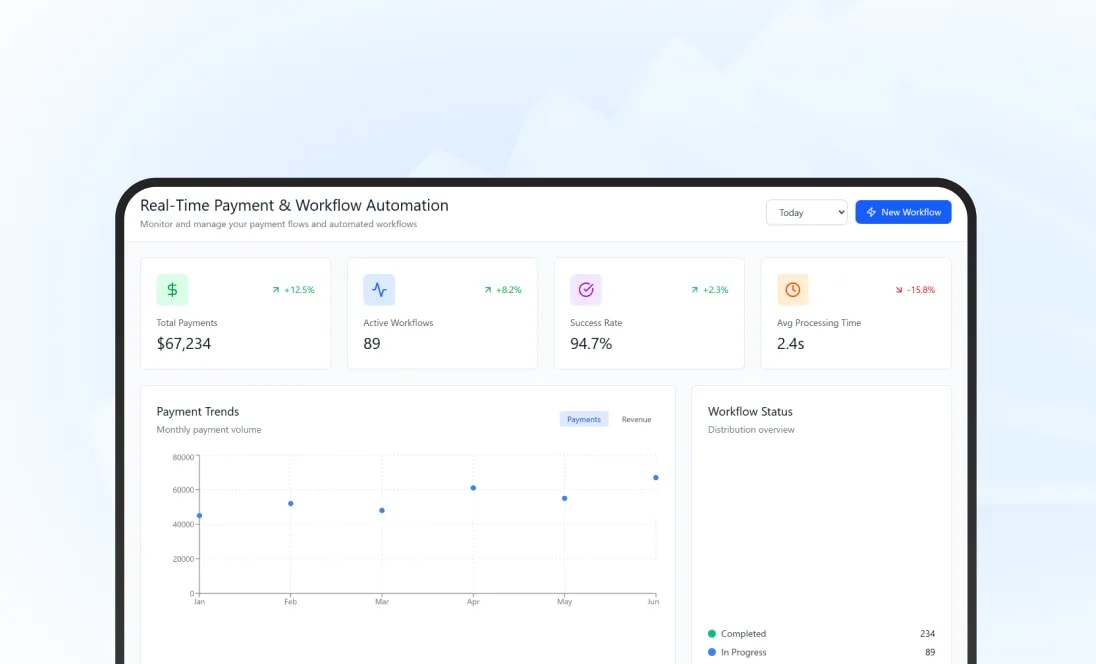
A healthcare claims environment relied on legacy AS/400 infrastructure, batch updates, manual report compilation, and disconnected back-office information. Our team built a cloud platform with modern services, more than 400 REST and EDI APIs, and self-service dashboards providing real-time KPI access. The published project also reports payer onboarding moving from more than a year to 3–4 months.
Read Full Portfolio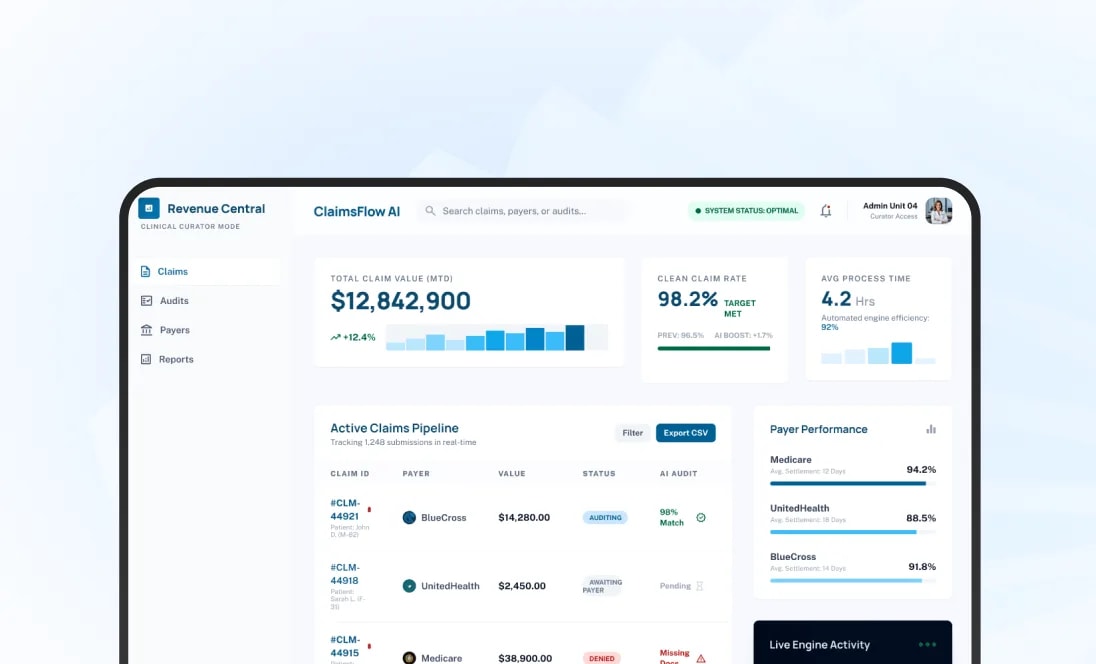
A financial technology client had a legacy trade-booking environment and disparate market feeds from providers including Markit, ICE, and MSCI. DITS developed an AWS-native, event-driven platform that automates ingestion and transformation into formats used by downstream platforms such as Fusion Invest and Finastra, reducing dependence on manual intervention and creating a more scalable data-processing architecture.
Explore Portfolio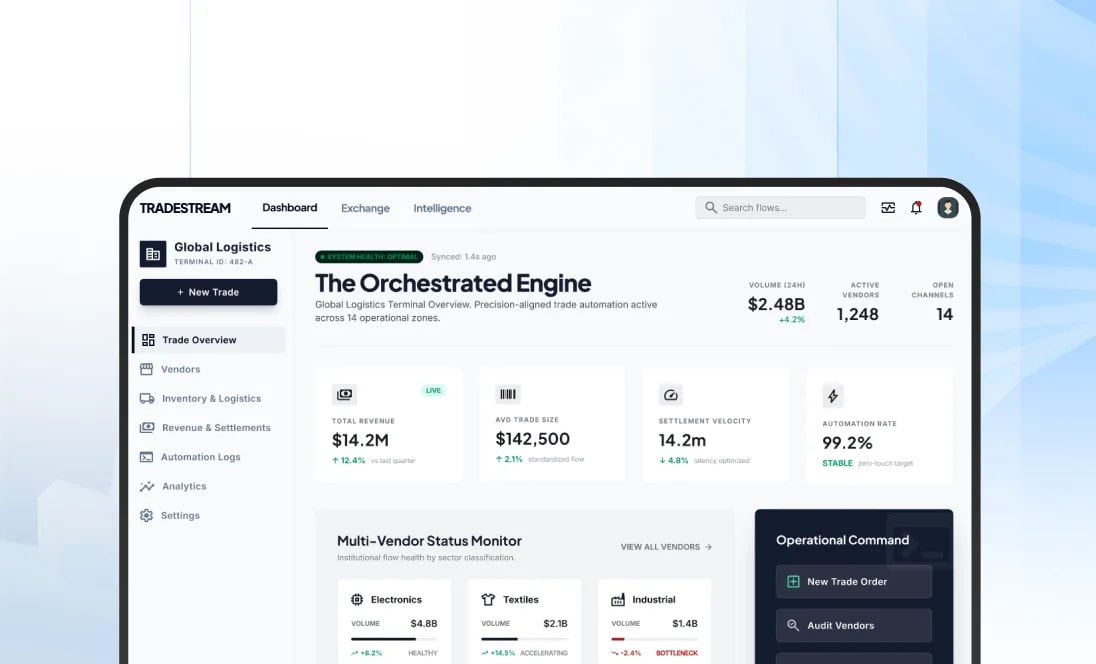
DITS built a cloud-enabled energy-monitoring platform consolidating more than 2,500 data points across electricity, water, gas, steam, solar, environmental sensors, and other operational sources. The platform brings information into dashboards, analytical views, anomaly alerts, and configurable reporting for facility and energy teams.
Read Full Portfolio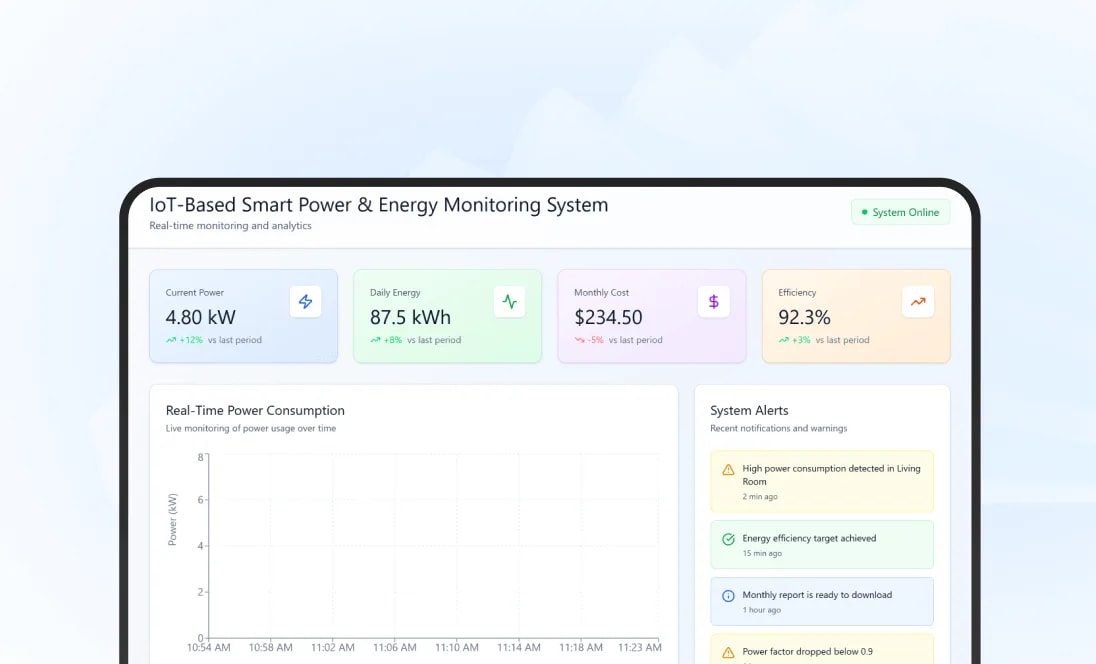
We evaluate enterprise data modernization against the business condition that justified the programme. Successful data warehouse modernization or platform transformation should improve how quickly, reliably, and economically information supports real business activity.
Measure whether required information reaches the users, applications, and reports that need it within the expected timeframe.
Track completeness, accuracy, duplicates, inconsistencies, reconciliation differences, failed validations, and other agreed quality conditions.
Measure how much manual effort and elapsed time remains between source-system activity and usable reporting.
Track failed jobs, retry rates, missed SLAs, data freshness, processing delays, and recovery effort.
Evaluate how quickly a new application, business unit, partner, or data source can be integrated into the platform.
Monitor relevant processing, analytical, concurrency, and query-performance measures according to user and application requirements.
Assess whether teams spend less effort maintaining fragile pipelines and more time creating reusable information capability.
Track infrastructure, licensing, storage, processing, support effort, and duplicated technology relative to the business value being created.
Measure whether trusted information and analytical tools are being used by the teams for whom the modernization programme was designed.
Determine whether the organization now has sufficiently accessible, governed, contextualized, and dependable information to support selected AI use cases.
Our data modernization services combine business understanding with architecture and engineering. We connect data architecture modernization, cloud, integration, applications, analytics, automation, and AI so the modernized data estate serves real decisions rather than becoming another isolated technology platform.
We identify what the organization needs to understand, improve, automate, or decide before determining which data technology should change.
Some data workloads should remain, others should be integrated, consolidated, migrated, redesigned, archived, or retired.
Our teams consider transformations, calculations, relationships, reporting definitions, and historical context—not only rows and columns.
DITS understands that databases, APIs, applications, workflows, and integrations evolve together, particularly during broader enterprise modernization.
The target is not simply a new warehouse or lake. We design information foundations around reporting, operations, applications, analytics, automation, and AI.
Quality, ownership, access, lineage, security, and observability are part of the platform rather than documentation added after implementation.
A bounded domain, pipeline, analytical workload, database, or reporting flow can be modernized first to validate architecture, reconciliation, performance, and operating assumptions.
Our teams can continue optimizing pipelines, models, performance, cost, governance, integrations, and analytical capability after the initial migration.