Change Takes Too Long
Tightly coupled architectures, accumulated dependencies, and fragile code can turn straightforward business requests into long engineering initiatives with disproportionate regression risk.
We help enterprises understand, de-risk, and transform business-critical software through AI-driven application modernization. Our AI-led modernization services combine modernization consulting, AI-powered application modernization, engineering, architecture, cloud, data, integration, and human validation to accelerate change while protecting the business logic and workflows organizations still depend on.
Assess Your Modernization OpportunitySuccessful AI-driven application modernization begins by understanding why the application is restricting the business. We use AI-assisted software modernization to improve system understanding and engineering productivity before deciding what should actually change.
Tightly coupled architectures, accumulated dependencies, and fragile code can turn straightforward business requests into long engineering initiatives with disproportionate regression risk.
Years of business rules, calculations, integrations, exceptions, and undocumented decisions may be embedded across code, databases, scripts, and configuration rather than maintained in reliable documentation.
A module may appear stable until teams discover unsupported libraries, fragile integrations, shared database dependencies, security issues, or logic known by only a small number of specialists.
Limited automated coverage makes it difficult to know whether refactoring, framework upgrades, architecture changes, or generated code preserve existing behavior.
Important enterprise information may remain difficult to access, integrate, analyze, or use for automation and AI because of legacy schemas and application boundaries.
Architecture diagrams, dependency maps, technical specifications, and business-rule documentation often become outdated while the production system continues changing.
Rewriting everything can remove useful business logic, increase migration scope, delay value, and expose the organization to change risk that a more selective modernization path could avoid.
Organizations may want intelligent automation, analytics, copilots, or agentic workflows while the underlying application cannot provide accessible data, reliable APIs, or clean architectural boundaries.
Effective AI-powered application modernization should improve the organization's ability to change the system safely. Our AI-led modernization services connect AI acceleration with architecture, business logic, validation, data, integration, and engineering controls.
AI can assist teams in explaining unfamiliar code, identifying dependencies, summarizing modules, and preparing technical knowledge for engineers and architects.
Legacy applications often encode operational rules that are no longer documented elsewhere. Modernization should surface and validate this knowledge before changing the technology around it.
Not every old component deserves the same investment. We connect technical findings with business criticality, operational risk, integration needs, and the cost of future change.
Appropriate AI-assisted analysis, code transformation, documentation, and testing can reduce mechanical effort so engineers spend more time on architecture, exceptions, validation, and business-critical decisions.
Structured AI-assisted workflows can help teams apply common patterns across code analysis, framework upgrades, documentation, testing, and migration activities.
Generated code is only useful when teams can demonstrate that business behavior, data integrity, integrations, and critical workflows still perform as expected.
Modern APIs, accessible data, clearer architecture, and stronger integration foundations make it easier to introduce intelligent capabilities after the underlying system becomes ready.
A global IoT platform was constrained by a monolithic JSP application that made updates and scaling difficult. DITS moved the product toward Spring Boot microservices, Docker, AWS infrastructure, modern integrations, and CI/CD while expanding telemetry and device-management capabilities. The published portfolio reports a 75% reduction in deployment time and describes the evolution from a legacy application into a SaaS- and hardware-integrated IoT ecosystem.
Explore Portfolio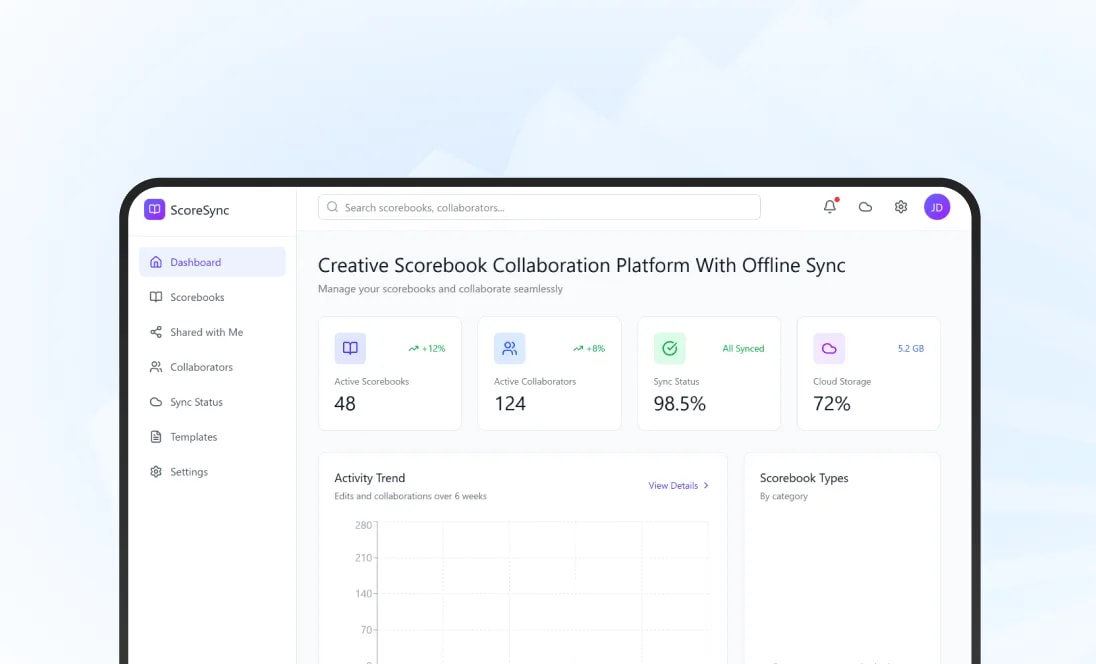
A healthcare claims platform depended on aging AS/400 infrastructure, batch-driven updates, fragmented back-office applications, and manual reporting. Our team introduced modern microservices, cloud infrastructure, automation, real-time analytics, and more than 400 REST and EDI APIs. The portfolio reports payer onboarding falling from 14–16 months to 3–4 months, alongside real-time KPI reporting and architecture designed for millions of claims.
Read Full Portfolio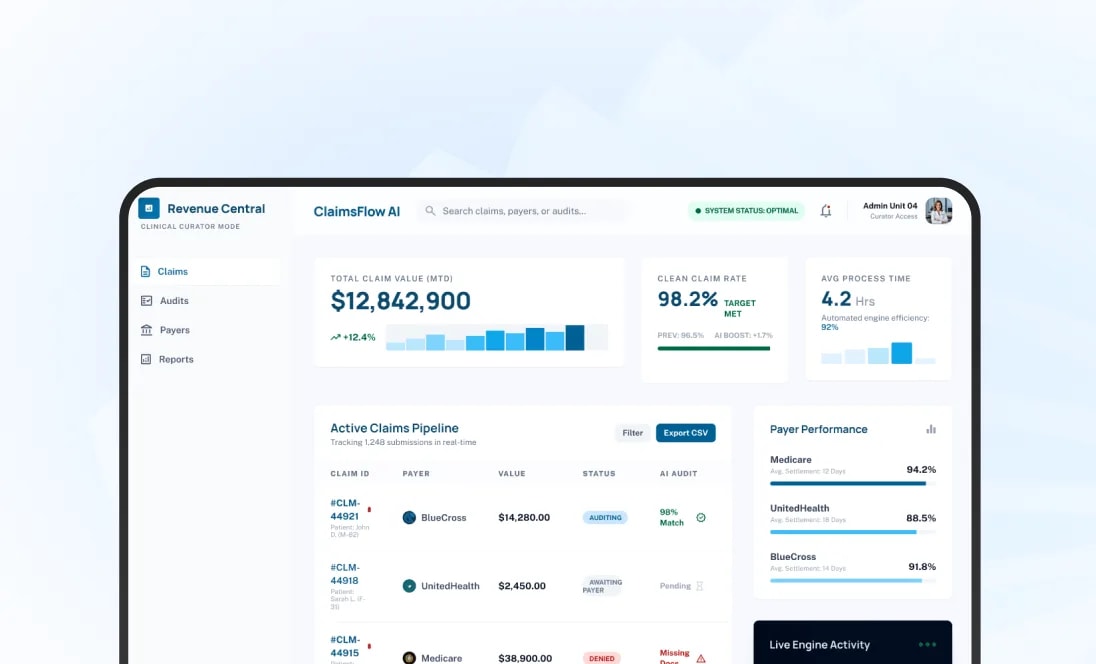
DITS supported a South African retailer whose disconnected applications, manual financial workflows, dated DevExpress interfaces, and lack of automated deployment limited operational change. Our work introduced centralized workflows, modern UI, automated reconciliation, staging and rollback capability, and QA-integrated releases. The portfolio reports a 60% reduction in stock-transfer errors and elimination of manual EFT reconciliation.
Explore Portfolio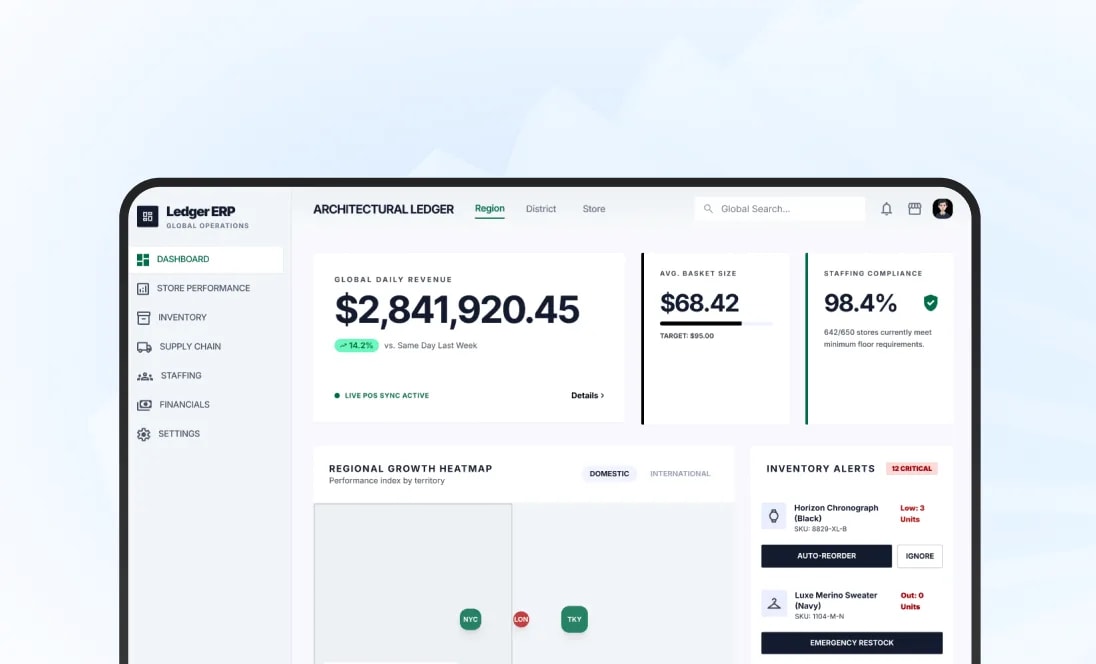
Strong generative AI application modernization begins with a decision about what the system actually needs. We use legacy modernization with AI to improve understanding and execution, not to turn every application into an automated rewrite project.
Keep applications or components that still deliver business value reliably when changing them would add cost and disruption without enough benefit.
Address reliability, security, documentation, testing, performance, or deployment issues where the application needs de-risking before deeper transformation.
Expose valuable legacy capabilities through APIs when isolation is the primary constraint and the underlying business logic remains useful.
Move applications or workloads onto stronger runtime, infrastructure, container, or cloud foundations where the existing platform is limiting future change.
Restructure code, modules, dependencies, or architecture where maintainability and technical debt are blocking engineering productivity.
Change application boundaries and interactions when monolithic or tightly coupled architecture is preventing scalability, integration, ownership, or release agility.
Replace high-risk components progressively while the remaining application continues supporting business operations.
Choose a rebuild only when maintaining or incrementally transforming the current system no longer presents a defensible business or technical path.
Our AI-led modernization services combine engineering judgment with AI-assisted analysis and execution. We apply AI-driven application modernization where it can reduce discovery effort, accelerate transformation, strengthen documentation, and improve validation across the modernization lifecycle.
Analyze application structure, modules, repositories, configuration, dependencies, interfaces, databases, and supporting documentation to create a clearer current-state view.
Identify relationships between components, libraries, services, databases, integrations, and workflows before engineers begin changing critical code.
Use application analysis to help surface rules, calculations, conditions, and operating behavior hidden inside older codebases for review by technical and business specialists.
Identify complexity, obsolete dependencies, duplicated logic, maintainability issues, unsupported technology, and high-risk areas that deserve modernization attention.
Create working technical explanations, module summaries, dependency information, and architectural context that engineers can validate and continuously improve.
Assist engineers with bounded refactoring, upgrades, syntax transformation, framework changes, and repetitive migration activities where generated output can be reviewed and tested.
Help create regression, unit, integration, and behavior-oriented tests that improve confidence before changing business-critical components.
Compare expected behavior, generated changes, application outputs, tests, and architectural requirements before accepting AI-assisted modifications into production.
AI-assisted software modernization can shorten the time engineers spend understanding unfamiliar systems. Within AI-powered application modernization, we use intelligence to generate hypotheses and technical context that architects and engineers validate before decisions are made.
Translate difficult modules and unfamiliar patterns into easier-to-review technical summaries so engineers can begin with more context.
Surface probable application relationships, package dependencies, integration points, shared components, and areas where changes could create wider impact.
Identify modules with concentrated dependencies, repeated logic, unusually high change risk, or architecture patterns that warrant deeper manual assessment.
Highlight potentially unused or redundant areas for expert review rather than assuming every historical component still supports a meaningful workflow.
Assist teams in locating rules distributed across source code, stored procedures, scripts, integration mappings, configuration, and database logic.
Build a working picture of application layers, boundaries, data movement, dependencies, external interfaces, and technical constraints.
Convert findings into reusable modernization context so critical application understanding does not remain limited to individual long-tenured developers.

AI code modernization can accelerate repetitive engineering tasks, but transformed code still requires architectural judgment, review, testing, and business validation. Our automated application modernization approach uses AI as an accelerator inside a controlled engineering workflow.
Assist with repetitive changes required when moving applications onto supported framework versions while engineers manage behavioral and architectural implications.
Support analysis and transformation when older application code must move toward more maintainable, supported, or cross-platform runtime environments.
Help restructure repetitive or tightly coupled code while experienced engineers determine whether the proposed changes improve the actual architecture.
Identify application functionality that can be exposed through service boundaries or APIs without immediately rebuilding the entire system.
Use code and dependency understanding to support the identification of logical boundaries while architects determine which modules genuinely benefit from separation.
Accelerate low-risk remediation while ensuring technical-debt priorities remain connected to performance, risk, release speed, security, and business value.
Generate draft module, class, service, interface, and integration documentation that teams verify against the actual behavior of the system.
Treat compilation, automated tests, integration checks, static analysis, and engineering review as required gates rather than considering generated code complete because it looks plausible.
Generative AI application modernization is particularly useful where the greatest modernization barrier is incomplete system knowledge. We use generative AI for legacy systems to assist teams in recovering technical and operational context before significant transformation begins.
Translate complex logic into structured explanations that subject-matter experts can review against how the organization actually operates.
Prepare draft technical documentation from code, interfaces, databases, configuration, and existing artifacts where reliable documentation is missing.
Explain how systems exchange information, which dependencies exist, and what downstream applications could be affected by modernization.
Analyze schemas, stored procedures, relationships, and data-access patterns to improve understanding before migration or restructuring.
Allow technical teams to investigate specific areas of large codebases more quickly while treating generated answers as working analysis rather than unquestioned truth.
Give modernization teams a faster route into unfamiliar business-critical applications without assuming AI-generated knowledge can replace experienced maintainers.
Capture system understanding in reusable artifacts so modernization gradually reduces dependency on undocumented institutional knowledge.
Automated application modernization can accelerate analysis and transformation, but speed without verification increases risk. Our AI-assisted software modernization model keeps accountable architects, engineers, QA specialists, and domain stakeholders involved where the system carries important business behavior.
AI may suggest transformations; architects determine whether those recommendations fit the operating model, target architecture, and future requirements.
Generated or transformed code goes through the same engineering review expected from manually produced production code.
Existing business behavior must be protected through adequate regression testing before transformed components replace production functionality.
Domain specialists verify important rules and calculations rather than relying solely on interpretations generated from code.
Modernization should assess authentication, authorization, dependency risk, secrets, data access, and relevant security implications before rollout.
Schema conversion, migration, and mapping require checks for completeness, integrity, relationships, history, and business meaning.
Use phased deployment, observability, rollback planning, and progressive adoption so modernization does not turn critical operations into an uncontrolled experiment.
Legacy modernization with AI becomes more valuable when intelligence supports a wider transformation rather than stopping at source-code conversion. Our AI-driven application modernization can connect code understanding with architecture, APIs, data, cloud, DevOps, and workflow improvement.
Evolve restrictive structures toward clearer modular, service-oriented, event-driven, or other appropriate architectural patterns.
Determine where rehosting, replatforming, containerization, managed services, or deeper cloud-native redesign creates meaningful value.
Create controlled interfaces around valuable legacy functionality so modern applications and partners can connect without depending on internal implementation details.
Improve schemas, storage, access, migration, pipelines, governance, and data availability where the current data layer restricts reporting, integration, or AI.
Replace fragile point-to-point dependencies with stronger APIs, events, integration layers, and reusable connectivity patterns.
Introduce modern build, test, deployment, observability, environment, and release practices so modernization continues after the first migration.
mprove the workflows and interfaces users interact with while preserving backend functionality that still creates value.
Open the data, services, interfaces, and architecture required to support intelligent products and workflows after the application foundation is ready.
Generative AI for legacy systems can reveal application knowledge more quickly, but legacy systems often contain years of operational intelligence. Our AI-powered application modernization prioritizes understanding this value before transformation decisions remove it.
Identify how users, systems, decisions, approvals, and exceptions interact through the current application.
Locate calculations, validations, eligibility logic, pricing, operational rules, and other behavior embedded within technical implementation.
Map external services, databases, files, APIs, messaging, partner interfaces, and scheduled processes that depend on the application.
Understand how business entities and historical information connect before databases or schemas are transformed.
Capture edge cases and uncommon workflows that may not be visible in high-level process documentation but remain critical in production.
Recover technical context from code and records where the engineers who originally designed the system may no longer be available.
Use recovered knowledge to identify areas that need additional validation before refactoring, migration, decomposition, or replacement.
Our AI-led modernization services are evolving toward a reusable modernization-intelligence layer that helps DITS understand applications more quickly while keeping consulting and engineering judgment in control. This supports AI-assisted software modernization without overclaiming autonomous transformation.
Build a structured view of architecture, modules, technologies, dependencies, interfaces, data, and risk.
Surface important rules and operational behavior for review with business and technical specialists.
Identify relationships that affect modernization sequencing, testing, migration, and continuity.
Separate low-value cleanup from technical constraints that materially affect business change, reliability, scale, or integration.
Use assessment findings to compare retention, stabilization, API enablement, refactoring, re-engineering, replacement, and rebuild paths.
Turn discovery into a prioritized roadmap covering risks, dependencies, target direction, validation requirements, and implementation sequence.
AI & Generative AI
AI-assisted software modernization can apply across several legacy environments, but the modernization decision still depends on business criticality, technical condition, dependencies, risk, and economics rather than technology age alone.
Older .NET Framework, ASP.NET Web Forms, VB.NET, and related Microsoft estates can benefit from faster code understanding, framework analysis, testing assistance, API enablement, and incremental modernization.
Legacy Java and tightly coupled monolithic systems can use AI-assisted analysis to improve dependency understanding, framework-upgrade planning, decomposition, and documentation.
Applications accumulated over years of incremental change can benefit from code intelligence, dependency analysis, documentation recovery, refactoring support, and architecture modernization.
Large applications with concentrated business logic can use AI code modernization to accelerate understanding before teams identify sensible module and service boundaries.
Custom ERP, CRM, workflow, and industry-specific systems often contain unique operational logic that should be extracted and validated before modernization.
Systems with limited documentation and shrinking internal expertise are strong candidates for knowledge recovery and application-understanding accelerators.
Applications with tightly coupled databases, stored procedures, reporting logic, and data dependencies can benefit from AI-assisted schema understanding and mapping.

Our AI-powered application modernization journey keeps business validation ahead of code transformation. DITS combines automated application modernization techniques with its broader transformation methodology so modernization decisions remain connected to the original business objective.
Clarify why modernization matters now, which business capability depends on the application, what cannot be disrupted, and what outcome leadership expects.
Understand workflows, code, applications, users, data, integrations, decisions, dependencies, infrastructure, and operating constraints.
Identify the areas where technical debt, risk, cost, change difficulty, security, scalability, or integration creates the greatest business constraint.
Test AI-assisted analysis, transformation approaches, target architecture, migration assumptions, code conversion, or other modernization hypotheses before scaling.
Refactor, re-engineer, integrate, migrate, modernize, automate, or selectively rebuild the components required by the validated strategy.
Support engineering teams, users, operational processes, governance, deployment practices, and organizational transition.
Evaluate technical and business outcomes against the agreed baseline instead of declaring success when code has merely been migrated.
Continue improving architecture, applications, data, integration, engineering practices, documentation, and AI-assisted delivery over time.
The value of AI-driven application modernization should be measured against the reason the application needed to change. AI code modernization matters when it improves engineering economics, risk, system quality, business agility, or future capability.
Measure how much engineering time is required to understand architecture, dependencies, modules, and technical behavior before modernization begins.
Track whether critical code, integrations, architecture, rules, and dependencies become better documented and easier to maintain.
Measure assessment, transformation, testing, migration, release, and validation time where AI assistance is expected to accelerate work.
Evaluate whether modernization produces stronger automated protection for the workflows and behaviors the business depends on.
Track deployment failures, rollback needs, defects, regression issues, and change-related incidents.
Measure code complexity, unsupported dependencies, ownership clarity, architecture boundaries, and the engineering effort required for future change.
Determine whether modern APIs and data access make the application easier to connect with partners, products, analytics, automation, and AI.
Evaluate whether future features, integrations, fixes, and operational improvements become easier and less expensive to implement.
Assess whether modernized data, APIs, architecture, and integration foundations make future intelligent capabilities more practical and governable.
DITS combines business understanding, modernization consulting, AI, architecture, engineering, integration, cloud, data, and continuous ownership. Our AI-led modernization services use intelligence to accelerate transformation without separating modernization decisions from the business-critical systems they affect.
We determine why the application matters and what the organization cannot afford to lose before deciding how aggressively it should change.
AI helps accelerate discovery, but DITS does not treat generated code as a substitute for understanding architecture, dependencies, workflows, and business rules.
Existing applications can often be stabilized, integrated, refactored, replatformed, API-enabled, or progressively modernized without unnecessary replacement.
AI accelerates repetitive analysis and transformation while architects, developers, QA specialists, and domain experts remain responsible for critical decisions.
Modernization sequencing, validation, testing, migration, rollback, and deployment are designed around the systems the organization still needs to operate.
DITS looks beyond source code to the databases, APIs, integrations, infrastructure, workflows, and delivery practices surrounding the application.
The goal is not simply cleaner code. Modernized systems should support faster business change, stronger integration, automation, analytics, cloud, and future AI.
DITS can support continuous modernization as business requirements expose additional architecture, data, integration, and engineering priorities.
You do not need to decide whether the application needs AI code modernization, a cloud move, refactoring, re-platforming, API enablement, or a rebuild before speaking with us. Bring the business-critical system and its constraints; we will assess where AI-driven application modernization can accelerate change and where experienced engineering judgment should remain in control.
Get Expert Advise Today