DITS Logo
Connect With Us

Freight Forwarding Software Solutions for Multimodal Operations

Freight operations depend on connected systems, reliable visibility, and efficient execution across carriers, modes, documentation, tracking, and back-office processes. DITS helps freight forwarders integrate critical systems, automate high-effort processes, and strengthen execution across TMS, carrier networks, documentation, tracking, and back-office workflows.

Explore Our Solutions

Freight Forwarding Software Consulting Built Around Business Priorities

DITS helps freight forwarders make better technology decisions by identifying system constraints, integration gaps, and process inefficiencies, then defining the right path to improve scalability, reliability, and operational performance.

  • Freight Software Architecture Assessment

    Evaluate application architecture, system dependencies, data flows, and integration gaps to identify what is limiting performance, scalability, and long-term platform flexibility.

  • Legacy Modernization Strategy

    Define a practical freight forwarding software modernization roadmap that improves maintainability, performance, and scalability while preserving business-critical functionality.

  • Integration & Connectivity Planning

    Plan how TMS, FMS, WMS, ERP, carrier APIs, EDI networks, and partner systems should connect to create a more reliable multimodal transportation management system environment.

  • Cloud & Infrastructure Advisory

    Assess cloud readiness, hosting architecture, deployment models, security, and performance requirements to build a more resilient foundation for growing freight operations.

  • Data, AI & Automation Readiness

    Evaluate data quality, workflow readiness, and system accessibility to determine where AI freight forwarding automation can reduce manual effort, improve decision speed, and deliver measurable operational value.

  • Platform & API Strategy

    Define APIs, integration layers, and platform architecture that improve interoperability and support multimodal logistics workflow automation across freight operations.

  • Build, Modernize, Integrate or Replace Advisory

    Determine whether existing systems should be retained, extended, modernized, integrated, or replaced based on business value, technical risk, scalability, and long-term technology priorities.

Freight Software Solutions for Connected, Scalable Operations

DITS helps freight businesses overcome fragmented systems, manual workflows, and legacy constraints through modern architecture, AI integration, agentic workflows, API-led connectivity, IoT, and cloud engineering.

  • Transportation Management System 

    Disconnected planning and execution reduce visibility and control. DITS builds multimodal transportation management systems using modular architecture, APIs, event-driven workflows, and unified operational data for better coordination.

  • Fleet Management Software

    Limited vehicle and driver visibility reduces fleet efficiency. DITS integrates GPS, telematics, IoT, maintenance workflows, and real-time data pipelines to improve utilization, monitoring, and operational responsiveness.

  • Automated Dispatch Management

    Manual dispatching creates delays and inconsistent allocation. DITS combines dispatch engines, geospatial intelligence, telematics data, configurable rules, and agentic workflows to automate assignments and manage operational exceptions.

  • Route Optimization & ePOD

    Inefficient routing and manual delivery confirmation increase cost and effort. DITS integrates optimization algorithms, mapping APIs, GPS, mobile workflows, and ePOD to improve route execution and delivery visibility.

  • Intelligent Document Processing 

    Manual document handling slows freight operations. DITS applies OCR, AI models, classification, validation rules, and human review to support AI customs document processing and accelerate downstream workflows.

  • Carrier API & EDI Integration

    Disconnected carrier platforms create data gaps and duplicate work. DITS uses APIs, EDI, webhooks, middleware, and transformation layers to synchronize rates, bookings, milestones, and shipment updates.

  • Multimodal Shipment Orchestration

    Cross-mode operations often suffer from fragmented handoffs. DITS uses orchestration engines, event-driven architecture, APIs, and shared data models to enable multimodal logistics workflow automation across shipments.

  • Freight Forwarding Software Modernization

    Legacy platforms restrict scalability and integration. DITS delivers freight forwarding software modernization through cloud migration, modularization, API enablement, database improvements, UX modernization, and selective redevelopment.

  • FMS / TMS Integration

    Disconnected freight, warehouse, ERP, and financial systems create reconciliation effort. DITS connects them through APIs, middleware, event streaming, and synchronized data layers to improve workflow continuity.

Build Freight Technology Around Your Business Model

Standard platforms do not always support differentiated workflows, customer experiences, or growth plans. DITS helps design and engineer freight software around the capabilities your business needs.

Discuss Your Freight Platform

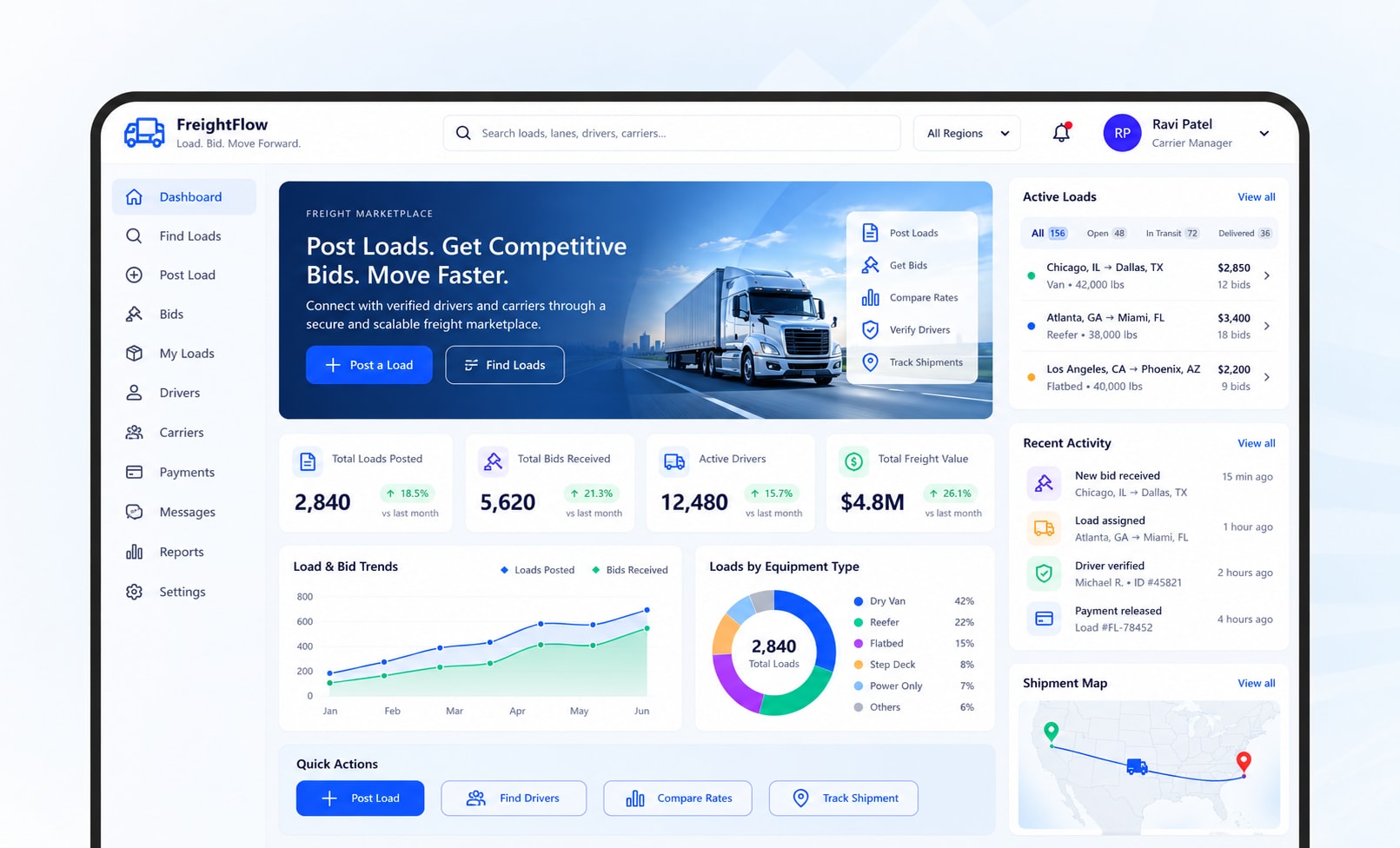
Cloud-Based Freight Marketplace for Load Posting & Driver Bidding  

DITS built a cloud-native freight marketplace that connects load providers with drivers through multi-dimensional bidding, ratings, invoicing, and secure API access. The platform uses Java, Spring Boot, Google Cloud, auto-scaling infrastructure, JWT authorization, and managed cloud services to support bursty marketplace traffic while keeping the operational footprint lean.

Discover Portfolio
Cloud-based freight marketplace dashboard for load posting, driver bidding, rate comparison, and shipment tracking

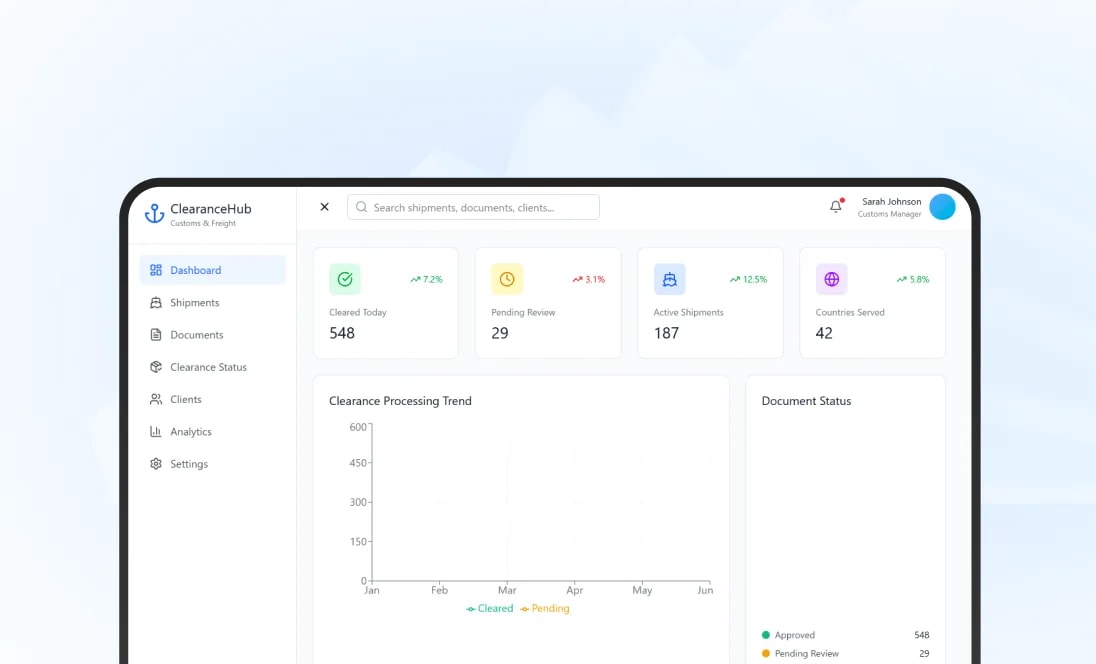
Customs Document Clearance Software for Freight Forwarders  

DITS developed a configurable SaaS platform that centralizes customs orders, document processing, data enrichment, tracking, access control, and integrations. Using OCR, REST APIs, AWS, Docker, PostgreSQL, JWT authentication, and CI/CD automation, the solution reduced manual data-entry time by 80%, shortened clearance cycles by 40%, and cut status inquiries by 50%.

Discover Portfolio
Customs Document Clearance Software for Freight Forwarders

Multimodal Freight Management for Greater Control Across Every Mode

DITS helps freight businesses connect road, air, ocean, and rail operations through integrated workflows, shared data, and real-time system connectivity. By reducing fragmented handoffs and improving visibility across modes, we enable more coordinated execution, faster exception response, and scalable multimodal freight operations.

Air Freight

Coordinate bookings, airway bills, carrier updates, shipment milestones, and exception handling through API integrations and connected workflows. DITS helps improve visibility across time-sensitive air cargo operations while reducing manual coordination between systems and partners.

Ocean Freight

Manage FCL/LCL movements, container milestones, carrier updates, documentation, and exceptions through integrated freight systems. DITS connects ocean workflows with carrier platforms, customer systems, and operational data to improve control across longer shipment cycles.

Road Freight

Connect dispatch, fleet data, routing, telematics, ePOD, and driver workflows within a unified operating environment. DITS supports freight forwarding workflow automation to improve route execution, delivery visibility, and coordination across first-mile, line-haul, and last-mile operations.

Multimodal Operations

Coordinate road, air, ocean, and rail movements through orchestration layers, APIs, shared data models, and event-driven workflows. DITS enables multimodal logistics workflow automation that keeps milestones, documents, partner activity, and exceptions connected across the complete shipment journey.

Power Freight Operations with Seamless System Integrations

Freight integrations create value only when systems exchange the right data reliably and downstream workflows can act on it. DITS connects core freight platforms while also designing the architecture, data mapping, synchronization, security, governance, and agentic workflows needed to make those integrations operationally useful.

ERP, TMS & WMS Integration

Connect planning, execution, inventory, financial, and shipment data through APIs, middleware, and shared data models to support more connected multimodal freight management software environments.

CRM & Customer Platform Integration

Synchronize customer, quote, shipment, and service data across commercial and operational systems to reduce handoff gaps and create a more consistent customer experience.

Accounting & Payment Integration

Connect shipment events, charges, invoices, payments, and reconciliation workflows with financial platforms to improve data consistency and reduce manual back-office processing.

Carrier API & EDI Connectivity

Integrate carrier rates, bookings, milestones, documents, and status updates through APIs, EDI, webhooks, and transformation layers while managing format differences across partner systems.

IoT & Telematics Integration

Bring vehicle, asset, location, and sensor data into freight workflows through IoT gateways and streaming pipelines to improve real-time visibility and enable smarter freight forwarding workflow automation.

Rate & Tariff Platform Integration

Connect freight rate and tariff sources with quoting and booking workflows, using data normalization and mapping logic to improve pricing consistency and reduce manual rate handling.

Agentic Workflow Integration

Embed AI agents into connected freight workflows to monitor events, validate data, trigger actions, route exceptions, and coordinate multi-step processes that support AI freight forwarding automation.

Data Mapping, Synchronization & Governance

Standardize data across systems through canonical models, transformation rules, master-data controls, synchronization logic, lineage, and governance practices to create a reliable operational data foundation.

Secure Integration Architecture

Design integration layers with role-based access, encryption, audit trails, API security, monitoring, and policy controls so connected freight systems remain scalable, observable, and secure.

Modernize Freight Software Without Disrupting Critical Operations

Legacy freight platforms can become harder to scale, integrate, secure, and maintain as operational requirements evolve. DITS approaches freight forwarding software modernization incrementally, improving the technology foundation while preserving critical workflows and reducing transformation risk.

Aging applications can slow releases and increase maintenance effort. DITS refactors or selectively rebuilds critical modules using modern frameworks, modular architecture, automated testing, and CI/CD to improve maintainability and scalability.

Legacy infrastructure can limit resilience and flexibility. DITS modernizes hosting through cloud-native services, containers, automated deployments, observability, and scalable infrastructure patterns to improve performance, availability, and operational efficiency.

API Enablement

Closed systems make integrations and new capabilities difficult to introduce. DITS exposes core freight functions through secure APIs, service layers, gateways, and event-driven interfaces to improve interoperability and platform extensibility.

Outdated interfaces increase training effort and slow operational teams. DITS redesigns freight workflows using role-based experiences, responsive interfaces, reusable components, and workflow simplification to improve usability and execution speed.

Tightly coupled systems make change expensive and risky. DITS introduces modular, service-oriented, and event-driven architecture patterns that isolate dependencies, improve scalability, and support faster integration of new freight capabilities.

Fragmented and inconsistent data limits reporting, automation, and AI readiness. DITS builds governed data models, pipelines, synchronization layers, and quality controls to create a reliable foundation for analytics and intelligent freight workflows.

Connect Freight Operations Before Silos Create More Cost

Disconnected systems increase manual work, reconciliation, and execution delays. DITS helps connect core freight platforms, carrier networks, data, and workflows into a more coordinated operating environment.

Plan Your Integration

DITS Technology Capabilities for Modern Freight Operations

DITS combines cloud, data, AI, automation, IoT, and product engineering expertise to help freight businesses modernize platforms, connect operations, improve decision-making, and scale technology with less operational friction.

  • Cloud, Data & Connected Systems

    Modern freight operations depend on reliable data flow across platforms. DITS builds cloud-ready architectures, data pipelines, APIs, integration layers, and governed data models that improve scalability, interoperability, and visibility.

  • Workflow Automation

    Manual handoffs across booking, dispatch, documentation, tracking, and billing slow execution. DITS uses orchestration engines, APIs, business rules, and freight forwarding workflow automation to reduce repetitive effort and improve process consistency.

  • AI for Freight Operations

    Freight teams need faster ways to process data, identify exceptions, and support decisions. DITS integrates AI models, document intelligence, predictive analytics, and decision-support capabilities into existing operational workflows.

  • Agentic AI

    Complex freight processes often require coordination across multiple systems and decisions. DITS designs agentic workflows that monitor events, retrieve data, trigger actions, manage exceptions, and escalate critical decisions with human oversight.

  • Product Engineering

    Freight platforms must evolve with new customers, integrations, and operating models. DITS combines product strategy, cloud-native engineering, APIs, DevOps, QA, and AIDLC practices to build and scale reliable digital freight products.

  • IoT & Connected Operations

    Limited real-time visibility can weaken fleet and shipment control. DITS integrates telematics, GPS, sensors, IoT gateways, and streaming data with freight platforms to support real-time monitoring and event-driven operations.

Core Features That Amplify Freight Operations Across Every Workflow

Modern freight platforms need more than shipment tracking. DITS brings together quoting, booking, visibility, documentation, compliance, analytics, customer access, and connected workflows to help freight businesses reduce operational friction and manage growing shipment complexity from one digital environment.

  • Freight Rate & Quote Management

    Centralize carrier rates, surcharges, tariffs, and customer pricing to shorten quote cycles, improve pricing consistency, and give teams better control over freight margins.

  • Multimodal Booking & Shipment Management

    Coordinate bookings, schedules, milestones, handoffs, and exceptions across road, air, ocean, and rail to give operations teams greater control over complex shipment journeys.

  • Real-Time Shipment Visibility

    Bring carrier events, GPS data, milestones, and exception alerts into a unified view so teams can identify delays earlier and communicate shipment status more effectively.

  • Freight Document Automation

    Digitize the creation, capture, validation, and routing of bills of lading, invoices, manifests, and customs documents to reduce repetitive work and processing delays.

  • Workflow & Back-Office Automation

    Automate repetitive activities across booking, approvals, status updates, invoicing, reconciliation, and exception routing to reduce administrative effort and improve process consistency.

  • Analytics & Operational Dashboards

    Turn shipment, carrier, cost, service, and exception data into actionable dashboards that help operations teams monitor performance, identify bottlenecks, and make faster decisions.

  • Customs & Compliance Management

    Connect customs data, declarations, documents, validation rules, and audit trails to support more consistent compliance workflows and reduce manual handling across international freight operations.

  • Customer & Partner Portals

    Give customers and partners self-service access to quotes, bookings, shipment status, documents, invoices, and updates, reducing routine communication while improving service visibility.

  • Freight Systems Integration

    Connect freight platforms with ERP, TMS, WMS, carrier networks, accounting systems, and partner applications through APIs, EDI, and governed data flows to reduce silos and maintain workflow continuity.

  • Data Security & Access Control

    Protect sensitive freight, customer, pricing, and operational data through role-based access, encryption, secure APIs, audit trails, and governance controls that reduce risk while keeping information accessible to authorized teams.

Compliance Frameworks Supporting Global Freight Operations

Freight operations must align with customs, trade, documentation, data, and transport requirements across different regions. Compliance-ready software helps standardize regulatory workflows, improve traceability, and support more reliable cross-border execution.

  • United States

    FMC · OTI Requirements · CBP · ACE · AES/EEI · EAR · OFAC · NVOCC

  • India

    ICEGATE · Customs Act 1962 · SCMTR · DGFT · Foreign Trade Policy · IEC · GST

  • United Kingdom

    HMRC Customs · Customs Declaration Service (CDS) · UK GDPR

  • European Union

    Union Customs Code (UCC) · ICS2 · Entry Summary Declaration (ENS) · GDPR

  • Canada

    CBSA · Advance Commercial Information (ACI) · EDI Cargo Reporting

  • Australia

    Australian Border Force (ABF) · Integrated Cargo System (ICS) · Customs Act 1901 · Biosecurity Act 2015 · GST

  • UAE

    Federal Customs Authority Requirements · GCC Common Customs Law · Dubai Customs · Abu Dhabi Customs · VAT

  • Singapore

    Singapore Customs · TradeNet · Strategic Goods Control · GST

  • Japan

    Japan Customs · NACCS · Foreign Exchange and Foreign Trade Act (FEFTA) · Consumption Tax

AI-Powered Freight Document Automation for Better Operational Visibility

DITS integrates AI into freight workflows to reduce manual effort, surface exceptions earlier, improve decision speed, and make operational data more actionable. Our approach combines AI freight forwarding automation, predictive insights, document intelligence, and governed workflows with human oversight where needed.

  • Intelligent Exception Management

    Freight teams can lose time reacting to delays, missing updates, and operational anomalies. DITS uses AI models, event data, and rules to prioritize exceptions and route them to the right teams faster.

  • AI-Assisted Quoting

    Manual rate comparison and quote preparation can slow response times. DITS combines rate data, pricing logic, historical patterns, and AI assistance to help teams prepare quotes more quickly and consistently.

  • Operational Decision Support

    Disconnected data can make day-to-day decisions slower and less consistent. DITS uses AI-driven analysis and contextual insights to support routing, prioritization, capacity, and shipment-related decisions.

  • Predictive Delay & Risk Insights

    Potential delays are often identified too late to act effectively. DITS uses historical and real-time shipment data to surface risk signals earlier and support more proactive operational planning.

  • Workflow Orchestration 

    Routine updates and handoffs create unnecessary manual effort. DITS uses event-driven triggers, intelligent notifications, and agentic workflows to automate repetitive actions while maintaining appropriate operational controls.

  • AI Customs Document Processing

    Customs documentation can require significant manual extraction and validation. DITS uses document intelligence, AI-based extraction, validation rules, confidence scoring, and human review to streamline customs document processing and reduce exception effort.

  • Freight Data Analysis & Pattern Detection

    Large volumes of shipment, carrier, and operational data can hide useful patterns. DITS uses AI and analytics to identify recurring bottlenecks, performance trends, and anomalies that support continuous operational improvement.

Technology Stack Behind Scalable Freight Forwarding Software Solutions

Frontend

  • React
  • Angular
  • Vue.js
  • Next.js

Make the Right Freight Technology Decision Before You Invest

The best next step may be to modernize, integrate, automate, extend, or build. DITS helps evaluate the options against business value, technical risk, scalability, and operational continuity.

Evaluate Your Technology Options

Business Outcomes That Strengthen Freight Forwarding Operations

The right FreightTech should do more than digitize processes. It should improve execution, visibility, connectivity, and scalability while helping teams manage growing operational complexity with greater control.

Faster Freight Execution

Connected workflows and freight automation solutions help reduce delays across quoting, booking, dispatch, documentation, and shipment handling, enabling teams to execute freight with greater speed and consistency.

Better Shipment Visibility

Integrated tracking, telematics, carrier data, and freight visibility software give teams a clearer view of shipment milestones, exceptions, and handoffs across road and multimodal operations.

Lower Manual Workload

Automation across documents, updates, approvals, reconciliation, and routine communication reduces repetitive work and allows teams to focus more on exceptions, customers, and operational decisions.

Better Customer Experience

Self-service portals, proactive notifications, accurate tracking, and faster document access give customers greater visibility while reducing dependence on manual status updates and service requests.

Greater Operational Scalability

Modern architecture, cloud infrastructure, and connected road freight management capabilities help businesses support higher shipment volumes, additional services, integrations, and locations without adding equivalent operational complexity.

Improved Cost & Margin Control

Connected rate, shipment, carrier, and financial data gives teams better visibility into freight costs, pricing, and exceptions, helping reduce leakage and support more informed margin decisions.

Why Partner with DITS for Freight Software Transformation

DITS combines freight domain understanding with consulting, software engineering, modernization, integration, AI, and cloud expertise to help businesses improve critical freight systems without losing sight of operational priorities. We focus on making technology decisions that improve scalability, connectivity, efficiency, and long-term platform value.

  • Consulting-Led Approach

    We assess workflows, system constraints, integration gaps, and growth priorities before recommending what should be modernized, integrated, automated, retained, or rebuilt.

  • Freight Engineering Expertise

    Our teams design around real freight workflows such as quoting, dispatch, shipment tracking, documentation, carrier connectivity, and multimodal execution.

  • Smart Modernization

    We modernize legacy freight platforms through cloud, APIs, architecture improvements, UX upgrades, and selective redevelopment while preserving valuable business logic.

  • Data-Driven Decision Support

    DITS structures and connects freight data across systems to improve reporting, analytics, forecasting, and operational decision-making, giving teams a more reliable foundation for planning and performance improvement.

  • Governed AI

    We introduce AI and agentic workflows with AIDLC practices, validation controls, confidence thresholds, and human oversight to improve automation without compromising operational control.

  • Built to Scale

    Cloud-native architecture, modular platforms, DevOps, observability, and continuous engineering help freight technology evolve with new customers, integrations, shipment volumes, and business models.

Freight Software Questions Decision-Makers Ask

Assess architecture, scalability, integration gaps, maintenance effort, workflow limitations, and future business needs. If core functionality still delivers value, selective modernization or integration may offer a lower-risk path than full replacement.