Types of Healthcare Delivery Systems for Clinics and Hospitals
Table Of Content
Published Date :
02 Jun 2026
Key Takeaways
- Healthcare delivery systems define how providers, payers, patients, and regulators work together to deliver care, manage costs, and improve healthcare outcomes across clinics and hospitals.
- Different healthcare delivery models such as Fee-for-Service, Managed Care, Integrated Delivery Systems, Accountable Care Organizations, and Telehealth offer unique advantages based on cost control, care coordination, and patient access requirements.
- Technology plays a critical role in modern healthcare delivery by improving interoperability, automating workflows, accelerating claims processing, and enabling better care coordination across healthcare networks.
- Digital solutions such as EHR platforms, healthcare analytics, AI-powered systems, telehealth applications, and asset management tools help organizations improve efficiency, visibility, and patient experiences.
- Healthcare organizations must evaluate workforce needs, cost predictability, technology readiness, compliance requirements, and long-term scalability when selecting a healthcare delivery model and technology stack.
- The future of healthcare delivery is increasingly driven by connected ecosystems, AI-enabled decision-making, predictive analytics, remote care, and integrated digital infrastructure that supports sustainable growth and operational excellence.
The delivery system of a healthcare organization is one of the most consequential strategic decisions it makes as a business.
In an industry facing rising costs, shifting regulations, workforce shortages, and increasing pressure to deliver results, the delivery model directly determines an organizations performance, positioning, and long-term sustainability.
Gone are the days when a single approach fit every organization. Today’s healthcare leaders need to understand the full spectrum of delivery systems: from traditional fee-for-service models to fully integrated value-based systems.
Before comparing the major types of healthcare delivery system, business leaders first need to understand one basic question: what is health care delivery system in practical terms?
It is the complete operating model that connects care access, provider networks, insurance processes, compliance, technology, and patient experience. Each model carries distinct advantages, risks, reimbursement mechanics, operational requirements, and scalability potential.
In this guide, we break down the major types of healthcare delivery systems, examining how they work, who they best serve, their financial implications, and the operational realities of running them.
What is Healthcare Delivery System and Where Technology Fits
A simple health care delivery system is the organized network where health services are arranged, funded, provided, observed, and refined for patients.
For businesses though, that definition gets even more helpful when they look at it through 4 components of health care delivery system, the care providers, payers, patients, and regulators. If these parts aren’t tied together right, things get pricey, timelines get longer, and the whole patient experience starts to feel a bit worse.
In simple terms, they define how healthcare services are organized, managed, and delivered to patients. That includes hospitals, clinics, insurance providers, and regulatory bodies working together, sometimes smoothly, sometimes not so much.
From a business perspective, it’s less about definitions and more about outcomes. How quickly are claims processed? Are patients getting timely care? Is data moving without friction?
A typical system involves:
- Providers delivering care
- Payers managing reimbursements
- Patients navigating access
- Regulators enforcing compliance
These 4 components of health care delivery system shape how care actually works in the real world. A clear health care delivery system definition helps executives see why healthcare performance is not dependent on hospitals alone. It depends on how smoothly all parties exchange information, approve services, manage risk, and support patients across the care journey.
Now here’s where things get interesting. Most inefficiencies don’t come from the structure itself. They come from disconnected systems. One hospital uses a different platform. The insurer relies on another. Data gets stuck in between.
That’s why organizations are investing in healthcare software development to build systems that actually talk to each other. Not in theory. In real workflows.
Think of a mid-sized employer dealing with recurring claim delays. On paper, their delivery model is solid. In practice, fragmented data slows everything down. A unified digital layer changes that. Faster approvals. Better visibility. Fewer escalations.
So while the framework of healthcare delivery systems sets the stage, technology determines how well the play runs.
Want better care coordination across healthcare services?
Create integrated healthcare platforms that connect providers, patients, and clinical systems for improved care delivery and patient experiences.
Why Healthcare Delivery Systems Matter For Businesses
For most US businesses, healthcare isn’t just a benefit. It’s one of the largest operational expenses after payroll. And yet, many leadership teams don’t fully see how deeply healthcare delivery systems influence that cost.
Here’s where the impact becomes clear:
- Employer-sponsored healthcare costs: The lack of proper coordination between healthcare providers and insurance companies results in unnecessary medical tests and treatment delays.
- Claims processing delays: Manual workflows and outdated systems slow down reimbursements. Employees feel it first. Finance teams feel it next.
- Regulatory pressure: Compliance with HIPAA and ACA isn’t optional. But managing it across fragmented systems increases risk and administrative overhead.
- Employee experience: When access to care is slow or confusing, productivity drops. Quietly, but consistently.
This is where businesses start rethinking all their operations. Healthcare insurance software has become popular because it helps organizations manage their claims processes more efficiently while decreasing manual work and enhancing their processing speed.
Once leaders understand what is health care delivery system, the next step is to compare the different models available in the market. Each of the major types of healthcare delivery system works differently in terms of cost control, patient access, reimbursement, coordination, and technology requirements.
Types of Healthcare Delivery Systems In US With Technology Enablement
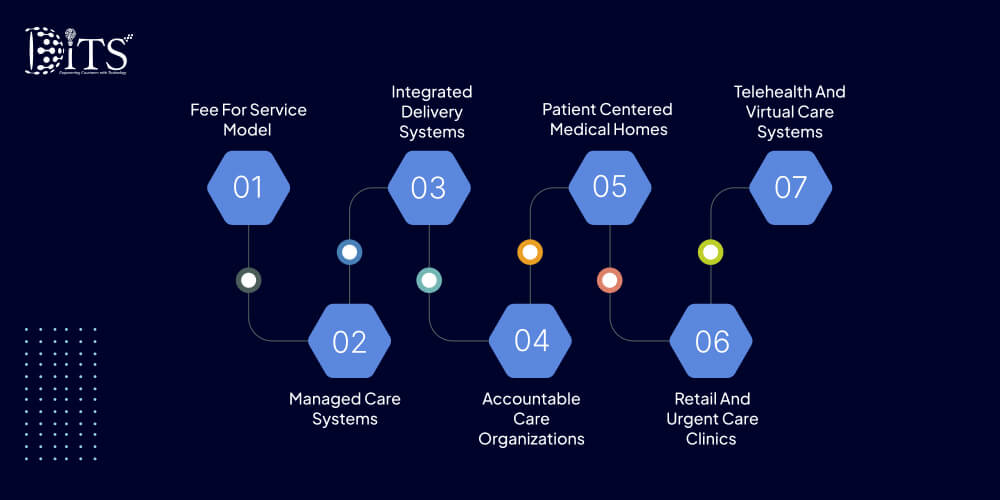
When executives evaluate types of healthcare delivery systems, the discussion often starts with structure but quickly shifts to performance. Not all models behave the same way under pressure. Some scale well. Others struggle when volume increases or data becomes fragmented.
What’s changed over the last few years is this. Technology is no longer supporting these systems quietly in the background. It’s actively shaping how efficient or inefficient they become.
Let’s break down the major models and where businesses are seeing real operational impact.
Fee For Service Model
This is the traditional model. Providers are paid for each service delivered. Consultations, tests, procedures. Everything is billed separately.
On paper, it offers flexibility. Providers aren’t restricted by networks or bundled payments.
In practice, it often leads to:
- Higher utilization of services
- Limited cost control
- Administrative overload in billing
Now imagine processing thousands of claims in this model without automation. Delays are almost guaranteed.
That’s why organizations are adopting systems supported by EHR software development to ensure accurate documentation and faster billing cycles. When records are clean and accessible, claims move faster. Errors drop. Disputes reduce.
A small improvement here can save millions annually for large employers.
Managed Care Systems
This category includes HMOs, PPOs, EPOs, and POS plans. These models focus on controlling costs through provider networks and coordinated care.
From a business lens, managed care offers predictability. But coordination across multiple stakeholders can get messy.
Common challenges include:
- Referral delays
- Approval bottlenecks
- Limited visibility into patient journeys
This is where digital systems make a visible difference. Workflow automation tools streamline approvals. Patient engagement platforms improve communication. And integrated systems reduce dependency on manual follow-ups.
Some organizations also explore cloud computing in healthcare benefits to improve scalability and real-time data access across networks. It’s not just about storing data. It’s about making it usable when decisions need to be made quickly.
Integrated Delivery Systems
Integrated Delivery Systems bring hospitals, physicians, and insurers under one umbrella. Everything operates within a unified structure.
The benefits of integrated delivery systems in healthcare become clear when coordination is critical. Data flows better. Care is more aligned. Costs are easier to track.
But integration doesn’t happen automatically. It requires strong digital infrastructure.
Key technology enablers include:
- Centralized patient records
- Real-time data exchange platforms
- Asset tracking across facilities
This is where healthcare asset management plays a quiet but important role. Hospitals need to know where equipment is, how it’s used, and when it needs maintenance. Without that visibility, operational efficiency suffers.
For large enterprises and insurers, IDS models supported by strong tech often deliver the most predictable outcomes.
Accountable Care Organizations
ACOs shift focus from volume to value. Providers are rewarded for improving patient outcomes while controlling costs.
It sounds ideal. But it depends heavily on data accuracy and analytics.
Without reliable insights, measuring outcomes becomes guesswork.
Businesses working with ACO-based plans often invest in analytics platforms powered by AI in healthcare.
These systems help:
- Predict patient risks
- Identify cost-saving opportunities
- Track performance metrics in real time
And here’s something worth noting. At DITS, AI isn’t treated as an add-on. It’s embedded into software development, quality assurance, and customization processes. That approach ensures systems are not only intelligent but also adaptable to changing requirements.
Patient Centered Medical Homes
PCMH models focus on continuous, coordinated primary care. Patients have a central physician managing their healthcare journey.
For businesses, this model supports long-term cost control through preventive care. Fewer hospitalizations. Better health outcomes.
But coordination is everything here.
Without strong systems, communication gaps appear quickly.
Digital tools such as patient engagement platforms and care coordination systems help bridge those gaps. And when combined with solutions like telehealth and remote patient monitoring app, organizations can extend care beyond physical visits.
That’s where real efficiency begins to show up.
Retail And Urgent Care Clinics
These clinics are built for speed and accessibility. Walk-in visits. Minimal wait times. Lower costs compared to hospitals.
They’ve become a practical option for employers managing minor health issues within their workforce.
But high patient volume brings operational pressure.
To handle that, clinics rely on:
- Fast scheduling systems
- Cloud-based records
- Automated workflows for patient intake
Without automation, queues grow. Service quality drops. And patient satisfaction takes a hit.
Telehealth And Virtual Care Systems
This model has moved from optional to essential. Especially for distributed workforces.
Employees expect quick access to care without leaving home. And businesses expect cost efficiency.
Virtual care delivers both. But only when supported by the right infrastructure.
Key components include:
- Secure communication platforms
- Integrated patient records
- AI-assisted triage systems
When implemented well, telehealth reduces unnecessary visits, speeds up diagnosis, and improves overall accessibility.
Across all these models, one pattern stands out. The structure of types of healthcare delivery systems matters, but the real advantage comes from how well they are digitally enabled.
And that’s where forward-looking businesses are placing their bets.
Emerging Trends in Healthcare Delivery Systems Driven by Technology
Healthcare leaders aren’t just trying to reduce costs anymore. They’re trying to build systems that can adapt quickly without disrupting care delivery. That shift is changing how businesses evaluate providers, insurers, and internal healthcare operations.
One trend stands out immediately. Healthcare is becoming far more data-driven than it was even five years ago.
Hospitals and insurers now use predictive insights to identify high-risk patients at earlier stages while they improve staffing efficiency and decrease unnecessary hospital admissions. A delayed diagnosis or a missed follow-up used to be treated as an operational issue. Today, it’s viewed as a system failure that technology should prevent.
Key trends shaping modern healthcare delivery include:
- Value-based care replacing volume-focused models
- AI-assisted diagnostics and operational analytics
- Automated claims and approval workflows
- Personalized treatment planning using patient data
- Remote care becoming part of standard healthcare access
Many healthcare organizations continue to use their original 10 to 15 years old infrastructure. The systems were built to function independently and they cannot handle extensive data analysis or meet current patient requirements. Small operational flaws develop into major financial issues when they persist through time.
Modernization initiatives require this location as their starting point for growth. Organizations are developing integrated systems which enable them to make decisions at a faster pace while delivering improved experiences for their patients.
Some enterprises also invest in custom platforms instead of relying entirely on off-the-shelf software. The reason is practical. Healthcare workflows vary significantly across organizations, and rigid systems often create more friction than efficiency.
At DITS, AI is integrated into software development, quality assurance, customization, and code maintenance processes to help healthcare businesses build scalable systems that adapt faster without compromising reliability. It’s a more grounded approach to digital transformation. Not hype-driven. Operationally focused.
The broader takeaway is becoming hard to ignore. Businesses that modernize healthcare operations today are likely to handle tomorrow’s complexity far better than those still relying on disconnected systems and manual workflows.
Role of Technology in Modern Healthcare Delivery
Technology has quietly become the operational backbone of modern healthcare. Not because organizations wanted more software, but because manual coordination simply stopped working at scale.
A hospital managing thousands of patients daily cannot depend on spreadsheets, disconnected databases, and email chains. Neither can insurers processing high claim volumes across multiple provider networks.
That’s why digital infrastructure now sits at the center of healthcare delivery operations.
Core technologies driving this shift include:
| Technology Area | Business Impact |
| Electronic Health Records | Faster access to patient data and reduced documentation errors |
| Interoperability Solutions | Better communication between providers and insurers |
| Workflow Automation | Reduced administrative burden and approval delays |
| AI-Powered Analytics | Improved operational forecasting and patient insights |
| Cloud-Based Platforms | Scalable access to healthcare systems across locations |
Electronic Health Records have become particularly critical. Without centralized records, care coordination becomes fragmented very quickly. A patient may repeat tests simply because systems don’t communicate properly. Costs rise. Frustration grows.
That’s one reason businesses increasingly prioritize scalable platforms supported by modern integration frameworks.
Another area gaining attention is workflow automation. Healthcare organizations process enormous volumes of repetitive administrative tasks every single day. Claims verification, appointment scheduling, prior authorizations, discharge coordination. Most of these workflows used to involve significant manual effort.
Now they don’t have to.
Automation reduces delays while improving consistency across operations. And when combined with AI-powered systems, organizations gain visibility they simply didn’t have before.
Healthcare Asset Management in Delivery Systems
Most healthcare discussions focus on patient care, claims, or compliance. Fair enough. But behind every hospital corridor and clinical workflow sits another challenge that rarely gets executive attention until something goes wrong: asset management.
A missing infusion pump. Delayed maintenance on diagnostic equipment. Underutilized devices sitting in storage while another department places urgent procurement requests. These situations happen more often than many organizations admit.
And they’re expensive.
Large healthcare facilities manage thousands of assets across multiple locations. Tracking utilization manually is almost impossible at scale. Small inefficiencies quietly pile up into operational losses, delayed treatments, and unnecessary capital spending.
This is where structured healthcare asset management systems become operationally critical rather than simply administrative.
Modern platforms help organizations:
- Track equipment in real time
- Monitor maintenance schedules automatically
- Reduce unnecessary asset purchases
- Improve utilization across departments
- Support compliance reporting
Here’s the bigger business implication. Better asset visibility doesn’t just save money. It improves patient flow and staff efficiency.
Imagine an emergency department searching 20 minutes for available equipment during peak intake hours. That delay affects care delivery immediately. Now multiply that across hundreds of daily interactions.
Connected systems solve those gaps quietly in the background.
Many healthcare providers are also integrating asset management with broader operational platforms, including patient records and workflow automation systems. The goal is simple. Create one connected environment instead of isolated tools that never fully communicate.
Organizations moving toward integrated healthcare operations often see measurable improvements within months, not years.
How Businesses Can Choose Right Healthcare Delivery Model and Technology Stack
Choosing between different delivery models isn’t only a healthcare decision anymore. It’s a business infrastructure decision.
The wrong setup creates operational friction that spreads across HR, finance, compliance, and employee experience. Slowly at first. Then all at once.
That’s why leadership teams now evaluate healthcare models with a much broader lens.
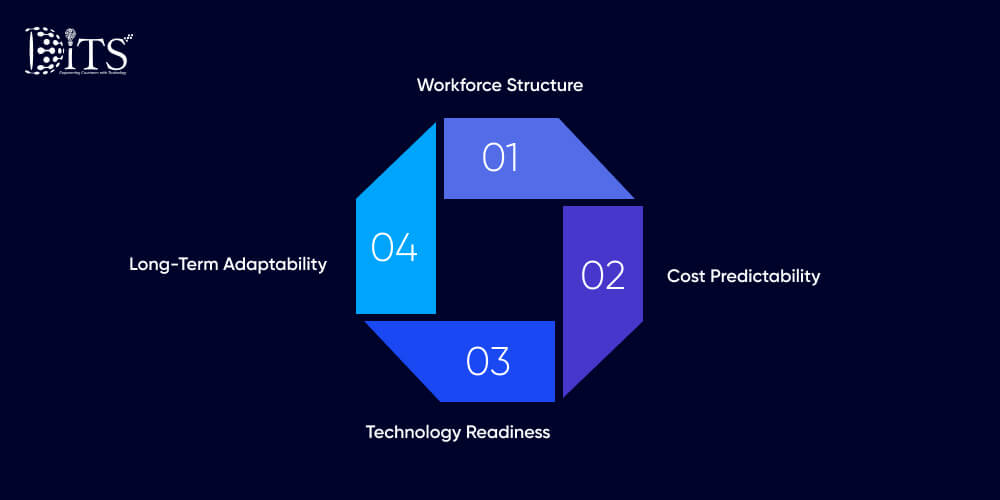
Several factors usually shape the decision:
Workforce Structure
A company with a distributed workforce has very different healthcare needs compared to an organization operating from centralized facilities.
Remote employees may prioritize virtual care access. Manufacturing environments may focus more heavily on occupational healthcare coordination.
One-size-fits-all rarely works anymore.
Cost Predictability
The organization needs to decide between two different approaches which require different levels of healthcare spending. The organization needs to choose between three different payment models which include Fee-for-Service and Managed Care and Integrated Delivery Systems. The administrative costs of healthcare services create an expense that companies fail to calculate according to their actual financial impact on total healthcare spending.
Technology Readiness
This part gets overlooked surprisingly often.
Businesses may adopt advanced healthcare models while still operating fragmented internal systems. The result? Coordination challenges that cancel out expected efficiency gains.
Key technology considerations include:
- Integration with existing HR and insurance platforms
- Scalability across locations
- Data security and HIPAA compliance
- Automation capabilities
- AI readiness for analytics and decision support
Some enterprises also evaluate whether off-the-shelf systems are sufficient or whether they require customized platforms to meet their operational needs.
The organization requires solutions which achieve both flexible workflow management and enhanced system integration through their use of healthcare software development solutions.
Long-Term Adaptability
Businesses need to adapt to changing workforce requirements and healthcare regulations and new care delivery methods. Organizations that select inflexible systems today will struggle with expensive system upgrades which they need to implement in the future.
Flexible cloud-based platforms provide organizations with superior long-term operational performance compared to traditional systems.
More importantly, they decrease the likelihood that technology will restrict growth or organizational development.
The most effective healthcare strategy at the executive level requires two components: an appropriate delivery structure and adaptable technology which supports business growth. Sustainable outcomes require both elements to work together as a complete system.
Planning to modernize healthcare delivery through technology?
Implement digital healthcare solutions that improve accessibility, interoperability, and operational efficiency while supporting better patient care outcomes.
Future of Healthcare Delivery in US
The future of healthcare delivery in the US will likely look less fragmented and far more connected than it does today. Healthcare moves carefully for good reason. But the direction is becoming clearer every year.
Businesses are already shifting toward hybrid healthcare ecosystems where physical care, virtual consultations, analytics, and automated workflows operate together.
Preventive care will continue gaining momentum because employers have realized that managing health earlier costs far less than managing complications later.
That shift is pushing healthcare organizations toward:
- Predictive analytics for early intervention
- Personalized treatment planning
- AI-assisted operational management
- Remote care accessibility
- Integrated patient engagement systems
Virtual care has become part of long-term healthcare planning for many organizations managing distributed teams and rising healthcare costs.
At the same time, healthcare providers are under growing pressure to improve operational efficiency without reducing quality of care. That balance is difficult to maintain using disconnected legacy systems.
This is where modernization of healthcare systems becomes essential.
Healthcare organizations investing in scalable infrastructure today can adapt and respond faster to changing regulations, and patient expectations as healthcare complexity isn’t slowing down anytime soon.
Conclusion
Understanding types of healthcare delivery systems has become a strategic business concern for organizations trying to manage rising healthcare costs, operational efficiency, and long-term scalability.
Each delivery model offers different strengths. Some prioritize flexibility. Others focus on coordinated care or cost predictability. But one pattern remains consistent across all of them: technology now determines how effectively these systems perform in real-world operations.
Organizations investing in connected ecosystems, workflow automation, AI-enabled analytics, and modern healthcare platforms are creating systems that adapt faster and operate more efficiently.
The future of healthcare delivery will belong to businesses that combine strong operational models with intelligent digital infrastructure.
FAQs
What are healthcare delivery systems in the US healthcare industry?
Healthcare delivery systems are the structures and processes used to provide medical services to patients. They include hospitals, clinics, insurers, physicians, and digital healthcare platforms working together to improve care quality, accessibility, and operational efficiency.
Why are healthcare delivery systems important for businesses?
Healthcare delivery systems directly affect employer healthcare costs, employee wellness, insurance processing efficiency, and regulatory compliance. A well-structured system can reduce administrative burden while improving healthcare access and treatment coordination for employees.
What are the most common types of healthcare delivery systems?
The most common types of healthcare delivery systems include Fee-for-Service models, Managed Care Systems, Integrated Delivery Systems, Accountable Care Organizations, Patient-Centered Medical Homes, Retail Clinics, and Telehealth-based care models. Each system operates differently based on cost management, care coordination, and patient engagement goals.
How does technology improve healthcare delivery systems?
Technology improves healthcare delivery through automation, centralized patient records, AI-powered analytics, interoperability, and workflow optimization. Modern digital platforms help healthcare providers reduce delays, improve communication, and deliver faster patient care with better operational visibility.
How can DITS healthcare delivery solution software help healthcare organizations?
DITS healthcare delivery solution software helps healthcare providers and businesses streamline care coordination, automate workflows, modernize legacy systems, and improve interoperability between departments and external healthcare networks. The solutions are designed to support scalability, operational efficiency, and better patient experiences.
What role does AI play in modern healthcare delivery systems?
AI helps healthcare organizations improve diagnostics, automate administrative tasks, optimize claims processing, and predict patient risks using real-time analytics. It also supports operational decision-making by identifying inefficiencies and improving resource utilization across healthcare facilities.
Can DITS healthcare delivery solution software integrate with existing healthcare systems?
Yes. DITS healthcare delivery solution software can integrate with existing EHR platforms, insurance systems, patient management tools, and operational databases to create a more connected healthcare ecosystem without disrupting ongoing operations.

Nidhi Thakur
With more than 19 years of experience - I represent a team of professionals that specializes in the healthcare and business and workflow automation domains. The team consists of experienced full-stack developers supported by senior system analysts who have developed multiple bespoke applications for Healthcare, Business Automation, Retail, IOT, Ed-tech domains for startups and Enterprise Level clients.
Recent Posts
Explore how intelligent document processing for insurance helps businesses automate document workflows, reduce processing costs, improve accuracy, and strengthen operational efficiency across insurance functions.
Discover how automated medical claims processing reduces delays, manual rework, claim denials, and administrative costs while improving reimbursement speed and operational efficiency.
Learn how to build medical billing software with essential features, integrations, security, and development costs.