25+ years of IT software development experience in different domains like Business Automation, Healthcare, Retail, Workflow automation, Transportation and logistics, Compliance, Risk Mitigation, POS, etc. Hands-on experience in dealing with overseas clients and providing them with an apt solution to their business needs.
You must have found yourself in situations where you're on the brink of launching a groundbreaking app or scaling your business with custom software, and the million-dollar question hits, how much will it cost to hire software developers in 2026?
It's not just about the hiring cost but the value they bring to your project.
As the tech industry races forward, the demand for skilled developers has skyrocketed, reshaping the cost landscape. With AI-driven tools, cloud-first technologies, and user demands for seamless experiences, the stakes and costs are higher than ever. But Why?
The answer isn’t as straightforward as slapping a number on the table. Instead, it’s a complex interplay of factors like expertise, geography, project complexity, and hiring models. Costs can range from a few thousand dollars for simple apps to well over $100,000 for robust, enterprise-grade software solutions.
Why do these costs vary so drastically? And more importantly, how can you make sure you’re getting value for every dollar spent? This blog breaks it all down to help you not only understand what drives these costs but also how to navigate this maze without losing your budget or sanity as you make informed decisions.
Let’s dive into the why, how, and what of hiring software developers in 2026.
How Much Does It Cost to Hire a Software Developer?
Hiring a software developer costs between $20 to $150 per hour, depending on experience level and geographic location.
For long-term projects, hiring a dedicated developer is more cost-effective than short-term hourly contracts.
How Much Does It Cost to Hire a Software Team?
The cost to hire a software team typically ranges between $25,000 to $250,000+ per project, depending on team size, location, complexity, and engagement model.
Here’s a quick breakdown:
Small team (3–5 members): $25,000 – $80,000 for a basic web or mobile app
Mid-sized team (6–10 members): $80,000 – $180,000 for scalable platforms or SaaS products
Large or enterprise team (10+ members): $180,000 – $250,000+ for complex, enterprise-grade solutions
If hiring on a monthly basis:
Offshore team: $8,000 – $25,000 per month
US/Western Europe team: $40,000 – $100,000+ per month
Costs vary based on:
Project scope and technical complexity
Technology stack
Development timeline
UI/UX requirements
QA, DevOps, and project management involvement
For startups, outsourcing to an experienced offshore team can significantly reduce costs while maintaining quality.
Why Hire Software Developers?
Software developers are the architects of the digital universe. Every app you tap on, website you scroll through, or system you rely on is powered by their expertise. The global demand for skilled developers is rising, and rightfully so! Let’s explore why
Global Digital Expansion: Businesses worldwide are pivoting toward digital transformation, making software a necessity rather than a luxury.
Booming Tech Trends: We’re living in an era of AI, Automation, and IoT (Internet of Things). To stay competitive, businesses need experts who can leverage these technologies and keep them ahead of competitors.
Importance of Custom Solutions: Off-the-shelf software often falls short of unique business requirements, emphasizing the need for tailored applications, websites, and systems.
User Expectations: Did you know the average smartphone user has 40+ apps installed but actively uses only about 18? Consumers expect flawless digital experiences, whether it’s a shopping app, a fitness tracker, or a corporate website. Developers bridge this gap by combining creativity with technology.
Different Types of Software Developers & Their Costs
When hiring software developers, their area of expertise directly influences both their demand and their associated costs. Understanding these developer roles can help you make informed decisions for your projects.
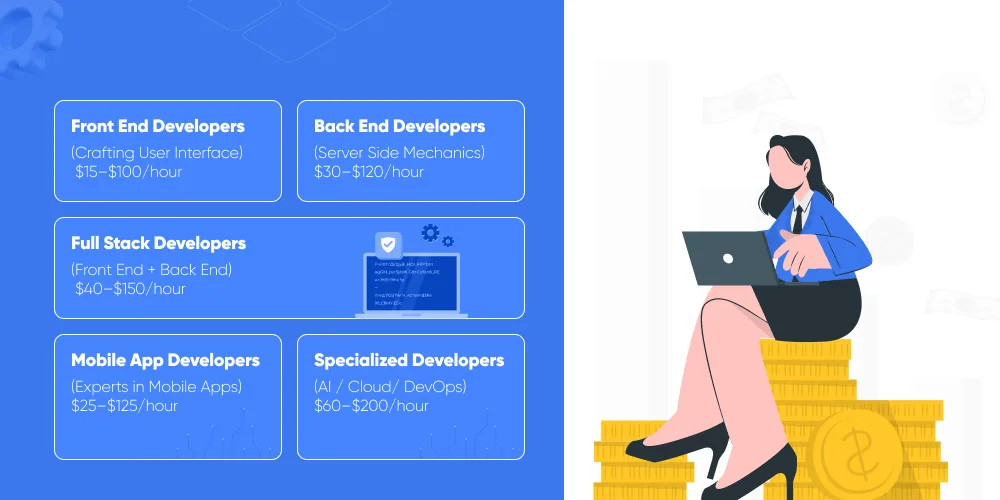
Front-end developers specialize in crafting the user interface (UI) everything users see and interact with in your application or website. They focus on creating intuitive, visually engaging, and responsive designs using technologies like HTML, CSS, and JavaScript frameworks such as React and Vue.js.
Since their work involves ensuring seamless navigation, proper layout rendering, and optimizing design for various devices, and the UI trends keep evolving, the demand for adaptive design expertise contributes to their costs.
Typical Cost: In 2026, their rates range from $15–$100/hour, depending on location and experience.
Back-End Developers
Back-end development handle the server-side mechanics of an application, making sure it functions smoothly under the hood. They are responsible for server logic, database management, and the integration of APIs that facilitate data exchange between the user interface and the back-end systems.
The complexity of building robust systems, such as those supporting e-commerce platforms or enterprise software, and managing technologies such as Node.js, Python, Ruby, or Java makes their skill set highly valuable.
Typical Cost: Expect to pay $30–$120/hour based on the project scope and region.
Full-Stack Developers
Full-stack developers are versatile professionals proficient in both front-end and back-end development. They bridge the gap between design and functionality, making them ideal for startups or businesses looking to build entire applications with smaller teams.
Full stack development team handle everything from UI/UX design to server-side coding and even deployment. Their dual expertise saves businesses the need to hire multiple specialists, but their broader skill set comes at a premium.
Typical Cost: Rates generally fall between $40–$150/hour, depending on location and experience.
Mobile App Developers
Mobile app developers focus exclusively on creating applications for iOS, Android, or cross-platform solutions. They are instrumental in optimizing apps for performance, user engagement, and compatibility across various devices.
Mobile app development in Dubai demands expertise in platform-specific guidelines, security, and user experience optimization, driving their rates higher.
Typical Cost: Their fees typically range from $25–$125/hour.
Specialized Developers
Developers specializing in emerging fields like artificial intelligence or cloud computing are vital for cutting-edge projects. Dedicated development team bring advanced expertise to complex solutions like AI-driven analytics platforms or large-scale cloud migrations.
The advanced nature of their work and the constant innovation in these fields make them among the most expensive developers.
Typical Cost: Specialized developers command rates of $60–$200/hour, depending on their niche and project demands.
Your Budget-Friendly & Quality Tech Partner- DITS!
Why overspend on talent when you can access top-tier developers at cost-effective rates? DITS delivers premium solutions without breaking the bank.
Understanding the cost of hiring software developers requires diving into the factors that influence pricing. These costs aren’t arbitrary; they depend on several critical aspects like the developer's expertise, project complexity, geographical location, and the hiring model. Knowing these details helps businesses allocate budgets effectively while ensuring they get the desired quality of work.
Developer Profile - Experience & Expertise
The profile of a developer is one of the most influential factors when it comes to determining costs. It’s not just about the number of lines of code they write but the depth of their experience, technical expertise, industry knowledge, and ability to adapt to ever-evolving trends. Here’s a deeper dive into how these elements shape a developer's price tag.
Experience Level
Junior developers are ideal for simple projects and have lower rates due to their limited experience. Mid-level developers offer a balance of capability and cost, able to handle moderate complexity. Senior developers, with their extensive experience, are suited for complex tasks and leadership roles, commanding higher fees for their expertise and problem-solving ability.
Technical Expertise
Developers skilled in specialized areas like AI and Atlanta based mobile app development command higher rates due to the niche nature of their expertise. In contrast, developers with expertise in popular technologies are generally more affordable but still provide substantial value in delivering scalable, reliable solutions.
Industry Knowledge
Developers familiar with specific industries bring added value by understanding the unique challenges and regulations within those fields. Their expertise allows them to create solutions that are efficient and compliant, though they typically come at a premium.
Adaptability to Trends
Tech trends evolve rapidly, and developers who stay current with emerging technologies like cloud computing or progressive web apps bring extra value. Their ability to apply cutting-edge solutions makes them more expensive but ensures the software they create is forward-thinking and durable.
Software Development Cost Based on Project Complexity & Scope
The intricacy of your project directly correlates to the cost of development. Larger, more complex projects require more time, resources, and expertise, which naturally increases expenses.
Cost to Hire Software Developers Based on Complexity
Complexity of Project
Costs
Basic Projects (Simple websites or apps with limited features.)
These can range from $10,000 to $50,000.
Medium Complexity Projects (Applications with advanced functionality like payment systems, user authentication, and API integrations.)
Costs typically fall between $50,000 and $100,000.
High Complexity Projects (Enterprise-level software or AI-driven systems with features like custom architectures, high security, and robust scalability.)
These can range from $100,000 to $500,000+.
Cost to Hire Software Developers Based on Location
The location of your software development team plays a major role in determining the costs. Factors such as local labor markets, cost of living, demand for developers, and the availability of skilled professionals contribute to price fluctuations across different regions.
How Software Development Costs Vary by Location
Generally, developers in high-cost regions like North America and Western Europe command premium prices, while regions such as India, Eastern Europe, and Southeast Asia offer more affordable alternatives without compromising on quality.
Here are some of the top regions for hiring software developers:
India & Southeast Asia
Offers the best balance of price and quality, with competitive rates ($15–$50/hour). Ideal for all kinds of projects, including enterprise solutions, mobile apps, AI, and more.
North America
Commands premium pricing ($80–$200/hour) but offers top-tier quality, particularly for complex or enterprise-level projects.
Western Europe
Skilled developers at higher rates ($60–$120/hour) compared to Eastern Europe, suitable for critical business applications.
Remote
Hiring remotely allows businesses to tap into global talent, offering flexible pricing based on the region. This can provide cost-effective solutions without geographic restrictions, allowing you to choose the best developers at the most appropriate rates.
Future-Ready Developers for Future-Ready Businesses!
Stay ahead of your competition with developers who leverage the latest technologies and deliver stellar results.
Different Hiring Models for Software Developers & Their Costs
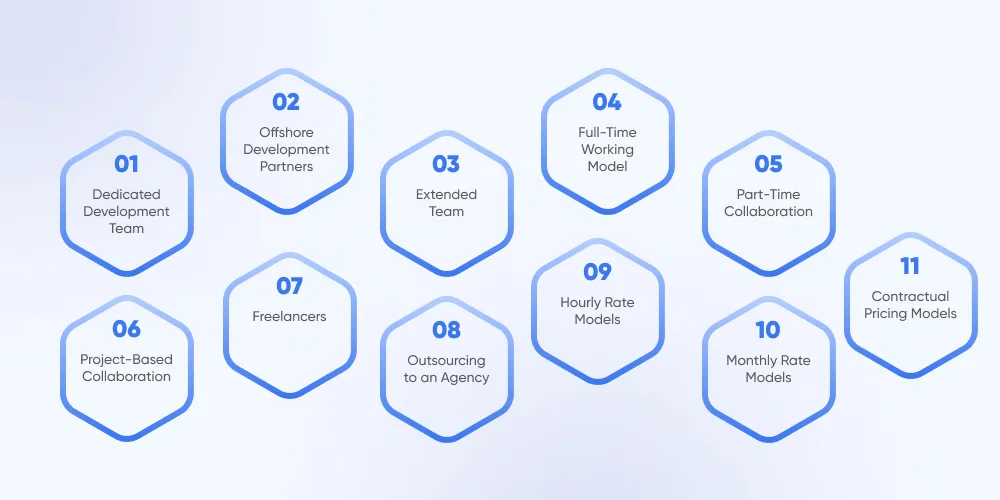
Selecting the right hiring model is one of the most critical decisions for the success of your software development project. The model you choose will directly impact the project's cost, timeline, and overall success. Whether you’re looking for flexibility, dedicated resources, or comprehensive solutions, each model has unique advantages that suit different project needs. Below is an overview of the most common hiring models and what they entail:
Hiring Model
What It Entails
Best For
Average Cost
Dedicated Development Team
A full team of developers working exclusively on your project, offering complete focus and innovation.
Long-term, large-scale projects requiring close collaboration.
$10,000–$50,000/month for a team
Offshore Development Partners
Tapping into global talent while maintaining high-quality work at a reduced cost.
Cost-effective, high-quality development without location constraints.
$15–$100/hour depending on location and expertise
Extended Team
Integrating external developers with your in-house team to augment resources when needed.
Projects needing additional hands or specialized skills.
Varies based on team size and engagement
Full-Time Working Model
A dedicated developer working exclusively on your project for the long term.
Ongoing projects requiring full-time focus and long-term commitment.
$3,000–$15,000/month per developer
Part-Time Collaboration
Bringing in developers for specific hours or tasks, providing flexibility with no full-time commitment.
Smaller projects, part-time support, or specialized input.
$1,500–$8,000/month depending on hours worked
Project-Based Collaboration
Engaging developers for the duration of a specific project with clearly defined goals.
One-off, well-defined projects with clear deliverables.
$5,000–$50,000+ depending on project scope
Freelancers
Independent developers hired for short-term tasks or specific expertise.
Small tasks, prototypes, or specialized skills on-demand.
$10–$100/hour depending on expertise
Outsourcing to an Agency
Engaging an agency to manage the entire project or specific parts, offering full-service solutions.
Paying for developers based on the hours worked, offering flexibility as project requirements evolve.
Projects with evolving scope or short-term needs.
$20–$150/hour depending on location and expertise
Monthly Rate Models
Paying a fixed monthly rate for a dedicated developer or team.
Ongoing projects that require dedicated, consistent development.
$3,000–$15,000/month per developer
Contractual Pricing Models
Fixed-price agreements with clear deliverables and timelines.
Well-defined projects with a fixed scope and timeline.
$10,000–$50,000+ depending on scope and contract
Freelancer vs Software Development Company vs In-House Hiring
Choosing between a freelancer, a software development company, or building an in-house team depends on your budget, project complexity, and long-term goals. Here’s a clear comparison:
1. Freelancer
Best for: Small projects, quick fixes, MVPs, short-term work
Cost:
$20–$100 per hour (depending on expertise and location)
Pros
Cons
Most affordable option Flexible hiring (hourly or project-based) Quick onboarding
Limited skill set (usually one specialization) No structured project management Higher risk of delays or availability issues Not ideal for complex or large-scale projects
2. Software Development Company
Best for: Startups, SaaS platforms, enterprise software, scalable products
Cost:
$25,000–$250,000+ per project
$8,000–$100,000+ per month (depending on region and team size)
Pros
Cons
Access to a full team (developers, designers, QA, PM) Structured processes and accountability Scalable resources Faster delivery for complex projects
Higher upfront investment than freelancers Less direct control compared to in-house teams
A development company is ideal when you need end-to-end product development and technical expertise without building an internal team.
3. In-House Hiring
Best for: Long-term product development and companies with ongoing tech needs.
Cost:
$10,000–$25,000/year per developer (India)
$90,000–$150,000+/year per developer (US)
Plus hiring, benefits, office, and infrastructure costs
Pros
Cons
Full control over the team Deep product understanding Strong company alignment
Why Software Development Costs Often Exceed Your Budget Limits?
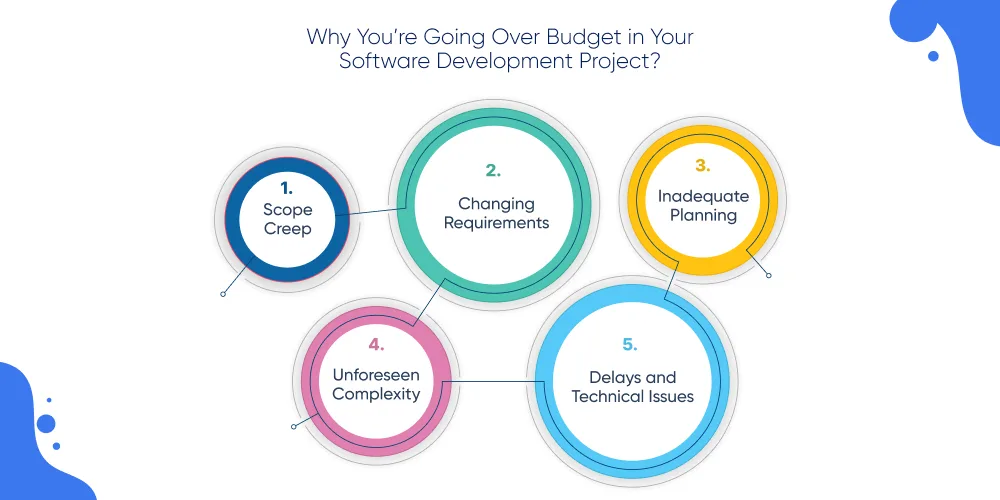
Software development projects often begin with a lot of enthusiasm and a well-defined budget, but as the project progresses, costs can quickly spiral beyond expectations. The reasons for this can be varied and sometimes subtle, but they all have a significant impact on the final price tag. Here’s a look at some of the most common reasons why budgets tend to exceed expectations:
Unforeseen Complexity: What seems like a simple project may require more integration or features, increasing time and cost.
Scope Creep: As new features are added throughout the project, costs can rise significantly, even with small changes.
Changing Requirements: Shifting goals or needs can lead to delays, additional work, and unforeseen expenses.
Delays and Technical Issues: Bugs, tech challenges, or dependencies can cause delays, compounding costs over time.
Inadequate Planning: Poor initial planning, such as not anticipating risks or needed integrations, can lead to unexpected costs.
Hidden Costs of Hiring Software Developers
When you budget for software development, it’s easy to overlook certain factors. But ignoring these hidden costs can lead to unexpected financial strain. Here’s what most people miss:
Onboarding Costs
It’s not just about the developer's hourly rate. Onboarding them, setting them up with the necessary software, and introducing them to your project’s requirements can take time. The time that translates into costs.
Training and Skill Upgradation
If the developer needs specialized training or requires access to resources to familiarize themselves with your business processes, these costs add up. Staying updated with industry trends or new technologies also involves investment.
Hardware and Software
Developers need the right tools to succeed. Whether it’s licenses for specific software or powerful hardware to handle complex tasks, these expenses aren’t always included in the initial developer rate.
Project Management
For any development project, there’s a need for oversight. Project management costs include the hours spent managing, coordinating, and ensuring the project stays on track. This isn’t always reflected in the initial quote from the developer.
Post-Launch Maintenance
Software doesn't end with the launch. Updates, bug fixes, and continuous improvements come after the product is live. You may need to factor in long-term support and updates that weren’t initially in your budget.
No More Hidden Costs, Just Quality & Expertise With DITS!
Hidden costs can derail your project, but they don’t have to. We combine cost transparency and exceptional expertise to deliver value-driven software development without surprises.
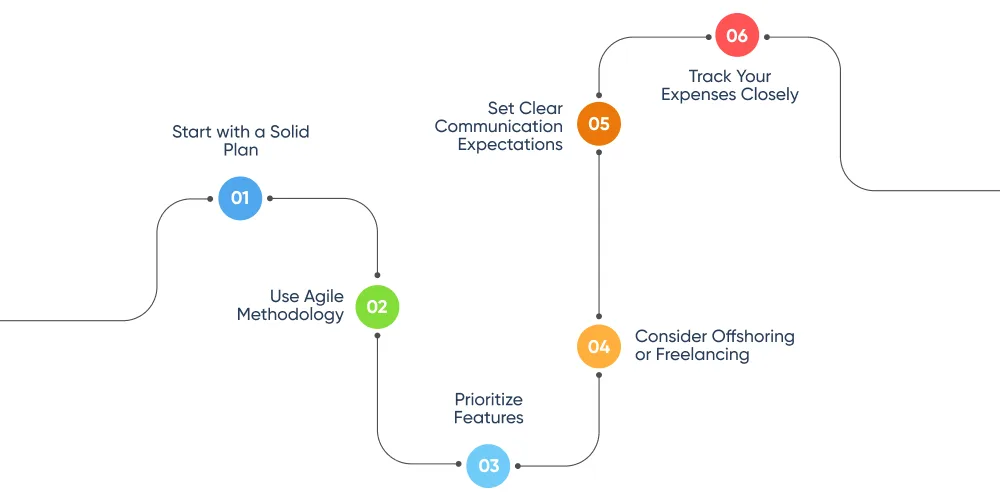
No one wants their project to go over budget, but avoiding unexpected costs is all about managing your approach. Here are some strategies that can help:
Start with a Solid Plan
"A goal without a plan is just a wish." Define clear goals, outline project requirements, and set realistic timelines from the start. A thorough plan acts as your project’s blueprint, preventing many common issues.
Use Agile Methodology
Agile focuses on adaptability. It allows for regular evaluations, so you can make adjustments along the way without major surprises. This approach ensures you're always aligned with both your budget and project goals.
Prioritize Features
Focus on what truly matters. Instead of trying to include every possible feature, prioritize the must-have features and eliminate the nice-to-haves. Stick to the essentials and adjust later if necessary.
Consider Offshoring or Freelancing
If your budget is tight, consider hiring from regions with lower labor costs, such as Eastern Europe or India. Just ensure the quality matches your expectations. A well-executed project at a lower price is always a win.
Set Clear Communication Expectations
Prevent misunderstandings that could lead to costly delays by setting clear communication practices. Have regular check-ins and status reports to keep everyone on the same page. Effective communication is the foundation of keeping costs in check.
Track Your Expenses Closely
Don’t wait until the end of the project to check your spending. Regularly track expenses and make sure everything aligns with your budget. This way, you can make adjustments or course corrections as needed.
By planning, prioritizing, and staying in tune with the project's progress, you can effectively manage your software development costs without compromising on the quality of the final product.
Hire Software Developers from DITS
As we wrap up, let’s take a moment to reflect: software development can be a complex journey, especially when it comes to managing costs. From unexpected delays to changing requirements, keeping your project on track and within budget is no small feat.
At DITS, we’re not just another custom software development company; we’re your partners in bringing your vision to life. Hiring software developers from DITS offers you a seamless, efficient, and cost-effective way to achieve your business goals. Here’s why we’re the perfect choice:
Top-Tier Talent: Our developers are handpicked experts with a proven track record of delivering exceptional results. From cutting-edge technologies to innovative solutions, we have you covered.
Cost Efficiency: Save on overheads, onboarding, and training costs while still getting access to world-class expertise. We ensure every penny you spend delivers value.
Flexibility & Scalability: Scale your team up or down as your project demands. Whether it’s a one-time need or an ongoing requirement, we adapt to you.
Streamlined Communication: We eliminate the challenges of working with remote teams through clear communication, agile workflows, and regular updates, ensuring transparency at every step.
Custom Solutions, Every Time: We specialize in tailored software development, meaning your project is designed to meet your unique needs without compromise.
Trusted Expertise: With years of experience and a global client base, we’re leaders in custom software development. We’ve helped businesses like yours succeed, and we’re ready to do the same for you.
Ready to hire remote software developers who deliver excellence without blowing your budget? Partner with DITS today and experience the difference of working with a team that genuinely cares about your success.
Contact us now to kickstart your next big project. Let’s build something extraordinary together!
Frequently asked questions
The cost depends on factors like experience, location, and project complexity. Rates typically range from $20/hour in regions like India to over $150/hour in high-cost regions like the USA or UK.
Dinesh Thakur
25+ years of IT software development experience in different domains like Business Automation, Healthcare, Retail, Workflow automation, Transportation and logistics, Compliance, Risk Mitigation, POS, etc. Hands-on experience in dealing with overseas clients and providing them with an apt solution to their business needs.