
Insights3 MIN READ
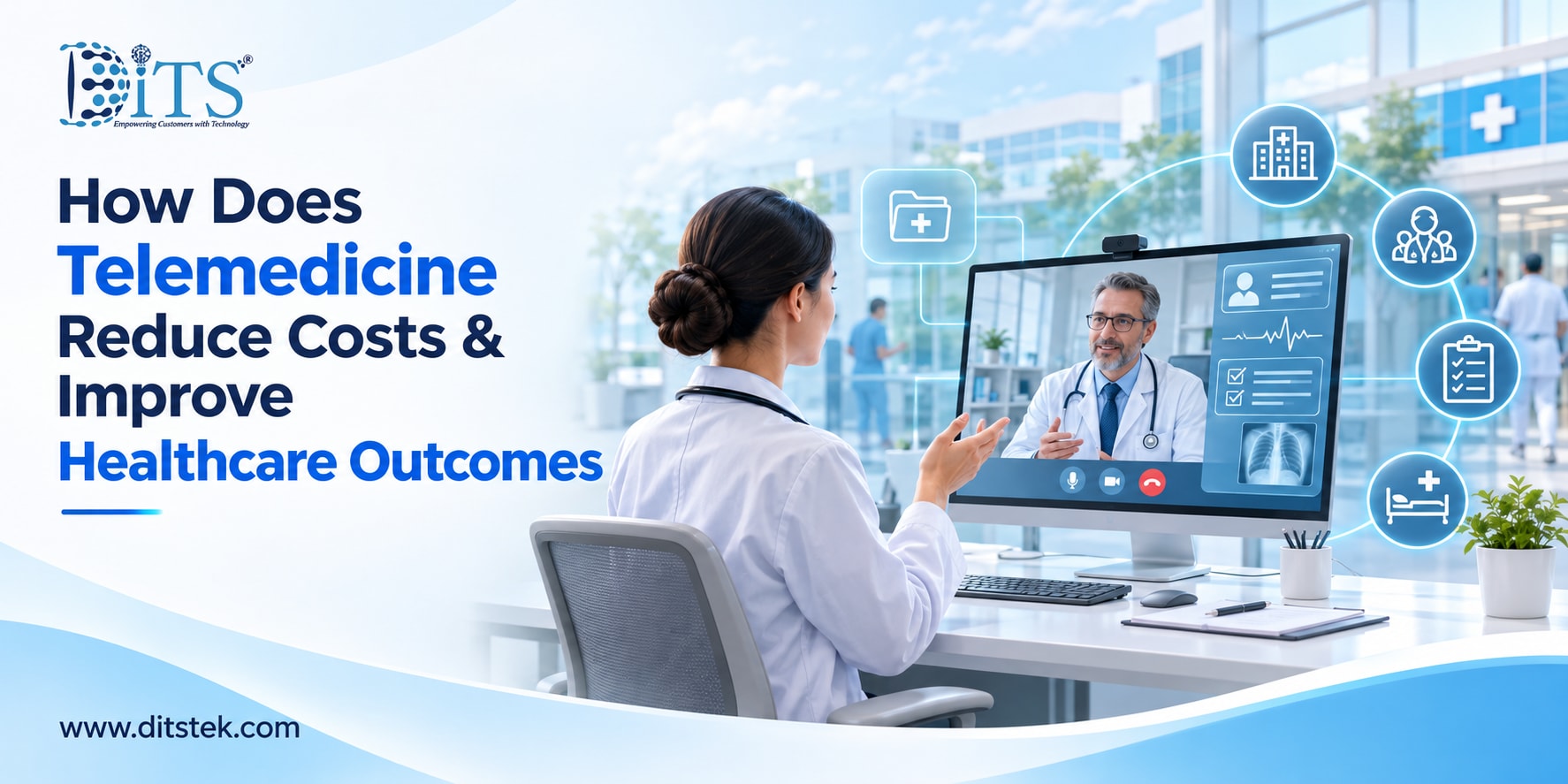
How Does Telemedicine Reduce Costs & Improve Healthcare Outcomes
Learn how telehealth solutions drive down costs while enhancing healthcare outcomes, revolutionizing the way we approach medical care.
Nidhi Thakur
11 Nov 2026

25+ years of IT software development experience in different domains like Business Automation, Healthcare, Retail, Workflow automation, Transportation and logistics, Compliance, Risk Mitigation, POS, etc. Hands-on experience in dealing with overseas clients and providing them with an apt solution to their business needs.
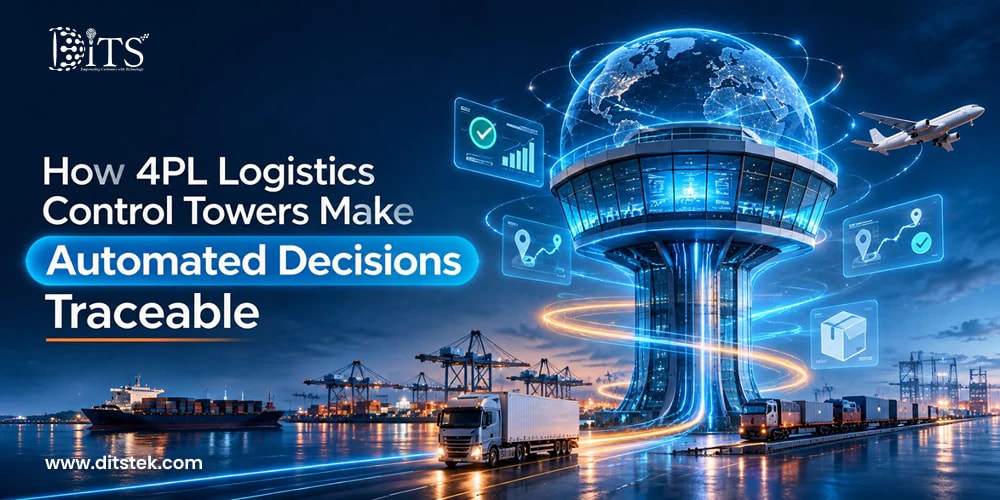
A fourth-party logistics (4PL) provider doesn't work with just one warehouse or carrier. It coordinates multiple warehouses, carriers, freight partners and customer systems, each with its own data, processes and definition of an on-time delivery.
On a normal day, these differences may not create major problems. But when a truck misses a pickup, a carrier runs out of capacity or a consignee changes a delivery slot at short notice, the 4PL must coordinate a response across multiple providers.
Not every decision is straightforward. Some carriers are fixed by contract, some can be substituted, and customers may have different rules around additional freight costs and delivery commitments. Every recovery decision must therefore account for contractual obligations, operational permissions and service risks.
A logistics control tower brings information from these disconnected systems into a unified operational view. But when AI starts recommending or executing actions within that environment, another challenge emerges: how can 4PL operators understand, validate and track those decisions?
The answer lies in making automated decisions traceable. Before AI agents can independently coordinate logistics activities, organizations need clear decision ownership, defined approval boundaries and reliable records of every action.
A quick decision is not always the right decision. Consider a shipment that is at risk of missing its delivery SLA. The logistics control tower identifies the delay and recommends moving the shipment to another carrier.
The recommendation may seem reasonable, but the operations manager needs more information before approving the change:
Why was the shipment flagged as at risk?
Which operational data and shipment events informed the recommendation?
Were alternative carriers evaluated?
Does the customer's contract permit a carrier change?
Will the alternative increase freight costs or affect the delivery commitment?
Who needs to approve the change, and who is accountable for the final decision?
Without these answers, teams cannot confidently validate automated recommendations or explain their actions to customers.
Explainability means making the reasoning behind an AI-generated recommendation visible and understandable. This includes the shipment's latest ETA, available carrier capacity, delivery commitments, freight costs, historical carrier performance and customer-specific operating rules.
However, these inputs can change throughout the day. A carrier that had available capacity at 9 a.m. may no longer have space by noon. This makes it important to preserve the information available when the recommendation was generated, rather than relying only on current system data.
A traceable logistics control tower should therefore maintain a decision record alongside every significant automated action. This record should capture the data considered, applicable business rules, recommendation generated, alternatives evaluated, approvals received, action taken and the person or system responsible.
This gives operations teams the evidence needed to review decisions, investigate exceptions and demonstrate how service commitments were managed.
Before introducing more automation, 4PL operators need to understand how their existing logistics workflows function. Most organizations already work with a combination of systems. Transportation Management Systems (TMS) handle transport planning, Warehouse Management Systems (WMS) track inventory and warehouse activities, and Enterprise Resource Planning (ERP) platforms maintain order, financial and customer information. Carrier portals, GPS platforms and customer systems provide additional shipment updates.
When these systems operate independently, logistics teams often become the link between them. An employee may identify a delayed shipment in the TMS, check warehouse availability in the WMS, contact the carrier for an updated ETA, seek customer approval for an alternative arrangement and manually update the shipment record.
This creates delays, repeated data entry and uncertainty around who owns the next action.
Document processing adds another layer of complexity. Proofs of delivery may arrive as scanned PDFs, carrier invoices may follow different formats, and customs documents may be shared through email. Document intelligence can extract relevant information from these files, match it to the corresponding shipment and retain a link to the original document. This reduces manual data entry while making the source of important operational information easier to verify.
The next step is to map how different exceptions move through the organization. For each exception type, teams should identify:
Trigger: What event or condition creates the exception?
Systems and data: Which platforms provide the information required to investigate it?
Decision owner: Who is responsible for evaluating and resolving the issue?
Approval authority: Does the proposed action require managerial or customer approval?
Resolution: What action is taken, and which systems need to be updated?
Evidence: What records, timestamps and approvals must be retained?
This assessment provides the foundation for a connected logistics control tower architecture. It also exposes integration gaps, unreliable data sources, manual dependencies and unclear accountability before automation is introduced.
Identify integration gaps, improve exception management and explore where AI-enabled automation can strengthen your logistics operations.
An auditable logistics control tower needs more than a centralized dashboard. Its architecture must connect operational systems, process shipment events, evaluate exceptions, coordinate decisions and preserve evidence of the actions taken.
For a 4PL provider managing multiple carriers, warehouses and customer relationships, these capabilities typically operate across five interconnected layers.
This layer connects the systems involved in logistics operations, including TMS, WMS, ERP, OMS, carrier platforms, GPS services and customer applications. APIs, event streams and other integration mechanisms help exchange shipment updates, order information, inventory data and carrier capacity.
Incoming information is consolidated into a unified operational view. Shipment milestones, pickup confirmations, delivery updates, ETA changes and exception events are normalized so teams can monitor activities across different logistics partners.
Business rules, analytics and AI models evaluate operational events, identify potential disruptions and compare recovery options. AI agents can assess carrier availability, delivery commitments, cost implications and customer-specific restrictions before recommending or initiating an action within their permitted boundaries.
This layer coordinates what happens after an exception is identified. It manages ownership assignment, escalation, approval requests, carrier reassignment and communication between connected systems. It also ensures that actions follow predefined operational and contractual rules.
The governance layer maintains decision histories, timestamps, data references, approval records, user actions and execution outcomes. It also supports access controls, exception reviews and rollback procedures where applicable. These records help organizations investigate decisions and demonstrate how operational and SLA commitments were managed.
Together, these layers create a control tower that does more than display logistics information. It provides the infrastructure needed to make decisions traceable, coordinate actions across providers and gradually introduce controlled automation.
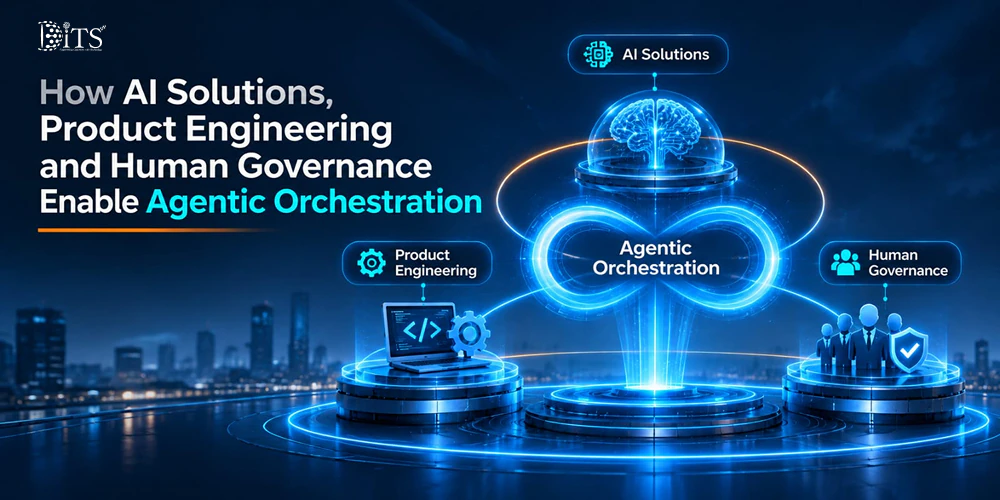
Agentic orchestration works when AI intelligence, reliable product engineering and human oversight operate together. Each plays a distinct role in helping 4PL providers coordinate logistics activities, respond to exceptions and execute decisions within defined operational boundaries.
The three key components are:
AI solutions analyze operational data, identify shipments at risk, prioritize exceptions and evaluate recovery options. They can assess carrier capacity, delivery commitments, freight costs, historical performance and customer-specific rules before recommending an action.
In a more advanced setup, AI agents can coordinate a sequence of activities. They retrieve shipment information, evaluate alternative carriers, compare service and cost implications, recommend a recovery option, request approval where required and initiate the next workflow once authorized.
Product engineering makes these capabilities usable within existing logistics operations. It connects TMS, WMS, ERP and carrier platforms while supporting the dashboards, APIs, exception management workflows, approval mechanisms and decision histories required for coordinated execution.
It also ensures that teams can review what happened, understand why an exception was raised, evaluate the recommended action and see what needs to happen next. Where appropriate, engineering controls also support action reversal or corrective workflows when an automated action produces an unexpected outcome.
Human governance defines the boundaries within which AI systems operate. It establishes which decisions can be executed automatically, which require human approval and which must remain under direct operational control.
For example, an AI agent may automatically flag a delayed shipment and recommend an alternative carrier. However, changing a carrier may require approval if the customer contract restricts substitutions or if the additional freight cost exceeds an agreed threshold.
Clear permissions, escalation rules, approval responsibilities and audit requirements help ensure that automation remains accountable as its scope expands.
Together, these three components allow 4PL operators to move from AI-assisted decision-making toward controlled agentic orchestration without losing operational oversight.
Logistics control tower adoption is growing as businesses face increasing pressure to improve shipment visibility, manage supply chain disruptions and coordinate operations across multiple logistics partners.
Traditional logistics operations often depend on separate systems, manual status checks and communication between different service providers. As shipment volumes and partner networks grow, these approaches make it harder to identify disruptions early, coordinate recovery actions and maintain consistent service levels.
A logistics control tower brings these activities into a connected operational environment. By combining data integration, real-time visibility, predictive analytics and workflow automation, organizations can identify potential problems earlier and coordinate responses across their logistics networks.
The broader control tower market reflects this growing interest. According to Grand View Research, the global control tower market was estimated at USD 11.4 billion in 2025. Its January 2025 forecast projected the market to reach USD 32.14 billion by 2030, representing a 23% CAGR between 2025 and 2030. The research identifies AI, machine learning, IoT and real-time data analysis as important factors supporting market growth.
For 4PL providers, the value of adoption goes beyond shipment tracking. A connected control tower can help coordinate carrier performance, manage exceptions across service providers, evaluate recovery options and maintain a consistent record of decisions.
As organizations move toward AI-enabled logistics operations, the focus is increasingly shifting from simply knowing where a shipment is to understanding what needs to happen next, who is responsible and whether the resulting action meets the agreed service commitments.
Build greater visibility into automated logistics decisions with connected systems, clear approval workflows and traceable operational records.
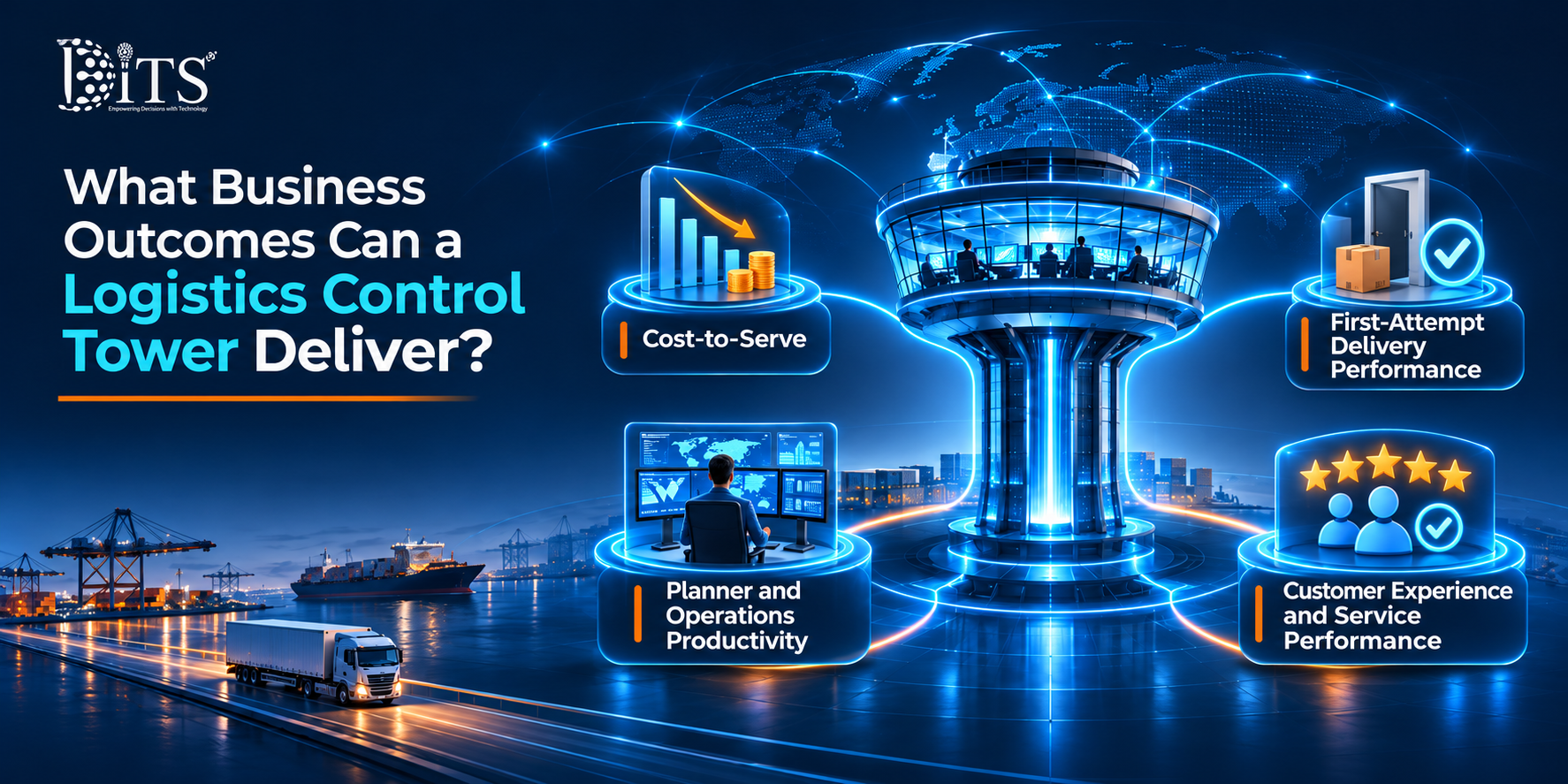
A logistics control tower creates business value by improving how organizations monitor shipments, manage exceptions and coordinate logistics partners. Its impact extends beyond visibility, influencing transportation costs, delivery reliability, operational productivity and customer experience.
The outcomes depend on the quality of system integrations, data availability, workflow design and the level of automation implemented. Four areas are particularly important:
A connected control tower helps organizations evaluate carrier performance, identify inefficient routes, manage capacity constraints and reduce avoidable transportation expenses. Better exception handling can also limit premium freight usage, unnecessary redeliveries and manual coordination costs.
By identifying potential delivery disruptions earlier, logistics teams can coordinate alternative carriers, adjust delivery schedules and communicate changes proactively. More reliable shipment information and faster exception resolution help reduce missed delivery windows and unsuccessful delivery attempts.
Automating shipment monitoring, exception prioritization, status reporting and routine escalations reduces the manual workload placed on logistics coordinators and planners. Teams can spend more time resolving complex exceptions and managing partner performance instead of repeatedly checking shipment updates across different systems.
More accurate delivery estimates, timely delay notifications and consistent exception resolution help customers plan their operations with greater confidence. Maintaining a record of shipment events, communications and corrective actions also makes it easier to investigate service failures and demonstrate SLA performance.
These outcomes are interconnected. Better visibility supports earlier intervention, effective exception management improves delivery reliability, and more coordinated operations can reduce avoidable costs. For retail and CPG businesses handling high shipment volumes, even incremental improvements in these areas can have a meaningful impact on operating performance.
Moving toward agentic orchestration doesn't require replacing every existing logistics system or automating every operational decision at once. For most 4PL providers, the starting point is understanding how their current systems, workflows and logistics partners operate together.
DITS approaches connected logistics operations by identifying where fragmented data, disconnected applications and manual exception handling affect operational performance. Based on these findings, the focus is on addressing the most critical gaps through integration, modernization, workflow redesign and AI-enabled capabilities.
Our capabilities include:
Reviewing existing logistics workflows, applications, data flows and decision responsibilities to identify integration gaps, manual dependencies and opportunities for improvement.
Connecting TMS, WMS, ERP, OMS and carrier platforms to improve data exchange, shipment visibility and coordination across logistics partners.
Modernizing outdated logistics applications and fragile point-to-point integrations to improve system reliability, scalability and readiness for connected operations.
Applying AI to support exception prioritization, document intelligence, shipment risk identification and operational decision-making.
Engineering logistics dashboards, exception management capabilities, approval workflows and decision histories that help teams coordinate operations and maintain accountability.
The objective is to help logistics businesses build a more connected operational environment, improve how exceptions are managed and introduce automation within clearly defined business and governance boundaries.
If you are evaluating how to improve visibility, integration and decision-making across your logistics operations, explore the DITS Logistics capabilities.
A logistics control tower earns trust when its decisions can be explained, validated and reviewed, not simply when they are made quickly. For 4PL providers coordinating multiple carriers, warehouses and customer contracts, every significant decision needs a clear record of what the system knew, what it recommended and who authorized the action.
Building this capability starts with connected systems, reliable operational data, defined exception ownership and decision records that support SLA accountability. These foundations also make it easier to introduce AI-driven automation gradually, with clear boundaries around autonomous actions and human approvals.
Organizations don't need to replace their existing logistics infrastructure or automate everything at once. Starting with high-volume exceptions and workflows involving significant manual intervention can help establish a practical foundation for more controlled orchestration.
If you are planning to improve visibility, integration and decision-making across your logistics operations, DITS can help assess your existing environment and identify the right path forward.
Explore how AI-enabled workflows can help identify shipment risks, coordinate exceptions and support faster decisions without compromising operational oversight.
25+ years of IT software development experience in different domains like Business Automation, Healthcare, Retail, Workflow automation, Transportation and logistics, Compliance, Risk Mitigation, POS, etc. Hands-on experience in dealing with overseas clients and providing them with an apt solution to their business needs.
Learn how telehealth solutions drive down costs while enhancing healthcare outcomes, revolutionizing the way we approach medical care.
Nidhi Thakur
11 Nov 2026
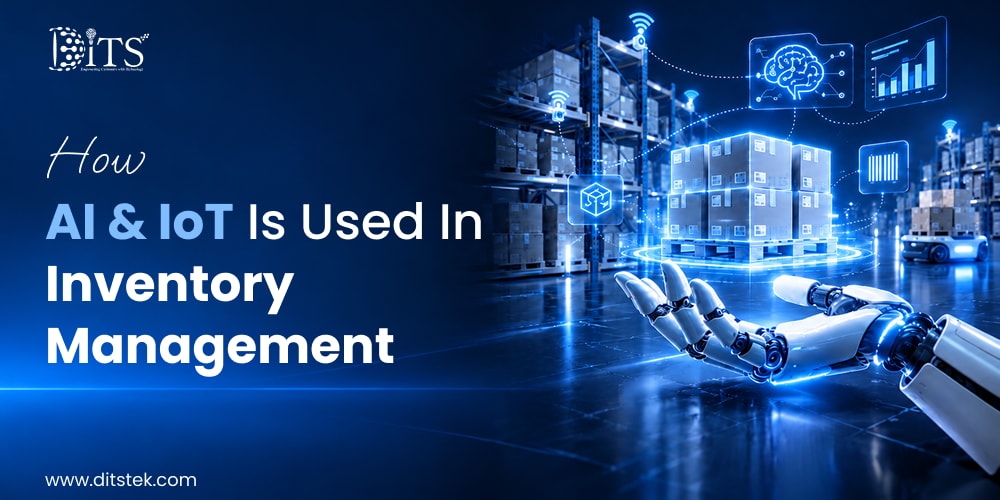
Discover how Artificial Intelligence (AI) and Internet of Things (IoT) is transforming inventory management. Learn about the applications, and future potential of AI and IoT.
Dinesh Thakur
10 Nov 2026
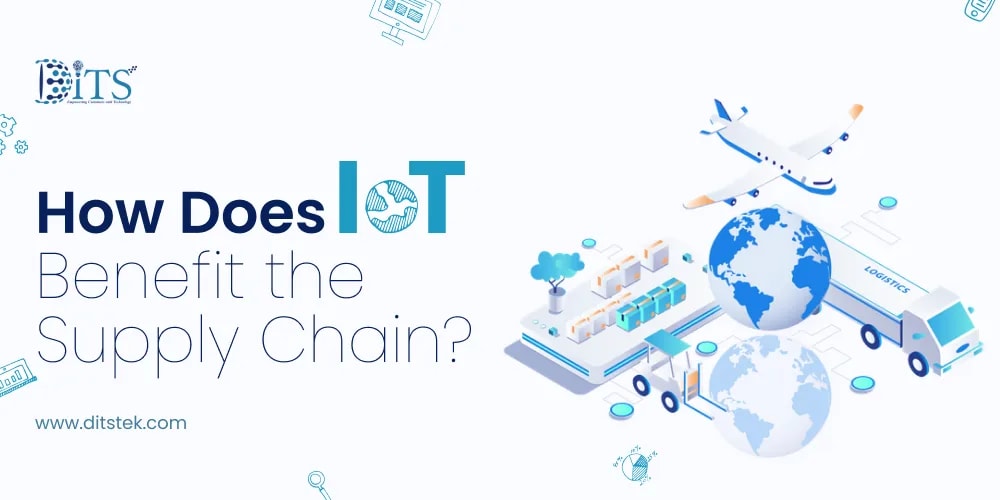
Discover How IoT benefits the supply chain. Learn how connected devices help improve efficiency, cut costs, offer real time tracking and manage inventory.
Dinesh Thakur
05 Nov 2026