With more than 20 years of experience - I represent a team of professionals that specializes in the healthcare and business and workflow automation domains. The team consists of experienced full-stack developers supported by senior system analysts who have developed multiple bespoke applications for Healthcare, Business Automation, Retail, IOT, Ed-tech domains for startups and Enterprise Level clients
Since 2017, Ditstek Innovations has been delivering custom medtech software development services for medical device manufacturers, healthcare institutions and hospitals, biotechnology companies, telehealth service providers, pharmaceutical companies, and healthtech startups worldwide. We develop all types of medical apps tailored for different healthcare settings, such as clinics, hospitals, assisted living facilities, nursing homes, pharmacies, and laboratories.
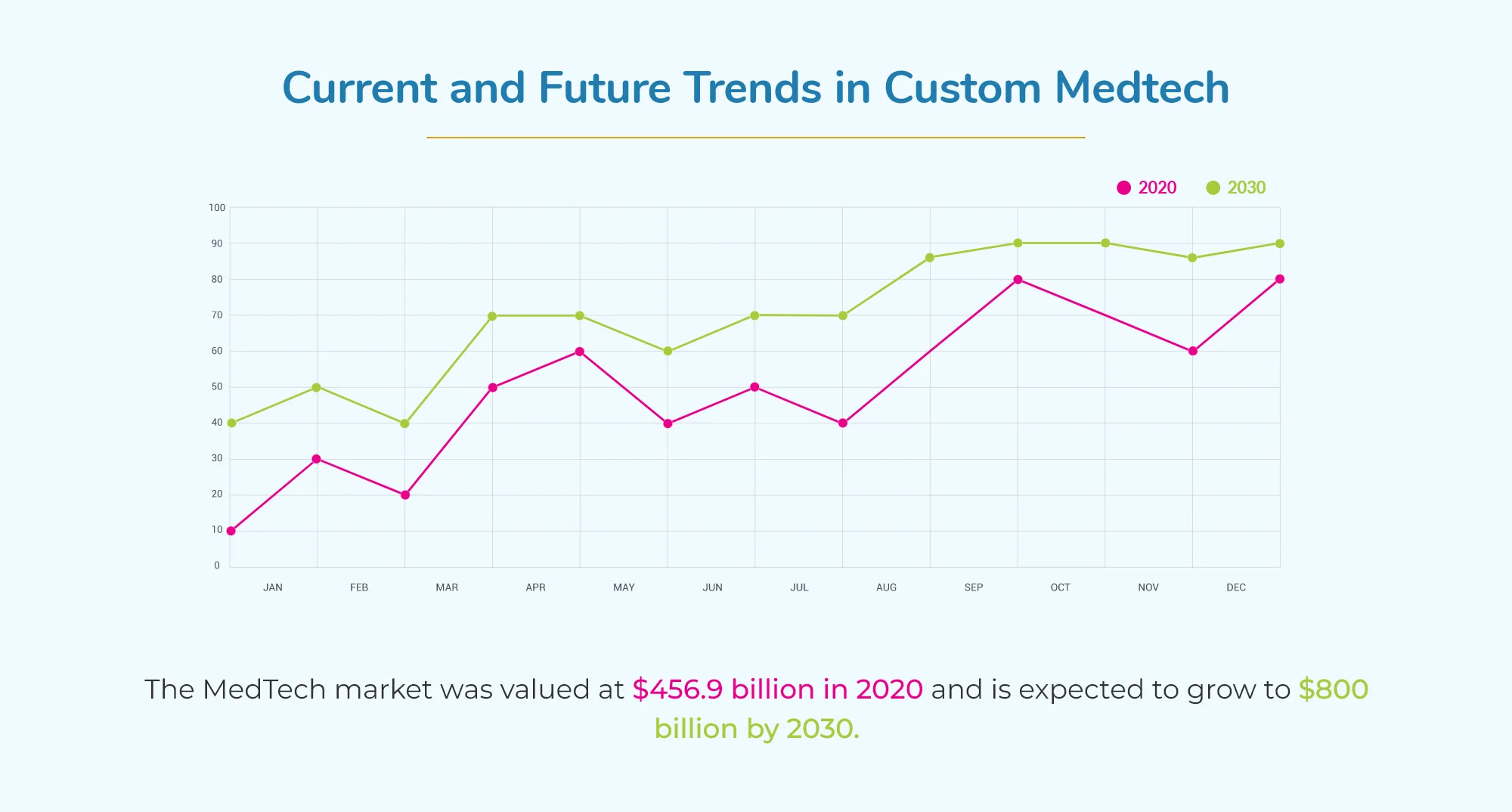
Current and Future Trends in Custom Medtech
The MedTech market was valued at $456.9 billion in 2020 and is expected to grow to $800 billion by 2030.
According to a recent report, in 2025, 173 $13.6 billion in medical tech deals were made. Mike Matson, an analyst at Needham & Co., predicted 353 deals worth $27.7 billion by year's end of the first quarter of 2026.
Frost & Sullivan expects the US digital therapeutics market to grow 35.9% from 2020 to 2029. The U.S. telehealth market, worth $36.8 billion in 2025, is expected to grow 45.1% annually to $309.9 billion by 2030.
The wearable and biometric technology market has grown steadily since 2023 and shows no signs of slowing. From 2023 to 2033, the global wearable technology market will grow 6% to $161 billion.
AI Integration and Agentic AI in MedTech
Artificial Intelligence is rapidly becoming a core component of modern MedTech software development. From predictive diagnostics to workflow automation, AI integration is helping healthcare organizations enhance clinical accuracy, operational efficiency, and patient engagement.
Today’s custom MedTech platforms are no longer limited to data storage and basic automation. By integrating AI and Machine Learning models, healthcare systems can analyze large volumes of structured and unstructured data in real time. This enables faster clinical decision-making, early disease detection, intelligent medical imaging analysis, predictive risk assessment, and automated administrative processes.
Another major advancement shaping the future of MedTech is Agentic AI.
Unlike traditional AI systems that only generate insights or recommendations, Agentic AI systems are designed to act autonomously within defined clinical and regulatory boundaries. These AI agents can monitor patient data continuously, trigger alerts, initiate workflows, schedule follow-ups, optimize hospital resources, and even assist in claims processing.
For example:
AI-powered Remote Patient Monitoring systems can detect anomalies in vitals and automatically escalate cases to care teams.
Intelligent revenue cycle management systems can identify billing errors and initiate corrective actions.
Clinical decision support systems can adapt recommendations based on evolving patient data.
When combined with interoperability standards like FHIR-based API integrations, AI-enabled systems create a connected healthcare ecosystem where data flows seamlessly across devices, EHRs, labs, pharmacies, and telehealth platforms.
At Ditstek Innovations, we integrate AI and Agentic AI capabilities into custom MedTech solutions while ensuring:
HIPAA-compliant architecture
Secure data handling and encryption
Scalable cloud deployment
Explainable and transparent AI models
Seamless integration with existing healthcare infrastructure
As healthcare continues shifting toward preventive, personalized, and value-based care models, AI-driven and agent-based MedTech systems will play a critical role in improving patient outcomes, reducing operational costs, and enhancing overall healthcare delivery.
Organizations that strategically adopt AI integration today will be better positioned to lead the next wave of digital transformation.
Types of Custom MedTech Software Development
We offer a variety of customized MedTech solutions for your healthcare organization's needs, processes, and goals. They are:
And the list doesn’t end here. There are many more and they are always evolving. Contact us with your unique needs and we will develop the custom solutions accordingly.
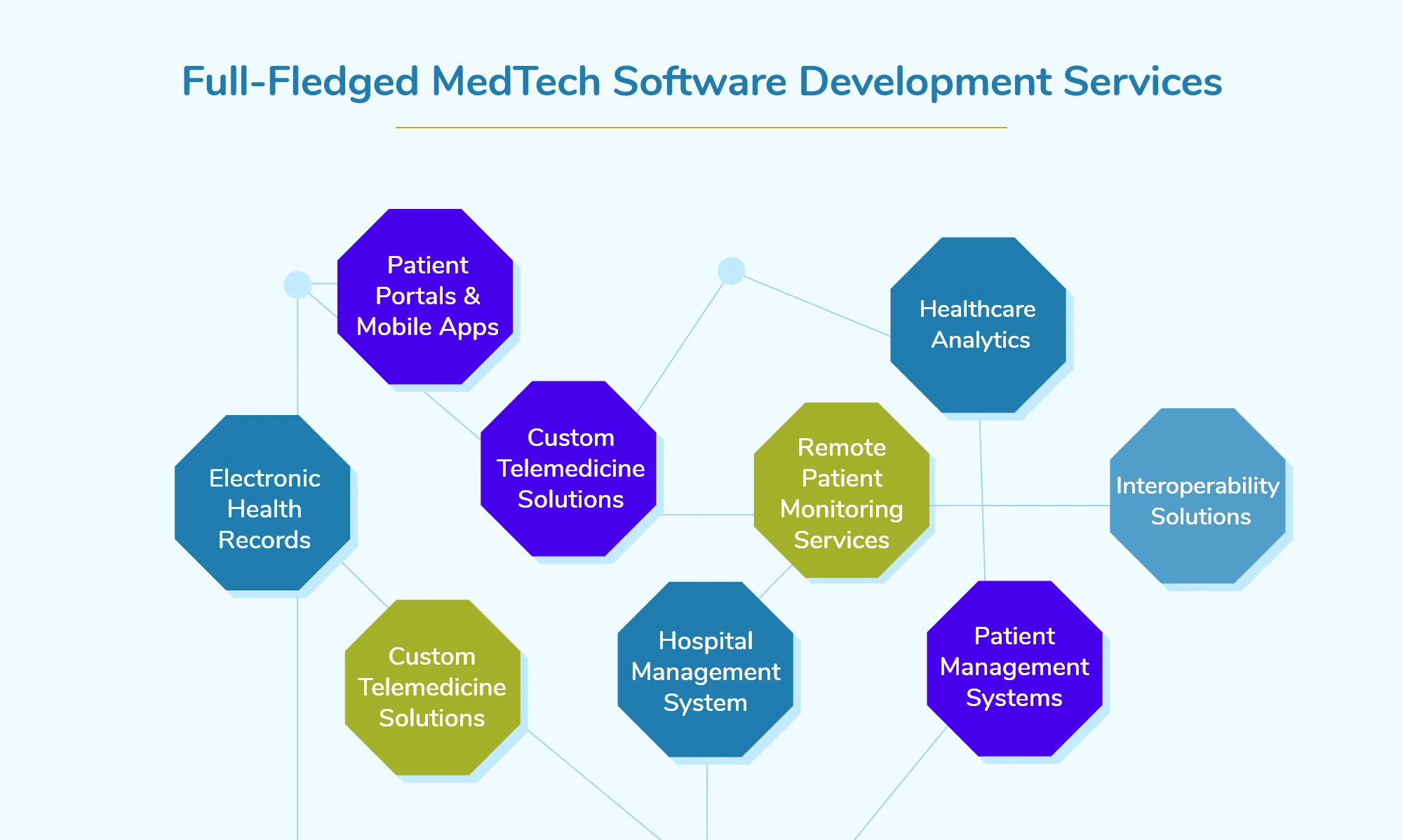
Full-Fledged MedTech Software Development Services
DITS, a leading custom medtech software development firm, combines extensive technical knowledge with extensive experience in the healthcare industry. We offer custom medtech software development services to cater your different business needs.
Electronic Health Records (EHR)
EHR solutions hold the potential to enhance patient care and optimize data management. We build software solutions that streamline clinical workflows, prioritizing security, user-friendliness, and interoperability.
Custom Telemedicine Solutions
DITS' team of skilled medtech software developers create custom telemedicine solutions that enable healthcare professionals in the medical field to provide top-notch virtual treatment.
Hospital Management System
Our medtech software developers have extensive experience to build powerful hospital management systems that consolidate all of your administrative tasks into one place, from patient & staff billing to appointment scheduling.
Remote Patient Monitoring Services
We can help you build remote patient monitoring solutions for more efficient patient care based on real-time data updates and information. These solutions can help clinicians or doctors monitor patient progress during treatments.
Patient Management Systems
Implementing tailored patient management solutions can improve efficiency and quality of care. Whether it's for billing or appointment scheduling, our medtech software developers create user-friendly systems that maximize efficiency.
Interoperability Solutions
Our interoperability solutions help different health care systems and gadgets share information with each other. Our team knows how to use the Fast Healthcare Interoperability Resources (FHIR) standard and make APIs to connect EHR systems.
Healthcare Analytics
Use our services for healthcare analytics to get the most out of your data. Our custom solutions use cutting-edge technologies like ML and AI to give you actionable insights that help you make better decisions and improve patient outcomes.
Patient Portals And Mobile Apps
Patient portals empower patients to manage their healthcare easily using any computer or mobile device. They can use these portals to make appointments, view their medical records, contact their doctors, refill prescriptions, pay bills, and more.
And More
And we don't stop here. Our developers possess a wealth of knowledge and experience in creating custom software or apps for the healthcare industry including mental health, sports, personal development, and other related field.
Must-Have Features Of MedTech Software Development
Tracking System
Tracking patients' vital signs and conditions like heart rate, pulse, blood sugar, blood pressure, and caloric intake should be the primary objective of any healthcare software.
Registration and Sign-In
Another must-have feature of healthcare software is an easy sign-up or sign-in option. There should be several ways to sign in, such as email, social media, phone numbers, and so on.
Scheduling & Reminders
This feature can help users set reminders for doctor appointments, medicines, sleep, exercise, water, upcoming sessions, diet, daily calorie consumption and other aspects.
Physician Information
This feature allows app users to search for doctors and medical facilities based on various criteria, such as availability, location, level of experience, specialization, and more.
Easy Patient Registration
Healthcare software should have secure authentication and a minimal registration process. It should allow patients to easily submit prescriptions, insurance forms, and medical records.
Patient Information
Make sure your app includes a patient information database. Patients and their caregivers should always have access to well-organized data, including prescription drugs, medical records, and health reports.
Management of the Documents
Documentation management is another important part of medical software. It includes managing data and obtaining it from different sources, such as test results, prescriptions, and other medical records.
E-Prescribing
Modern medical software lets doctors send patients prescriptions online, eliminating the need for in-person visits. It also lets healthcare providers consider patients' preferences regarding the pharmacy they use.
Looking for a custom medtech software development for your business?
DITS, a leading medtech software development company, can help you develop tailor software solutions to cater your business needs.
Factors to Consider for Custom MedTech Software Development
When developing medtech software, many factors must be considered and planned which are as follow:
1. Adherence to Regulatory Compliance
Following strict FDA regulations is crucial. Medtech software must follow these rules to be safe, effective, and high-quality. Regulations are needed to ensure patient safety and meet complex legal and quality standards for market approval.
2. Security and Data Privacy
Strong data security measures must be put in place, like encryption and limits on who can see the data. For keeping patients' trust and following data protection laws like HIPAA, it's important to stop breaches or unauthorized access to private patient data.
3. Usability and User Experience
Custom Medtech software needs to be user-centered so that it is simple for patients and doctors to understand and use. Users must be able to interact with the software more smoothly and efficiently.
4. Scalability and Flexibility
Medtech software must scale to handle growing data and users. It must also easily accommodate updates, new features, and integration and adapt to new needs without a complete redesign.
5. Speed and Reliability
Medtech software's real-time functionality requires a delicate balance between speed, reliability, and accuracy. Performance, stress, and load testing ensure software responds quickly and accurately to user loads.
6. Continuous Monitoring and Updates
Monitoring software health after deployment is necessary. Monitoring tools track performance, system usage, and security vulnerabilities. This data helps identify and mitigate emerging issues.
Benefits of Developing MedTech Softwares
Patients, health organizations, and everyone in between can benefit from developing custom Medtech software. Take a look at how:
Data Protection: Medical software makes data storage, sharing, and access safer and easier for patients and providers.
Reduced Costs: Health systems can save doctors and nurses money and time by streamlining processes, reducing testing and analysis, improving safety, and reducing paperwork.
Improved Documentation: Medical professionals can streamline billing and coding with clear and comprehensive documentation technology. Establishing an automated workflow and ensuring necessary data is entered at all times in healthcare organizations can reduce errors and streamline business processes.
Remote Patient Monitoring: Medical software allows doctors to keep tabs on their patients and treat them even when they can't be there in person. Clinicians can track patients' progress during treatments and address issues before they escalate.
Data Analysis: Custom healthcare software uses predictive algorithms to identify disease risk based on medical histories.
Tech Stack To Develop Custom MedTech Software Development
We use combination of different technologies to develop custom medical software development to cater different business needs:
Front End Development: Angular, React, Vue, Node.js, and Core JavaScript
IDEs and Compilers: Integrated Development Environments (IDE) and Compiler
DITS’ Experience in Creating Medtech Software Development
We have experience with saas-based healthcare software development, API integration, client-server architecture, healthcare device integration, and more.
Example 1: Saas Based Remote Patient Monitoring System
We developed a HIPAA-compliant SAAS-based Virtual Patient Monitoring System for one of our clients. The core functionality of the software was to improve the healthcare outcomes, reduce costs, and transform patients’ experience.
Example 2: Saas Based Healthcare Revenue Cycle Management
Built on Java (backend) and Angular/App Script (frontend), our Saas Based Healthcare Revenue Cycle Management helps to improve accuracy, boost revenue, and refine working capital utilization.
Why Choose Ditstek Innovations To Build Custom MedTech Software?
At DITS, we know how software can change the healthcare industry by facilitating the development of new ideas and improving patient outcomes.
All sizes of healthcare organizations can benefit from the wide range of services we offer and the depth of our software development and consulting knowledge.
We As Custom MedTech Software Development Company Offer:
Secure and compliant medtech software development
Assistance, improvement, and medtech software/app testing for equipment and IoT software projects
Improved and reengineered legacy device software
Maintenance services for medical software
Reduced medtech software development costs
Strong experience working with US healthcare, biotech, pharmaceutical, and IoT companies
Frequently asked questions
The medical technology market will continue to grow due to new technologies and rising consumer demand for healthcare solutions. Startups and innovation hubs will help the industry grow by developing new solutions and attracting investors.
Nidhi Thakur
With more than 20 years of experience - I represent a team of professionals that specializes in the healthcare and business and workflow automation domains. The team consists of experienced full-stack developers supported by senior system analysts who have developed multiple bespoke applications for Healthcare, Business Automation, Retail, IOT, Ed-tech domains for startups and Enterprise Level clients