25+ years of IT software development experience in different domains like Business Automation, Healthcare, Retail, Workflow automation, Transportation and logistics, Compliance, Risk Mitigation, POS, etc. Hands-on experience in dealing with overseas clients and providing them with an apt solution to their business needs.
Key Takeaways
Conversational AI, in insurance, is getting essential for modern insurers.
With conversational AI in insurance, companies can cut down on costs and also make response time better, faster, generally.
Conversational AI for insurance also handles those routine customer chats by itself, more or less automating the everyday stuff.
That way the teams can put their attention on the more complicated and high value activities.
Real success really depends on having clear goals and solid integration, like actually connecting well to what you already have.
Still, legacy systems and messy data issues can definitely slow implementation down, sometimes a lot.
Insurance conversational AI is slowly turning into a strategic asset, not just a “nice to have”.
The ROI keeps getting stronger as the systems learn and then scale over time.
Finally, picking the right partner matters, it can influence long term success more than people expect.
Let’s be honest, nobody really wakes up excited to call their insurance company. Those long hold times and confusing policies, plus getting transferred from one agent to another, can test anyone's patience. The agents get buried under repetitive questions and the claim process drags on, which in turn makes customer satisfaction slide, even faster than expected.
That is exactly where conversational AI comes in. It’s not only those clunky chatbots from before that could barely make sense of simple questions. Today’s conversational AI is way smarter, quicker, and honestly genuinely helpful. It can handle claims, field policy questions, help people move through renewals, and even assist onboarding, in a smoother way. All of that happens without forcing somebody to sit on hold for 30 minutes or more, and nobody really wants that.
This blog lays out the real practical steps for bringing conversational AI into insurance operations. It covers how insurers can adopt it, steer clear of common pitfalls, and build systems that actually deliver tangible business value.
Conversational AI in Insurance Context
At a practical level, conversational AI insurance refers to systems that can understand, process, and respond to customer queries in a natural way. These are not just scripted bots. They learn from interactions, improve over time, and handle complex workflows that previously required human intervention.
In the insurance space, this capability is being applied across multiple touchpoints.
Here’s where it typically fits:
Customer onboarding with guided conversations
Policy queries and coverage explanations
Claims initiation and status tracking
Renewal reminders and payment assistance
But there’s a difference worth noting. Basic bots follow rules. Advanced systems powered by insurance conversational AI understand intent, context, and even partial information.
Business Case for Conversational AI in Insurance
For most US insurers, the decision to adopt conversational AI for insurance is driven by innovation and operational pressure. Rising customer expectations, increasing service costs, and the need for faster turnaround times are forcing a shift.
Consider a mid-sized insurance provider handling 8,000 to 10,000 customer queries daily. Even a 30% automation rate can significantly reduce call center load. That translates into real savings.
Here’s what businesses are seeing when they implement conversational AI in insurance effectively:
Reduced cost per interaction by up to 40%
Faster claims response, often within minutes instead of hours
Improved customer satisfaction due to instant availability
Better handling of peak demand, especially during natural disasters or policy renewal cycles.
Key Use Cases Across Insurance Segments
Adoption of conversational AI insurance by companies directly impact their revenue, service quality, and turnaround time.
Let’s break it down with practical applications.
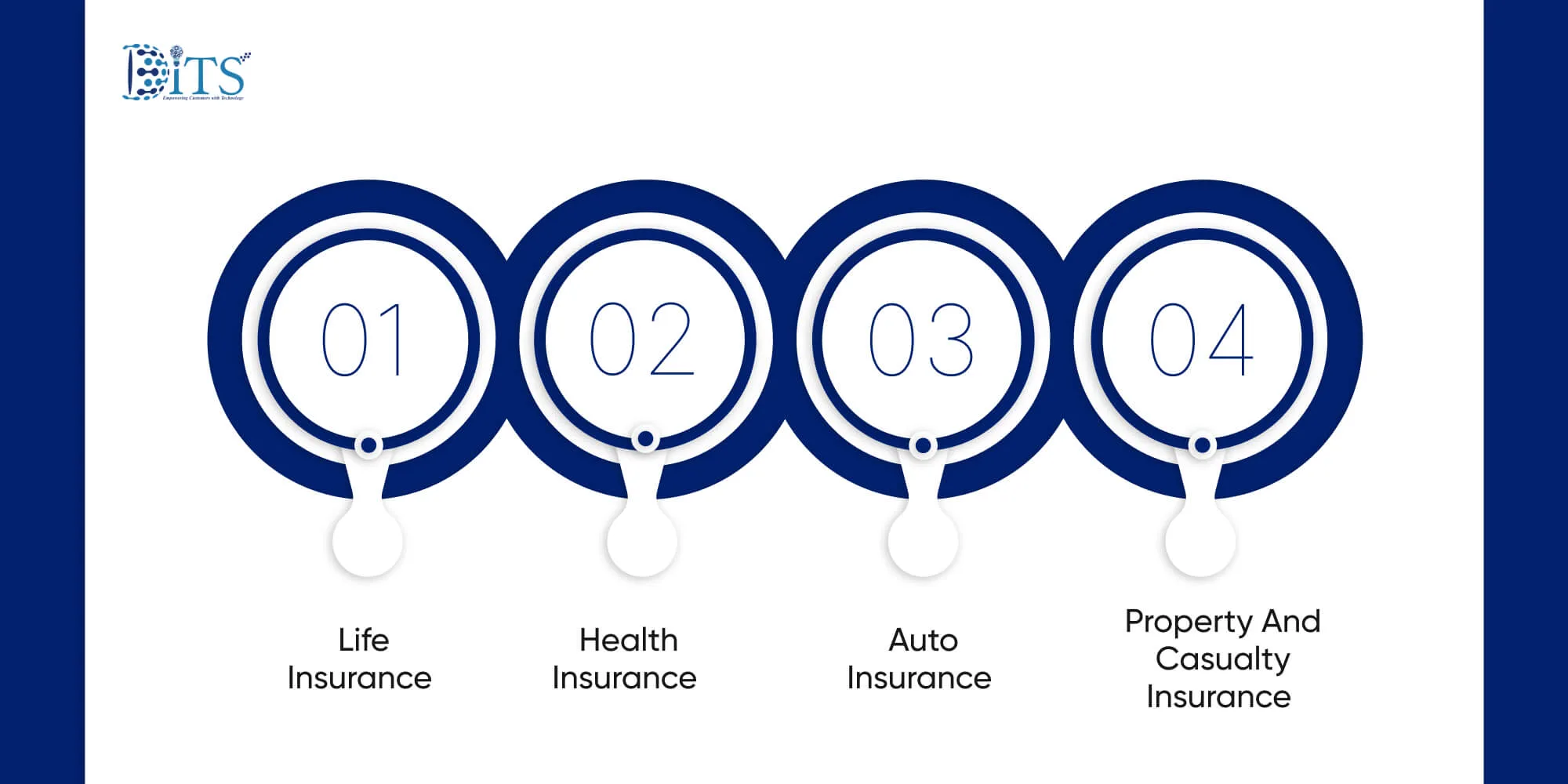
Life Insurance
Assisting customers with policy details, premiums, and beneficiaries
Guiding users through complex product comparisons
Handling renewal reminders and documentation queries
A typical scenario? A customer unsure about policy maturity terms gets instant clarification without waiting for an agent callback.
Health Insurance
Explaining coverage, exclusions, and claim eligibility
Providing real-time claim status updates
Supporting pre-authorization requests
Here’s the catch. Health policies are complex, and customers often feel overwhelmed. Systems powered by insurance conversational AI simplify this by breaking down information into easy, understandable responses.
Auto Insurance
First Notice of Loss (FNOL) reporting
Roadside assistance coordination
Claim progress tracking
A driver involved in an accident can initiate a claim instantly through a conversational interface. Faster reporting often leads to faster resolution.
Property and Casualty Insurance
Claims intake with guided data collection
Damage reporting with structured inputs
Follow-up communication automation
Across all these segments, one pattern is clear. Conversational AI for insurance reduces friction at every interaction point. Customers don’t have to chase information. It comes to them, instantly and accurately.
Step-by-Step Implementation Framework for Conversational AI In Insurance
Implementing conversational AI in insurance is a structured process that requires alignment between business goals, technology, and existing systems.
Here’s how leading insurers approach it.
Define Business Objectives and KPIs
Start with clarity. What exactly are you trying to solve?
Reduce customer service costs
Improve claim response time
Increase policy conversion rates
This is where many organizations engage in AI consulting to identify high-impact use cases and measurable outcomes. Without defined KPIs, even the best systems fail to show ROI.
Map Customer Journeys and Interaction Points
Look closely at where customers experience delays or confusion.
Claim filing processes
Policy inquiries
Renewal communication
These friction points become the first candidates for automation using conversational AI insurance solutions.
Choose Right Technology Stack
Technology decisions shape long-term scalability.
Key considerations:
Natural language understanding capabilities
Multi-channel support including web, mobile, and voice
Integration readiness
At this stage, businesses often rely on AI software development to build tailored solutions that align with their workflows rather than forcing generic platforms into complex insurance environments.
Ensure Seamless System Integration
No conversational system works in isolation.
It must connect with:
CRM platforms
Policy administration systems
Claims management systems
This is where AI integration services play a critical role. Without proper integration, responses become shallow, and automation fails to deliver real value.
Design Conversational Flows
This part is often underestimated.
The whole conversation should feel natural, not like some stiff machine talking back
Every response has to be exact and aligned with required rules, no fuzz
If the user needs a human, the handoff should be smooth like effortless transition
When the flow is made well, a simple question can turn into a guided journey that boosts conversions, and also improves overall satisfaction.
Deploy on Scalable Infrastructure
Once usage ramps up, the system still has to keep up, no slowdowns.
So insurers commonly use cloud computing services, to keep things flexible, scalable, and to maintain data availability across different regions, all at once.
Train, Test, and Optimize
Initial deployment is just the beginning.
Train models using real interaction data
Monitor performance and identify gaps
Continuously refine responses
At DITS, we embed AI deeply into our delivery lifecycle, using it for development, quality assurance, code quality monitoring, and customization. Every solution evolves with usage, not just at launch.
Ready To Implement Conversational AI In Insurance?
Build intelligent insurance solutions that automate workflows, streamline communication, and support efficient policy and claims management.
When implementing conversational AI insurance, insurers need to think beyond features and focus on how systems connect, scale, and evolve over time.
Let’s break this down.
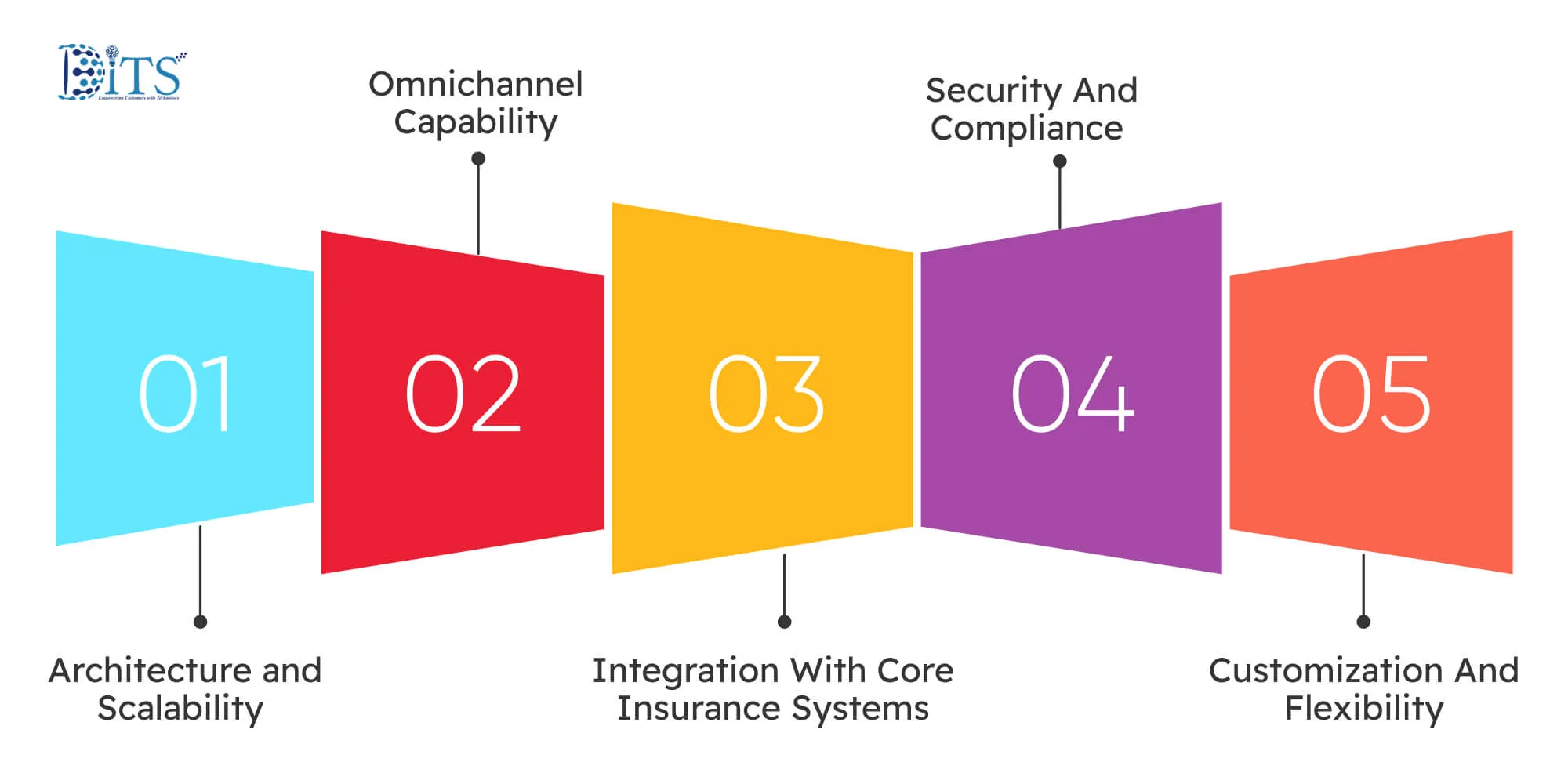
Architecture and Scalability
A strong foundation matters. Systems should be built using modular, API-first architecture so they can integrate easily and expand without major rework.
Key considerations:
Cloud-native deployment for flexibility
Microservices architecture for scalability
Real-time data processing capabilities
This is where cloud computing services become essential, enabling insurers to handle sudden spikes in demand without compromising performance.
Omnichannel Capability
Customers don’t stick to one channel. They switch between web, mobile apps, messaging platforms, and even voice calls.
Your conversational system should:
Maintain context across channels
Provide consistent responses everywhere
Support both text and voice interactions
A fragmented experience breaks trust. A unified one builds it.
Integration With Core Insurance Systems
This is non-negotiable. Without deep integration, AI becomes a surface-level tool.
Critical systems to connect:
Policy administration platforms
Claims management systems
CRM and customer databases
Strong AI integration services ensure that every response is backed by real-time, accurate data, not static or outdated information.
Security And Compliance
Insurance data is sensitive. There’s no room for compromise.
Systems must:
Follow US data protection standards
Ensure encryption across all interactions
Maintain audit trails for compliance
Security isn’t a feature. It’s a baseline expectation.
Customization And Flexibility
No two insurers operate the same way. Off-the-shelf solutions often fall short when workflows become complex.
That’s why organizations invest in AI software development and custom application development to create solutions tailored to their operational needs.
At DITS, we approach this differently. We put AI in the whole development journey, starting at coding, moving through quality checks and into ongoing refinement, you know. So it is not only a system that works right away, but also something that keeps getting better as it gets used more, kind of continuously.
Measuring Success and ROI Of Conversational AI In Insurance
Implementing conversational AI in insurance is one thing. Proving its business value is another. Leadership teams need clear metrics that go beyond technical performance and tie directly to operational outcomes.
Here’s what actually matters.
Key Performance Indicators to Track
Instead of tracking everything, focus on metrics that reflect efficiency and customer impact:
Customer satisfaction score (CSAT) improvement
First response time and resolution time
Percentage of queries automated
Cost per interaction compared to human support
Conversion rates for policy sales and renewals
For example, insurers that automate even 40% of incoming queries often see a noticeable drop in support costs within the first 3 to 6 months.
Operational Impact
Beyond numbers, the real value shows up in day-to-day operations.
Reduced workload on customer support teams
Faster claims processing cycles
Consistent and compliant communication
And here’s something many teams realize late. Automation doesn’t just cut costs. It frees up human agents to focus on high-value interactions, like complex claims or upselling opportunities.
Customer Experience Gains
Customers don’t measure technology. They measure experience.
With conversational AI for insurance, they get:
Instant responses, even outside business hours
Clear and structured information
Reduced need to repeat queries across channels
That consistency builds trust over time. Quietly, but effectively.
Long-Term Business Value
The real ROI compounds over time.
Systems improve with more data
Automation rates increase gradually
Customer engagement becomes more proactive
Organizations that adopt insurance conversational AI early often gain a competitive edge. Not because of the technology alone, but because of how deeply it gets embedded into operations.
Ready To Transform Insurance Operations With Conversational AI?
Build intelligent insurance solutions that automate customer interactions, streamline claims support, and improve operational efficiency at scale.
The evolution of conversational AI insurance is moving beyond basic automation. What started as query handling is now becoming a strategic layer that influences decision-making, personalization, and proactive engagement.
And the shift is already visible.
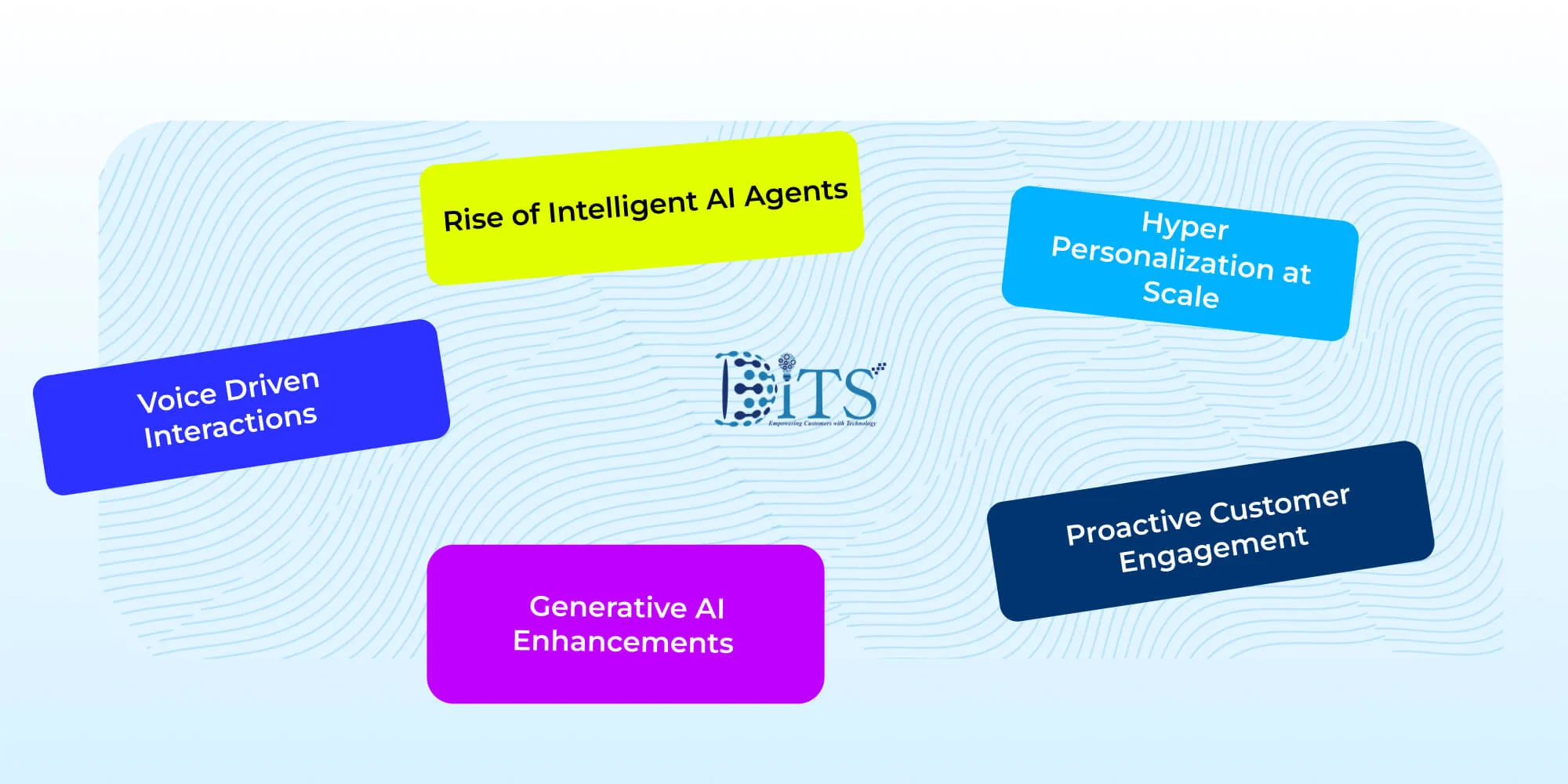
Rise of Intelligent AI Agents
Traditional chatbots respond. Advanced systems act.
Automate multi-step workflows without constant human input
This changes the role of AI from support tool to operational partner.
Hyper Personalization at Scale
Customers no longer want generic responses. They expect tailored communication based on their policy, history, and behavior.
Future systems powered by conversational AI for insurance will:
Recommend policies based on life events
Send proactive alerts for renewals or coverage gaps
Personalize interactions in real time
It’s not just about answering questions anymore. It’s about anticipating them.
Voice Driven Interactions
Text-based interactions are only one part of the equation. Voice is gaining traction, especially in claims scenarios where speed matters.
Users can report an accident through a voice assistant while still at the scene, which means faster reporting and faster processing.
That’s where conversational AI in insurance is heading next.
Generative AI Enhancements
New capabilities are enabling systems to:
Summarize claims reports
Generate customer-friendly explanations of policies
Assist agents with real-time response suggestions
This adds depth to interactions, making them more natural and context-aware.
Proactive Customer Engagement
Here’s the real shift. Moving from reactive to proactive.
Future systems will:
Notify customers about potential risks
Suggest policy upgrades before renewal cycles
Alert users about missing documentation
This is where insurance conversational AI becomes a growth driver, not just a cost-saving tool.
Insurers that invest early will not just improve efficiency. They will redefine how customer relationships are managed in a digital-first environment.
Why Choose DITS For Conversational AI In Insurance
Selecting the right implementation partner is essential to make conversational AI insurance a high-impact asset for business.
We understand how insurance operations work, from claims processing to policy servicing. That context allows us to design solutions that fit naturally into existing processes instead of disrupting them.
End To End AI Capability
With strong expertise in AI software development, we go beyond basic automation and create systems that assist teams in decision-making and workflow execution. Using AI chatbot development, we build intelligent systems that handle real customer interactions, not just scripted queries.
Seamless Integration and Scalability
Most insurers struggle with disconnected systems. We address that directly.
Integration with CRM, claims, and policy systems
Scalable architecture to handle growing demand
Flexible deployment aligned with business needs
This ensures that conversational AI for insurance delivers real-time, accurate responses backed by actual data.
AI-Driven Development Process
At DITS, AI is not limited to the final product. We use it across our internal processes as well.
Accelerated development cycles
AI-assisted quality assurance
Continuous code quality monitoring
Customization based on evolving business needs
Every solution is designed to improve over time, not remain static after deployment.
Enterprise-Grade Delivery
With experience in enterprise environments, we ensure:
High performance and reliability
Secure and compliant systems
Scalable infrastructure for long-term growth
For insurers looking to implement conversational AI in insurance effectively, the difference lies in choosing a partner who understands both technology and industry realities.
Want To Automate Insurance Support And Policy Services?
Implement conversational AI systems that handle customer queries, policy management, and claims assistance with greater efficiency and accuracy.
Adopting conversational AI insurance is becoming a core part of how insurers operate, compete, and grow in a digital-first environment.
With conversational AI for insurance, insurers can reduce operational strain, improve response times, and create more consistent customer experiences. But more importantly, they gain the ability to respond to changing expectations without constantly expanding teams.
There’s also a mindset shift involved. This is not about replacing human effort. It’s about augmenting it. When routine queries are automated, teams can focus on high-value interactions that actually drive business growth.
Frequently asked questions
Conversational AI in insurance refers to the use of AI-powered systems that can interact with customers through natural language, either via chat or voice. These systems handle tasks like answering policy questions, assisting with claims, and guiding users through insurance processes without human intervention.
Dinesh Thakur
25+ years of IT software development experience in different domains like Business Automation, Healthcare, Retail, Workflow automation, Transportation and logistics, Compliance, Risk Mitigation, POS, etc. Hands-on experience in dealing with overseas clients and providing them with an apt solution to their business needs.