How Medical Insurance Verification Software Helps Businesses Make Processes Faster
Table Of Content
Published Date :
11 Jun 2026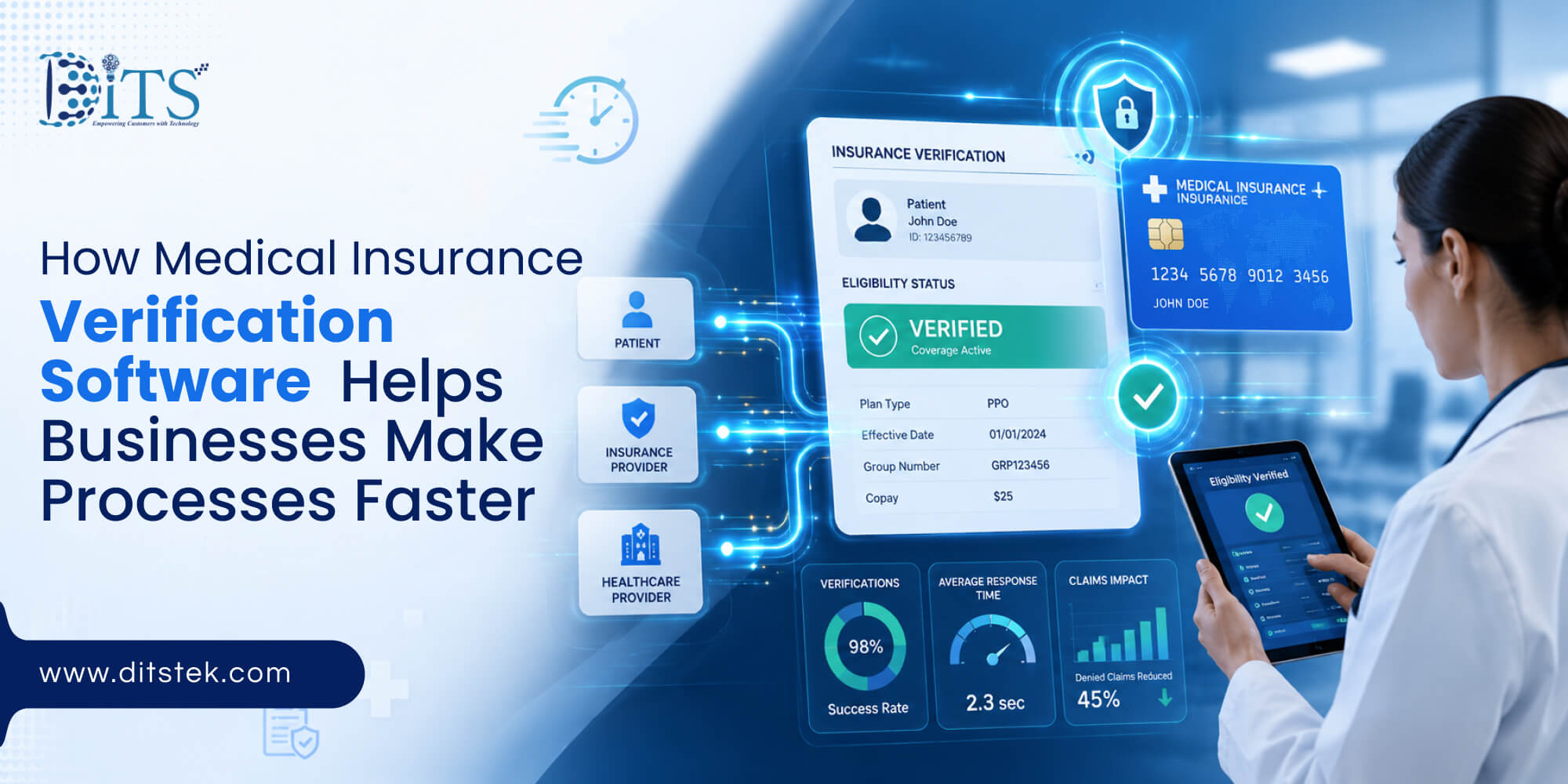
Key Takeaways
- Insurance verification directly affects two aspects of business operation which are revenue generation and patient experience.
- The health insurance eligibility verification software enables users to complete eligibility checks at a much faster rate.
- The process of workflow automation helps organizations to decrease their administrative tasks while their employees achieve better work efficiency.
- The process of real-time verification decreases both claim denials and the need for rework.
- The organization achieves faster billing processes because it uses accurate data which also generates better cash flow results.
- The system provides smooth operational processes because it connects with current systems in use.
- The implementation of AI-based solutions improves organizational precision while enabling ongoing system performance advancements.
For healthcare practices, insurance verification has long been one of those necessary evils that eats up valuable time and resources. The front desk employees dedicate multiple hours to waiting on phone lines while they contact insurance companies for manual verification of coverage and eligibility.
The process creates a bottleneck which affects all aspects of the system including patient check-ins and billing cycles. The system creates major operational difficulties which affect all people involved in the process.
According to a study, health insurance claim management teams spend 12 minutes on manual verification of insurance claim per patient, and it does not include the follow up time. If they add follow up time, it doubles the time spend on verification of insurance claim per patient. The staff members at the organization need to spend 10 hours on this administrative task because you multiply the daily requirement of 30 patients by the multiple operational requirements of 10 hours. The staff members at the organization need to spend 10 hours on this administrative task because you multiply the daily requirement of 30 patients by the multiple operational requirements of 10 hours.
Health insurance verification software enables healthcare organizations to complete their most time-consuming work because it transforms the process from hours of work to a task that now requires only minutes. The system enables organizations to reduce their verification time by 70 percent.
This post will show how this technology enables medical practices, billing companies and healthcare organizations to improve their operational efficiency while decreasing errors and providing enhanced services to their patients.
What Is Medical Insurance Verification Software
The primary function of medical insurance verification software operates to confirm patient insurance coverage before medical services begin which empowers medical providers to access precise insurance data at required times.
The system establishes a connection with payer databases to retrieve eligibility information which it displays in a format that staff members can use for immediate actions.
It performs automated checks across multiple insurers in seconds. The system displays coverage status together with co-pays and deductibles and policy limits in an instant.
Modern platforms establish connections with healthcare software development ecosystems that include EHRs and billing systems to enable departments to share information without interruption.
The outcome generates quicker decision-making processes which decrease unexpected developments while establishing a workflow system that meets all business requirements.
How Health Insurance Verification Software Speeds Up Processes
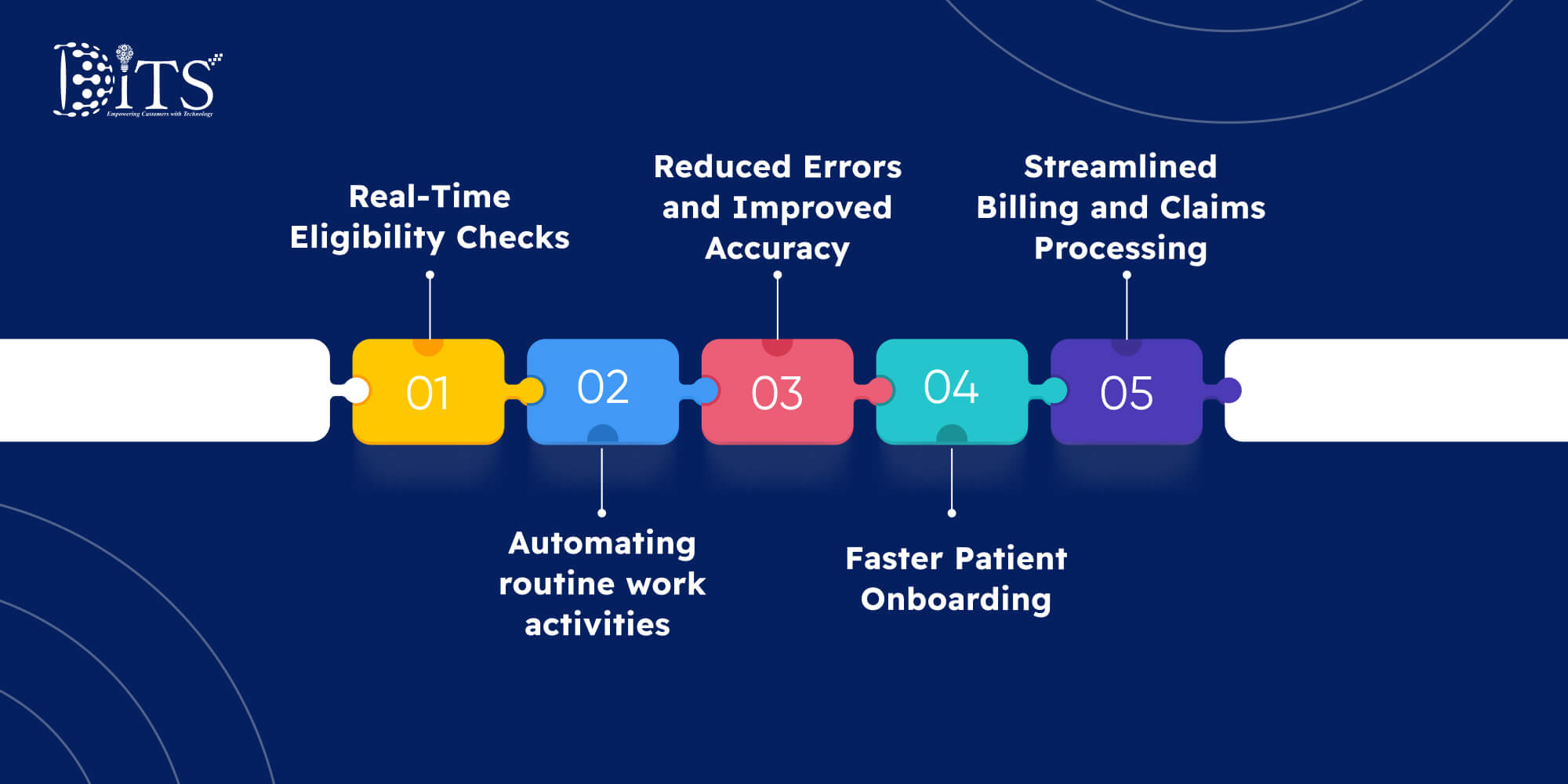
Speed in healthcare operations is not just about executing things faster, but removing challenges from every step that slows decision-making, delays service, or impacts business. The decision-making of health insurance verification software starts to show measurable impact across departments.
Real-Time Eligibility Checks
The most significant transformation results from people now being able to access coverage information instantly. The insurance eligibility verification software retrieves eligibility information together with co-pay and deductible data within seconds because staff members do not need to access multiple insurance provider systems.
Automating Routine Work Activities
The system performs automatic processing for three essential operations which include data entry, form validation, and payer verification. The system decreases manual work requirements while enabling staff members to focus on their most valuable tasks.
The interesting part begins here. Organizations report that their administrative workload decreases by 30 to 40 percent during the initial months after they begin using the new system.
Reduced Errors and Improved Accuracy
Automation brings consistency. Systems pull data directly from payer sources, minimizing the risk of incorrect entries or outdated information.
Fewer errors at the verification stage mean fewer denied claims later.
Faster Patient Onboarding
Registration becomes smoother when insurance details are already verified. Staff can focus on patient interaction rather than backend checks.
Patients notice this. Shorter wait times and quicker processing create a more professional and reliable experience.
Streamlined Billing and Claims Processing
Accurate verification feeds directly into billing systems. Claims are submitted with correct data the first time, reducing rework and follow-ups.
Organizations use this package which includes healthcare claim management software to speed up their revenue cycle while achieving better success in their claim submissions. At DITS, we approach this differently.
We don’t just build software. Our AI integration services enable us to enhance verification processes and achieve greater data precision and support better decision-making abilities.
Need Faster Patient Eligibility Verification And Approvals?
Build automated verification systems that streamline insurance validation and improve operational efficiency across healthcare organizations.
Key Features of Medical Insurance Verification Software
Not all systems deliver the same value. The difference often lies in the features that directly impact speed, accuracy, and usability across teams. The right medical insurance verification software is built to support real-world operational pressure.
Real-Time Eligibility Verification
Your system uses real-time insurance eligibility verification software which retrieves coverage information from payer systems to provide immediate results while decreasing the need for manual verifications.
Multi-Payer Integration
The software enables staff members to access multiple insurance connections through a single interface which streamlines the process by eliminating the need to use different systems.
Automated Alerts and Notifications
The software automatically generates alerts which notify users about three types of missing data: information that needs to be completed and policies that have reached their expiration date and coverage restrictions.
EHR And Billing System Integration
It provides direct data transfer from verified information to both clinical operations and billing procedures.
Customizable Workflows
The verification process allows organizations to customize their rules and data requirements and their reporting methods according to their specific needs.
Data Security and Compliance
The system needs to implement strong encryption methods and meet all healthcare regulatory requirements because it handles sensitive patient data.
Feature Impact at a Glance
| Feature | Business Impact |
| Real-time verification | Reduces verification time from minutes to seconds |
| Automation | Cuts administrative workload significantly |
| System integration | Eliminates duplicate data entry |
| Alerts and notifications | Prevents costly verification errors |
| Custom workflows | Aligns software with operational needs |
Choose the right set, and the system becomes an enabler. Choose poorly, and it becomes just another tool that teams work around.
Benefits For Healthcare Businesses
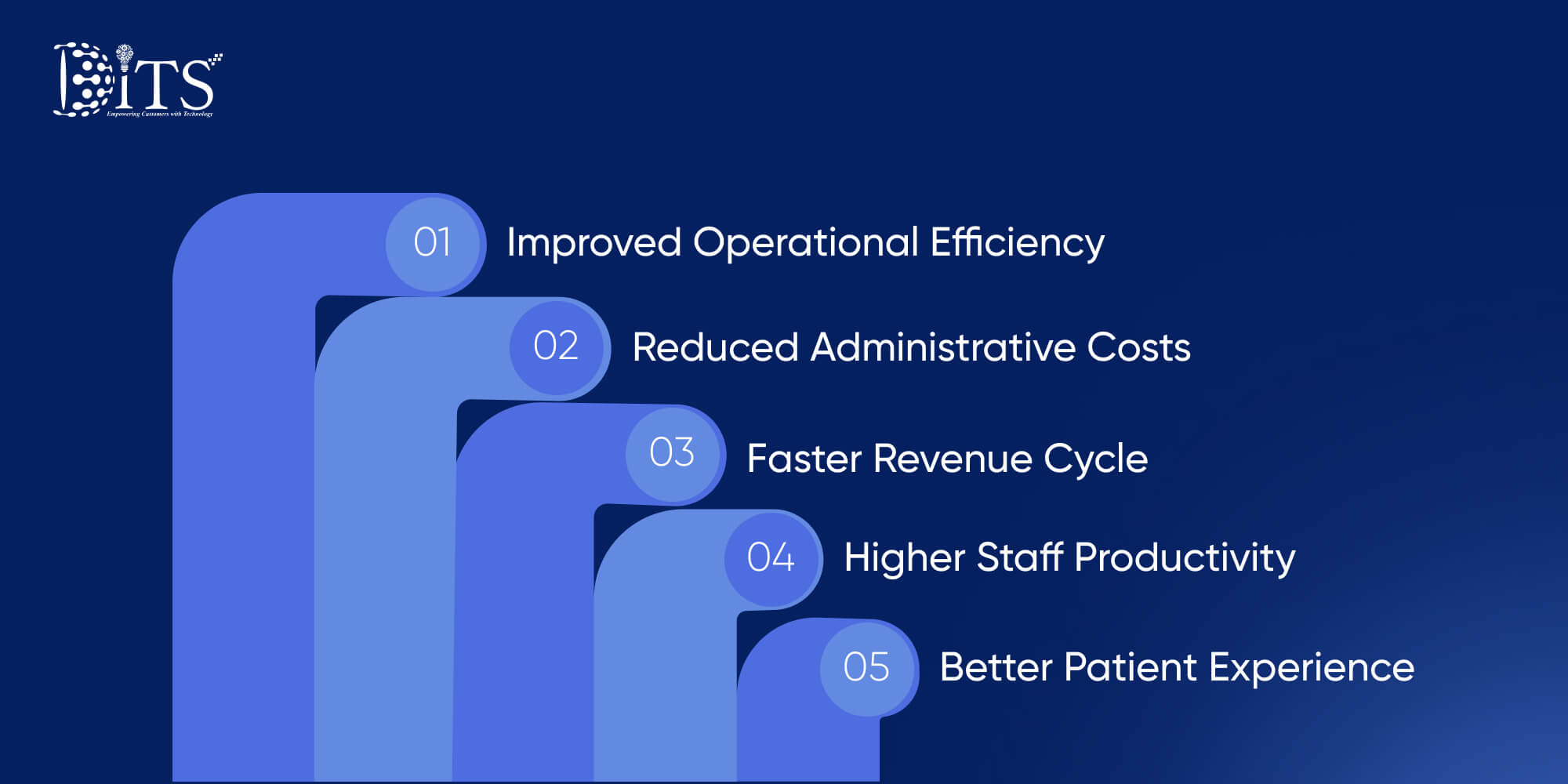
For leadership teams, the real question is not whether verification can be automated. It is whether that automation translates into measurable business outcomes. And in most cases, it does, quite quickly.
Improved Operational Efficiency
The admin department of healthcare organization handles increased patient demands without adding new staff members. Staff members can complete hours of work in minutes, enabling them to focus on their essential responsibilities.
Reduced Administrative Costs
The organization spends less money on administrative work because it has reduced its manual work processes. The organization experiences operational cost increases because of this issue which continues to occur unaddressed.
Faster Revenue Cycle
Accurate verification leads to cleaner claims. Claims get approved faster, and payment cycles shorten, improving overall cash flow stability.
Higher Staff Productivity
When teams are not tied up in repetitive verification tasks, they can contribute to more strategic and patient-facing activities.
Better Patient Experience
The organization provides patients with better service, which enables them to check-in faster and experience less billing confusion. The way healthcare providers operate needs to consider this aspect as healthcare markets become more competitive.
Here’s the part many executives notice first. Small efficiency gains at the verification stage ripple across the entire organization. What starts as a backend improvement ends up enhancing front-end experiences and financial outcomes.
Use Cases Across Healthcare Providers
The application of verification systems is not limited to large hospitals. The situation demonstrates its actual worth during situations which require instant action because they produce immediate effects on both income and patient movement through the medical facility.
Hospitals And Multi-Specialty Clinics
These organizations handle complex cases and high patient volumes daily. Automated verification ensures that coverage details are accurate before treatment begins, reducing billing disputes later.
Diagnostic Laboratories
Labs operate on tight turnaround times. Testing operations experience interruptions during insurance verification processes. Automated systems help labs verify coverage instantly and proceed without hesitation.
Medical Billing Companies
Billing firms rely heavily on clean data. Even minor verification errors can lead to claim rejections. Using health insurance eligibility verification software, they can ensure higher claim acceptance rates and reduce rework cycles.
Telehealth Providers
In virtual care settings, there is no room for delays. Patients expect quick onboarding and immediate consultation. Verification systems enable seamless digital intake processes.
Common Challenges in Manual Insurance Verification
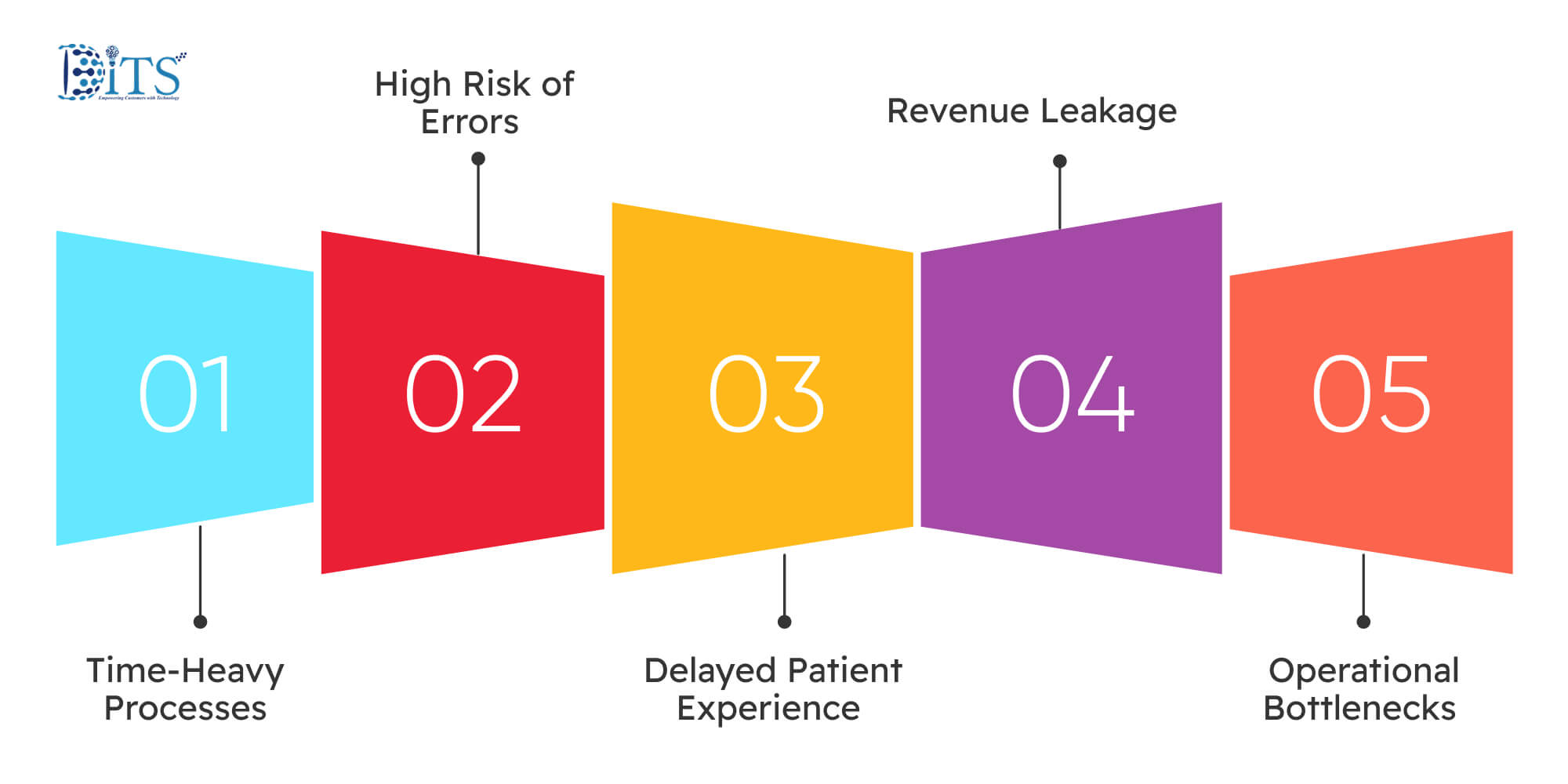
Manual verification may seem manageable at a smaller scale, but once patient volume increases, the cracks start to show.
Time-Heavy Processes
Staff spend 8 to 10 minutes per patient switching between systems, verifying details, and documenting results. Multiply that across hundreds of patients, and productivity drops significantly.
High Risk of Errors
A mistyped policy number or outdated coverage detail can lead to claim denials later. These are small mistakes with expensive consequences.
Delayed Patient Experience
Patients waiting at reception desks or on calls often experience unnecessary delays, which impacts satisfaction and trust.
Revenue Leakage
Incorrect or incomplete verification leads to denied claims, rework cycles, and in some cases, lost revenue.
Operational Bottlenecks
Billing teams depend on accurate verification data. When that data is delayed or flawed, the entire revenue cycle slows down.
One delay trigger another, and before long, the organization is stuck in a reactive cycle, constantly fixing problems instead of preventing them.
Want To Reduce Claim Delays And Administrative Work?
Streamline insurance verification workflows with automated processes that improve accuracy, reduce errors, and accelerate patient onboarding.
Choosing Right Health Insurance Verification Software
Selecting the right system is less about features on paper and more about how well it fits into your operational reality. Many businesses invest in tools that look promising during demos but fail to deliver under real-world pressure or in customization as per business needs. Health insurance software development needs a team of technical experts, designers with a business understanding and vision to delivery the solution as per business needs.
Integration Capability
The software should connect seamlessly with your existing systems, whether it is EHR, billing, or a healthcare claim automation platform. Disconnected systems create more problems than they solve.
Scalability
What works for 50 patients a day may not work for 500. The platform must handle growth without performance drops.
Ease Of Use
If your team needs weeks of training to use it, adoption will be slow. A clean, intuitive interface makes a significant difference in day-to-day operations.
Customization Options
Every organization has its own workflows. The ability to tailor verification rules and reporting ensures the system aligns with your processes, not the other way around.
Compliance And Security
With sensitive patient data involved, strong security protocols and regulatory compliance are essential, not optional.
The primary focus of most decision-makers centers on immediate expenses. The actual expense emerges from operational inefficiencies together with mistakes and the resulting decline in revenue which accumulates throughout the period. The correct solution requires only a modestly increased investment which results in improved financial returns within a few months.
At DITS, we take a long-term view. Our AI software development together with our intelligent system design creates verification platforms which provide both current efficiency and future-proofing capabilities. AI operates throughout all development stages testing processes and custom development activities to deliver stable operation and ongoing system enhancements.
Future of Insurance Verification in Healthcare
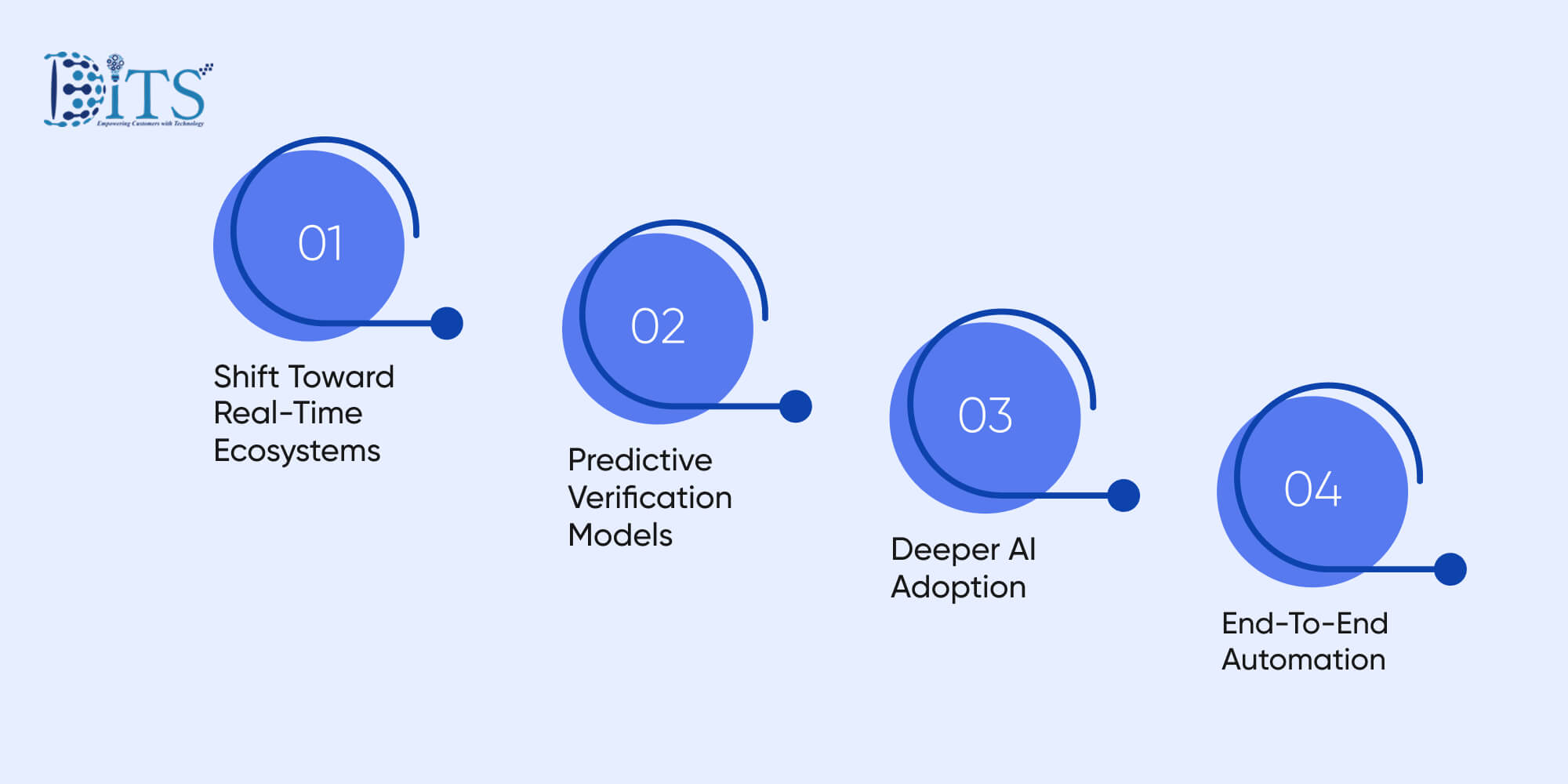
Healthcare operations are steadily moving toward real-time, data-driven decision-making. Insurance verification is no exception. What was once a reactive, manual task is now evolving into a proactive, intelligent process.
Shift Toward Real-Time Ecosystems
Verification will no longer be a separate step. It will become an embedded function within patient intake, scheduling, and billing workflows, powered by real-time insurance eligibility verification software.
Predictive Verification Models
Systems will begin identifying potential coverage issues before they occur. For example, flagging policy limitations or authorization requirements even before appointment confirmation.
Deeper AI Adoption
With growing use of AI in healthcare, verification systems will learn from historical data, improving accuracy and reducing exceptions over time.
End-To-End Automation
From eligibility checks to claim submission, the entire process will become more connected. This reduces manual intervention and ensures consistency across the revenue cycle.
Why Choose DITS For Health Insurance Verification Software
Choosing a technology partner is not just about software delivery. It is about finding a team that understands healthcare operations, revenue pressures, and the need for precision at every step.
At DITS, the focus goes beyond building systems. It is about creating solutions that align with real business challenges and deliver measurable outcomes.
Deep Domain Understanding
DITS brings strong experience in healthcare software development, ensuring that every solution is designed with real-world workflows in mind, not just technical assumptions.
AI-Driven Development Approach
We integrate intelligence into every layer of the system. From design to deployment, AI consulting and automation capabilities are embedded to enhance accuracy, reduce manual effort, and improve decision-making.
End-To-End Customization
No two healthcare organizations operate the same way. Our solutions are tailored to specific business requirements, ensuring that verification workflows match operational needs rather than forcing teams to adapt.
Built For Performance and Scalability
Whether handling hundreds or thousands of verifications daily, our systems are designed to perform consistently without compromising speed or reliability.
Quality-First Engineering
AI is not just a feature for us. At DITS, we use AI for development, quality assurance, code maintenance, and continuous optimization, ensuring that the software evolves with your business.
Seamless Integration Capabilities
Our platforms integrate smoothly with existing systems, including billing tools and healthcare claim management software, enabling a connected and efficient workflow.
DITS focuses on reducing verification time, minimizing errors, and improving revenue cycle performance. Clients often experience faster onboarding, fewer claim denials, and better operational control within months of implementation.
Ready To Modernize Medical Insurance Verification Systems?
Develop AI-powered verification platforms that improve workflow efficiency, reduce claim delays, and enhance patient experiences.
Conclusion
Insurance verification may appear to be a routine administrative task, but its impact runs much deeper. It influences patient experience, operational efficiency, and ultimately, financial performance.
When businesses rely on manual processes, delays and errors become part of the system. Over time, these small inefficiencies compound into larger challenges, from denied claims to strained staff productivity.
With the adoption of health insurance verification software, that cycle begins to shift. Processes become faster, data becomes more reliable, and teams operate with greater confidence. The focus moves from fixing issues to preventing them altogether.
Investing in the right verification system is not just about improving one process, but strengthening the entire operational framework.
FAQs
What is health insurance verification software and why is it important?
Health insurance verification software helps healthcare providers confirm a patient’s insurance coverage, benefits, and eligibility before delivering services. It is important because it reduces claim denials, improves billing accuracy, and ensures a smoother patient experience from the very beginning.
How does health insurance verification software improve revenue cycle efficiency?
By automating eligibility checks and reducing manual errors, the software ensures that claims are submitted with accurate information. This leads to faster approvals, fewer rejections, and a more predictable cash flow, which is critical for maintaining financial stability.
Can DITS for health insurance verification software development be customized for different healthcare businesses?
Yes, DITS for health insurance verification software development services are fully customizable. We design solutions based on specific workflows, patient volumes, and operational requirements, ensuring that the system aligns perfectly with your business processes.
How secure is medical insurance verification software?
Modern verification systems are built with strong security protocols, including data encryption and compliance with healthcare regulations. This ensures that sensitive patient and insurance information is protected at all times.
How long does it take to implement a verification system?
Implementation timelines can vary depending on the complexity of the organization and integration requirements. However, most businesses begin to see operational improvements within a few weeks of deployment.
Why should businesses choose DITS for health insurance verification software development?
DITS for health insurance verification software development stands out due to its AI-driven approach, deep healthcare expertise, and focus on long-term scalability. Our solutions are designed to reduce verification time, improve accuracy, and support continuous operational growth.

Nidhi Thakur
With more than 19 years of experience - I represent a team of professionals that specializes in the healthcare and business and workflow automation domains. The team consists of experienced full-stack developers supported by senior system analysts who have developed multiple bespoke applications for Healthcare, Business Automation, Retail, IOT, Ed-tech domains for startups and Enterprise Level clients.
Recent Posts
Explore how intelligent document processing for insurance helps businesses automate document workflows, reduce processing costs, improve accuracy, and strengthen operational efficiency across insurance functions.
Discover how automated medical claims processing reduces delays, manual rework, claim denials, and administrative costs while improving reimbursement speed and operational efficiency.
Learn how to build medical billing software with essential features, integrations, security, and development costs.