Guide to Build Last Mile Delivery Station Tracking Software
Table Of Content
Published Date :
03 Jun 2026
Key Takeaways
- Last mile delivery station tracking software provides real-time visibility into package movement, dispatch operations, driver assignments, and station performance, helping logistics businesses improve operational control.
- Delivery challenges often originate inside delivery stations rather than during transportation, making station-level tracking essential for reducing delays, bottlenecks, and failed deliveries.
- A scalable platform requires key components such as real-time dashboards, mobile applications, cloud infrastructure, GPS and IoT integrations, centralized data processing, and robust API connectivity.
- AI-powered capabilities such as predictive delay alerts, smart dispatch recommendations, automated exception handling, and performance analytics help logistics teams make faster and more informed decisions.
- Successful implementation depends on understanding delivery workflows, planning around supply chain visibility, integrating with existing systems, and designing for long-term scalability and user adoption.
- Businesses that invest in delivery station tracking software gain improved delivery visibility, faster dispatch operations, lower operational costs, stronger customer satisfaction, and data-driven decision-making across their logistics network.
The last mile is becoming an essential competitive area of logistics businesses which determines customer loyalty. Companies that deliver products and e-commerce businesses face extreme challenges to develop their delivery centers into operational hubs that offer complete system visibility and advanced intelligence features.
But, last mile delivery has quietly become the most expensive and unpredictable part of the logistics chain. In fact, studies suggest it can account for nearly 41% of total shipping costs in many supply chains, according to a report by Capgemini. That’s not a small number. It’s the part of logistics chain where delays happen, margins shrink, and customer expectations get tested.
Now layer in global operations, multiple delivery stations, and the rising demand for same-day fulfillment. This is where things get complicated quickly.
That is why businesses are turning toward last mile delivery software that goes beyond basic tracking and monitors what’s happening at each delivery station in real time.
This guide breaks down how to build such a system, not from a theoretical lens, but from a practical, business-first perspective. What to build, how to approach it, and where most companies get it wrong.
What is Last Mile Delivery Station Tracking Software?
Last mile delivery station tracking software is designed to give businesses visibility into what’s happening inside delivery hubs, not just on the road. It connects dispatch teams, drivers, and station managers into one system where every movement, delay, or exception gets recorded and acted upon.
The urban delivery station processes ten thousand parcels each day as its primary operation. The facility receives packages in large quantities which staff members then sort and distribute to delivery routes before they make their scheduled dispatches.
The absence of an organized system causes minor operational problems to accumulate until they reach significant levels. The delivery schedule begins to slip when a package gets lost and a shipment experiences a hold-up.
This is where advanced systems step in.
Key Role in Operations
Instead of relying on scattered tools, businesses get a centralized platform that manages:
- Station-level package flow, from arrival to dispatch
- Real-time updates on vehicle departures and route assignments
- Staff coordination across shifts and locations
- Exception handling when something goes off track
It not only tracks parcels, but manages the entire station ecosystem.
Basic Tracking Vs Station-Level Intelligence
There’s a noticeable difference between standard tools and advanced systems. Many businesses start with simple solutions and quickly outgrow them.
| Capability | Basic Tracking Tools | Station Tracking Software |
| Visibility | Limited to shipment status | Full station-level operations |
| Data Usage | Historical or delayed | Real-time, actionable insights |
| Control | Minimal | Centralized operational control |
| Scalability | Works for small operations | Designed for multi-location global networks |
| Decision Support | Reactive | Predictive and proactive |
The shift is subtle but important especially for transportation and logistics companies. Businesses that were reacting to delivery issues can now prevent them using last mile delivery tracking software.
And once that shift happens, teams begin to rely more on real time data and make the right decisions faster.
Want Better Visibility Across Last Mile Deliveries?
Create scalable tracking systems that provide real-time updates, fleet coordination, and accurate delivery monitoring for logistics businesses.
Why Global Businesses Need Last Mile Delivery Station Tracking Systems
Most delivery challenges don’t start on the road. They begin earlier, inside the station where operations are supposed to be tightly controlled. That’s where things begin to slip quietly.
A regional ecommerce company once scaled from 3 to 18 delivery hubs in under a year. On paper, growth looked strong. In reality, dispatch delays increased by 27%, and customer complaints doubled. The issue wasn’t fleet size or driver availability. It was lack of visibility inside stations.
This is a common pattern.
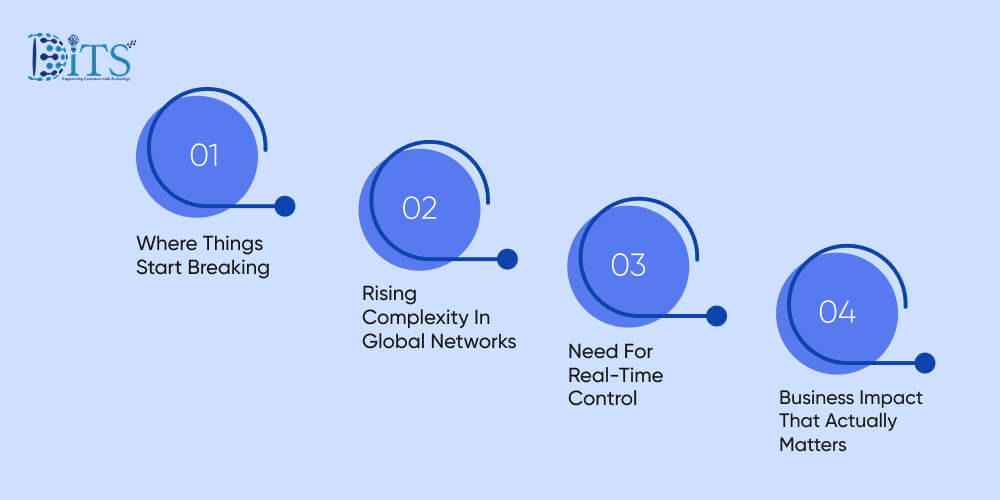
Where Things Start Breaking
As delivery volumes grow, operations become layered and harder to manage:
- Packages arrive from multiple sources at uneven intervals
- Sorting teams work in shifts with varying efficiency levels
- Dispatch windows shrink due to same-day delivery expectations
- Communication gaps between stations and drivers create delays
Without a structured system, teams simply rely on manual coordination, which works fine for some time, but not afterward.
Rising Complexity in Global Networks
Global businesses operate across regions, time zones, and compliance frameworks. A delivery station in Berlin doesn’t behave like one in Toronto or Mumbai. Yet leadership expects uniform performance.
This is where centralized tracking systems becomes essential.
They provide:
- A unified view across all delivery stations
- Real-time updates instead of delayed reports
- Standardized processes without losing local flexibility
And something more subtle. Accountability.
When every action is logged and visible, operational discipline improves without constant oversight.
Need for Real-Time Control
Executives don’t want reports at the end of the day. They want to know what’s happening now.
A delayed dispatch at 2 PM shouldn’t show up as a problem at 6 PM. By then, the damage is already done.
Station tracking systems enable:
- Live monitoring of dispatch performance
- Instant alerts when thresholds are crossed
- Faster decision-making when operations deviate
It shifts operations from reactive to controlled.
Business Impact That Actually Matters
When implemented properly, the results are noticeable, not just operationally but financially:
- Reduced delivery delays and failed attempts
- Lower operational costs due to better resource utilization
- Improved customer satisfaction with accurate delivery timelines
- Better alignment across supply chain management teams
Nobody likes uncertainty in logistics. It creates friction across departments and erodes customer trust.
With the right system in place, that uncertainty starts to fade. Not overnight, but steadily.
Core Components of Last Mile Software Architecture
Building a delivery station tracking system isn’t just about putting a dashboard on top of data. The structure underneath decides whether the system scales smoothly or starts breaking under pressure.
Most businesses realize this a bit late. Everything works fine at 5,000 deliveries a day. At 50,000, cracks begin to show. Slow dashboards, delayed updates, missing data. Not ideal.
A well-planned architecture avoids that.
Frontend Interfaces
This is where users interact with the system. And honestly, if this part feels clunky, adoption suffers no matter how strong the backend is.
Typically, you’ll need:
- Web dashboards for operations managers to monitor station activity
- Mobile applications for drivers and station staff handling real-time tasks
- Role-based views so each user sees only what they need
The goal is simple. Reduce friction. If a station manager has to click through five screens to check dispatch status, something’s off.
Backend System and APIs
This is the engine room. Everything flows through here.
A strong backend handles:
- Real-time data processing from multiple stations
- Communication between different modules like tracking, dispatch, and alerts
- API integrations with external systems and devices
This is also where AI software development practices can quietly improve performance. At DITS, AI is used not just for features but for optimizing backend workflows, maintaining code quality, and enabling smarter customization based on business needs.
Integration With GPS and IoT Devices
Tracking doesn’t work in isolation. It depends heavily on data coming from devices.
Key integrations include:
- GPS systems for vehicle location tracking
- Barcode or RFID scanners for package movement
- Sensors from an IoT tracking and GPS based platform to monitor real-time station activity
Without reliable data input, even the best-designed system becomes guesswork.
Cloud Infrastructure for Scalability
Global operations demand flexibility. You can’t afford downtime when delivery volumes spike during peak seasons.
Cloud infrastructure enables:
- On-demand scaling based on delivery load
- High availability across regions
- Faster deployment of updates and fixes
It also supports distributed operations, which is critical for businesses managing multiple delivery stations worldwide.
Data Storage and Processing Systems
This is where long-term value builds.
The system needs to store and process:
- Historical delivery data
- Station performance metrics
- Route efficiency trends
With the right setup, this data doesn’t just sit idle. It feeds into decision-making.
Over time, businesses begin to see patterns. Bottlenecks that repeat. Stations that underperform. Routes that consistently delay dispatch.
And once those patterns become visible, improvement becomes intentional rather than reactive.
Step-By-Step Process To Build Last Mile Delivery Software
Building delivery station tracking software should start with a clear view of how parcels, drivers, dispatch managers, and customers interact every day.
A strong development approach connects logistics knowledge, automation, cloud systems, and business workflows. That’s where DITS can align software development with real operating needs, not just technical requirements.
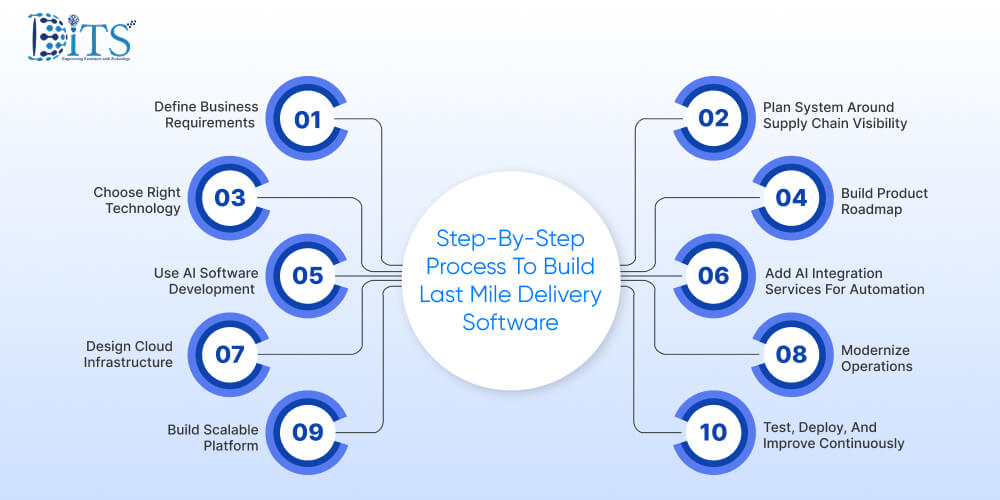
Define Business Requirements
The first step is to understand where the delivery operation is losing time, money, or control. Some businesses struggle with delayed dispatch, while others have poor visibility across stations. Some cannot track driver performance, while many rely on manual updates between warehouse, dispatch, and customer support teams.
At this stage, DITS works with businesses to map real delivery workflows and identify system gaps across stations, routes, packages, and user roles. This helps define what the software must actually solve.
Key areas to define include:
- Number of delivery stations and regional hubs
- User roles such as station managers, drivers, warehouse teams, dispatch teams, and admin users
- Package movement from arrival to final dispatch
- KPIs such as delivery success rate, dispatch time, failed attempts, route efficiency, and parcel dwell time
- Existing gaps in current transport and logistics software systems
This step gives the project a practical foundation. Without it, companies often build a polished platform that doesn’t match ground-level delivery realities.
Plan System Around Supply Chain Visibility
Delivery station tracking does not work in isolation. It has to connect with the larger logistics chain, including order management, warehouse operations, fleet movement, and customer communication.
DITS aligns the software architecture with supply chain management requirements so businesses can see how delivery station performance affects upstream and downstream operations. For example, if a station receives packages late from a fulfillment center, the system should not simply mark dispatch as delayed. It should help teams understand why the delay happened and what action is needed.
This planning stage usually covers:
- Order flow between warehouse and delivery station
- Real-time package status updates
- Integration with inventory and fulfillment systems
- Station-level bottleneck identification
- Reporting for regional and global operations teams
For executives, this level of visibility is valuable because it turns delivery tracking into business intelligence. Not just “where is the parcel?” but “where is the process slowing down?”
Choose Right Technology
A delivery tracking system for global businesses must be stable, secure, and ready to scale. A small pilot may run smoothly with limited users, but enterprise operations need stronger architecture from day one.
With enterprise software development, DITS focuses on building systems that can support large delivery volumes, multiple locations, and long-term growth.
The technology stack may include:
- Web dashboards for operations and leadership teams
- Mobile apps for drivers and station staff
- Backend systems for real-time data processing
- APIs for logistics, warehouse, ERP, CRM, and customer systems
- Databases designed for high-volume tracking data
- Secure authentication and access control
The software should be able to handle peak season traffic, multi-country expansion, or complex integrations, the cost comes back later.
Build Product Roadmap
Every business does not need every feature on day one. In fact, trying to build everything at once can slow the project and inflate costs.
Through product engineering services, DITS helps businesses plan the software as a product, not just a one-time IT project. The system can begin with core modules and later expand with automation, analytics, AI, and customer-facing capabilities.
A practical roadmap may look like this:
- Phase 1: Station dashboard, package tracking, dispatch monitoring
- Phase 2: Driver app, route assignment, alerts, exception handling
- Phase 3: Analytics, performance reports, predictive insights
- Phase 4: Advanced automation, AI-based recommendations, multi-region scaling
This phased approach keeps development focused. It also allows businesses to launch faster, collect feedback, and improve the platform based on actual operational use.
Use AI Software Development
Modern delivery software should do more than record data. It should help teams act faster.
With AI software development, DITS can add intelligence into the platform so delivery teams are not stuck manually reviewing every delay, route issue, or station bottleneck. AI can support smarter planning, faster exception detection, and better forecasting.
Useful AI-driven capabilities may include:
- Predictive delay alerts based on route, traffic, station load, and past patterns
- Smart dispatch recommendations
- Package prioritization based on delivery urgency
- Performance insights for stations and drivers
- Automated anomaly detection when tracking data looks unusual
At DITS, AI is also used during software development, quality assurance, code quality management, and customization. That means AI supports both the product being built and the engineering process behind it.
Add AI Integration Services For Automation
Many businesses already use different tools for fleet management, warehouse operations, order processing, and customer updates. The real challenge is making these systems work together intelligently.
DITS provides AI integration services to connect AI capabilities with existing platforms and workflows. This helps businesses automate repetitive decisions and reduce manual coordination.
For example, the system can automatically:
- Flag routes likely to miss delivery windows
- Notify station managers when parcel dwell time crosses a limit
- Suggest driver reassignment during peak load
- Trigger customer updates when delivery status changes
- Identify stations that repeatedly cause delays
And guess what? Small automations like these often create large operational savings because they reduce decision lag. In last mile delivery, minutes matter.
Design Cloud Infrastructure
Delivery tracking software generates continuous data from stations, scanners, vehicles, drivers, and customer systems. If infrastructure is weak, dashboards slow down, alerts arrive late, and teams lose trust in the platform.
With cloud computing services, DITS builds scalable cloud environments that support real-time performance, high availability, and regional expansion.
Cloud planning should cover:
- Auto-scaling for peak delivery seasons
- Secure cloud hosting across regions
- Backup and disaster recovery
- Real-time data processing
- Monitoring and performance optimization
This is especially useful for global businesses that manage delivery operations across countries. A well-planned cloud setup allows the software to grow without forcing a complete rebuild later.
Modernize Operations
A delivery station tracking platform is not only a software project. It changes how teams work.
Through digital transformation services, DITS helps businesses move from manual, fragmented processes to connected digital workflows. That includes replacing spreadsheets, reducing phone-based coordination, improving reporting accuracy, and giving leadership a live view of delivery operations.
This step may involve:
- Digitizing station check-in and package scans
- Automating dispatch status updates
- Creating centralized dashboards for regional teams
- Standardizing workflows across delivery stations
- Training teams to adopt new digital processes
This part matters more than many companies expect. Even the best platform can fail if people don’t use it properly.
Build Scalable Platform
Some businesses build delivery tracking software for internal use. Others want to create a commercial platform for logistics clients, ecommerce brands, or regional delivery partners.
For that, SaaS product development becomes important.
DITS can help structure the system as a scalable SaaS product with features such as:
- Multi-tenant architecture
- Subscription-based access
- Role-based permissions
- Customer-specific dashboards
- Usage analytics
- Secure data separation
- Continuous feature upgrades
This is useful for logistics providers that want to offer tracking capabilities as part of their service package. It can also help enterprise businesses standardize delivery station operations across multiple brands, regions, or subsidiaries.
Test, Deploy, and Improve Continuously
Once the core platform is built, testing becomes critical. Delivery tracking software deals with live movement, real-time updates, and operational decisions, so even small errors can create confusion.
DITS focuses on testing areas such as:
- Functional accuracy across modules
- GPS and scanner data reliability
- Dashboard speed during high-volume usage
- API performance
- Security and user access
- Mobile app usability for drivers and station staff
- Load testing for peak delivery periods
After deployment, the system should be monitored and improved continuously. Delivery patterns change. Business rules change. Customer expectations change too.
That’s why a last mile tracking platform should be treated as a living product, not a finished file sitting on a server.
Looking To Build Efficient Last Mile Tracking Software?
Develop real-time delivery tracking platforms that improve shipment visibility, operational control, and customer satisfaction across logistics operations.
Cost Factors In Developing Last Mile Delivery Tracking Software
Cost is usually the first serious question that comes up. No business wants to invest in a system without knowing where the money is going and what returns to expect.
What Drives The Cost
A few key factors influence overall investment:
- Feature complexity: A simple tracking system costs far less than a platform that handles dispatch logic, station inventory, analytics, and automation. Adding predictive insights or AI-based features increases both development time and cost.
- Integration requirements: Connecting with warehouse systems, fleet tools, CRM platforms, and customer communication systems adds layers of complexity.
- Infrastructure and cloud setup: A scalable system running across multiple regions needs a strong cloud foundation. Costs depend on data volume, real-time processing needs, and uptime expectations.
- User base and geography: Supporting 50 users in one region is very different from supporting 5,000 users across continents. More users, more locations, more load.
- Customization and workflows: Off-the-shelf logic rarely works for global delivery operations. Tailored workflows, regional rules, and compliance needs increase development effort.
Estimated Cost Range
To give a rough idea for global businesses:
| Software Scope | Estimated Cost Range |
| Basic tracking and dashboard | $30,000 – $60,000 |
| Mid-level system with dispatch and station tracking | $60,000 – $120,000 |
| Advanced platform with AI, integrations, and analytics | $120,000 – $250,000+ |
These numbers can shift based on business size and requirements, but they provide a working benchmark. For businesses trying to estimate the cost of last mile delivery tracking, the smarter approach is to look beyond development and include long-term operational savings.
Challenges In Building Last Mile Tracking Software
On paper, building a delivery tracking system looks straightforward. But once development begins, real-world complexity starts creeping in.
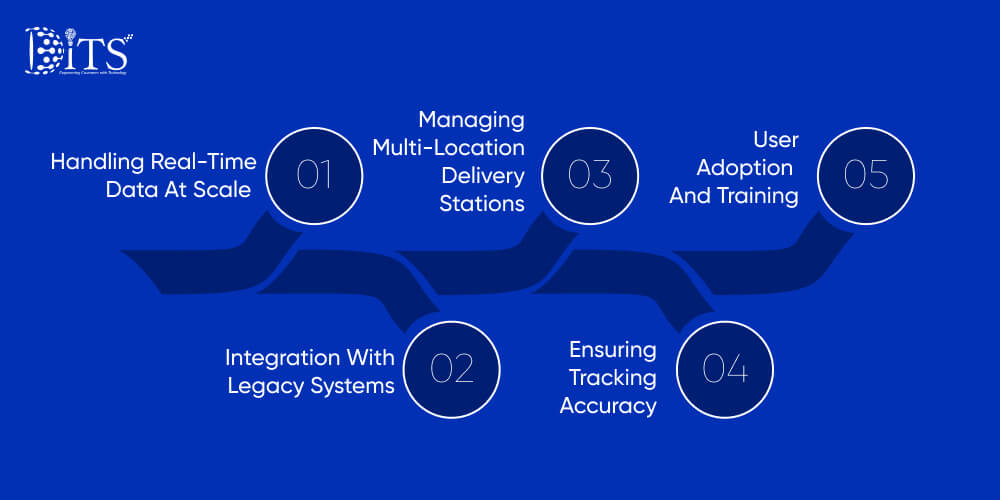
Handling Real-Time Data At Scale
Delivery stations generate continuous data. Every scan, route update, dispatch event, and status change flows into the system.
At small volumes, this is manageable. At scale, things get tricky.
- Thousands of packages being scanned every hour
- Multiple stations pushing updates at the same time
- Drivers moving across routes with live GPS feeds
If the system isn’t designed for high-frequency data, delays start appearing in dashboards.
Integration With Legacy Systems
Many businesses already use different tools for warehouse management, order processing, and fleet tracking. These systems often don’t communicate well with each other.
Bringing them together into one unified platform can be complex:
- Different data formats and standards
- Outdated APIs or no APIs at all
- Inconsistent data across systems
This is where many last mile delivery software companies struggle. Integration is not just technical. It’s also about aligning workflows across departments that have operated independently for years.
Managing Multi-Location Delivery Stations
A single delivery station is manageable. Ten stations require coordination. Fifty stations introduce variability.
Each location may have:
- Different staffing patterns
- Different parcel volumes
- Different operational constraints
Standardizing processes while allowing flexibility becomes a balancing act. Too rigid, and local teams struggle. Too loose, and performance becomes inconsistent.
Ensuring Tracking Accuracy
Even a small gap in tracking accuracy can create confusion.
- Missed scans at stations
- Incorrect package assignments
- GPS signal inconsistencies
- Delayed data sync from devices
Building a system that minimizes such errors requires strong validation logic, reliable device integration, and continuous monitoring.
User Adoption and Training
This is often underestimated.
You can build one of the best last mile delivery software platforms, but if station staff and drivers don’t use it properly, the system loses value.
Common challenges include:
- Resistance to replacing manual processes
- Learning curve for new tools
- Inconsistent usage across stations
The solution is designing software that feels natural to use under pressure.
Because at a busy delivery station, nobody has time to figure out complicated systems and that’s the reality many businesses discover a little too late.
Searching For Reliable Logistics Software Development Partner Today?
Work with experienced logistics technology experts to build secure and scalable last mile delivery tracking solutions tailored for growth.
Benefits of Implementing Delivery Station Tracking Software
When delivery station tracking is done right, the impact shows up quickly.
Improved Delivery Visibility and Control
With a centralized system in place, businesses gain a clear view of what’s happening across all delivery stations at any given moment.
- Live tracking of parcel movement within stations
- Real-time dispatch status across locations
- Clear identification of delays and bottlenecks
Instead of waiting for end-of-day reports, teams can act while operations are still in motion. That shift alone changes how decisions are made.
Faster and More Optimized Dispatch Operations
Dispatch is where time is either saved or lost.
With structured workflows and real-time data:
- Route assignments become faster and more accurate
- Drivers spend less time waiting at stations
- Packages move through sorting and dispatch without unnecessary delays
Over time, even small time savings per route add up. Minutes per dispatch turn into hours saved across the network.
Reduced Delays and Operational Inefficiencies
Most delays are not caused by distance. They are caused by poor coordination.
With better tracking:
- Missed scans are flagged instantly
- Delayed departures trigger alerts
- Station-level inefficiencies become visible
This allows teams to fix issues early instead of reacting after customers complain.
Better Customer Experience With Real-Time Updates
Customers don’t just want delivery. They want certainty.
With a well-implemented system:
- Accurate delivery timelines are shared
- Real-time updates reduce uncertainty
- Fewer failed deliveries improve trust
For businesses using ecommerce last mile delivery software, this becomes even more critical. A delayed update can lead to support calls, cancellations, or negative reviews.
Data-Driven Decision Making
Perhaps the most underrated benefit.
Over time, the system builds a data layer that helps leadership make better decisions:
- Which stations consistently underperform
- Which routes cause delays
- Which time windows create bottlenecks
- Where additional resources are needed
This connects directly with broader supply chain management goals. Delivery is no longer treated as an isolated function. It becomes a measurable, improvable part of the entire operation.
And once decisions are backed by data instead of assumptions, improvements become consistent. Not occasional.
Why Choose DITS For Last Mile Delivery Tracking Software?
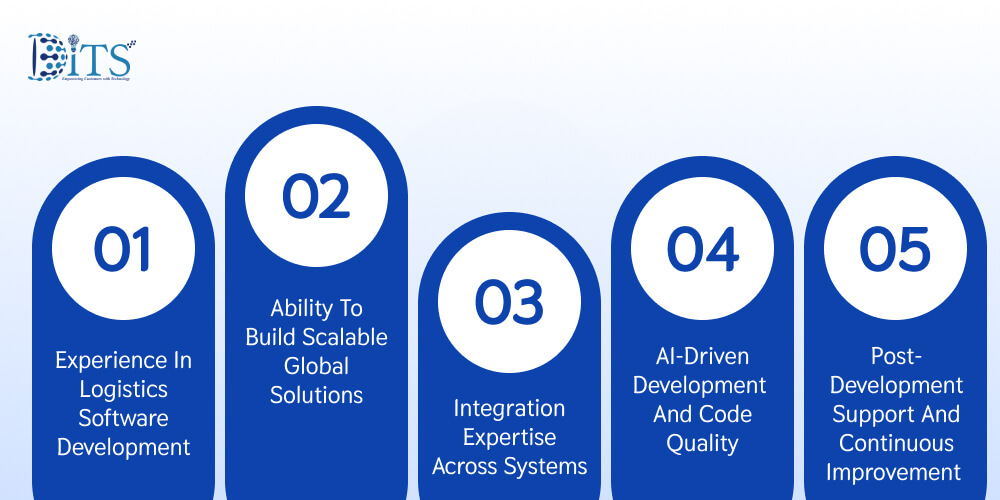
Choosing a development partner is not just about technical capability. It’s about whether the team understands how delivery operations actually function when volumes are high, timelines are tight, and expectations are unforgiving.
That’s where the difference begins.
Experience in Logistics Software Development
DITS brings hands-on experience in building transport and logistics software that aligns with real-world delivery environments. This means the focus is not only on building features, but on solving operational challenges such as dispatch delays, station congestion, and tracking gaps.
Instead of generic solutions, the approach is tailored to how your delivery network actually runs.
Ability To Build Scalable Global Solutions
Global businesses need systems that don’t slow down as they expand. Whether it’s adding new delivery stations, entering new regions, or handling peak season volumes, scalability becomes critical.
DITS builds platforms that:
- Handle high-volume tracking data without performance drops
- Support multi-location operations across regions
- Scale infrastructure based on demand
This ensures the system grows with the business, not against it.
Integration Expertise Across Systems
Most delivery ecosystems are a mix of tools. Warehouse systems, fleet tracking, order management, and customer platforms all need to work together.
DITS focuses on seamless integration so that data flows smoothly between systems. This includes connecting with existing platforms, enabling real-time updates, and reducing manual coordination between teams.
And this is where AI integration services add another layer. Systems don’t just connect, they start working smarter together, automating decisions and reducing delays.
AI-Driven Development and Code Quality
At DITS, AI is not treated as an add-on feature. It is part of the development process itself.
AI is used for:
- Improving software development speed and accuracy
- Enhancing quality assurance processes
- Maintaining code quality and reducing defects
- Enabling deeper customization based on business needs
This ensures the final product is not only functional but reliable and adaptable.
Post-Development Support and Continuous Improvement
Delivery operations don’t stay static. New challenges emerge, volumes change, and customer expectations evolve.
DITS provides ongoing support to:
- Monitor system performance
- Introduce improvements based on usage data
- Scale features as business needs grow
- Ensure the platform remains aligned with operational goals
Because in reality, launching the software is just the beginning. What matters is how it performs over time.
Planning To Modernize Delivery Operations With Technology?
Implement advanced tracking platforms with automation, analytics, and real-time monitoring to improve delivery performance and customer experience.
Conclusion
Last mile delivery has become one of the most critical and complex parts of modern logistics. It directly impacts cost, customer satisfaction, and overall business performance.
Building the right tracking system is not about adding more tools. It’s about creating visibility where it didn’t exist, bringing structure to fragmented processes, and enabling faster, more informed decisions across delivery stations.
With the right approach, businesses move from reacting to delivery issues to preventing them. From managing chaos to running controlled, predictable operations.
And in a space where customer expectations continue to rise, that shift is not optional anymore. It’s what separates businesses that scale smoothly from those that struggle to keep up.
FAQs
1. What is last mile delivery station tracking software?
Last mile delivery station tracking software helps businesses monitor what happens inside delivery hubs before packages move out for final delivery. It tracks parcel movement, dispatch status, driver assignments, delays, exceptions, and station-level performance in real time. This gives logistics teams better control over operations instead of relying on manual updates or delayed reports.
2. Why do logistics businesses need delivery station tracking software?
Logistics businesses need delivery station tracking software because many delivery delays start inside the station, not on the road. When parcel sorting, dispatch timing, driver coordination, and package scans are not properly tracked, small issues can quickly turn into missed delivery windows and unhappy customers. A tracking system helps teams identify problems early and act faster.
3. How can DITS last mile delivery tracking software development services help logistics companies?
DITS last mile delivery tracking software development services can help logistics companies build custom platforms for station tracking, dispatch monitoring, route visibility, package movement, driver coordination, alerts, and analytics. Instead of using a generic tool, businesses can get software designed around their actual delivery workflows, station structure, user roles, and operational goals.
4. What are the main benefits of delivery station tracking software?
The main benefits include better delivery visibility, faster dispatch operations, fewer delays, improved customer updates, reduced manual coordination, better resource utilization, and stronger decision-making. Over time, the system also helps leadership understand which stations, routes, or processes are causing repeated bottlenecks.
5. How much does it cost to build last mile delivery tracking software?
The cost depends on features, integrations, user roles, cloud infrastructure, AI capabilities, and the number of delivery stations. A basic tracking and dashboard system may cost less, while an advanced platform with AI, analytics, dispatch automation, and multi-region support requires a higher investment. The blog estimates that advanced platforms can go beyond $120,000 depending on business requirements.

Dinesh Thakur
21+ years of IT software development experience in different domains like Business Automation, Healthcare, Retail, Workflow automation, Transportation and logistics, Compliance, Risk Mitigation, POS, etc. Hands-on experience in dealing with overseas clients and providing them with an apt solution to their business needs.
Recent Posts
Explore how intelligent document processing for insurance helps businesses automate document workflows, reduce processing costs, improve accuracy, and strengthen operational efficiency across insurance functions.
Discover how automated medical claims processing reduces delays, manual rework, claim denials, and administrative costs while improving reimbursement speed and operational efficiency.
Learn how to build medical billing software with essential features, integrations, security, and development costs.