25+ years of IT software development experience in different domains like Business Automation, Healthcare, Retail, Workflow automation, Transportation and logistics, Compliance, Risk Mitigation, POS, etc. Hands-on experience in dealing with overseas clients and providing them with an apt solution to their business needs.
Modern supply chains often face limited shipment visibility, delayed inventory updates, manual monitoring, disconnected systems, and slow responses to disruptions. These gaps can increase operating costs, affect service levels, and make it harder for teams to make timely, informed decisions.
IoT allows solving these problems by ensuring the communication of vehicles, tools, inventory, and other physical resources with digital structures that collect and transmit operating data. However, the effectiveness of utilizing IoT technologies depends on the scope of their use, the quality of integration of IoT devices with existing ERP, WMS, TMS, and other legacy systems, and issues of their compatibility for achieving business objectives.
Role of IoT in Supply Chain Management
IoT enables supply chain professionals to move away from their standard reactive operations. By establishing the connection between physical processes and enterprises’ systems, organizations gain practical operational information allowing them to increase control, decrease unnecessary delays, and increase efficiency of resource management in logistics and fulfillment processes.
Key areas of value include:
Quick resolution of exceptions through early identification of problems.
Operational planning with greater accuracy based on real-time data on availability, mobility, and capacity of assets.
Improved inventory control because of better tracking of inventory items during storage, transit, and restocking processes.
Reduced operational risks due to continuous tracking of hazardous materials, the condition of equipment, and other critical assets.
Enhanced coordination between operations, logistics, procurement, and services functions through access to common data sources.
Increased scalability due to greater standardization of monitoring and controls.
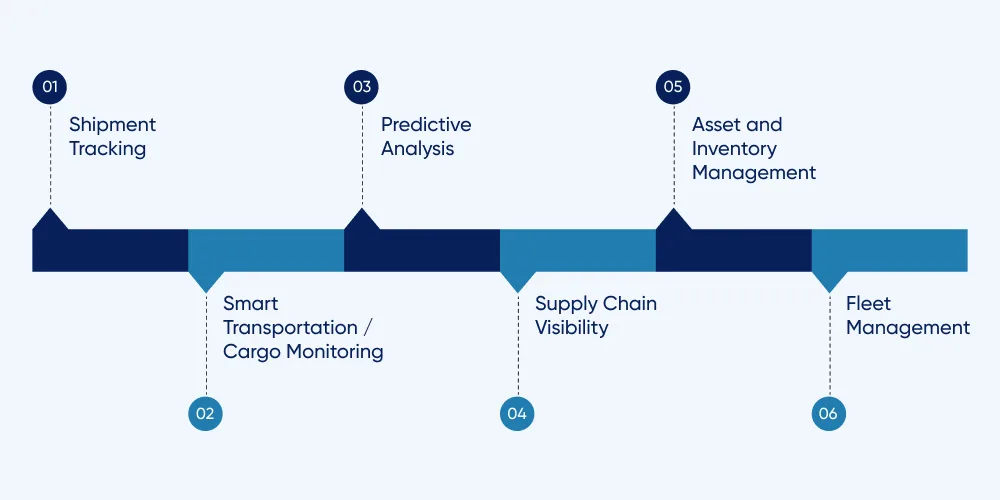
Applications of IoT in Supply Chain Management
IoT aids supply chain teams in achieving visibility, responsiveness, and control in their daily operations. Integrated connected data gives rise to quicker decision-making processes, optimized utilization of resources, reduced operational risks and improved execution.
Shipment Tracking and Cargo Monitoring
Incomplete visibility of the shipping process can make it difficult to discover any possible delays, routing changes, cargo damages, etc. The use of IoT devices such as GPS trackers and condition monitoring devices will allow collecting real-time data concerning the shipment's location and status, thus making it easier to intervene and decrease the risk of loss or damage.
Smart Transportation Facilities
Lack of visibility of traffic conditions, vehicle movement, and shipment progress can result in an increased transit time and fuel expenses. By installing IoT sensors in vehicles, containers, and other transportation assets, logistics will be able to gather live data regarding the operation, thus adjusting the route and transport planning.
Fleet Management
If logistics companies are not able to get enough information about vehicle availability and usage, they will find it difficult to allocate their assets properly and utilize all their capacities. IoT fleet monitoring will allow tracking real-time vehicle location and usage, making it easier for logistics teams to optimize the vehicle's assignment and increase its capacity.
Fleet Maintenance Monitoring
Unpredictable failure of vehicles and equipment may cause interruptions in deliveries and raise maintenance costs. IoT sensors constantly monitor several parameters, including engine performance, tire pressure, fuel efficiency, and the state of the equipment itself. Early detection of any abnormality allows maintenance teams to take necessary measures before the failure occurs.
Predictive Analytics
Ineffective reactive planning makes it more difficult to predict changes in demand, possible issues in equipment operation, or disruptions of any kind. IoT provides a constant data stream, which can be used for the analysis of existing trends and emerging risks. In this way fleet companies could improve their forecasting, resource planning and prevent potential problems from occurring.
Supply Chain Visibility
Disconnected data sources within various participants of the supply chain, including suppliers, warehouses, carriers, and internal databases, make it difficult to track any possible delays and bottlenecks in the operation process. IoT offers constant operational data at different points of the supply chain. This helps organizations to detect inefficiencies, dependencies and coordinate actions between all participants.
Asset and Inventory Management
Poorly organized manual records and disconnected inventory management systems lead to misplaced assets, inventory inaccuracy, or delays in fulfilling orders on time. Using tracking tools based on IoT technology enables the collection of more relevant data on asset location, inventory movement, and conditions in which everything is stored. As a result, an overall improvement in inventory is possible.
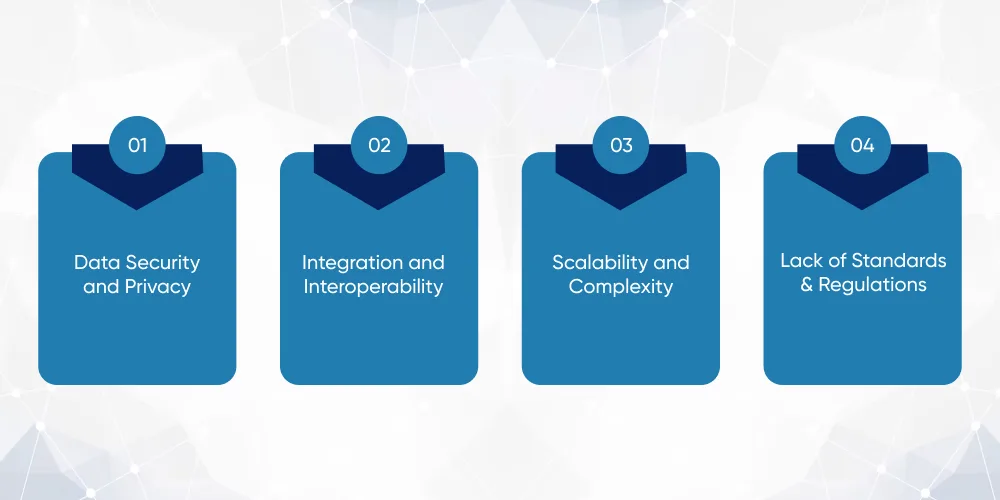
Challenges in Implementing IoT in Supply Chains
IoT helps enhance visibility and operational control but its effectiveness depends on how well it aligns with the prevailing tech ecosystem. Businesses should assess factors such as security, integration readiness, scalability, and compliance before deployment of IoT technology throughout their supply chains.
Data Security and Privacy
Examine the procedure for capturing, retaining, transmitting, and protecting data from the IoT framework.
Set rules for employees and for business associates.
Assess the ability of the current regulations in terms of wider interconnected ecosystem.
Ensure laws and recommendations are observed.
Integration and Compatibility
Establish if the IoT data is compatible with ERP system, WMS, TMS, transport management system, legacy solution, etc.
Know limitations in systems that may cause occurrence of overlapping operations and unrelated information.
Identify the readiness of APIs, their appropriateness for data use and check for other related aspects.
Do not introduce an extra layer without knowing the current situation.
Scalability and Complexity
Evaluate if the system will be able to accommodate additional devices, enterprises, people and data in its operation.
Include power and capacities of the infrastructure, devices management and more in the list of requirements.
Make sure to assess level of complexity with respect to integration.
Calculate all the expenses connected to creation and utilization of the system (not only its initial price).
Specification and Regulation
Identify the regional and industry-based requirements for connected devices and data handling.
Analyze the requirements needed for the security of the device, tracking, usage and storage of the data, and the reporting process.
Incorporate consideration for compliance from the start of the technology work.
Establish whether the existing systems are adequate to support the auditing and reporting requirements.
Build a More Connected Supply Chain
Identify gaps in shipment tracking, inventory visibility, and operational data. Explore how IoT integration can improve coordination and supply chain control.
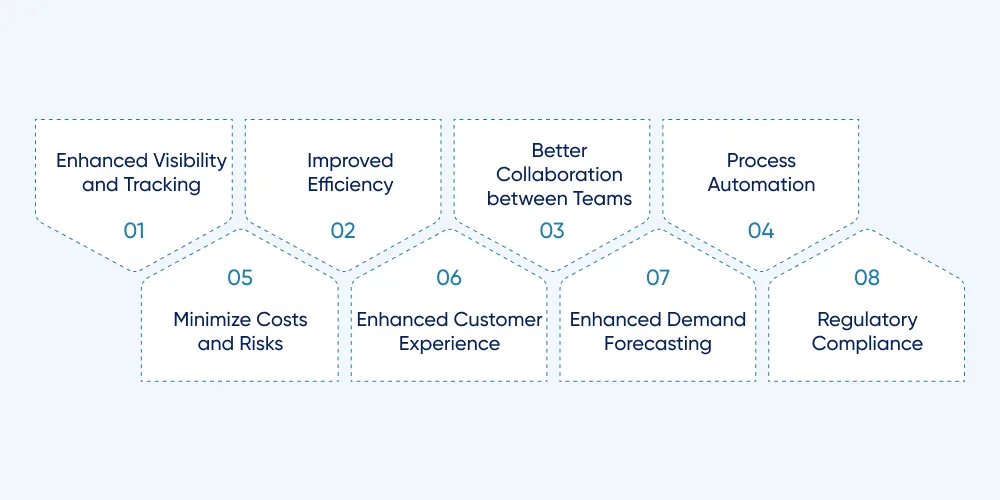
IoT aids supply chain teams in achieving visibility, responsiveness, and control in their daily operations. Integrated connected data gives rise to quicker decision-making processes, optimized utilization of resources, reduced operational risks and improved execution.
Enhanced Visibility and Tracking
IoT enables supply chain and logistics companies to have a real-time view of shipments, inventory, vehicles, and important assets in the supply chain. Improved visibility allows for the detection of deviations in the supply chain and better traceability of goods in the supply chain.
Improved Efficiency
The use of real-time operational information decreases the need for manual monitoring making it easy to coordinate transportation, storage, and inventory activities. As a result, this promotes more faster workflow and better utilization of resources while reducing non-productive waiting time in regular operations.
Better Collaboration Between Teams
Sharing operational information improves interaction between suppliers, warehouses, carriers, operations departments, and customer service departments. IoT-based software solutions help break down data silos by providing a single version of precise information across the entire supply chain. It improves teamwork and minimizes the chances of data silos.
Process Automation
Information from the IoT enables automated sending of alerts, updates, and execution of workflows. This eliminates the need for manual checking of the processes, speeds up administrative processes and lets focuses on exceptions.
Minimize Costs and Risks
By improving assets, shipment, equipment, and stock monitoring, organizations can minimize unnecessary travels, downtime, spoilage, loss of assets, and unscheduled maintenance. Additionally, it detects the problems in advance, which affects risk management and operations in a positive way.
Enhanced Customer Experience
Improving accuracy of shipment information and stocks will allow organizations to provide more precise delivery information, minimize uncertainty in execution, and respond faster to the service problems. It can be used to raise reliability and improve the customer experience.
Enhanced Demand Forecasting
The operational data, produced by the Internet of Things, may enhance the forecasting and planning processes with more recent inputs. When combined with analysis, this information will help organizations in recognizing clear demand trends, improving stock management, and aligning more precise resources with existing operating conditions.
Regulatory Compliance
The IoT system may help trace and track the conditions of goods requiring certain handling, storage, or transportation. The IoT technology provides substantial evidence for auditing, report generation, and compliance while giving the teams an opportunity to identify problems before they pose more serious challenges for the organization.
How DITS can Help you Implement IoT in your Business?
Successful adaptation of the IoT begins with knowing the nature of existing gaps in operations, and the extent to which these gaps can be overcome by means of connected technologies. DITS assists businesses in evaluating their current supply chain operations, systems, integration gaps, and issues regarding performance.
Our approach focuses on:
Evaluate supply chain obstacles, operational issues, and performance limits.
Analyze ERP, WMS, TMS, legacy systems, data movements, and integration capability.
Determine the level of integration, application modernization, automation, retaining, replacing, or building.
Choose architecture, operation patterns, connections, and engineering strategies.
Deploy and scale the solution while adapting to further changes in operations and business needs.
Explore our projects to see how DITS helps businesses solve complex operational challenges through the right mix of integration, modernization, automation, and engineering.
Modernize Your Supply Chain Technology
Connect IoT devices with existing ERP, WMS, and TMS platforms through the right integration and modernization strategy to improve operational efficiency.
By employing GPS units and environmental sensors to track position, temperature, humidity, and security in real time, IoT improves package tracking. This improves overall cargo safety and delivery reliability by guaranteeing improved visibility, lowering the chance of damage or loss, and facilitating prompt reactions to disruptions.
Dinesh Thakur
25+ years of IT software development experience in different domains like Business Automation, Healthcare, Retail, Workflow automation, Transportation and logistics, Compliance, Risk Mitigation, POS, etc. Hands-on experience in dealing with overseas clients and providing them with an apt solution to their business needs.