With more than 20 years of experience - I represent a team of professionals that specializes in the healthcare and business and workflow automation domains. The team consists of experienced full-stack developers supported by senior system analysts who have developed multiple bespoke applications for Healthcare, Business Automation, Retail, IOT, Ed-tech domains for startups and Enterprise Level clients
Data mapping in healthcare is the process of linking and matching patient data from different information systems like EHRs (electronic health records) to create unified patient records. Healthcare providers use these records to access accurate patient information across multiple platforms.
Data mapping makes it convenient to translate data between multiple systems in a consistent format. This allows a smooth exchange of information that supports healthcare providers to offer quality care to their patients.
In this blog, we will discuss the importance of data mapping in healthcare, how it helps in data management, decision-making and improved patient care in the industry.
What is Data Mapping?
Data mapping in healthcare is the process of linking data present in one information system to similar data stored in other systems in an ecosystem. This is specifically crucial in projects where multiple systems need to exchange data with each other for communication. The process of includes identification of source and target data, draft a mapping document, define transformation rules and finally execute the map. The integration projects in healthcare organizations often rely on automatic testing to validate information, which in turn minimize errors and improve efficiency.
Why Data Mapping Matters
Data mapping is the process of collecting, analyzing and using the data for patient care and documentation. The technology used for data collection and mapping allows the immediate availability of detailed patient information across systems. The collaborative efforts within a medical system can improve the accuracy of data collection in healthcare.
Good quality and accurate patient data is required to keep up the medical care. Also, patients should have access to information about their health to help manage their condition. The entire clinical care team in clinics and hospitals need access to precise patient data and history to inform their treatment and offer the best possible medical care.
Make Your Healthcare Data Work Smarter, Not Harder!
Tired of messy data slowing you down? Our powerful data management software streamlines healthcare records, making insights clear and accessible.
Data mapping in healthcare industry is important for the success of integration projects. It is important due to multiple external factors and demand within the industry. We need data mapping for smooth communication and coordination between multiple systems. Also, it facilitates precise exchange of data and allows efficient and informed decision-making.
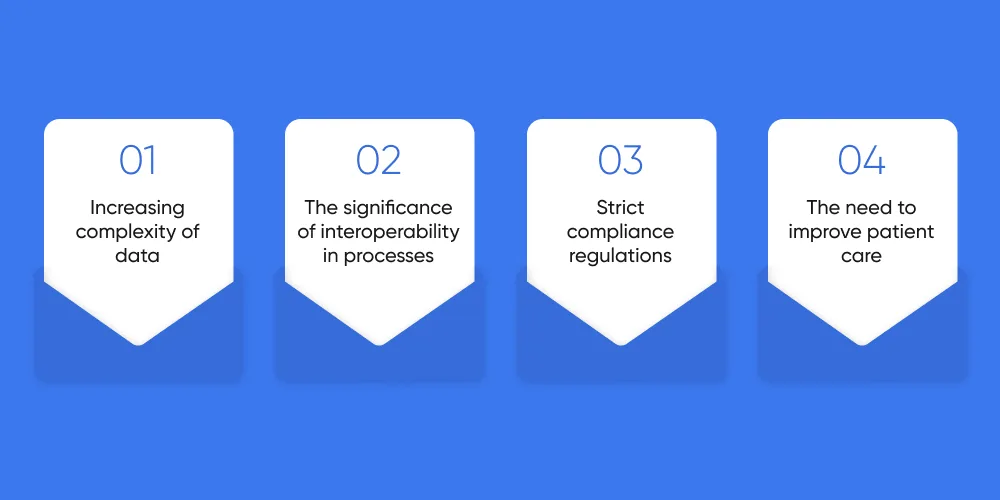
The importance of data mapping in the healthcare industry is rising due to
1. Increasing Complexity of Data
The worldwide adoption of electronic health records have led to significant increase in the health data and its complexity. As the data is spread across a multitude of systems, it becomes challenging to keep it precise, complete and consistent. Healthcare professionals find it difficult to manage large volumes of data. Another challenge is to deliver quality patient care and streamline healthcare operations. To tackle these challenges, data mapping serves as a powerful method to organize data types and establish a standardized data model in healthcare industry.
2. The Significance of Interoperability in Processes
Interoperability is important in healthcare organizations when it comes to data management in small or large hospitals. The sharing of patient data across multiple systems is essential to deliver quality patient care. In order to achieve this, it becomes crucial to implement precise data mapping techniques in healthcare organizations. Mapping and aligning data elements enables healthcare providers to ensure precise and efficient exchange of data, which in turn improve the quality of patient care and streamlined workflows in clinics and hospitals.
3. Strict Compliance Regulations
Health data is governed by strict laws, including GDPR and HIPAA. To comply with these regulations, healthcare companies must give high priority to the secure management of patient data. In the healthcare sector, efficient data mapping is essential to achieve this goal.
Data mapping gives stakeholders more control over the use and circulation of data in the healthcare sector through transparency and secure management of patient data. This in turn promotes better compliance with established regulations.
4. The Need to Improve Patient Care
Effective data mapping is essential to improve patient care. Effective data mapping provides healthcare professionals with a comprehensive view of each patient, thereby promoting better coordination and personalized treatment, and ultimately improving the overall well-being of people.
Applications of Data Mapping in Healthcare
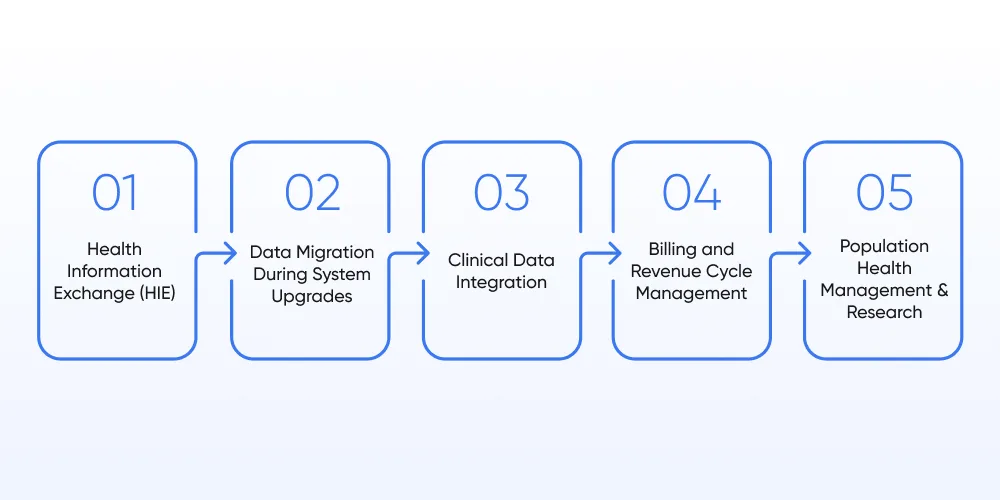
Data mapping plays a vital role in healthcare industry. It ensures accurate, efficient and meaningful exchange of data across systems. Here's how it applies in different areas:
1. Health Information Exchange (HIE)
Data mapping enables secure and standardized data sharing between systems within an organization and between different organizations. This ensures interoperability of patient records, lab results, and treatment histories across various systems in an organization. It enables continuous communication between clinics, hospitals, pharmacies and insurance companies while ultimately improves patient care.
2. Data Migration During System Upgrades
When organizations upgrade their IT infrastructure they need to transfer massive user data including patient records, business data and administrative information from legacy systems to modern platforms. Data mapping improves consistency, integrity and security, minimizing the risk of data loss during migration.
3. Clinical Data Integration
Healthcare providers make use of multiple systems like Electronic health records (EHRs) and lab management systems. Data mapping helps to integrate information from these systems and sources to offer a unified view of patient' medical history. A patient's medical history includes treatment plans, test results and medications prescribed, which helps make informed decisions and improved patient care.
4. Billing and Revenue Cycle Management
Accurate patient data, and insurance details are required for precise medical billing and insurance claims. Data mapping ensures the accurate processing of claims, which in turn reduces denials and delays in claims. This leads to better financial management for healthcare providers.
Healthcare organizations rely on data mapping for aggregation and analyzation of data from different sources. This allows convenient tracking of disease patterns and identifying health trends of patients for public health initiatives. By integrating patient data across populations, service providers in healthcare can improve resource allocation, preventive care and treatment strategies.
Healthcare Data Mapping That Just Gets It Right!
Say goodbye to data silos and hello to seamless integration! Our software ensures your healthcare data speaks the same language across all systems.
Healthcare mapping is changing how the data is being used in the medical organizations. It helps healthcare providers work better, use resources smartly, and make better choices. Here are the primary benefits of data mapping in healthcare organizations.
Better Use of Resources - By mapping resources, hospitals can make sure supplies and staff are available in areas where they’re needed the most. This is really important in areas that don’t have enough help and sufficient supplies, especially during emergencies.
Tracking Public Health - Mapping tools show where disease outbreaks happen. This helps health officials act quickly to limit the spread. They can focus their efforts on the areas hit the hardest.
Targeted Health Programs - With good data, healthcare providers can create programs that fit the needs of different groups. This makes public health efforts more effective.
Emergency Preparedness - Healthcare mapping is crucial for planning for disasters. It helps teams know what to do and where to send help when something bad happens.
Better Patient Care - By looking at health trends in different areas, providers can offer services that match each community's needs.
Smart Decision-Making - When mapping is combined with health data, it gives important insights. Leaders can use this info to improve healthcare services and policies.
Improving Community Health - Healthcare mapping can highlight issues like poverty and access to food. This helps tackle problems and boosts the overall health of communities.
Overall, healthcare mapping is making a big difference. It allows providers to make smarter choices that help individuals and entire communities.
Challenges in Healthcare Data Mapping
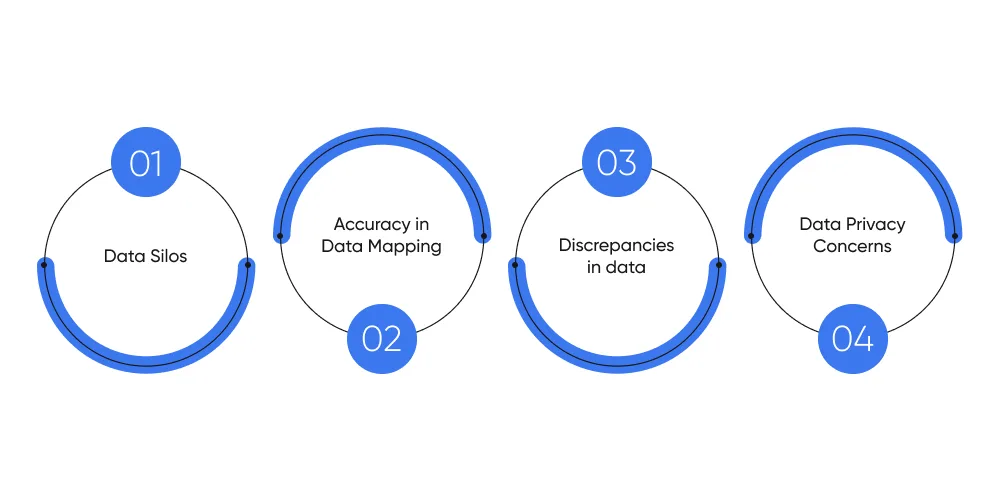
Data mapping presents a formidable challenge, which brings risks such as missed records, misplaced values and complexities in data. These implications of these integrations are profound, which directly influences the quality of patient care. Thus, it is crucial to acknowledge these risks and take relevant preventive measures to address them.
Data Silos: Data silos, which prevent departments from readily sharing the data stored in their systems, are one of the largest problems facing healthcare organizations. As a result, data mapping is extremely challenging. Collaboration is necessary to dismantle these silos, and frequently, this involves adjustments to the way data is kept and accessed across departments.
Accuracy in Data Mapping: Service providers may find it extremely difficult to accurately map legacy data in older healthcare systems. A process mistake can have serious repercussions, including interfering with data integrations, causing delays, and resulting in incorrect patient diagnoses. Making data maps can occasionally lead to errors like leaving out important details. Data mapping is difficult because of the complexity of healthcare data, which may be the cause of such errors. To ensure the success of data integration projects, people working on these projects must be trained to get familiar with data mapping tools and requirements.
Discrepancies in Data: Data discrepancies between source and target systems can pose a serious challenge in mapping of healthcare data. This happens when different data formats or terminologies are used, making data mapping daunting. Managing these discrepancies require using data transition techniques like normalization and data cleaning. Normalization organizes data into a consistent format, allowing seamless integration between different systems, while cleaning involves rectifying inconsistencies and errors for accuracy.
Data Privacy Concerns: Since data in healthcare industry is highly sensitive, it is crucial to ensure its privacy and security while mapping. This is challenging while transferring data between systems. Data privacy and security needs to be maintained to meet healthcare regulatory standards like HIPAA (Health Insurance Portability and Accountability Act).
Best Practices for Effective Data Mapping in Healthcare
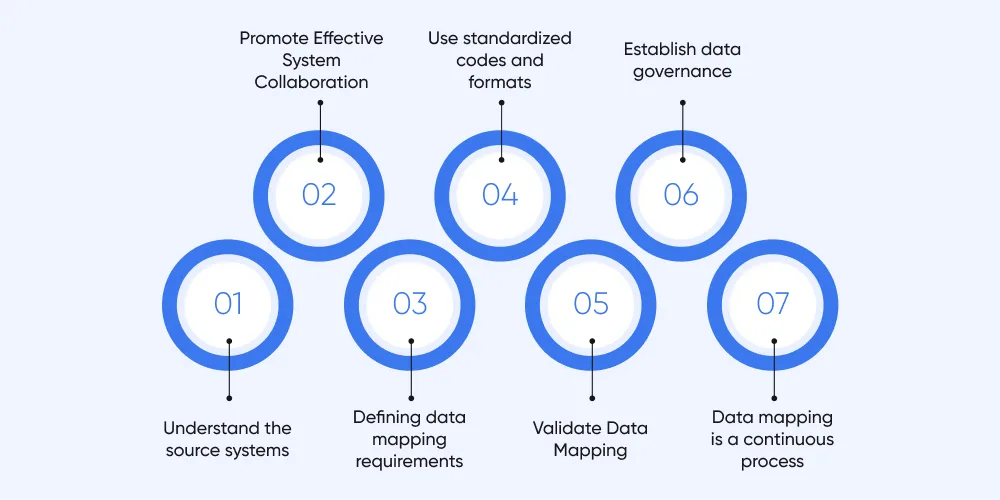
Here are some data mapping best practices to help assure the success of your healthcare integration project.
Understand the Source Systems
The first step in good data mapping is to understand the source systems. This includes identifying each system's data elements, data formats, and meanings. A detailed understanding of the source systems can help to avoid data loss, errors, and inconsistencies during data mapping.
Promote Effective System Collaboration
Healthcare integration projects range from basic point-to-point interfaces to large health information exchange integrations with hundreds of endpoints. Data mapping is critical for ensuring that systems communicate efficiently and effectively.
Defining Data Mapping Requirements
Identifying the data pieces that must be mapped requires an awareness of the healthcare integration project's specific data requirements. This includes determining the sorts of data to be transferred, such as patient demographics, clinical data, and billing information. Healthcare IT systems store and exchange data in a variety of formats, including HL7, FHIR, and DICOM.
Understanding the data pieces' formats is critical for ensuring proper mapping. The mapping rules indicate how the data pieces will be translated from one format to another. This may comprise standards for data translation, conversion, or formatting. For example, if the source system has a different code set than the target system, mapping rules may be required to convert the code set to the correct format.
Use Standardized Codes and Formats
Using standard codes and formats can make data mapping easier and prevent errors. Standard codes and formats guarantee that data is consistent and easy to map across systems. Standard codes and formats used for message exchange include HL7 and X12 EDI.
Validate Data Mapping
After data mapping is completed, validation is required to confirm that the data is appropriately mapped. Validation involves comparing data before and after mapping and ensuring that the data in the destination system matches the data in the source system.
Establish Data Governance
Data governance is required to ensure that data mapping is sustainable over time. Data governance entails establishing data standards, policies, and procedures for managing data within the healthcare institution. Data governance can help to guarantee that data is correct, full, and consistent across all systems. Monitor and update the data mapping.
Data Mapping is a Continuous Process
Monitoring data mapping is vital for detecting mistakes and inconsistencies and making appropriate adjustments. Data mapping should be updated on a regular basis to ensure accuracy and long-term effectiveness of the integration project.
One Platform, Endless Healthcare Data Possibilities!
From patient records to billing, our software maps and organizes your data effortlessly, so you can focus on what truly matters—saving lives!
At DITS we specialize in creating custom healthcare software solutions that help leverage and manage data to improve patient care, and make informed decisions. Our expertise in software development for healthcare industry enables healthcare providers to manage and use data safety and efficiently.
Our dedicated software development team has years of expertise and experience in creating data mapping solutions for healthcare industry. Whether you have a clinic, hospital or offer health insurance provider, we can offer solutions to make data mapping and transition smooth and convenient.
Our data mapping healthcare solutions, enable you to manage massive data across multiple systems and departments to ensure better patient care and develop treatment strategies. So, if you are looking for a data mapping in healthcare solution for your organization, feel free to contact us and know more about our healthcare software development solutions.
Frequently asked questions
Data mapping in healthcare refers to the process of linking data across various systems to ensure consistency and interoperability. As vast amounts of data are generated daily in healthcare organizations, proper data mapping is crucial, without which it would be challenging to transfer or integrate data between systems. Transferring or integrating data without proper mapping can lead to errors, inefficiencies and potential risks to patient care.
Nidhi Thakur
With more than 20 years of experience - I represent a team of professionals that specializes in the healthcare and business and workflow automation domains. The team consists of experienced full-stack developers supported by senior system analysts who have developed multiple bespoke applications for Healthcare, Business Automation, Retail, IOT, Ed-tech domains for startups and Enterprise Level clients