In the dynamic healthcare landscape, managing chronic diseases is a critical challenge. However, with the aging population and chronic diseases becoming more prevalent, the need for an efficient chronic disease management solution has become even more important. Chronic disease management software emerges as a tool to transform care delivery.
In this blog, we'll delve deeper into the importance of CDM software, explore the factors behind its adoption, benefits it brings to both patients and providers, and how DITS can help you build a robust healthcare software solution.
At Ditstek Innovations, we specialize in custom chronic disease management software development. With 7+ years of experience serving global clients with scalable healthcare solutions, we have the expertise to leverage the latest tools & technologies to develop scalable chronic disease management software that addresses your specific requirements.
What is Chronic Disease Management Software?
Chronic disease management is a system designed to assist healthcare providers in maintaining patient self-care routines and helping them avoid complications related to chronic diseases. This proactive approach to healthcare delivery strives to improve overall healthcare outcomes and reduce the cost of care by optimizing care quality through better coordination, early intervention, and prevention.
In summary, chronic disease management software (CDMS) facilitates the systematic tracking of patients’ health data, medications, treatment plans, appointments, and communications within a healthcare setting. By centralizing all these aspects of disease management, a CDMS allows healthcare providers to streamline their workflow, improve outcomes, and enhance the quality of care.
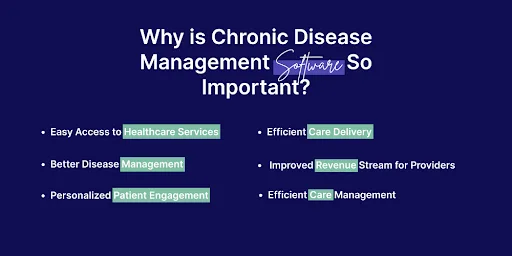
Why is Chronic Disease Management Software So Important?
Chronic disease management software holds enormous potential to revolutionize healthcare and improve patient outcomes. Below are the two key important factors that support the increasing demand for CDM software-
The Rising Prevalence of Chronic Diseases
According to research by the American Hospital Association, around 133 million people (half of the US population) suffer from at least one major chronic illness, such as hypertension, arthritis, heart disease, etc.
As per another study, one in three adults in the US has multiple chronic conditions. Healthcare systems often struggle with a high influx of patients with chronic conditions who need regular check-ups and adjustments in their care plans.
Further, chronic disease management is expensive. 90% of the US's annual healthcare expenses are for people with chronic or mental health conditions.
What is even more worrisome is the fact that chronic diseases are becoming more prevalent. By 2050, there will be approx 142 million people with at least one chronic ailment.
As the number of people with chronic conditions increases, it becomes challenging for healthcare providers to deliver coordinated and quality care. Thus, one key driver behind the growing demand for CDM software is the prevalence of chronic diseases.
The Complex Nature of Chronic Care
Unlike acute illnesses, chronic diseases don't have a clear diagnosis or a defined treatment plan. In the case of chronic diseases, individuals require ongoing care, continuous monitoring, prescription management, counseling, and support in sticking to their specific treatment plans. Also, patients with chronic conditions sometimes require care from multiple providers.
Coordinating all these different aspects of care becomes challenging for healthcare providers who wear many hats at the same time. This often leads to inefficient or fragmented care delivery, which impacts overall outcomes. A CDM software is designed to address these problem areas and streamline chronic disease management.
Empower Your Healthcare Team and Improve Patient Outcomes with Custom Chronic Disease Management Solutions.
Consult Our Experts!
Benefits of Chronic Disease Management Software
Before we discuss the types of CDMS, let's dive into the benefits it offers to a healthcare organization -
Easy Access to Healthcare Services
People using CDMS can easily reach out for healthcare support. Whether they have a simple question or need treatment, accessing help is easy. With everything available online, there's no need to wait for appointments or travel long distances. Communication via smartphones, emails, and EHRs is quick and efficient, making the process smooth for everyone involved.
Efficient Care Delivery
With CDMS, care delivery becomes incredibly efficient. Patients no longer need to make in-person appointments; they can handle everything remotely from anywhere. This remote communication saves time and effort, as smartphones, emails, and EHRs facilitate quick interactions between patients and healthcare providers.
Better Disease Management
CDMS empowers patients to manage their conditions effectively. Patients can easily connect with healthcare providers and access organized health information to prevent complications and maintain control over their health. This improved disease management leads to better results and a higher quality of life for patients.
Improved Revenue Stream for Providers
For healthcare providers, CDMS offers opportunities to streamline operations and increase revenue. By reducing workload and managing patient documentation effectively, providers can optimize their workflow and allocate resources more efficiently. This results in better patient care and higher revenue for healthcare organizations.
Personalized Patient Engagement
CDMS offers personalized engagement strategies tailored to each patient's needs. Through remote monitoring, patient portals, and telehealth consultations, healthcare practitioners can deliver targeted educational resources, support treatment adherence, and provide appointment reminders. This personalized approach supports patient engagement and improves overall healthcare outcomes.
Efficient Care Management
By leveraging EHRs, appointment scheduling, and secure messaging systems, CDMS helps healthcare organizations streamline care management processes. This includes centralized patient data, automation of administrative tasks, and facilitation of communication among healthcare providers. As a result, workflow processes are optimized, productivity is enhanced, and patients with chronic conditions receive high-quality care.
At DITS, our team of proficient healthcare software developers is ready to collaborate with you to develop a CDM solution that aligns with your unique organizational goals and delivers tangible results. Below are the types of chronic disease management solutions we can build for you -
Electronic Health Records (EHRs)
EHRs are like digital folders that keep all your health information in one place. They're much better than old paper records because they collect everything digitally: your medical history, test results, medications, and treatment plans. With EHRs, doctors can see your medical information instantly, allowing you to participate in your healthcare journey.
Patient Self-Care Systems
Patient Self-Care Systems help you take charge of your health & manage your chronic condition with the help of tools like mobile apps, online portals, and wearable devices. You can track your symptoms, remember to take your medications on time, and learn how to live healthier.
Hierarchical Diagnosis and Treatment Systems
These systems help doctors diagnose and treat chronic diseases in a structured way. They use special tools and guidelines to ensure patients get the best care. On the other hand, by following these systems, doctors can ensure everyone gets the same high-quality treatment based on the latest research.
Condition-Specific CDM Program
Condition-Specific CDM Programs are special plans for managing specific chronic diseases, like diabetes or heart disease. They provide a roadmap for doctors to follow, ensuring patients get the right care. By using these models, doctors can organize care better and help people with chronic conditions live healthier lives.
Telehealth & Remote Monitoring Solutions
These solutions are vital for managing chronic conditions as they allow continuous monitoring without patients needing to visit the doctor in person. Telehealth & Remote Monitoring Solutions allows healthcare providers to stay connected with patients, track their progress, and adjust treatments as needed, all from a distance. This convenience improves patient care and helps them better manage their health.
Custom Chronic Disease Management Solution
We are experts in developing a feature-rich CDMS based on your specific business requirements while sticking to the slightest details. This allows you to have better control over the solution's functionality and provides you with higher returns in the long-term.
Ready to Streamline Chronic Disease Management?
Partner with Us to Develop Custom Software Solutions Powered by DITS.
Contact Us Now!
Essential Features of a Chronic Disease Management Software
Here, we outline the most important features of a CDMS that help care providers deliver effective care and allow patients to participate in their care journey actively-
Chronic Disease Self-Management
Patient self-management is crucial for effectively managing chronic conditions. This involves various tools and strategies that empower individuals to participate actively in their care plans.
Self-Assessment Tools: Patients can use tools like pain scales and quality-of-life surveys to assess their health status and track changes over time.
Medication and Symptom Tracking: Logging daily medication intake and symptoms helps patients and healthcare providers monitor the effectiveness of treatments and identify any issues early on.
Vitals Tracking: Through connected devices or manual logging, patients can monitor vital signs such as blood sugar levels or oxygen saturation, providing valuable insights into their health.
Health Habits Monitoring: Tracking physical activity, nutrition, and sleep patterns helps patients make lifestyle changes that can improve their overall health and well-being.
Reminders and Notifications: Automated reminders for medication doses, appointments, and screenings help patients stay on top of their healthcare routine.
Educational Resources: Access to educational materials on chronic conditions, treatment options, and lifestyle recommendations empowers patients to make informed decisions about their health.
Mental Health Support: Tools for mood tracking and stress management support patients dealing with mental health.
Chatbots for Queries: AI-powered chatbots assist patients with tasks like scheduling appointments and refilling prescriptions, enhancing accessibility to care.
Treatment Planning and Care Administration
Effective treatment planning and care administration are essential for providing a comprehensive care plan to patients with chronic conditions.
Personalized Treatment Plans: Tailored treatment plans address the unique needs/preferences of each patient to ensure optimal management of their health condition.
Appointment Scheduling: Convenient scheduling options for regular and urgent appointments streamline the care process and improve patient access to care.
Medication Management: Tools for prescription management, dosage adjustments, and adherence monitoring help patients adhere to their treatment regimens and achieve better health outcomes.
Remote Patient Monitoring:Remote monitoring allows healthcare providers to track patient healthcare data and intervene whenever necessary, reducing the need for in-person visits.
Clinical Documentation: AI-supported documentation tools streamline the process of updating patient records in real-time, ensuring accurate and up-to-date information is available to all care team members.
Home Visit Coordination: Coordination of home visits for nursing care delivery ensures that patients receive the support they need in the comfort of their own homes.
Patient-Provider Communication
Telehealth Consultations: Patients can consult with medical specialists remotely via telehealth platforms, enhancing access to specialized care.
File Sharing: Secure file-sharing capabilities allow doctors and patients to exchange health data and documents for collaborative decision-making.
Health Data Exchange: Integration with electronic health record (EHR) systems enables seamless health information exchange between providers, improving care coordination.
Provider Analytics
Clinical Indicators: Tracking disease-specific clinical indicators helps healthcare providers monitor patient health and assess the effectiveness of interventions.
Preventive Care Measures: Measuring preventive care measures helps identify early intervention and disease prevention opportunities.
Medication Management Metrics: Metrics related to medication management evaluate prescribing practices, medication adherence, and patient outcomes.
Care Coordination Metrics: Assessment of care coordination efforts ensures seamless transitions between healthcare settings and optimal patient outcomes.
Patient Engagement Metrics: Evaluation of patient engagement metrics provides insights into patient satisfaction, adherence to treatment plans, and health outcomes.
Patient Engagement and Progress Monitoring
Motivational Messaging: Patients receive motivational messages and feedback to encourage active participation in their healthcare journey.
Medication Adherence: Automated reminders and counseling help patients adhere to their medication regimens and prevent interruptions in treatment.
Patient Support Communities: Online forums and peer education sessions allow patients to connect with others facing similar health challenges.
Goal Setting and Tracking: Patients can set personalized health goals and track their progress over time, fostering a sense of achievement and empowerment.
Patient Data Security
Identity Management: Robust identity management systems ensure that only authorized individuals can access patient information.
Role-Based Access Control: Access to patient data is granted based on predefined roles and permissions, limiting exposure to sensitive information.
End-to-End Data Encryption: All patient data, including electronic protected health information (ePHI), chat messages, and user action logs, is encrypted to protect against unauthorized access or interception.
Regulatory Compliance: Compliance with healthcare regulations like HIPAA, HITECH Act, and GDPR ensures that patient data is handled according to legal requirements.
What is the Cost to Develop a Chronic Disease Management System?
There is no one-size-fits-all answer. While developing chronic disease management software, one has to consider many factors and features in order to estimate the cost. Here are some factors that affect the development cost of chronic disease management solution:
Basic features & functionalities
Extra features to be added
Android/iOS Platforms
Size of the software development team
Where the Team is Based
Certifications & Compliances
Third-party integrations
However, to help you make an informative decision, the average cost for building custom chronic disease management software varies between $150,000 and $600,000+, depending on the solution's complexity. Connect with us today and discuss your needs. We will provide you the estimate of project development cost within 3-5 business days according to your business requirements.
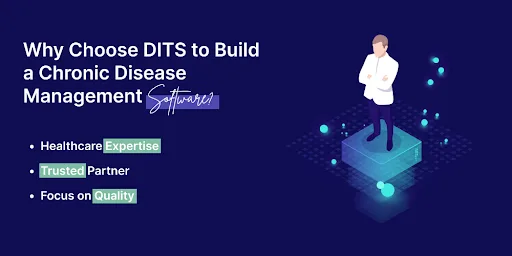
Why Choose DITS to Build a Chronic Disease Management Software?
We at Ditstek Innovations have rich experience developing custom medtech software for managing chronic diseases. Our team of software experts uses their technical know-how to build integrated, easy-to-use solutions for all your healthcare needs.
Healthcare Expertise - Building robust healthcare solutions is our forte, so we understand the challenges healthcare facilities or professionals must be facing and provide tailored chronic disease management software solutions.
Trusted Partner: We're your offshore software development partner who uses the right tools and technology to build strong and flexible chronic disease management software.
Focus on Quality: We pay close attention to each project to ensure we understand what's needed and deliver software that improves patient care, makes work easier, and gets better results.
FAQ’s
1. What chronic conditions require ongoing care and management?
Below are the examples of chronic ailments that require ongoing management -
2. How can developing an application help manage chronic diseases?
Developing an app for chronic disease management can offer several benefits, like remote patient monitoring, allowing care providers to track medication adherence, monitor vitals, and do early interventions when necessary. The app also supports patient-provider communication and personalized care plans and allows patients to take an active role in managing their health conditions.
3. Do chronic disease management programs really work?
CDM solutions can significantly improve patient’s self-care practices and reduce workload of healthcare providers. These programs are designed to improve patients’ overall well-being, cut down expenses on preventable conditions, and enable an efficient treatment plan as per specific requirements.