With more than 20 years of experience - I represent a team of professionals that specializes in the healthcare and business and workflow automation domains. The team consists of experienced full-stack developers supported by senior system analysts who have developed multiple bespoke applications for Healthcare, Business Automation, Retail, IOT, Ed-tech domains for startups and Enterprise Level clients
The healthcare industry is evolving rapidly, and the demand for connected, patient-centric care is also increasing and cloud computing is right at the heart of it. From storing vast amounts of patient information to enabling real-time collaboration between doctors and specialists, cloud solutions are proving to be a game-changer.
One clear example is electronic health records (EHRs). When hosted in the cloud, they enable healthcare providers to access accurate patient data at any time and from any location, thereby improving the speed and quality of diagnoses and treatments.
From electronic health records to telemedicine, hospitals and healthcare organizations are leveraging cloud technologies to securely and efficiently manage growing volumes of sensitive data.
But the impact goes far beyond just data storage. Cloud platforms are helping hospitals and clinics streamline operations, improve compliance, and strengthen overall governance. They make it easier to share insights across departments, manage growing data volumes, and maintain the security standards required in such a sensitive industry.
In this blog, we will explore the applications of cloud computing in healthcare and highlight why it has become a vital enabler for modern healthcare businesses and their partners.
Why Healthcare Is Rapidly Adopting Cloud Computing
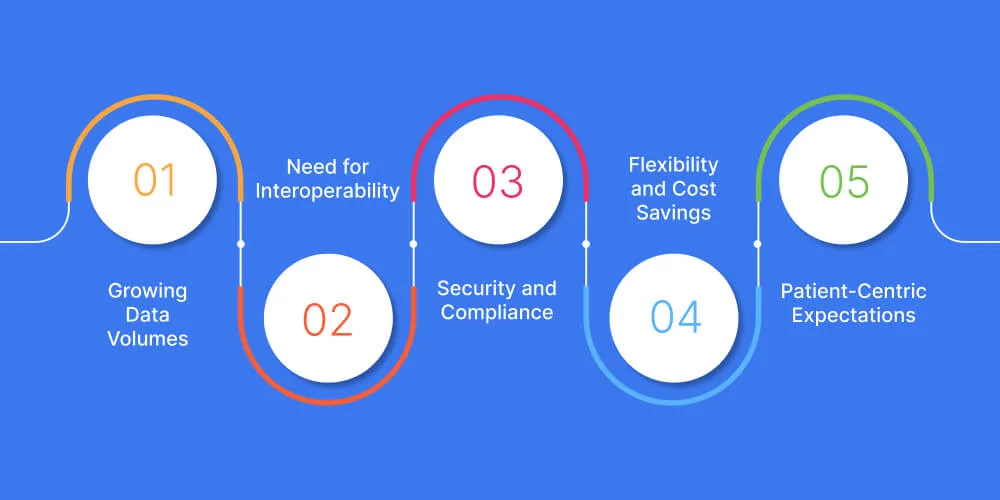
Healthcare organizations are under immense pressure to improve efficiency, deliver better patient care, and maintain compliance with strict regulations. Cloud adoption is rising because it directly addresses these challenges.
Growing Data Volumes: The rise of EHRs, IoT-enabled devices, and medical imaging produces massive amounts of information. Cloud systems provide the scalability needed to store and manage this data securely.
Need for Interoperability: Hospitals, labs, pharmacies, and insurers often operate on different platforms. Cloud solutions bridge these gaps, allowing seamless exchange of critical information.
Security and Compliance: With healthcare regulations like HIPAA compliance and GDPR, protecting patient information is non-negotiable. Cloud platforms come with advanced security and compliance frameworks.
Flexibility and Cost Savings: Unlike on-premise systems, cloud models offer a pay-as-you-go structure. This reduces upfront investments while providing flexibility to scale as demands grow.
Patient-Centric Expectations: Today’s patients want digital access to records, telehealth options, and better engagement tools. Cloud computing makes these experiences easier to deliver.
Want to Future-Proof Your Healthcare Practice?
Discover how cloud-driven solutions can reduce costs, boost compliance, and enhance patient outcomes across every touchpoint.
The applications of cloud computing in healthcare are transforming the way hospitals, clinics, and allied businesses operate. From simplifying data access to enabling advanced patient care, the cloud is at the core of healthcare innovation.
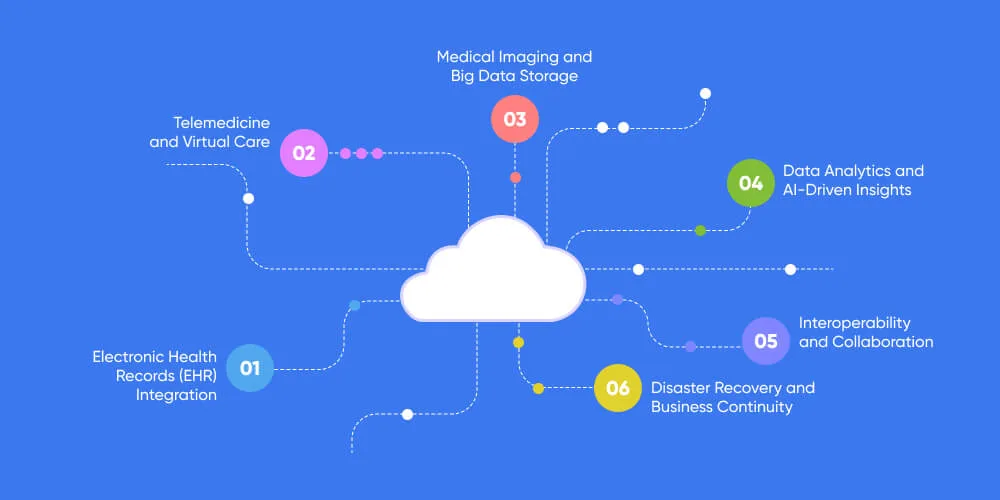
Electronic Health Records (EHR) Integration
Cloud platforms make EHRs accessible across multiple facilities, giving doctors and nurses a unified view of a patient’s history. This real-time access improves decision-making, reduces duplicate tests, and ensures continuity of care across different providers.
Telemedicine and Virtual Care
Virtual consultations have become a norm, especially after the pandemic. Cloud-based telemedicine platforms ensure secure video calls, patient data sharing, and integration with EHR systems. They also scale easily to handle surges in demand, ensuring uninterrupted care.
Medical Imaging and Big Data Storage
Large imaging files like MRIs and CT scans require significant storage and processing power. Cloud systems handle this efficiently, making it easier to store, retrieve, and even analyze images using AI-powered tools. This reduces dependency on expensive physical infrastructure.
Data Analytics and AI-Driven Insights
Healthcare providers are leveraging cloud-based analytics for predictive modeling and population health studies. When combined with AI, the cloud helps generate real-time insights, supporting personalized treatment plans and better resource management.
Interoperability and Collaboration
Healthcare is often collaborative—patients may see multiple providers. Cloud solutions enable secure sharing of updates among providers, pharmacies, and insurers, ensuring smooth coordination and fewer delays in treatment.
Disaster Recovery and Business Continuity
With cyber threats and natural disasters posing risks, cloud-based backup systems are essential. They allow quick recovery of patient records and operational data, ensuring healthcare organizations maintain continuity even during disruptions.
Struggling with Legacy Healthcare Systems?
Many providers still rely on outdated infrastructure. Transitioning to the cloud ensures speed, scalability, and long-term adaptability.
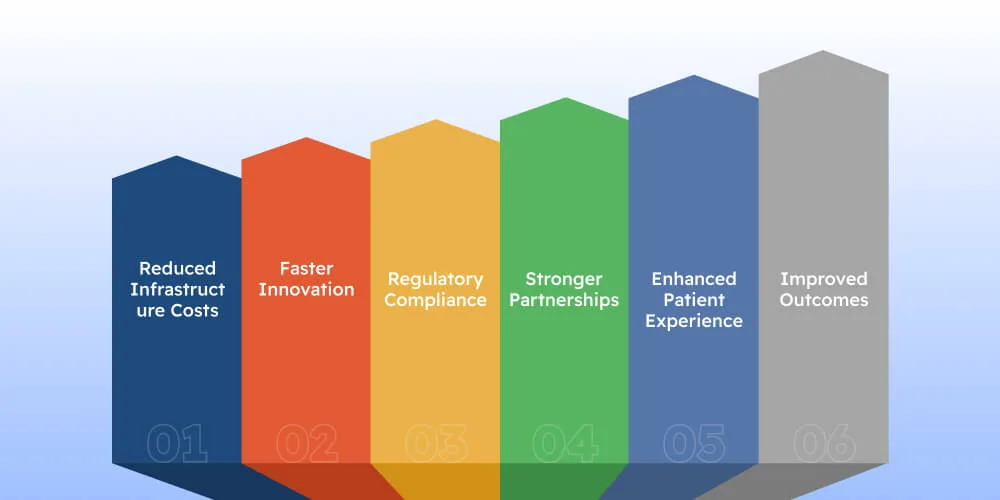
Adopting cloud technology is not just about storing data—it creates long-term value for healthcare providers and their partners. The benefits of cloud computing in healthcare go beyond efficiency and extend to innovation and patient trust.
Reduced Infrastructure Costs: Cloud eliminates the need for expensive on-premise servers, reducing both capital and maintenance expenses.
Faster Innovation: New healthcare applications and tools can be launched more quickly on cloud platforms, helping providers respond to industry changes and patient needs without delays.
Regulatory Compliance: Cloud solutions often come pre-equipped with compliance measures for HIPAA, GDPR, and other regulations, easing the compliance burden on healthcare organizations.
Stronger Partnerships: Cloud-based collaboration tools strengthen connections between providers, insurers, labs, and even pharmaceutical companies, enabling smoother workflows.
Enhanced Patient Experience: Patients benefit from quick access to records, digital consultations, and personalized care—all supported by cloud solutions.
Improved Outcomes: With analytics, AI, and real-time monitoring powered by the cloud, healthcare businesses can make more informed decisions that directly impact patient health.
Challenges and Considerations
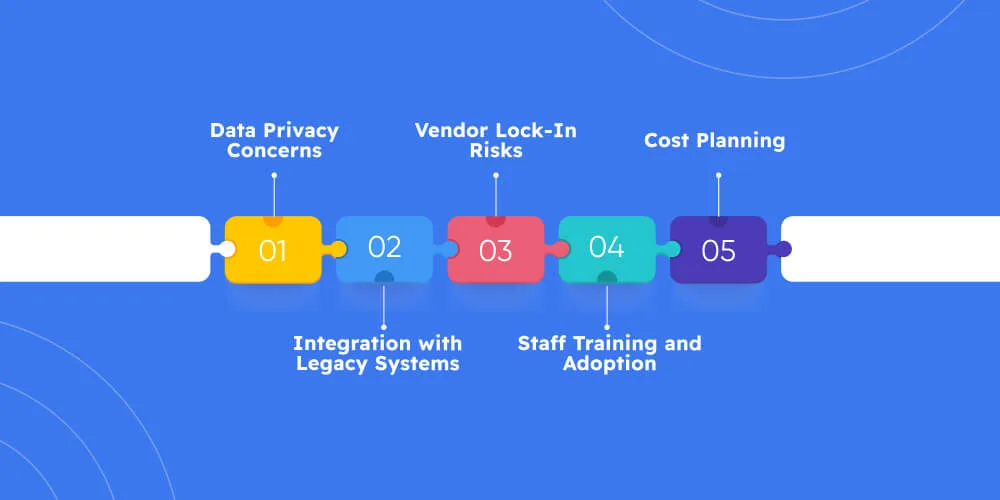
While cloud adoption is transforming healthcare, organizations must also prepare for potential challenges to ensure smooth implementation.
Data Privacy Concerns: Patient data is highly sensitive, and breaches can damage trust. Healthcare cloud services must prioritize encryption, access control, and regular security audits.
Integration with Legacy Systems: Many hospitals still rely on older infrastructure. Legacy Modernization is often required to ensure compatibility between traditional systems and new cloud platforms.
Vendor Lock-In Risks: Relying on a single cloud provider can limit flexibility. Healthcare businesses should consider multi-cloud or hybrid strategies.
Staff Training and Adoption: Implementing cloud requires cultural change. Staff need training to maximize efficiency and follow compliance protocols.
Cost Planning: Though flexible, cloud models require careful planning to manage recurring subscription costs and avoid overspending.
Ready to Lead in Healthcare Innovation?
Join the shift toward smarter, cloud-enabled healthcare. Position your business for growth, compliance, and improved patient outcomes.
How DITS Helps Healthcare Businesses with Cloud Solutions
At DITS, we understand that every healthcare business has unique needs when it comes to digital transformation. Our expertise goes beyond offering standard healthcare cloud services—we design tailored solutions that support innovation, compliance, and scalability.
By leveraging AI software development, we create intelligent systems that enhance decision-making, streamline operations, and improve patient outcomes.
Our solutions also extend to remote patient monitoring, enabling providers to track health data in real time through cloud-connected devices.
For organizations using outdated systems, we provide Legacy Modernization, ensuring smooth migration and interoperability with modern cloud platforms.
At DITS, we integrate AI into every solution we develop, from quality assurance and code maintenance to customization. This commitment ensures that our healthcare clients receive scalable, secure, and future-ready platforms designed to deliver long-term value.
Conclusion
Cloud technology is no longer optional—it’s a necessity for modern healthcare. From storing medical records to powering telemedicine and AI-driven analytics, the cloud computing applications in healthcare are reshaping how providers deliver care and how businesses collaborate within the healthcare ecosystem. By embracing these solutions, organizations can achieve greater efficiency, ensure compliance, and improve patient experiences. For healthcare business owners and their partners, the shift to cloud represents not just a technological upgrade, but a strategic investment in the future of healthcare delivery.
Frequently asked questions
Cloud computing in healthcare refers to using internet-based platforms to store, manage, and process healthcare data. It enables providers to access patient records, run applications, and collaborate across different systems securely and efficiently.
Nidhi Thakur
With more than 20 years of experience - I represent a team of professionals that specializes in the healthcare and business and workflow automation domains. The team consists of experienced full-stack developers supported by senior system analysts who have developed multiple bespoke applications for Healthcare, Business Automation, Retail, IOT, Ed-tech domains for startups and Enterprise Level clients