Top Challenges Healthcare AI Consulting Solves for Businesses
Table Of Content
Published Date :
23 Apr 2026
Key Takeaways
- U.S. healthcare systems face rising costs and resource pressure.
- Workforce shortages continue to impact care delivery.
- Many systems still operate in reactive models.
- AI consulting helps reduce inefficiencies and manual work.
- Better data integration improves decision-making speed.
- Patient expectations now demand faster and personalized care.
- Predictive capabilities support proactive healthcare models.
- A strong healthcare ai consulting firm ensures scalable and compliant solutions.
- Early AI adoption creates a competitive advantage.
The U.S. healthcare system is under constant pressure. Costs are rising faster than expected. At the same time, organizations are struggling to balance compliance, patient expectations, and operational efficiency.
For many decision-makers, the real concern is not just cost control, but how to scale without compromising care quality. Even discussions around healthcare app development cost in USA now go beyond budgeting. They are tied to long-term operational sustainability.
This is where healthcare AI consulting starts to shift from optional to essential. It is no longer about experimenting with technology. It is about solving real bottlenecks, improving decision-making, and building systems that actually work under pressure.
Current Scenario and Key Challenges of U.S. Healthcare
Demand continues to rise, but resources are not scaling at the same pace. Hospitals are seeing higher patient volumes, while staffing levels and infrastructure investments struggle to keep up. It creates a gap that directly affects service quality and operational stability.
At the same time, the industry is moving toward value-based care. Providers are now accountable not just for treatments, but for outcomes. That shift sounds promising, but it requires better data visibility, coordinated systems, and faster decision-making. Many organizations are still catching up.
Digital transformation is no longer a roadmap item. It is happening in real time. Providers, payers, and health tech companies are under pressure to modernize systems, improve workflows, and deliver connected experiences.
And here’s the reality. Without structured intervention, these changes don’t scale well. This is exactly where ai healthcare consulting starts creating measurable impact by aligning technology with operational priorities.
Are You Struggling With Rising Healthcare Operational Costs?
Identify inefficiencies, streamline workflows, and unlock cost-saving opportunities using AI-driven strategies tailored for scalable and compliant healthcare operations.
Key Challenges in U.S. Healthcare
Rising Operational Costs
Healthcare organizations are spending heavily, yet efficiency gains remain limited. Administrative tasks alone account for a significant portion of expenses, often driven by manual processes and disconnected systems. Billing errors, redundant documentation, and slow approvals quietly drain resources.
On top of that, care delivery itself is becoming more expensive. Advanced treatments, compliance requirements, and infrastructure upgrades add layers of cost that are difficult to control.
Here’s the catch. Without process optimization, scaling operations only increases financial pressure instead of improving margins.
Workforce Shortages and Burnout
Staffing gaps are no longer temporary. Many hospitals are operating with fewer clinicians than required, while patient demand continues to rise. The result is predictable. Overworked teams, longer shifts, and rising burnout rates.
And when teams are stretched thin, quality starts to slip. Delayed responses, missed follow-ups, and reduced patient engagement become common. Nobody plans for this, but it happens quietly over time.
Data Silos and Interoperability Issues
Healthcare systems generate massive amounts of data, but most of it sits in isolated platforms. EHRs, lab systems, billing tools, and patient apps often do not communicate effectively.
This fragmentation slows down decision-making. Clinicians lack complete patient histories, and administrators struggle to get a unified operational view.
Even simple questions, like tracking patient journeys across departments, become complex. That’s where inefficiencies start multiplying.
Regulatory Compliance and Data Security
Compliance is not optional in healthcare. Regulations such as HIPAA require strict data handling practices, and the cost of non-compliance can be severe.
At the same time, cybersecurity threats are increasing. Healthcare data is highly sensitive, which makes it a prime target for attacks.
Balancing compliance with operational agility becomes a constant challenge. Many organizations end up slowing down innovation just to stay compliant.
Inefficient Patient Experience
Patients today expect faster responses and more personalized care. But in reality, many still face long wait times, delayed updates, and fragmented communication.
Scheduling issues, limited digital interfaces, and lack of proactive engagement reduce overall satisfaction.
And here’s the problem. Poor experience does not just affect patient retention. It impacts brand trust, which is far harder to rebuild.
Diagnostic Errors and Delayed Treatments
Healthcare decisions often depend on analyzing large volumes of clinical data. Humans are skilled, but there are limits to how much information can be processed accurately and quickly.
Missed patterns or delayed analysis can lead to incorrect or late diagnoses. In critical cases, even small delays can have serious consequences.
This is not about capability. It is about scale and speed.
Limited Predictive Capabilities
Most healthcare systems still operate reactively. Issues are addressed after they occur, whether it is patient deterioration, resource shortages, or operational bottlenecks.
There is limited ability to forecast patient risks or anticipate demand spikes. That creates last-minute decision-making, which is rarely optimal.
Interestingly, discussions around healthcare app development cost in USA are now increasingly linked to predictive features. Organizations are realizing that without forecasting capabilities, even well-built systems fall short.
How Healthcare AI Consulting Addresses These Challenges
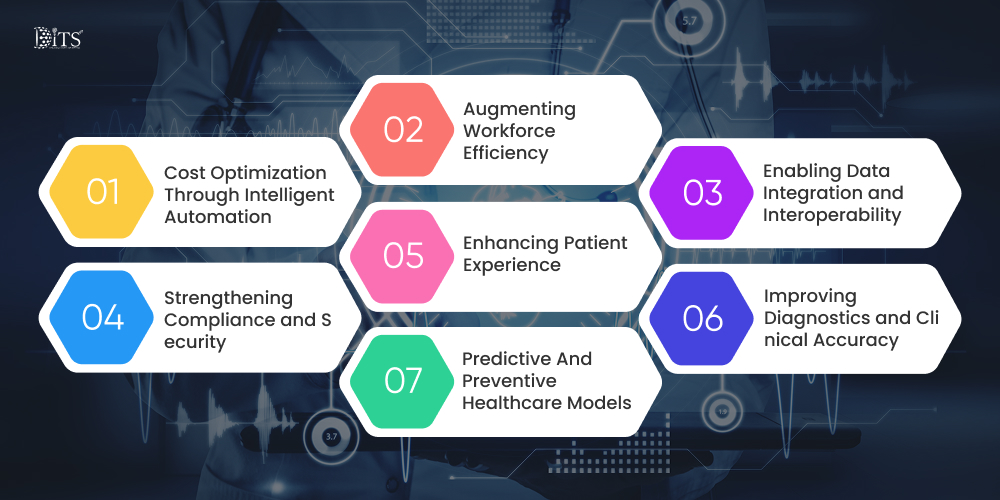
Cost Optimization Through Intelligent Automation
One of the first areas where healthcare AI consulting delivers impact is cost control. Not by cutting corners, but by removing inefficiencies that have been overlooked for years.
Administrative workflows such as medical billing, claims processing, and appointment scheduling can be automated with high accuracy. This reduces manual intervention, minimizes errors, and speeds up operations.
Think of a mid-sized hospital processing thousands of claims weekly. Even a small error rate can translate into significant revenue leakage. With intelligent automation in place, those leakages start closing almost immediately.
And over time, these small gains compound into measurable savings.
Augmenting Workforce Efficiency
Workforce challenges cannot be solved overnight. Hiring takes time, and training takes even longer. But productivity can be improved.
AI-powered decision support tools assist clinicians by analyzing patient data and suggesting relevant insights. Routine queries and administrative interactions can be handled through virtual assistants, freeing up staff for more critical tasks.
Here’s what changes. Instead of being overloaded, teams start focusing on what truly matters. Patient care improves, and burnout begins to reduce.
Enabling Data Integration and Interoperability
Fragmented data is one of the biggest barriers to efficiency. This is where AI healthcare consulting brings structure.
By creating unified data platforms, organizations can integrate information across systems. Real-time access to patient data allows better coordination between departments and faster decision-making.
However, integration alone is not enough. Effective AI integration ensures that data is not just connected, but also actively analyzed and used to drive insights across workflows.
In many cases, this also complements ongoing healthcare software development efforts, ensuring that new systems are not just modern but also connected.
When data flows seamlessly, operations become smoother. And decisions become sharper.
Strengthening Compliance and Security
AI-driven systems can monitor data access, detect unusual patterns, and flag potential security risks in real time. Automated compliance checks ensure that processes remain aligned with regulatory requirements without constant manual oversight.
For leadership teams, this creates a balance. You stay compliant without sacrificing agility.
Enhancing Patient Experience
Patient expectations have evolved. People want faster responses, personalized care, and easy access to services.
AI-powered chatbots, smart scheduling systems, and personalized recommendations improve engagement at every touchpoint. Even something as simple as reducing appointment wait times can significantly improve satisfaction.
Many organizations are also integrating capabilities like remote patient monitoring, allowing continuous care beyond hospital walls.
And when patients feel cared for, retention follows naturally.
Improving Diagnostics and Clinical Accuracy
Clinical accuracy improves when decisions are supported by data.
AI models can analyze large datasets, identify patterns, and assist in early disease detection. This does not replace clinicians. It strengthens their decision-making.
For example, analyzing imaging data or patient history across thousands of cases can highlight insights that are easy to miss manually.
This is where precision meets scale.
Predictive And Preventive Healthcare Models
Reactive healthcare is expensive and difficult to scale. Predictive care changes how organizations plan and respond.
AI systems can forecast patient risks, predict hospital admissions, and flag potential complications before they escalate. This allows teams to act early instead of reacting under pressure.
For example, hospitals can anticipate ICU demand days in advance and allocate resources accordingly. That kind of visibility reduces last-minute chaos and improves patient outcomes.
Many organizations are already adopting AI in healthcare to move toward data-driven care models.
And as adoption grows, the focus is shifting toward long-term strategy. Conversations are now centered around the future scope of AI in healthcare, especially in areas like preventive care and population health management.
Strategic Benefits of AI Consulting in Healthcare
Adopting AI is not just about solving isolated problems. It creates a broader shift in how healthcare organizations operate, scale, and compete.
Here’s what changes when AI consulting is implemented with a clear roadmap:
| Business Area | Impact Delivered |
| Operations | Faster workflows, reduced manual dependency, improved turnaround times |
| Financial Performance | Lower operational costs, better revenue cycle management |
| Clinical Outcomes | More accurate diagnostics, timely interventions |
| Patient Engagement | Personalized care journeys, improved satisfaction |
| Decision-Making | Real-time insights, data-backed strategies |
What stands out is speed. Organizations that engage with a healthcare AI consulting firm often accelerate their digital transformation timelines by months, sometimes even years.
But there’s more to it. Solutions are not generic. They are designed around existing workflows, compliance requirements, and long-term business goals.
At DITS, this approach goes deeper. AI is not treated as an add-on. It is embedded into AI consulting, software development, quality assurance, and customization processes. Every solution is built with intelligence at its core, ensuring consistency, scalability, and long-term value.
And once these systems are in place, the benefits are not temporary. They compound over time, strengthening both operational resilience and competitive positioning.
Why Choose DITS For AI In Healthcare Software
What sets DITS apart is how AI is embedded across the lifecycle. From development to deployment, AI is used in software engineering, quality assurance, code optimization, and customization. It ensures consistency, reduces errors, and accelerates delivery timelines without compromising quality.
There is also a strong emphasis on integration. Whether it is connecting legacy systems or enabling new digital platforms, the goal is to make everything work together seamlessly.
And here’s the outcome. Healthcare organizations do not just adopt AI. They operationalize it in a way that delivers measurable impact across efficiency, patient care, and decision-making.
Ready To Shift From Reactive To Predictive Healthcare Models?
Adopt proactive, data-driven care strategies using AI to forecast risks, optimize resources, and improve long-term patient outcomes with measurable business impact.
Conclusion
U.S. healthcare is at a turning point. Rising costs, workforce challenges, fragmented systems, and increasing patient expectations are pushing organizations to rethink how they operate.
AI is no longer a future concept. It is actively solving some of the most critical challenges in the industry today. From reducing operational inefficiencies to enabling predictive care, the impact is both immediate and long-term.
More importantly, healthcare AI consulting transforms how organizations approach growth. It shifts the focus from reactive problem-solving to proactive strategy.
For decision-makers, the question is no longer whether to invest in AI. It is how quickly they can implement it in a way that delivers real value.
And those who act early will not just adapt. They will lead the next phase of healthcare transformation.
FAQs
What role does AI consulting play in healthcare transformation?
AI consulting helps healthcare organizations identify inefficiencies, integrate intelligent systems, and improve decision-making. It focuses on practical implementation, ensuring that ai solutions align with clinical workflows, compliance requirements, and long-term business goals.
How does DITS help with AI in healthcare software development support healthcare providers?
DITS AI in healthcare software development services focus on building intelligent, scalable, and secure solutions tailored to healthcare needs. From automating workflows to enabling predictive analytics, the approach ensures better operational efficiency and improved patient outcomes.
Can AI reduce operational costs in healthcare organizations?
Yes, AI significantly reduces operational costs by automating repetitive tasks such as billing, scheduling, and claims processing. It also minimizes errors and improves resource utilization, leading to better financial control over time.
How secure are AI-based healthcare systems?
Modern AI systems are designed with strong security frameworks, including data encryption, access controls, and real-time monitoring. When implemented correctly, they help organizations stay compliant with regulations while protecting sensitive patient data.
Why choose DITS for AI in healthcare software development for custom solutions?
Our services are built around customization and integration. The focus is on creating solutions that fit existing systems, support scalability, and deliver measurable ROI without disrupting ongoing operations.

Nidhi Thakur
With more than 19 years of experience - I represent a team of professionals that specializes in the healthcare and business and workflow automation domains. The team consists of experienced full-stack developers supported by senior system analysts who have developed multiple bespoke applications for Healthcare, Business Automation, Retail, IOT, Ed-tech domains for startups and Enterprise Level clients.
Recent Posts
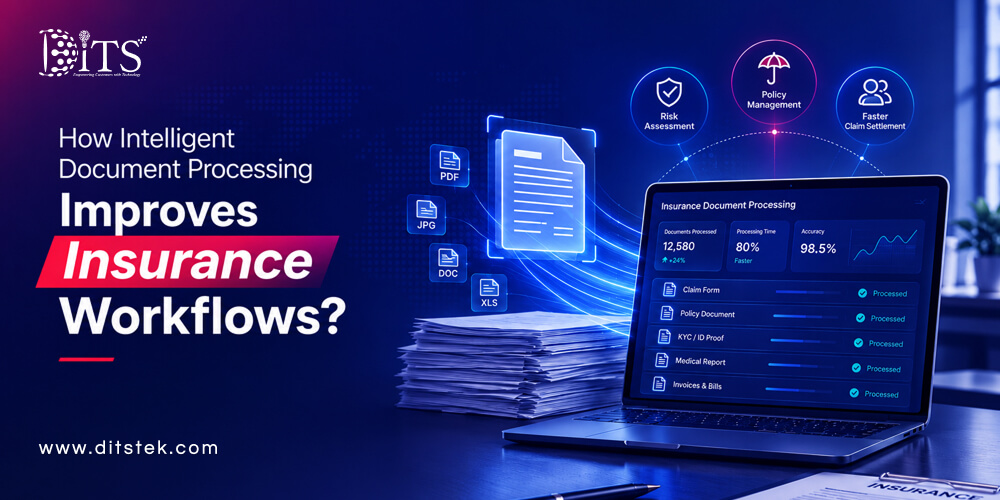
Explore how intelligent document processing for insurance helps businesses automate document workflows, reduce processing costs, improve accuracy, and strengthen operational efficiency across insurance functions.
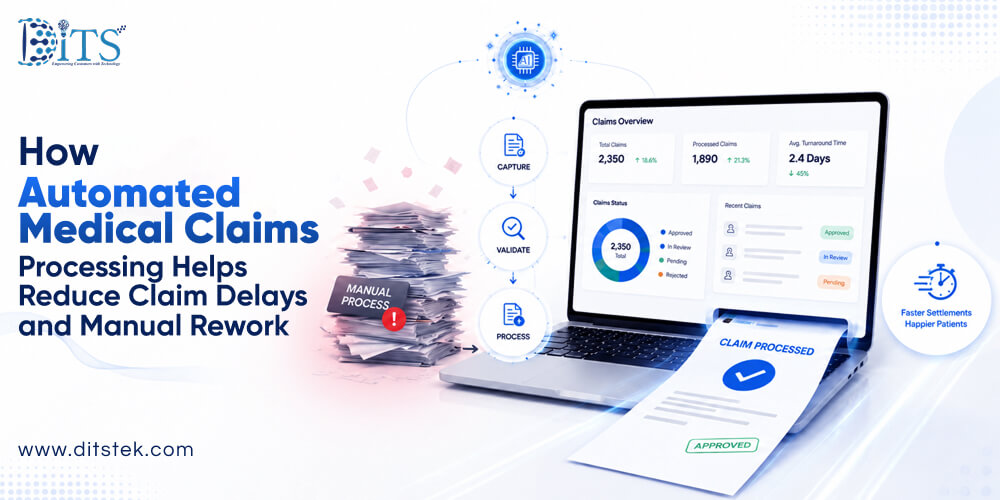
Discover how automated medical claims processing reduces delays, manual rework, claim denials, and administrative costs while improving reimbursement speed and operational efficiency.
Learn how to build medical billing software with essential features, integrations, security, and development costs.