With more than 20 years of experience - I represent a team of professionals that specializes in the healthcare and business and workflow automation domains. The team consists of experienced full-stack developers supported by senior system analysts who have developed multiple bespoke applications for Healthcare, Business Automation, Retail, IOT, Ed-tech domains for startups and Enterprise Level clients
Access to quality healthcare should not be a luxury dictated by geography, yet for millions of people in rural areas, it is. The physical distance from healthcare centers, limited infrastructure, and a shortage of healthcare professionals are persistent barriers to adequate medical care. Telehealth is bridging this gap, but generic solutions often fail to address the unique challenges of rural communities.
So, how can custom telehealth solutions ensure real impact?
This blog dives into the key considerations, technologies, and strategies for building a telehealth system that is truly accessible, efficient, and tailored for underserved regions. Let’s explore what it takes to transform rural healthcare through technology.
The Reality of Rural Healthcare: The Numbers You Can’t Ignore
Healthcare in rural areas is facing serious challenges that can’t be overlooked.
Rural patients travel twice as far for medical care compared to those in cities. Many have to drive hours just for a routine checkup.
Nearly 60 million people in the U.S. live in rural areas, but only 10% of doctors practice there. This shortage leaves millions without easy access to healthcare.
The global telehealth market has grown 38x since 2020, yet rural areas struggle with poor internet connectivity and limited digital access.
One in four rural hospitals is at risk of closing, making access to care even more difficult.
Telehealth can help, but off-the-shelf solutions don’t always work in rural settings. A tailored approach is essential to ensure accessibility, reliability, and real impact.
Build Custom Telehealth for Rural Areas!
Discover the key steps to creating a seamless telehealth solution for remote regions. Start your journey today!
Bringing telehealth to rural areas isn’t just about having the right technology. It is about making it work in real-world conditions. While telehealth has the potential to revolutionize healthcare access for remote communities, several roadblocks stand in the way.
Here are the biggest hurdles:
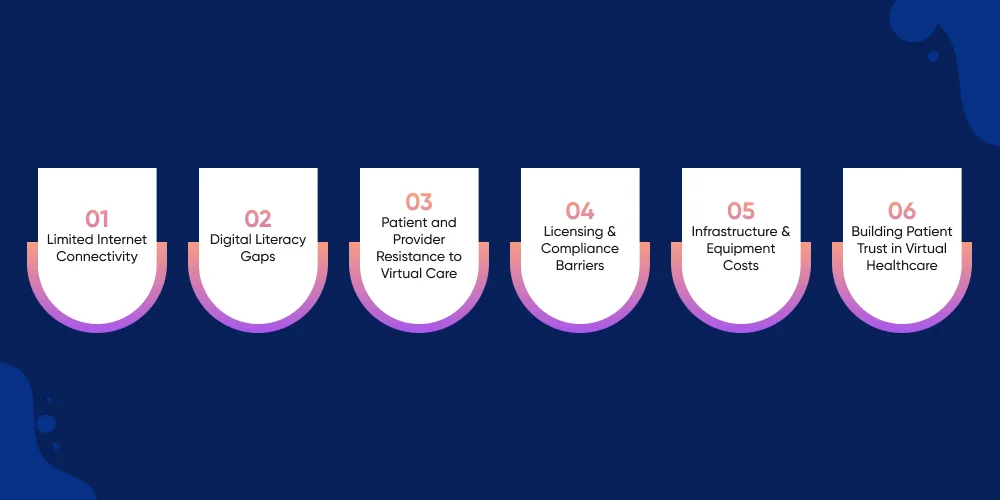
1. Limited Internet Connectivity
High-speed internet is a given in urban areas, but in many rural regions, it’s a luxury. Slow connections and unreliable broadband make video consultations frustrating or impossible. Many rural patients are left with dropped calls, buffering screens, or the inability to connect at all.
A practical solution is optimizing telehealth platforms for low-bandwidth environments. Features like adaptive video quality, offline access to medical records, and text-based consultations can help bridge this gap.
2. Digital Literacy Gaps
Many rural residents and even some healthcare providers are not familiar with telehealth platforms. If an app feels too complex or requires multiple steps to access care, patients may choose to avoid it. Healthcare professionals may also hesitate to adopt telehealth tools if they feel untrained or unsupported.
User-friendly design is key. Platforms must be intuitive and require minimal steps to schedule and attend a consultation. Training programs for both patients and providers can further ease adoption.
3. Patient and Provider Resistance to Virtual Care
For some, healthcare is about personal interaction—making eye contact, discussing concerns in person, and feeling reassured. Many patients view virtual consultations as impersonal, and some doctors prefer traditional face-to-face interactions.
A hybrid approach that blends in-person visits with telehealth can improve adoption. Features like AI-powered symptom checkers and ongoing messaging with healthcare professionals can make virtual care feel more engaging and accessible.
4. Licensing & Compliance Barriers
Telehealth must adhere to strict regulations. Doctors need licenses to practice across state lines, reimbursement policies vary, and data privacy laws create additional complexities. Navigating this regulatory maze can slow down telehealth adoption, especially in rural regions.
Healthcare policies must evolve to accommodate telehealth expansion. Meanwhile, telehealth providers must ensure full compliance with HIPAA and other healthcare regulations to protect patient data and privacy.
5. Infrastructure & Equipment Costs
A telehealth setup requires more than just a smartphone and an app. Clinics and independent healthcare providers need secure software, medical-grade devices, and data storage solutions, all of which can be costly.
Cloud-based platforms, shared infrastructure models, and government incentives can help reduce these costs and make telehealth solutions more accessible.
6. Building Patient Trust in Virtual Healthcare
Many rural patients are concerned about misdiagnosis, data security, or feeling like just another number in a digital system. A lack of trust in telehealth can limit its adoption.
To build confidence, healthcare providers must ensure secure data handling, clear communication, and a patient-first approach. A combination of virtual and in-person care can also help patients feel more connected to their healthcare providers.
Steps to Develop Custom Telehealth for Rural Areas
Creating an effective telehealth solution for rural communities requires a structured, well-planned approach. Here’s how to develop a system that ensures seamless healthcare access, optimized performance, and long-term usability.
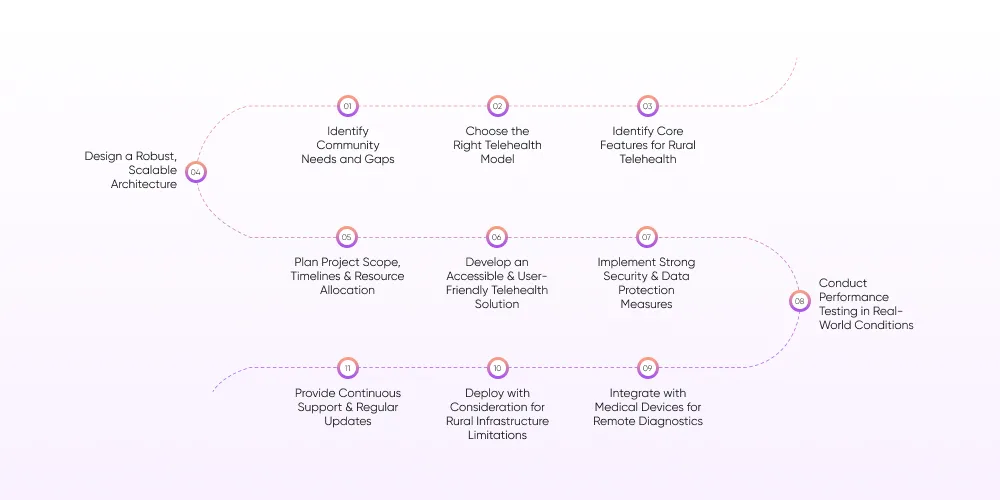
1. Identify Community Needs and Gaps
Every rural region has different healthcare challenges. Some areas may lack specialists, while others struggle with transportation or internet access. The first step is conducting research, surveying local healthcare providers and patients to understand their pain points.
Key questions to consider:
What are the most common health concerns in the area?
How comfortable are patients and providers with digital solutions?
What technology and internet limitations exist?
2. Choose the Right Telehealth Model
Not all telehealth happens over live video. Some communities may need asynchronous telehealth (where doctors review patient data later), while others benefit from remote patient monitoring (RPM) for managing chronic conditions.
Synchronous Care (Live Video Consultations): Best for real-time doctor visits and specialist referrals. Asynchronous Care (Store-and-Forward): Useful for sharing medical records, images, and lab results when real-time visits aren’t feasible. Remote Patient Monitoring (RPM): Ideal for managing chronic diseases like diabetes and hypertension using wearable devices and sensors.
Selecting the right approach ensures the telehealth system is effective and practical for rural settings.
3. Identify Core Features for Rural Telehealth
A successful telehealth solution should cater to the unique needs of rural patients and healthcare providers. Key features include:
Remote patient monitoring for chronic disease management.
Audio and video consultations to facilitate real-time doctor-patient interactions.
Digital health records management to ensure continuity of care across different providers.
Asynchronous communication options like chat and messaging for low-bandwidth areas.
4. Design a Robust, Scalable Architecture
To ensure the system functions smoothly even in areas with low or unstable internet, the software architecture must be adaptable:
Use lightweight, cloud-based solutions that work efficiently on slow networks.
Implement data compression techniques to enable smooth video consultations.
Support offline functionality, allowing users to upload data once they reconnect.
5. Plan Project Scope, Timelines & Resource Allocation
A well-defined roadmap ensures a structured development process:
Set clear objectives based on healthcare provider and patient needs.
Define milestones and deadlines for each development phase.
Allocate technical, financial, and human resources effectively.
6. Develop an Accessible & User-Friendly Telehealth Solution
A rural telehealth system must be designed for ease of use for all stakeholders, including elderly patients and non-tech-savvy users.
Simplified UI/UX with intuitive navigation.
Multilingual support to accommodate diverse populations.
Cross-platform compatibility for web, mobile, and even feature phones.
7. Implement Strong Security & Data Protection Measures
To safeguard sensitive patient data, the telehealth platform should include:
End-to-end encryption for consultations and medical records.
Multi-factor authentication to prevent unauthorized access.
Compliance with HIPAA, GDPR, or regional healthcare data regulations.
8. Conduct Performance Testing in Real-World Conditions
The software should undergo rigorous testing to ensure it functions well under various constraints:
Test for low-bandwidth adaptability to avoid lag during video consultations.
Evaluate system performance across multiple devices and operating systems.
Identify and resolve potential bugs, glitches, or security vulnerabilities.
9. Integrate with Medical Devices for Remote Diagnostics
A robust telehealth solution should support connected medical devices that enhance patient care at home:
Wearable pulse oximeters for monitoring oxygen levels.
Portable ECG monitors for remote heart health tracking.
Handheld ultrasound scanners for supervised diagnostics.
10. Deploy with Consideration for Rural Infrastructure Limitations
Here are the essential modules that make up a comprehensive rural telehealth platform:
Virtual Consultation Module
Enables video, audio, and chat-based consultations. Optimized for low-bandwidth connections to work in areas with weak internet. Allows appointment scheduling and reminders for better patient engagement.
Remote Patient Monitoring (RPM) Module
Connects with wearable and at-home medical devices to track vitals. Enables real-time health tracking, reducing unnecessary hospital visits. Alerts healthcare providers about critical health changes.
Electronic Health Records (EHR) Module
Stores and manages patient records securely in one place. Allows doctors to access medical history for informed treatment decisions. Ensures data privacy and compliance with regulations like HIPAA.
e-Prescription & Pharmacy Integration
Enables digital prescriptions that can be shared with local pharmacies. Supports medication tracking and reminders for patient adherence. Integrates with telepharmacy services to ensure medicine availability.
AI-Powered Symptom Checker
Helps patients assess symptoms before booking a consultation. Uses AI-driven insights to provide early health recommendations. Reduces unnecessary doctor visits while ensuring critical cases get attention.
Multilingual & Accessibility Features
Offers support for multiple languages to reach diverse populations. Includes voice assistance and simple UI for users with low digital literacy. Ensures accessibility for elderly and disabled patients.
Admin & Analytics Dashboard
Provides doctors and healthcare providers with patient insights. Tracks appointment trends, health reports, and system performance. Helps optimize healthcare services based on real-time data analytics.
Community Support & Telehealth Training
Offers educational resources on how to use telehealth effectively. Trains local healthcare workers to assist patients with telemedicine tools. Builds community trust and engagement in telehealth adoption.
Must Have Features of Rural Telemedicine Software
Below are the essential features that make telemedicine effective in rural settings.
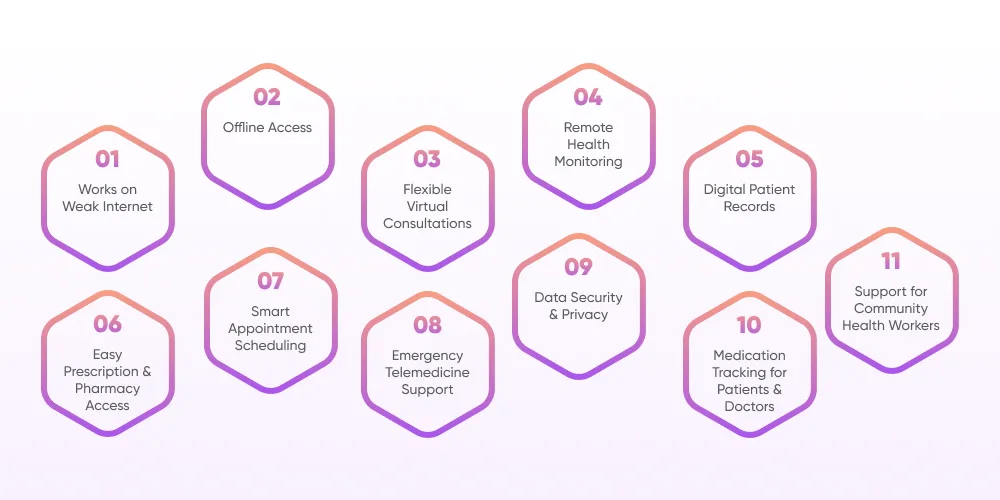
Works on Weak Internet
High-speed internet isn’t a given in rural areas. The software needs to function smoothly even with slow or spotty connections, ensuring patients don’t get cut off mid-consultation.
Offline Access
Some features, like viewing medical records or appointment details, should work even when there’s no internet. This ensures patients and healthcare workers can still access critical information anytime.
Flexible Virtual Consultations
Not every patient is comfortable with video calls. Offering multiple ways to connect—video, voice, or even chat—makes telehealth more accessible.
Remote Health Monitoring
Devices like blood pressure monitors and glucose meters can send real-time data to doctors, reducing the need for in-person visits and ensuring early detection of health issues.
Digital Patient Records
No more missing paperwork. A secure system should store medical histories, test results, and treatment plans, so doctors always have the right information when they need it.
Easy Prescription & Pharmacy Access
Patients should be able to receive digital prescriptions and get medications from local pharmacies without unnecessary travel.
Smart Appointment Scheduling
Automated reminders help prevent missed checkups, which is especially important for patients managing chronic conditions.
Emergency Telemedicine Support
When hospitals are miles away, immediate access to a doctor can save lives. A telehealth system should provide emergency consultations and connect patients with the nearest healthcare providers.
Data Security & Privacy
With sensitive medical information being shared online, the software must follow strict security measures to prevent data breaches and unauthorized access.
Medication Tracking for Patients & Doctors
Many rural patients struggle with remembering their medications. A built-in system to track prescriptions, send reminders, and monitor adherence can improve treatment outcomes.
Support for Community Health Workers
In many rural areas, local health workers act as the first point of care. A dashboard that helps them track patient cases and update records can make a big difference in treatment continuity.
Additional Features of Rural Telemedicine Software
Beyond the essential must-haves, there are extra features that can enhance the experience for both patients and healthcare providers.
Feature
Why It’s Useful
AI-Based Symptom Checker
A built-in symptom checker can help patients decide whether they need a consultation or if simple home care is enough.
AI-Powered Medical Triage
An AI-driven triage system can prioritize patients based on the severity of their condition, ensuring that critical cases get seen first.
Government & Insurance Integration
Many rural patients rely on government health programs or insurance for treatment. Direct integration can speed up approvals and reimbursements, reducing financial stress.
Health Monitoring with Wearable Devices
Smart devices like blood pressure monitors, glucose meters, or heart rate trackers can send real-time health data to doctors, allowing for continuous monitoring without hospital visits.
Digital Payments for Easy Transactions
Many rural patients don’t have access to traditional banking, so offering digital payment options for consultations and prescriptions can make healthcare more accessible.
Voice-Controlled Features
Adding voice commands can help elderly patients and those with limited digital skills access telehealth services more easily.
Patient Education & Support Resources
Simple guides, video tutorials, and FAQs can help them understand how to use the platform effectively.
Remote Rehabilitation Support
Remote rehabilitation tools can help patients stick to their treatment plans with virtual check-ins and guided exercises.
Telehealth can also support larger public health initiatives by tracking health trends, detecting outbreaks, and providing real-time data to authorities.
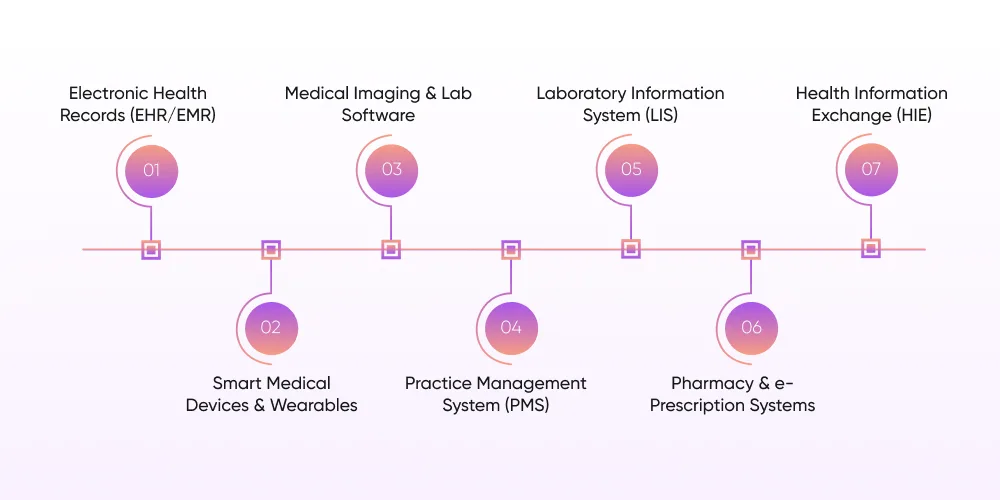
Key Integrations for a Rural Telehealth Platform
The right integrations ensure smooth operations, better patient care, and minimal hassles for both patients and healthcare providers.
1. Electronic Health Records (EHR/EMR)
Doctors and nurses need quick access to patient histories, prescriptions, and test results. EHR/EMR integration makes this possible, helping healthcare providers offer informed care without relying on paper records.
2. Smart Medical Devices & Wearables
Devices like blood pressure monitors, glucose meters, and pulse oximeters can send real-time health data to doctors. This allows for remote monitoring of chronic conditions without frequent hospital visits.
3. Medical Imaging & Lab Software
Patients in rural areas shouldn’t have to travel miles just to share their X-rays or test reports with a doctor. This integration lets healthcare providers access medical images and lab results instantly.
4. Practice Management System (PMS)
A telehealth system should make life easier for doctors too. PMS integration helps with scheduling, billing, and record-keeping, so healthcare professionals can focus on patient care instead of paperwork.
Our Web Based Practice Management System Portfolio
Built on jQuery, JavaScript (frontend), and Asp.Net (backend), we have built end-to-end enterprise cloud-based behavioral health solution to cater to specific behavioural healthcare segments in the US.
Getting lab test results quickly can be life-saving. By integrating LIS, telehealth platforms ensure doctors can see test reports in real time and make faster treatment decisions.
6. Pharmacy & e-Prescription Systems
Many rural areas lack easy access to pharmacies. By integrating with pharmacy networks, telehealth apps allow doctors to send prescriptions digitally and help patients get their medicines delivered.
7. Health Information Exchange (HIE)
To ensure continuity of care, telehealth platforms should integrate with HIEs, allowing different healthcare providers to share patient data securely and avoid duplicate tests or conflicting treatments.
Tech Stack for a Scalable Telehealth App for Rural Areas
Why Choose DITS for Telehealth App Development for Rural Areas?
We specialize in creating custom, high-performance telehealth platforms that are designed specifically for the unique needs of rural healthcare.
What Makes Us Different?
Expertise You Can Trust: We get that rural healthcare has its own set of challenges. Our deep industry knowledge ensures we create telehealth platforms that truly work, from navigating compliance to streamlining healthcare workflows.
Tailored for Your Needs: We work closely with you to design telehealth solutions that fit your specific requirements, making sure they are practical and effective for your community.
Security & Compliance First: Patient privacy is everything. That’s why we follow HIPAA, GDPR, and other global standards, ensuring that all data is secure and your platform is compliant with healthcare regulations.
Built to Scale: Whether you’re starting small or scaling up to reach thousands of patients, our infrastructure grows with you. You can count on us to keep up with your needs as your platform expands.
Cutting-Edge Technology: From AI-powered diagnostics to wearable device connectivity, we bring the latest tech into the telehealth experience. Plus, we support real-time patient tracking to make healthcare more proactive.
Full Support, Every Step of the Way: Our commitment doesn’t end at deployment. We provide continuous support and maintenance to ensure that your telehealth platform stays updated, secure, and effective long-term.
If you're ready to build a telehealth solution that truly transforms healthcare access for rural communities, we're here to help. Let’s connect and make it happen!
Frequently asked questions
Custom telehealth solutions are better suited for rural areas as they can be optimized for low-bandwidth environments, offer offline capabilities, and integrate with local healthcare systems. This ensures a smoother user experience and better accessibility for people with limited digital literacy.
Nidhi Thakur
With more than 20 years of experience - I represent a team of professionals that specializes in the healthcare and business and workflow automation domains. The team consists of experienced full-stack developers supported by senior system analysts who have developed multiple bespoke applications for Healthcare, Business Automation, Retail, IOT, Ed-tech domains for startups and Enterprise Level clients