With more than 20 years of experience - I represent a team of professionals that specializes in the healthcare and business and workflow automation domains. The team consists of experienced full-stack developers supported by senior system analysts who have developed multiple bespoke applications for Healthcare, Business Automation, Retail, IOT, Ed-tech domains for startups and Enterprise Level clients
Key Takeaways
Many claim denials begin with preventable issues such as eligibility errors, missing authorizations, coding inaccuracies, and incomplete documentation.
Medical billing services help reduce denials through pre-claim validation, claim scrubbing, proactive follow-up, and structured denial management.
Medical billing services support a wide range of stakeholders, including small practices, multi-specialty groups, hospitals, RCM companies, and healthcare SaaS providers.
Medical billing solutions for small practices can reduce administrative rework, How Medical Billing Services Reduce Claim Denials and Revenue Leakagecollections, and limit revenue leakage across the revenue cycle.
Claim denials can silently drain healthcare practice's revenue. A single rejected claim may seem manageable. However, repeated denials can lead to extended reimbursement cycles, growing accounts receivable, surplus workload, and gains that may eventually be disregarded.
But the real problem often begins much earlier in the billing process. Many claim denials originate from issues such as eligibility errors, missing authorization, coding inaccuracies, imprecise documentation, or incorrect claim submission.
Medical billing services for established and small practices especially help address these gaps by strengthening the billing process from the start. Through claim validation, denial tracking, payer follow-up, and root-cause analysis, healthcare organizations can reduce preventable denials and protect more of the revenue they have already earned.
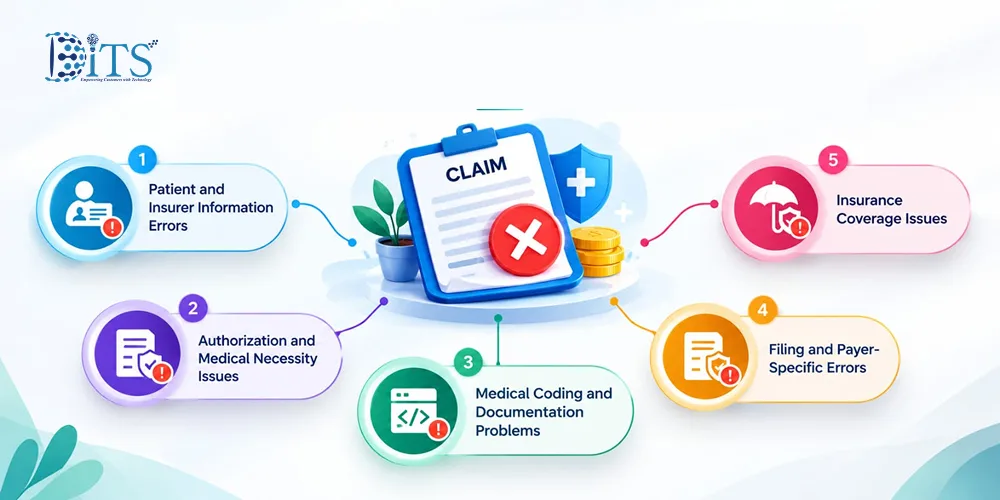
Why Medical Claims are Denied
For smaller to mid-size healthcare organizations, the undermentioned issues can be especially disruptive because limited administrative resources make repeated corrections and follow-ups difficult.
Patient and Insurer Information Errors
Incorrect patient or insurance information may seem like a small administrative issue, but it can quickly lead to rejected claims and payment delays. Every incorrect member ID, insurance plan, or demographic detail creates extra work for billing teams and increases the risk of revenue being delayed or lost.
Authorization and Medical Necessity Issues
Prior authorization is required for many healthcare services, but the rules may depend on the payer and the procedure. Missing authorization, differences between the approved and delivered services, or insufficient documentation of the medical necessity can lead to claim denials. The impact can extend beyond reimbursement as well. According to a survey by The Commonwealth Fund, 41% of patients who experienced a foregoing authorization denial faced delayed medical care.
Medical Coding and Documentation Problems
A well-structured and accurate coding process is the pillar of maintaining a reliable billing workflow. When coding is poorly managed, it becomes a common source of denial in no time. Missing modifiers, incorrect codes, insufficient documentation, or inconsistencies between the diagnosis and procedure can all trigger payer review, delays or claim rejection.
Filing and Payer-Specific Errors
Payer-specific requirements can add a layer of complexity to established and small practices’ medical billing. Diverse claim formats, documentation needs and filing deadlines mean even claim can be denied if it is not submitted in the right manner. Moreover, during high-volume periods, manual workflows can make it difficult for practices to meet submission deadlines and keep track of payer-specific requirements.
Insurance Coverage Issues
Not every patient may have an active insurance policy that fully covers the treatment being provided. Coverage can change over time; policies may expire, or certain procedures may fall outside the scope of the policy. In some cases, the patient may also have changed insurance providers without updating their information with the practice.
Reduce Claim Denials and Protect Your Revenue
Strengthen billing workflows, catch claim errors early, and improve collections with smarter medical billing solutions.
How Medical Billing Services Strengthen the Claim Process
Reducing claim denials requires more than fixing rejected claims after they occur. This is especially important for smaller providers, where medical billing services for small practices can help create a more structured and proactive billing workflow.
Verify Eligibility Before the Patient Visit
Insurance information can change between appointments. Therefore, medical billing services validate eligibility before services are delivered. Another crucial piece of information that needs to be gathered is the patient’s insurance. It helps confirm active coverage, benefits, and payer requirements, reducing the risk of claims being denied because of outdated or incorrect insurance details.
Recognize Prior Authorization Requirements Early
Missing prior authorization is one of the most avoidable reasons for claim denials. Medical billing services help prevent this by checking payment requirements prior to treatment. Additionally, they can confirm the need for authorization, secure approval on time, and ensure that the authorized service matches the care actually provided.
Strengthen Coding and Documentation Accuracy
Coding errors and incomplete documentation can quickly turn otherwise valid claims into denials. That is where a reliable medical billing service helps reduce this risk by reviewing CPT and ICD-10 codes, modifiers, diagnoses, and supporting documentation before submission. It also ensures that billing teams stay updated on coding changes, payer requirements, and compliance guidelines.
Scrub Claims Before They Reach the Payer
Claim scrubbing works as an important quality-control step within medical billing services for small practice as well as established ones. It helps identify incomplete fields, invalid codes, formatting issues, duplicate submissions, and other errors before the claim is sent to the payer. By correcting these problems early, practices can improve clean claim submissions and reduce unnecessary rejections. Fewer rejected claims also mean less back-and-forth with payers, less time spent on corrections, and a faster path to reimbursement.
Monitor Claims Throughout the Payment Cycle
Rather than waiting for payment to arrive, billing teams monitor submitted claims and investigate delays. Early follow-up can uncover missing information, payer requests, or processing issues before they turn into older accounts receivable.
How Better Medical Billing Services Minimize Revenue Leakage
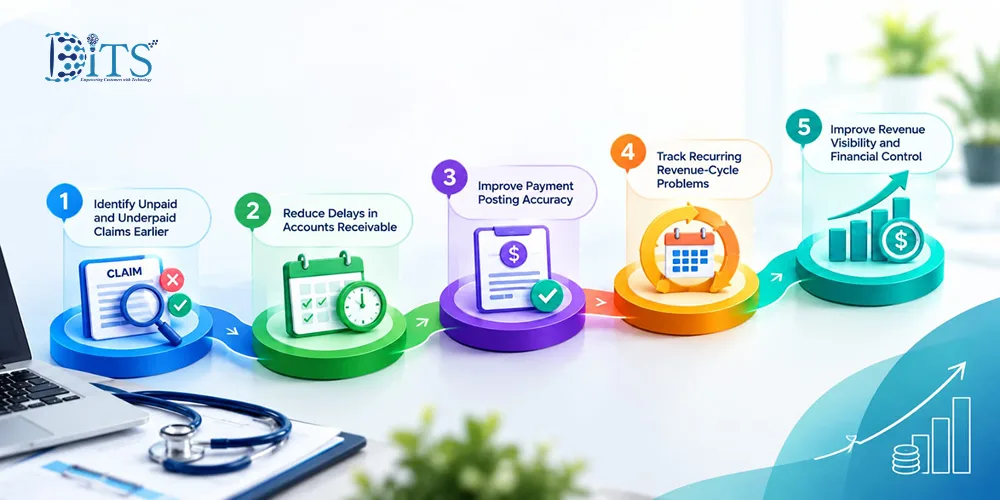
MGMA data shows that 48% of medical practice leaders consider denials and appeals their biggest revenue-cycle leakage point. The problem stretches when claims remain unpaid, underpaid, or unresolved for lengthy periods. Medical billing services can reduce this leakage in the following ways:
Identify Unpaid and Underpaid Claims Earlier
Not every revenue loss comes from a complete denial. Some claims may remain unpaid, while others may be reimbursed at a lower amount than expected. Medical billing teams can review payment activity, compare reimbursements with expected amounts, and follow up with payers when discrepancies are found.
Reduce Delays in Accounts Receivable
Claims that remain in accounts receivable for extended periods can become harder to collect. Regular claim tracking and timely follow-ups help practices identify stalled claims, resolve payer issues, and prevent outstanding balances from continuing to age.
Improve Payment Posting Accuracy
Incorrect or delayed payment posting can make it difficult to understand what has been paid, what remains outstanding, and where follow-up is required. Accurate payment posting gives practices a clearer view of their revenue and helps prevent missed collection opportunities.
Track Recurring Revenue-Cycle Problems
Better billing services do more than process individual claims. They can monitor denial reasons, payment trends, aging accounts, and payer-related issues to identify recurring gaps in the revenue cycle. This allows practices to address the underlying cause rather than repeatedly fixing the same problem.
Improve Revenue Visibility and Financial Control
Medical billing services for small practices can provide clearer reporting on collections, denials, outstanding claims, and accounts receivable. Better visibility allows the practice leaders to understand where revenue is being delayed or lost and take action before those issues begin affecting cash flow.
Improve Your Medical Billing and Revenue Cycle
Identify billing gaps, streamline claims, and improve revenue visibility with efficient healthcare billing workflows.
5 Reasons Your Practice Should Consider Medical Billing Services
A practice may need professional medical billing support when billing challenges begin affecting collections, staff productivity, or revenue-cycle visibility. Some common signs include:
Denials Are Increasing:A steady rise in denied claims may indicate gaps in eligibility checks, coding, documentation, authorization, or claim submission.
The Same Denial Reasons Keep Recurring: Repeated denials for similar reasons often point to an underlying workflow problem that needs to be addressed.
Staff Spend Too Much Time Following Up on Claims: When administrative teams spend significant time checking the reasons behind unpaid claims, other important things suffer.
Accounts Receivable Continues to Age: Growing A/R can indicate delayed follow-ups, unresolved claims, or weaknesses in the collection process.
Coding or Payer Requirements Are Becoming Difficult to Manage: Changing payer policies and coding requirements can increase errors and make billing more complex for internal teams.
Key Capabilities to Look for in a Medical Billing Service
Choosing the right medical billing provider requires looking beyond basic claim submission. The provider should support the full revenue cycle and help reduce billing errors, delays, and revenue leakage.
Eligibility Verification
The provider should verify insurance coverage and benefits before services are delivered to reduce eligibility-related denials.
Coding and Documentation Review
Look for support that helps identify coding errors, missing documentation, and inconsistencies before claims are submitted.
Denial Management
The provider should track denial reasons, correct claims, manage appeals, and help prevent recurring denial issues.
A/R Follow-Up
Consistent follow-up on unpaid and aging claims is essential for improving collections and reducing outstanding balances.
Payment Posting
Accurate payment posting helps practices track reimbursements, adjustments, patient balances, and underpayments more effectively.
Reporting and Analytics
Clear reporting should provide visibility into denials, collections, aging claims, payer trends, and overall billing performance.
Payer-Specific Workflows
The provider should understand different payer requirements, submission rules, authorization processes, and filing deadlines.
Integration With Existing Systems
Billing services should work smoothly with the practice’s existing EHR, practice management, and other healthcare systems to avoid unnecessary workflow disruption.
Stop Revenue Leakage Before It Impacts Cash Flow
Track denials, aging claims, underpayments, and billing gaps to improve collections and revenue-cycle performance.
System Integration: Connect EHRs, billing platforms, clearinghouses, reporting tools, and other healthcare systems more effectively.
Claims Workflow Automation: Automate repetitive activities and manual follow-ups.
Eligibility and Verification Automation: Reduce repetitive insurance verification tasks and bring relevant payer information into the workflow earlier.
As your technology and consulting partner, DITS helps determine what should be improved, integrated, automated, or modernized across your medical billing operations. We focus on implementing the right changes in the right order to improve efficiency, reduce manual effort, and support a more scalable revenue cycle.
Frequently asked questions
Medical billing services cannot eliminate every denial, but they can reduce many preventable ones. Early verification, accurate coding, proper documentation, and claim validation help address issues before submission.
Nidhi Thakur
With more than 20 years of experience - I represent a team of professionals that specializes in the healthcare and business and workflow automation domains. The team consists of experienced full-stack developers supported by senior system analysts who have developed multiple bespoke applications for Healthcare, Business Automation, Retail, IOT, Ed-tech domains for startups and Enterprise Level clients