With more than 20 years of experience - I represent a team of professionals that specializes in the healthcare and business and workflow automation domains. The team consists of experienced full-stack developers supported by senior system analysts who have developed multiple bespoke applications for Healthcare, Business Automation, Retail, IOT, Ed-tech domains for startups and Enterprise Level clients
$40,000 to $200,000 is the average cost telemedicine app development based on various factors such as app type, number and complexity of features, team composition, technical expertise, and project timelines.
The telemedicine sector continues to surge as one of healthcare's fastest-growing trends. More than half of US medical professionals and healthcare facilities have embraced telemedicine solutions, reflecting its increasing adoption and market validation.
The benefits of telemedicine are evident: it's cost-effective, convenient, and offers swift access to healthcare professionals. If you're considering entering the telehealth market and exploring the costs of developing your own telemedicine solution, this blog is a must-read.
Curious why telemedicine app development costs vary so widely? Dive into our blog for a detailed breakdown of factors influencing costs and discover what to expect when budgeting for your telehealth solution.
In response to the increasing demand for telehealth software, we have created a guideline to help you understand the costs involved.
What is Telehealth?
Telehealth refers to delivering healthcare services via communication technologies. It greatly improves healthcare services access through modern solutions. This method reduces the risk associated with the unavailability of healthcare practitioners.
By removing barriers such as remote location, mobility challenges, and age-related difficulties, telehealth has made healthcare more accessible. Recent research indicates that telehealth can also lower costs for patients and practitioners.
When Did Telemedicine Emerge?
Although telemedicine technology is still considered relatively new, it has been a part of healthcare since the late 1960s. Its inception can be traced back to a TV link established between Norfolk State Hospital and the Nebraska Psychiatric Institute for psychiatric consultations, marking one of the first uses of telemedicine. Willem Einthoven is also notable for being the first physician to use telemedicine to transfer electrocardiograms.
Looking for Telehealth App Development Solutions?
We specialize in designing and developing custom healthcare software that meets FDA standards and HIPAA security compliance. At DITS, we're equipped to help you create a reliable telemedicine application with customized features for seamless virtual care delivery.
Why Is Telemedicine A Promising Opportunity To Explore?
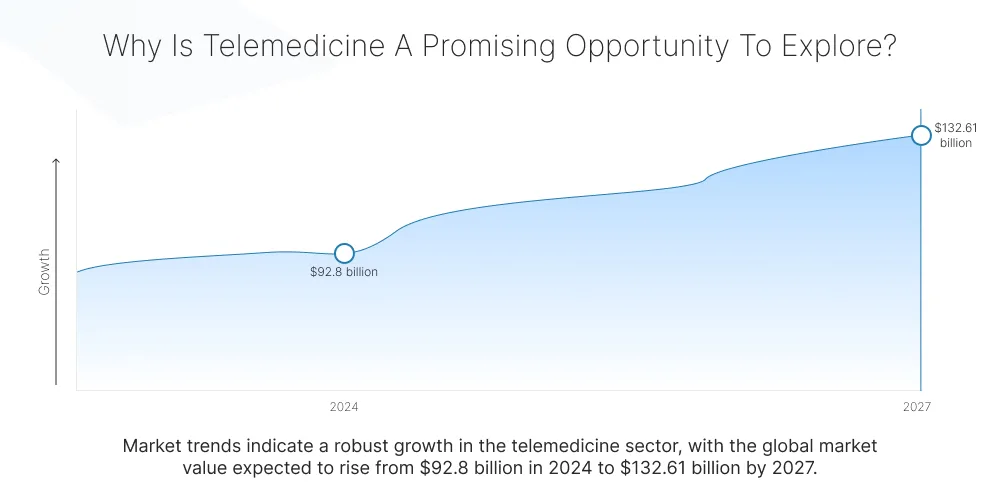
Over 74% of US patients prefer telehealth services and over 50% of medical professionals in the US have integrated telemedicine programs into their practices. Market trends indicate a robust growth in the telemedicine sector, with the global market value expected to rise from $92.8 billion in 2025 to $132.61 billion by 2027. Entrepreneurs find this sector lucrative, with $5.1 billion in venture capital investments in digital health during Q1 2024 across 347 deals.
According to industry reports, the global telemedicine market is projected to surpass $285 billion by 2030, driven by increased adoption of virtual healthcare services and advancements in digital health technologies.
As the telehealth industry expands, so does the range of professional modalities available, including general practitioners, psychologists, psychiatrists, nurses, counselors, occupational therapists, and chiropractors.
Video appointments have replaced traditional in-person visits, offering an attractive option for both patients and healthcare providers. Patients no longer need to spend time in waiting rooms or commute to appointments.
Patients choose telehealth mainly for the convenience of accessing healthcare from home, saving time on commuting and minimizing disruptions to work or family commitments. They also appreciate quicker access to healthcare providers, shorter wait times, and the ability to schedule appointments outside regular office hours.
Telemedicine also provides essential access to medical care and specialized practitioners for individuals living in rural or underserved areas. Therefore, telemedicine is a critical feature for any new healthcare app.
The telemedicine landscape is evolving rapidly as healthcare providers increasingly rely on digital platforms to deliver care. Several emerging trends are shaping the future of telehealth and influencing telemedicine app development strategies.
AI-powered virtual consultations are becoming more common. AI chatbots and virtual health assistants help patients schedule appointments, perform symptom checks, and receive basic medical guidance before consulting a doctor.
Remote patient monitoring (RPM) is gaining traction, particularly for chronic disease management. Connected devices and wearable sensors enable healthcare providers to continuously monitor patient vitals such as heart rate, blood pressure, and glucose levels.
Integration with electronic health records (EHR) is another growing trend. Telemedicine platforms are now expected to seamlessly connect with hospital systems, labs, and pharmacies to provide a unified healthcare ecosystem.
Mental health telemedicine services are also expanding rapidly. Telepsychiatry and online counseling platforms are seeing increased adoption due to the growing awareness of mental health issues.
These innovations are pushing healthcare organizations and startups to invest in advanced telemedicine platforms capable of supporting next-generation digital healthcare services.
How Much Does Telemedicine App Development Cost?
Understanding the financial considerations of telemedicine implementation is crucial for healthcare providers and stakeholders. The breakdown of telemedicine app development cost involves analyzing various factors, each influencing the overall development budget significantly. Here’s a detailed overview of telehealth pricing when implementing a telehealth system.
Stage
Cost Range
Discovery Stage
$5,000 to $15,000
Proof-of-Concept Stage
$20,000 to $50,000
MVP Development
$60,000 to $120,000
Deployment
$10,000 to $30,000
Maintenance and Support
$15,000 to $40,000/annually
Licencing and Compliance
$10,000 to $25,000
Full System Development
$120,000 to $200,000
Telemedicine App Development Cost Formula
Telemedicine App Development Cost = Total Hours for Development Processes X Hourly Developer Rate + Hidden Cost
Expert Tip: Many healthcare startups reduce telemedicine app development costs by launching an MVP first, validating the product with early users, and then gradually adding advanced features such as AI diagnostics, wearable integrations, and remote patient monitoring.
Ready to Enhance Virtual Care?
Ensure your telemedicine application meets all regulatory standards.
Factors Affecting the Cost of Telemedicine Software Development
Telemedicine software or app development cost depends on many factors including the type of application, its complexity, the type of team, its technical level, and its location.
App Complexity and Features
The cost of developing a telemedicine app depends heavily on the number of features it includes. A basic telemedicine app with essential features may cost between $30,000 and $55,000. Adding more features and capabilities will increase the total cost. Simply put, more features result in higher costs.
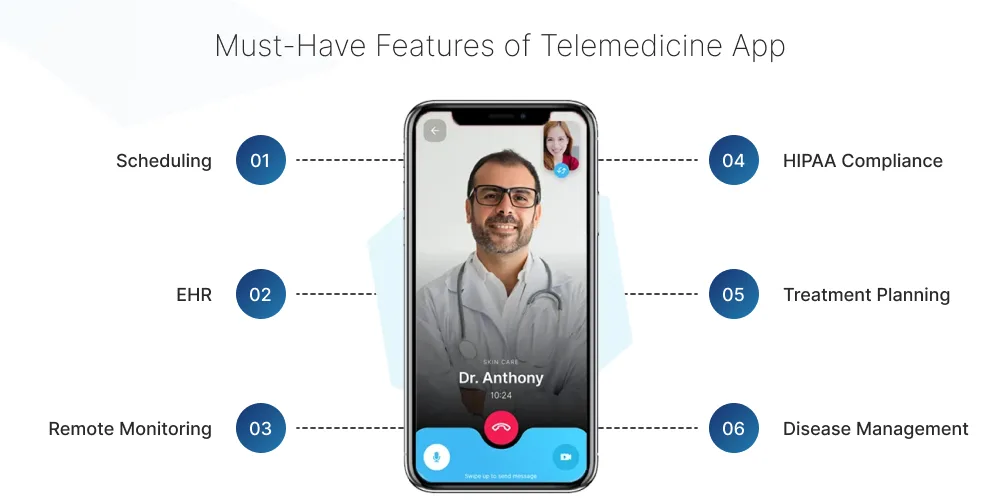
Must-Have Features of Telemedicine App
Scheduling: Patients or doctors can easily schedule, reschedule, and cancel online and offline appointments, therapy sessions.
EHR: Telemedicine apps equipped with EHR systems enable practitioners to efficiently access and store health records. The use of EHR minimizes errors and inefficiencies and provides a convenient way for users to schedule appointments and communicate patient health information across multiple systems and platforms.
Remote Monitoring: Incorporating remote patient monitoring features into telemedicine apps is essential to support patients with self-monitoring needs. This feature allows physicians to observe patient symptoms and monitor their rehabilitation process. It is especially useful for treating chronic diseases such as cardiovascular disease, diabetes, and asthma.
HIPAA Compliance: HIPAA compliance is essential when dealing with any platform in the telemedicine industry. It ensures that patient data is secure and free from the risk of leaks. Patients prioritize this feature and often choose telehealth apps based on their adherence to HIPAA standards.
Treatment Planning: Treatment planning is essential for a robust telemedicine app. It facilitates the creation of telehealth visit summaries using adaptable templates, streamlining documentation procedures.
Disease Management: This feature supports the collection of patient vitals via smart devices or manual input, to monitor patient progress closely. It also provides a medication intake log with reminders to support medication adherence.
App Type
Estimated Cost
Time-frame
Simple App
$30,000 - $55,000
3 - 5 months
Medium Complex App
$55,000 - $120,000
5 - 10 months
High Complex App
$120,000 - $200,000
10+ months
Regulatory Compliance and Security
Building telemedicine apps requires strict adherence to healthcare regulations and security standards, impacting the cost of telemedicine software development. For instance, targeting the US market requires compliance with HIPAA. Meanwhile, apps serving the EU must comply with GDPR.
Regulatory compliance may cost you around $10,000 to $30,000.
Platform and Technology Choices
The platform you select for app development plays a crucial role in determining the cost of telemedicine app development. For example, developing an Android app can be cost-effective as compared to an iOS app. On the other hand, cross-platform development can lower costs by using a single codebase for multiple platforms. These factors require thoughtful consideration when planning the budget for your telemedicine app.
Average cost to develop telemedicine software or apps is $50,000 to $170,000 per platform. If you choose cross-platform development, the cost can be slashed by up to 50%.
UI/UX Design
A compelling UI/UX design can significantly boost user engagement and retention for your app. A visually appealing UI that reflects your brand's identity requires comprehensive testing and can lead to increased costs in telemedicine software development. From attracting new users and improving productivity to enhancing your brand's reputation, a well-designed UI/UX plays a pivotal role.
To understand how design impacts telemedicine app costs, consider key questions:
Is your app idea innovative or similar to existing solutions?
Does your product already have an established digital presence?
Are you starting from scratch or upgrading an existing app?
These insights help telemedicine developers assess the complexity and estimate the design costs.
Average cost to design UI/UX of telemedicine apps or software may range from $20,000 to $50,000.
Development Team and Expertise
Costs of telemedicine app development can vary based on the composition and location of your development team. For instance, app development services in North America typically command higher rates compared to Eastern Europe and Asia. Teams with specialized skills in healthcare and telemedicine also typically charge higher rates. Moreover, opting for in-house teams instead of outsourcing can entail higher costs and overhead expenses. DITS tackles these challenges by offering an outsourcing model, providing access to skilled healthcare software developers and technical experts without the logistical challenges of maintaining an internal team, ensuring efficient and high-quality outcomes.
Telemedicine App Cost As Per Location Of Development Team
Location
Average Cost
India
$40,000 - $200,000
USA
$100,000 - $280,000
Europe
$100,000 - $250,000
UAE
$90,000 - $240,000
Third-party Integrations
To create an interconnected digital healthcare environment, integration with third party software solutions like EHR/EMR, AI, Wearables, notification is necessary. Integration with third party apps will help you enhance the overall efficiency of your telemedicine solutions, but it may also contribute to the development complexity and overall telemedicine app development cost.
Basic Integrations Cost
$10,000 - $30,000
Complex Integrations Cost
$30,000 - $100,000
Post-Development Support and Maintenance
Developing a telemedicine app involves ongoing support and maintenance. This encompasses regular updates to enhance app functionality and address bugs promptly. Implementing security patches is critical to safeguard user data and maintain compliance with regulatory requirements. Providing customer support ensures users receive prompt assistance and resolves any queries they have about app functionality or usage.
It will cost around $20,000 – $40,000 per year for maintenance.
Hidden Costs of Telemedicine App Development
While most businesses consider development and design costs, several hidden expenses can influence the total telemedicine app development cost.
Infrastructure and cloud hosting can significantly impact long-term expenses, especially when the platform handles large volumes of patient data and video consultations.
Regulatory approvals and certifications may also require legal consultation and compliance audits, particularly when targeting the US or European markets.
Third-party APIs such as video conferencing, payment gateways, e-prescription systems, and EHR integrations often charge usage-based fees.
Data security and encryption systems are critical for protecting sensitive patient data and ensuring compliance with healthcare regulations like HIPAA.
App store compliance and approvals can also require modifications, testing cycles, and additional development resources.
Accounting for these hidden costs early helps businesses plan a realistic budget for telemedicine platform development.
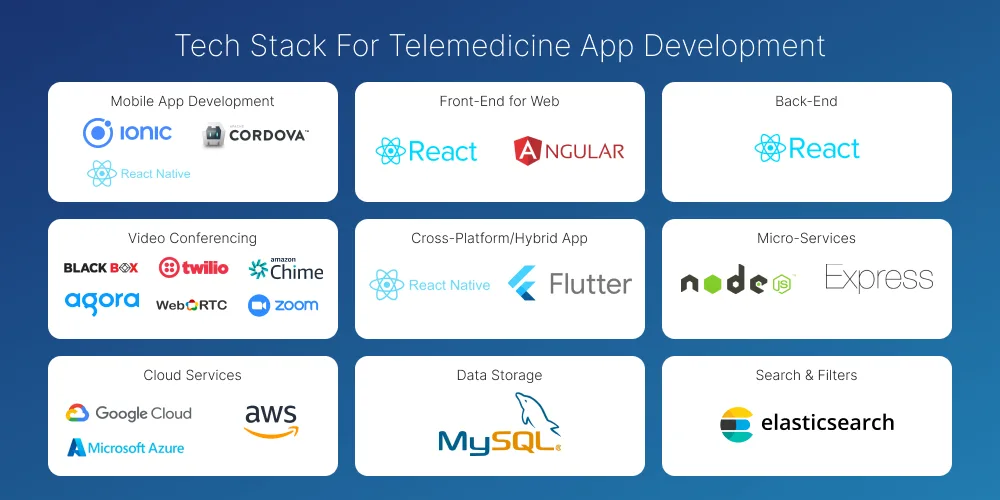
Tech Stack For Telemedicine App Development
Technologies Used In Telemedicine App Development
As the telemedicine realm continues to expand, it is propelled by technological innovations reaching new heights.
How Long Does It Take To Build a Telemedicine App?
From inception to launch, developing a telemedicine app can range from 3 to 6 months for a simple version, while a more complex app with advanced features and robust integrations may require 9 to 12 months or more. Accurately estimating the timeframe involves defining app requirements, consulting with experienced healthcare software developers, and addressing regulatory and testing protocols.
We specialize in developing a wide range of eHealth solutions for our clients, such as:
EHR/EMR systems
Telemedicine software
E-prescribing software
Medical billing software
RPM solutions with wearable devices
Hospital Management Software (HMS)
Health insurance software
Healthcare CRMs
Health tracking apps
IoT integrations, and more.
Develop Your Telehealth App with Confidence!
We specialize in FDA and HIPAA-compliant telehealth software. Let's build your secure virtual care solution together!
Looking to Develop a Telemedicine App or Software?
The cost of developing a telemedicine app can range widely from $40,000 to over $200,000, depending on factors such as complexity, features, compliance requirements, and platform choice. Building a telemedicine app involves navigating several risks and challenges, such as ensuring data security and adhering to regulatory standards. However, by incorporating best practices like having a unique selling point and strategic marketing approaches, you can mitigate these risks and create a successful app.
Our experts at custom Dubai based mobile app development are ready to partner with you for success! We emphasize user-centric design and tailor our solutions to meet the unique needs of your healthcare business, ensuring a seamless experience for both patients and providers.
Discuss your project with us today, and let’s create telemedicine solutions that not only meet but exceed industry standards and user expectations!
Frequently asked questions
Telemedicine networks, real-time telemedicine, store-and-forward practices, remote patient monitoring (RPM), medical imaging, mobile health (MHealth), virtual health assistants, telepharmacy, teledermatology, telepsychiatry, tele-rehabilitation are some of the different types of applications.
Nidhi Thakur
With more than 20 years of experience - I represent a team of professionals that specializes in the healthcare and business and workflow automation domains. The team consists of experienced full-stack developers supported by senior system analysts who have developed multiple bespoke applications for Healthcare, Business Automation, Retail, IOT, Ed-tech domains for startups and Enterprise Level clients