What Is Generative AI in Oil and Gas Exploration?
Table Of Content
Published Date :
14 May 2026
Key Takeaways
- Oil and gas exploration generates massive datasets that are difficult to interpret manually.
- Generative AI helps analyze seismic images, geological records, and drilling data more efficiently.
- Exploration teams can simulate subsurface scenarios before investing in drilling operations.
- Improved data interpretation can reduce exploration risks and improve drilling success rates.
- Adoption of AI-driven exploration tools is increasing across the global energy industry.
- Companies investing early in advanced exploration analytics may gain a long-term operational advantage.
The oil and gas industry has never been new to innovation. From the first rotary drill bits to advanced seismic imaging, exploration has always evolved alongside technology. But today, a new force is reshaping how we discover, evaluate, and extract hydrocarbon reserves; and it's doing so at a very fast pace.
Generative AI is quietly revolutionizing oil and gas exploration, helping companies analyze vast geological datasets, predict reservoir behavior, generate synthetic seismic models, and make faster, smarter drilling decisions with unprecedented accuracy.
The stakes are massive. With exploration costs soaring, regulatory pressures mounting, and the demand for operational efficiency at an all-time high, generative AI offers something the industry desperately needs: the ability to do more with less while significantly reducing risk.
For U.S. energy companies facing rising operational costs and tighter timelines, AI is gradually becoming a strategic tool for improving exploration accuracy, accelerating decision making, and reducing financial risk.
So what exactly is generative AI, and how is it transforming oil and gas exploration, let's break it down in this blog.
What is Generative AI
Generative AI refers to a class of artificial intelligence models capable of creating new data, patterns, and insights based on existing information. Instead of simply analyzing historical datasets, these models learn underlying structures and relationships, then generate simulations, predictions, and possible scenarios.
In the energy sector, this capability is particularly valuable because exploration data rarely tells a complete story. Seismic images may hint at subsurface formations, while well logs reveal only partial geological structures.
Generative AI fills those gaps by identifying patterns across large datasets and producing models to help geoscientists understand what might exist beneath the surface. Exploration teams gain the ability to test hypotheses before drilling millions of dollars into the ground.
Generative ai in the oil and gas industry allows companies to interpret geological complexity faster, simulate potential reservoirs, and generate insights that previously required months of manual analysis.
Why Oil and Gas Exploration Requires Advanced AI
Oil and gas exploration generates enormous volumes of data and interpreting that information has never been simple. Geoscientists often spend months analyzing seismic images, drilling reports, and geological surveys before identifying a promising reservoir.
High Cost and High-Risk Exploration
Drilling a single offshore exploration well in the United States can cost anywhere between $20 million and $100 million depending on depth and location. Nobody likes costly surprises, especially when a drilling project produces little or no output.
Generative AI models help reduce that uncertainty by analyzing geological structures and predicting reservoir potential before drilling.
Massive Geological Data Volumes
Exploration projects collect data from multiple sources, including:
- Seismic imaging surveys
- Historical drilling records
- Well logging data
- Geological and reservoir models
- Satellite and geospatial information
Managing such diverse datasets manually slows down decision-making. AI-driven analysis allows teams to process these datasets far more efficiently.
Time Intensive Geological Interpretation
Traditional seismic interpretation may take weeks or months depending on the complexity of the field. But exploration schedules rarely allow that luxury anymore. Energy companies must evaluate prospects faster while maintaining analytical accuracy.
This is where generative AI in oil and gas industry speeds up the seismic interpretation process. When AI accelerates geological interpretation and scenario simulation, exploration teams can make confident drilling decisions sooner.
Data Sources Powering AI Based Exploration
Generative AI models depend heavily on high-quality geological and operational data. Exploration companies already collect massive datasets during surveys and drilling operations.
Typical datasets used in AI-driven exploration include:
- Seismic survey data that maps subsurface geological structures
- Well logs capturing rock properties, pressure levels, and fluid content
- Drilling reports containing historical operational outcomes
- Reservoir simulation models built from previous exploration projects
- Satellite and geospatial mapping data used for regional geological analysis
This growing reliance on advanced analytics is one reason the generative AI in oil and gas market has started expanding quickly. Once those datasets are structured properly, the practical applications of generative AI begin to unfold.
Looking To Improve Oil Exploration With Generative AI?
Analyze seismic data faster, reduce drilling risks, and improve exploration accuracy using advanced AI-driven geological modeling solutions effectively.
Key Generative AI Use Cases in Oil And Gas Industry
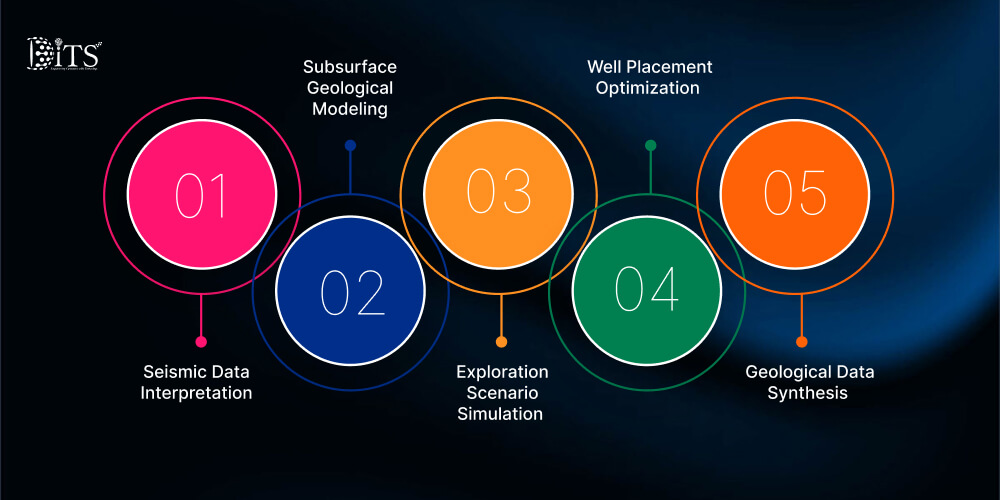
Exploration teams are beginning to apply generative models across multiple stages of the exploration lifecycle. Some of these applications focus on accelerating geological interpretation, while others support strategic drilling decisions.
Below are several practical generative AI use cases in oil and gas industry operations:
Seismic Data Interpretation
Seismic imaging has long been the foundation of oil exploration. However, interpreting these complex images often requires weeks of expert analysis.
Generative AI models can examine seismic reflections, detect patterns, and highlight potential hydrocarbon traps. What once required months of manual interpretation can now be completed far faster, allowing geoscientists to focus on validating insights rather than searching for them.
Subsurface Geological Modeling
Exploration teams frequently need to build subsurface models for areas with limited drilling data. Traditional modeling relies heavily on assumptions and partial datasets.
Generative AI improves this process by generating geological scenarios based on existing regional data. These models estimate rock layers, reservoir structures, and fluid movement patterns, helping engineers visualize underground formations before drilling begins.
Exploration Scenario Simulation
Every drilling project carries risk. Generative AI allows companies to simulate multiple exploration scenarios before committing to expensive operations.
Engineers can evaluate possible reservoir sizes, pressure conditions, and recovery rates across different drilling strategies. Instead of relying on a single geological interpretation, teams gain a broader range of simulated outcomes.
Well Placement Optimization
Even when a promising reservoir is identified, selecting the optimal drilling location remains complex.
AI systems analyze geological structures, pressure gradients, and historical drilling performance to recommend well placement strategies. Small adjustments in drilling location can significantly increase recovery rates.
Geological Data Synthesis
Oil exploration data rarely exists in a single format. Seismic imaging, well logs, satellite data, and geological maps all provide different perspectives.
Generative AI helps combine these datasets into unified exploration models, giving engineers a clearer picture of potential reservoirs.
And the impact of these applications is becoming increasingly visible across the energy sector. In fact, many U.S. exploration companies now treat AI-driven analysis as a competitive advantage rather than an experimental technology.
Business Benefits of Generative AI In Oil and Gas
Exploration technologies often promise efficiency, but energy executives usually ask a simple question first. Does it improve decision quality and reduce financial risk?
Generative AI is gaining traction precisely because it addresses those concerns. Instead of replacing geoscientists, it acts as an analytical accelerator. Teams can explore more geological scenarios, validate drilling decisions faster, and uncover patterns hidden inside decades of exploration data.
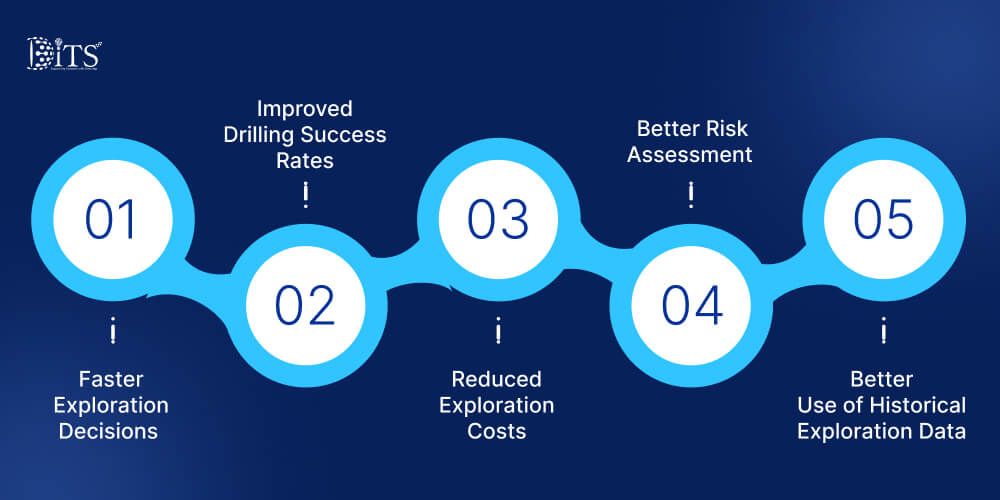
Several operational advantages stand out for energy companies.
Faster Exploration Decisions
Traditional geological interpretation can take weeks, sometimes months, depending on data complexity. When AI models assist with seismic analysis and reservoir modeling, exploration teams receive early insights much faster.
Faster interpretation translates into faster exploration decisions. In an industry where project timelines influence millions in operational costs, that speed matters.
Improved Drilling Success Rates
Drilling success depends heavily on geological interpretation accuracy. Generative AI evaluates subsurface formations using thousands of historical exploration patterns, which helps engineers identify more promising drilling locations.
Even a small improvement in drilling success rates can significantly impact profitability.
Reduced Exploration Costs
Exploration campaigns often involve extensive surveying, testing, and modeling. AI-driven analysis reduces redundant geological evaluations and helps teams focus on high-potential prospects.
Nobody enjoys spending millions on an exploratory well that produces little output. Better data interpretation lowers that risk.
Better Risk Assessment
Exploration decisions involve multiple uncertainties such as reservoir pressure, rock permeability, and hydrocarbon migration patterns. Generative AI models simulate different geological conditions, allowing engineers to understand possible outcomes before drilling begins.
Executives gain something extremely valuable. A clearer view of exploration risk.
Better Use of Historical Exploration Data
Oil companies possess vast historical datasets from previous exploration projects. Many of these records remain underutilized because analyzing them manually is difficult.
AI models can process decades of drilling logs and seismic images within hours. Suddenly, information that once sat quietly in archives becomes a strategic exploration asset.
For organizations investing in generative AI in oil and gas, the outcome is not just faster analysis. It is smarter exploration planning.
Planning To Modernize Oil And Gas Exploration Processes?
Implement intelligent exploration platforms that support predictive modeling, drilling optimization, and advanced geological scenario simulation capabilities efficiently.
Industry Adoption Trends Across Energy Sector
Several major energy companies in the United States have already begun integrating advanced analytics into exploration workflows. While not every project relies entirely on generative models yet, adoption is accelerating steadily.
Some common industry trends include:
- AI-assisted seismic interpretation tools used in offshore exploration
- Machine learning models applied to reservoir characterization
- Automated geological modeling platforms supporting exploration planning
- Data-driven digital oilfield initiatives improving operational efficiency
Energy companies are not experimenting casually anymore. Many exploration departments now maintain dedicated AI research teams working alongside geoscientists and petroleum engineers.
And the momentum continues to build as computing infrastructure improves and geological datasets grow larger.
This growing adoption explains why analysts predict significant growth in the generative AI in oil and gas market over the next decade. Energy companies increasingly view AI as a strategic capability rather than a niche research project.
However, adoption is not without challenges. Implementing generative AI in exploration environments requires careful planning and technical preparation.
Regulatory and Compliance Considerations in AI Driven Exploration
Oil and gas exploration in the United States operates under strict regulatory oversight. Agencies such as the Environmental Protection Agency and the Bureau of Safety and Environmental Enforcement closely monitor drilling operations, environmental impact, and operational safety. Any new technology introduced into exploration workflows must align with these regulatory frameworks.
Energy companies adopting generative AI in the oil and gas industry typically establish clear governance processes that address:
- Data validation and quality control
- Model transparency for regulatory review
- Environmental impact analysis support
- Secure storage of geological and operational data
Regulatory alignment may not sound exciting but ignoring it can stall entire exploration projects. Responsible AI implementation ensures technology supports compliance and helps oil and gas companies follow industry regulations.
Key Considerations Before Investing in Generative AI
Before committing resources to generative AI initiatives, energy companies should evaluate several operational factors. The technology is powerful, but successful outcomes depend on preparation and realistic expectations.
Key questions decision-makers often ask include:
- Does the organization possess structured geological datasets ready for AI analysis?
- Which exploration workflows would benefit most from automation or simulation?
- Is existing computing infrastructure capable of handling large-scale seismic data processing?
- Does the company have AI expertise internally or require external engineering support?
Many organizations begin with small pilot initiatives to validate value before expanding deployment. In several cases, teams develop a prototype platform through MVP development to test geological modeling capabilities and evaluate real exploration datasets.
Interestingly, generative AI adoption often connects with broader digital transformation initiatives across the energy sector. For example, companies already investing in smart power and energy monitoring or evaluating IoT use cases in oil and gas industry frequently expand their data strategies to include AI-driven exploration insights.
In short, generative AI works best when it becomes part of a larger digital infrastructure rather than an isolated experiment.
Why Choose DITS For Generative AI Development in Oil And Gas
Building AI-powered exploration platforms requires a strong understanding of enterprise software architecture, data integration, and large-scale analytical systems.
At DITS, our engineering teams develop intelligent platforms that combine advanced AI capabilities with scalable enterprise software systems. We incorporate artificial intelligence throughout the development lifecycle including software design, automated quality assurance, code optimization, and platform customization.
This approach ensures every system we deliver maintains high performance, strong code quality, and the flexibility required for evolving exploration environments.
For energy companies exploring AI-driven solutions, DITS focuses on delivering:
- Custom AI models tailored for geological data analysis
- Scalable software platforms capable of processing massive seismic datasets
- Seamless integration with existing exploration and reservoir management systems
- Robust architecture designed for enterprise-level energy operations
Generative AI is not simply a feature added to exploration software. When engineered correctly, it becomes a core analytical capability supporting faster and more informed drilling decisions.
Conclusion
Oil and gas exploration has always balanced science, experience, and calculated risk. Geological interpretation, seismic analysis, and drilling decisions demand enormous expertise, yet even the most experienced teams face uncertainty when dealing with complex subsurface environments.
This is where modern AI capabilities are beginning to shift the landscape. By analyzing large exploration datasets, simulating geological scenarios, and identifying subtle patterns across seismic images, generative AI allows exploration teams to work with deeper insights and faster analytical cycles.
As computing infrastructure improves and exploration datasets continue expanding, AI-driven exploration platforms will likely become a standard part of modern energy operations.
FAQs
What is generative ai in oil and gas exploration?
Generative AI refers to advanced artificial intelligence models that analyze geological datasets such as seismic surveys, well logs, and historical drilling data to generate subsurface models and exploration insights. These systems help geoscientists simulate geological scenarios, identify potential reservoirs, and evaluate drilling opportunities with greater accuracy.
How is generative ai used in oil and gas exploration?
Generative AI supports several exploration activities including seismic data interpretation, reservoir modeling, drilling probability analysis, and geological scenario simulation. By processing large datasets quickly, AI systems help exploration teams identify promising drilling locations while reducing uncertainty.
How can DITS support generative ai software development for oil and gas companies?
DITS offers specialized generative ai software development services tailored for energy sector applications. Our engineering teams design AI-driven platforms capable of analyzing seismic datasets, generating geological models, and integrating insights directly into exploration workflows. These systems are built to scale with enterprise exploration environments while maintaining high performance and reliability.
Why should energy companies partner with DITS for generative ai solutions?
Energy companies partner with DITS for generative ai software development because we combine strong software engineering expertise with advanced AI capabilities. Our development approach focuses on building scalable exploration analytics platforms that integrate seamlessly with existing geological tools, helping organizations accelerate exploration insights while maintaining strong system performance.
What challenges should companies consider before implementing generative ai in exploration?
Before deploying AI-driven exploration systems, companies should evaluate data quality, computing infrastructure, and integration requirements with existing geological platforms. Successful projects typically begin with structured datasets and a focused use case, allowing organizations to gradually scale their AI capabilities.

Dinesh Thakur
21+ years of IT software development experience in different domains like Business Automation, Healthcare, Retail, Workflow automation, Transportation and logistics, Compliance, Risk Mitigation, POS, etc. Hands-on experience in dealing with overseas clients and providing them with an apt solution to their business needs.
Recent Posts

AI triage in healthcare helps prioritize patients, improve access, streamline care decisions, and enhance patient engagement with smarter workflows.
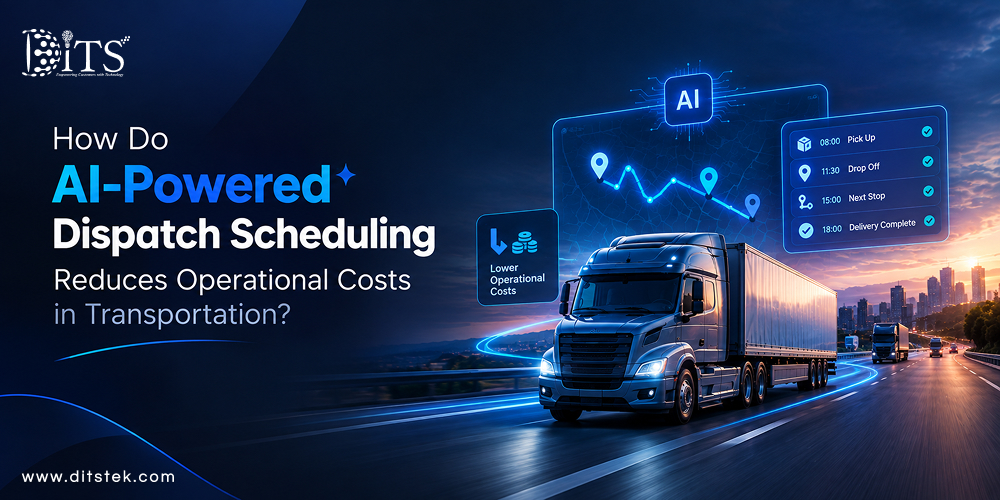
AI-powered dispatch scheduling reduces transportation costs by optimizing routes, vehicle utilization, driver schedules, and delivery operations for greater efficiency.

AI integration connects AI with existing systems and workflows, while AI adoption focuses on using AI effectively to drive measurable business outcomes.