How to Build Energy Management Systems (EMS) for Commercial Buildings
Table Of Content
Published Date :
31 Mar 2026
Key Takeaways
- Energy management systems (EMS) help real estate businesses monitor and control electricity usage across facilities.
- Building energy management systems provide real-time visibility into energy consumption patterns.
- Automated controls can optimize HVAC, lighting, and equipment operations without manual intervention.
- Businesses can reduce energy costs by 10–30 percent through intelligent monitoring and optimization.
- IoT sensors, analytics platforms, and automation technologies form the foundation of modern EMS platforms.
- AI-powered analytics can identify energy inefficiencies and improve operational decision-making.
Commercial facilities run on complex energy ecosystems. Lighting, heating, cooling, ventilation, elevators, refrigeration, data centers, and backup power units all draw electricity simultaneously. Without a centralized system, facility teams are often operating blind, reacting only when costs spike or equipment fails.
That is why many organizations now rely on commercial energy management systems to bring structure and intelligence to how energy is monitored and controlled across large buildings. These systems collect operational data from multiple devices, analyze patterns, and help facilities operate more efficiently without constant manual intervention.
Instead of relying on manual checks or scattered monitoring tools, building operators gain a unified platform that continuously measures usage, identifies waste, and recommends optimization strategies. And when automation is introduced, many routine adjustments happen without anyone needing to touch a control panel.
Let’s look at how these systems actually work inside commercial environments.
What Is Energy Management System (EMS)?
An energy management system is a digital platform designed to track and optimize electricity consumption across an entire building infrastructure.
It connects physical assets such as HVAC units, lighting circuits, and electrical panels to a central monitoring system that records energy use throughout the day. Operations managers can view this information through dashboards that highlight usage trends, peak demand hours, and potential inefficiencies.
Typical commercial facilities using EMS platforms include:
- Corporate office buildings
- Hospitals and healthcare facilities
- Hotels and hospitality properties
- Shopping malls and retail complexes
- University and corporate campuses
For large facilities, the value becomes obvious within weeks. Instead of relying on monthly energy bills to detect problems, operators can identify inefficiencies within minutes.
Key Components of Commercial EMS
A functioning EMS relies on several interconnected technologies that collect, transmit, and analyze energy data across the building environment.
Core components usually include:
Smart energy meters
Measure electricity consumption at circuit or equipment level and transmit data continuously.
IoT sensors and controllers
Track environmental conditions such as temperature, humidity, occupancy, and equipment performance.
Data gateways and communication protocols
Act as the bridge between physical devices and central monitoring platforms, allowing devices to exchange information securely.
Energy analytics platforms
Process incoming data streams and convert them into insights, reports, and optimization recommendations.
Automated control systems
Enable automatic energy management systems to adjust HVAC settings, lighting schedules, or equipment operations based on usage patterns.
When these components operate together, buildings move from passive monitoring to active energy optimization.
Looking to Reduce Energy Waste Across Your Buildings?
Identify hidden inefficiencies, automate energy controls, and achieve measurable savings with a customized energy management solution designed for scalability.
How EMS Improves Building Operations
Energy management platforms are not just monitoring tools. Their real value lies in how they influence day-to-day building operations.
Real-Time Energy Visibility
Facility managers can track electricity usage across different zones or equipment in real time, allowing immediate identification of abnormal consumption.
Automated Control of HVAC, Lighting, And Equipment
Systems can automatically reduce lighting intensity during low occupancy hours or adjust cooling levels based on temperature sensors.
Demand Response Management
When electricity demand approaches peak thresholds, the system can temporarily reduce non-critical loads to prevent costly demand charges.
Predictive Energy Optimization
Historical usage patterns help software anticipate demand cycles and adjust system behavior proactively.
In many cases, companies discover that 10 to 25 percent of their energy costs were avoidable. The challenge was never awareness. It was visibility.
And that is precisely what modern energy management systems for commercial buildings are designed to deliver.
Read Portfolio: IoT Smart Lighting & HVAC Control System
Step-By-Step Process to Build Energy Management Systems for Commercial Buildings
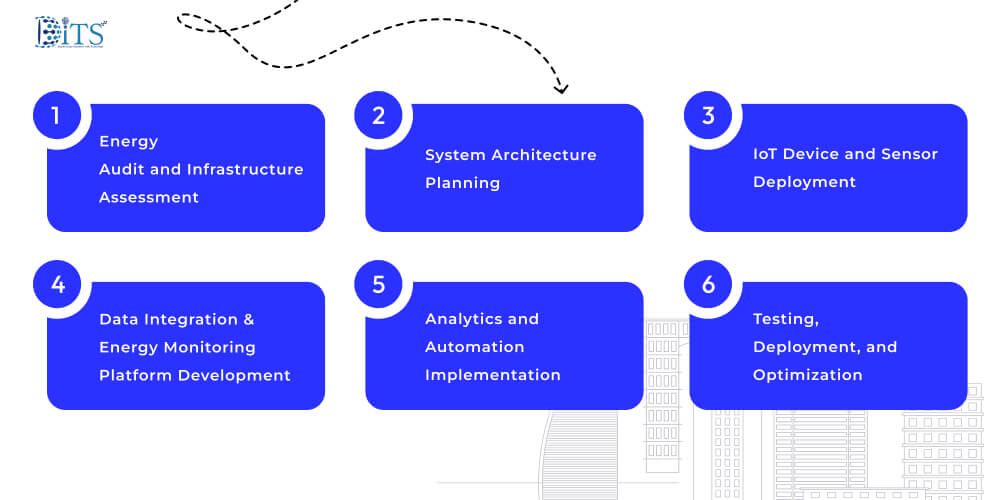
Deploying a modern EMS platform inside a commercial facility isn’t just about installing sensors and dashboards. It requires structured planning, integration with building infrastructure, and continuous optimization. When implemented properly, commercial energy management systems evolve into operational intelligence platforms that guide energy decisions every day.
Below is the typical process organizations follow when building scalable energy monitoring and control solutions.
Energy Audit and Infrastructure Assessment
Every successful deployment begins with understanding how energy is currently used across the facility.
Engineers and consultants examine historical electricity consumption, peak load periods, and equipment efficiency. HVAC systems, lighting networks, elevators, chillers, and server rooms are usually the biggest contributors to energy usage.
Typical assessment activities include:
- Identifying energy consumption patterns across departments
- Reviewing utility bills from the past 12–24 months
- Evaluating HVAC efficiency and maintenance records
- Inspecting lighting systems and occupancy behavior
- Mapping electrical distribution panels and circuits
Many organizations involve IT consulting services at this stage to build a realistic implementation roadmap and align the EMS architecture with existing infrastructure.
The audit often reveals surprising inefficiencies. Lights running all night in conference areas. Cooling systems operating at full capacity during low occupancy hours. Small issues that quietly drain budgets every month.
System Architecture Planning
Once energy consumption patterns are clear, the next step is designing the technical architecture that will support the EMS platform.
This phase focuses on defining how devices, sensors, and software layers will interact across the building network.
Planning activities typically include:
- Defining sensor network topology
- Determining placement of smart meters and monitoring devices
- Selecting communication protocols such as Modbus, BACnet, or MQTT
- Designing data pipelines for real-time telemetry
- Creating integration points with existing building management systems
This stage also determines how scalable the solution will be. For example, a single office building might require only dozens of sensors, while a multi-campus property portfolio could involve thousands of connected devices.
Careful architecture planning ensures the system grows without major redesign later.
IoT Device and Sensor Deployment
After architecture design, implementation teams begin deploying hardware across the facility.
Smart meters are installed at key electrical panels to measure consumption. Environmental sensors track occupancy levels, temperature variations, and lighting conditions. Controllers connect HVAC equipment and lighting systems to the monitoring platform.
Typical device installations include:
- Smart electrical meters
- Temperature and humidity sensors
- Occupancy sensors
- Lighting controllers
- Equipment monitoring devices
Once installed, devices begin transmitting operational data continuously, allowing building energy management systems to collect detailed insights about how energy is consumed in every zone of the facility.
Data Integration and Energy Monitoring Platform Development
Hardware alone cannot deliver insights. Data must be collected, processed, and presented in a form that facility managers can understand and act upon.
This is where robust software platforms become essential. Organizations typically invest in software development services to build centralized monitoring dashboards that aggregate data from all sensors and meters.
Key capabilities of the platform usually include:
- Real-time energy consumption dashboards
- Historical energy trend analysis
- Equipment performance monitoring
- Alert systems for abnormal usage patterns
- Reporting tools for energy audits and compliance
Many organizations also implement tailored dashboards through custom application development, allowing facility teams to track energy consumption by building, floor, or department.
Here’s an interesting shift happening across the industry. Software is no longer just visualizing data. It’s starting to predict energy behavior before problems occur.
Analytics and Automation Implementation
Once energy data flows consistently into the system, advanced analytics tools begin delivering real operational value.
Energy analytics models analyze consumption patterns across time, weather conditions, occupancy behavior, and equipment performance. These insights allow automatic energy management systems to optimize building operations automatically.
Common automation capabilities include:
- Dynamic HVAC adjustments based on occupancy
- Automated lighting schedules
- Peak demand load balancing
- Predictive alerts for inefficient equipment
This is also where AI integration services begin playing a significant role. Intelligent models can forecast energy demand, recommend equipment adjustments, and detect anomalies in consumption patterns.
At DITS, AI is integrated into the development lifecycle itself. It supports software development, strengthens quality assurance processes, improves code reliability, and enables deeper customization within the systems we build. The result is smarter platforms that continuously evolve after deployment.
Testing, Deployment, and Optimization
Before full-scale rollout, the EMS platform undergoes rigorous testing to ensure accurate readings and stable performance.
Testing typically focuses on:
- Sensor calibration accuracy
- Communication reliability between devices
- Dashboard data consistency
- Automation rule validation
- Security and access controls
After deployment, monitoring continues for several months to fine-tune system behavior. Energy consumption data collected during this phase often leads to new optimization strategies.
And this is where organizations usually see the biggest impact. Small adjustments to HVAC schedules or lighting automation can reduce energy consumption by 10 to 30 percent without affecting building comfort.
Once optimized, these systems become a silent operational advantage, working quietly in the background while facility teams focus on more strategic priorities.
Planning to Build a Scalable Energy Management Platform?
Design and implement a future-ready EMS with advanced analytics, seamless integrations, and automation capabilities tailored to your facility requirements.
Estimated Cost of Building Energy Management Systems
The cost of implementing EMS solutions varies widely depending on building size, infrastructure complexity, and the level of automation required. A small commercial property may require only a few dozen monitoring devices, while large campuses can involve thousands of connected sensors and controllers.
Below is a simplified view of how investment levels typically scale with facility size.
| Building Size | Estimated Development Investment | Estimated Monthly Operating Cost | Typical Complexity Level |
| Small Commercial Facility | $25,000 – $80,000 | $1,000 – $3,000 | Moderate |
| Mid-Sized Office Or Mall | $80,000 – $250,000 | $3,000 – $10,000 | High |
| Large Multi-Building Campus | $250,000 – $600,000+ | $10,000+ | Enterprise |
Read Full Energy Management System Development Cost Breakdown
Several factors influence total investment:
- Size and complexity of the building infrastructure
- Number of sensors, meters, and connected devices
- Software platform development and integration requirements
- Level of automation and analytics implemented
- Ongoing system monitoring and maintenance needs
Organizations that approach EMS implementation strategically often recover these investments through operational savings within two to four years.
Why Choose DITS For Energy Management System Development
Developing reliable energy management systems for commercial buildings requires more than connecting sensors and dashboards. The system must integrate with existing building infrastructure, process large volumes of operational data, and support automation that improves efficiency without disrupting daily operations.
At DITS, we design scalable platforms that help organizations monitor, analyze, and optimize building energy usage through intelligent software solutions.
Our approach focuses on:
IoT-Driven Monitoring Infrastructure
We implement connected sensor networks that capture real-time energy consumption data across equipment, electrical systems, and facility zones.
Custom Energy Monitoring Platforms
Through custom application development, we build centralized dashboards that allow facility managers to track consumption patterns, identify inefficiencies, and make faster operational decisions.
Intelligent Software Engineering
At DITS, AI supports our development process by strengthening software development, improving quality assurance, maintaining code quality, and enabling advanced system customization.
End-To-End Implementation
From architecture planning to deployment, our teams deliver practical EMS solutions designed for long-term operational efficiency.
Need a Smarter Way to Control Energy Systems?
Leverage automation, analytics, and IoT integration to streamline operations and improve building performance without increasing manual workload or complexity.
Conclusion
Energy costs continue to rise, and commercial buildings remain one of the largest consumers of electricity across modern urban environments. Without visibility into how energy is being used, even well-managed facilities can lose significant operational efficiency over time.
That is why organizations across industries are adopting building energy management systems to monitor consumption, automate equipment behavior, and identify inefficiencies before they become costly problems.
Modern EMS platforms combine connected sensors, advanced analytics, and intelligent automation to create smarter buildings that operate with far greater efficiency. Over time, these systems not only reduce energy expenses but also improve equipment performance and long-term infrastructure reliability.
For businesses managing large facilities or multi-building portfolios, investing in intelligent energy systems is no longer optional. It has become a strategic decision that directly influences operational costs, sustainability goals, and long-term competitiveness.
FAQs
How Long Does It Take to Implement Energy Management Systems In Commercial Buildings?
Implementation timelines depend on building size, infrastructure complexity, and the number of connected devices. A mid-sized commercial building can usually deploy an EMS platform within 3 to 6 months, including energy audits, sensor installation, and platform configuration. Large multi-building campuses may require 6 to 12 months, especially when integrating legacy equipment and advanced automation features.
What Kind of Energy Savings Can Businesses Expect from EMS Platforms?
Most organizations see 10 to 30 percent reduction in energy consumption after deploying modern monitoring and automation systems. Savings typically come from optimizing HVAC schedules, reducing peak demand charges, identifying inefficient equipment, and improving lighting control based on occupancy patterns.
Can Energy Management Systems Integrate with Existing Building Infrastructure?
Yes. Modern EMS platforms are designed to integrate with existing HVAC controllers, lighting systems, and building management software using communication protocols such as BACnet, Modbus, and API integrations. Even older infrastructure can often be connected through gateways or hardware adapters.
How Can DITS Help Businesses Build Energy Management Platforms?
DITS provides end-to-end software development services for organizations planning to implement intelligent building infrastructure. Our teams design monitoring platforms, integrate IoT devices, develop analytics dashboards, and build scalable systems that help businesses monitor and optimize energy usage across commercial facilities.
Do Energy Management Systems Support Predictive Energy Optimization?
Yes. Advanced platforms can analyze historical consumption patterns, weather conditions, and occupancy behavior to forecast future demand. With the support of AI integration services, businesses can automate energy adjustments, detect abnormal usage patterns, and continuously improve building efficiency over time

Dinesh Thakur
21+ years of IT software development experience in different domains like Business Automation, Healthcare, Retail, Workflow automation, Transportation and logistics, Compliance, Risk Mitigation, POS, etc. Hands-on experience in dealing with overseas clients and providing them with an apt solution to their business needs.
Recent Posts
AI triage in healthcare helps prioritize patients, improve access, streamline care decisions, and enhance patient engagement with smarter workflows.
AI-powered dispatch scheduling reduces transportation costs by optimizing routes, vehicle utilization, driver schedules, and delivery operations for greater efficiency.
AI integration connects AI with existing systems and workflows, while AI adoption focuses on using AI effectively to drive measurable business outcomes.