CDSS in Healthcare – Know its Features, Benefits and More
Table Of Content
Published Date :
19 May 2026
Key Takeaways
- Clinical Decision Support Systems help physicians analyze complex patient data.
- CDSS healthcare platforms support diagnosis, treatment planning, and medication safety.
- Integration with electronic health records allows CDSS insights to appear directly within physician workflows.
- Strong regulatory compliance is essential for any CDSS in healthcare implementation.
- Healthcare organizations benefit from improved patient outcomes, faster decision-making, and better care coordination.
- Custom platforms built through specialized healthcare software development ensure CDSS solutions align with hospital operations and scalability.
Hospitals across the United States are handling more data than ever before. Patient histories, lab reports, imaging files, treatment records, insurance documentation. The list keeps growing. In busy facilities across cities like New York, Chicago, and Houston, physicians often make time-sensitive decisions while navigating thousands of clinical variables.
This is where technology quietly becomes a second pair of eyes.
Many healthcare leaders now ask a very practical question: What is CDSS in healthcare and why does it matter for modern care delivery? Clinical Decision Support Systems are designed to help medical professionals process complex information faster and with greater accuracy.
For hospital administrators and healthcare executives, CDSS represents something even more important. It helps reduce costly errors, improve care consistency, and support evidence-based treatment decisions across the organization.
What Is CDSS In Healthcare
A CDSS healthcare platform is a digital system designed to support medical professionals during clinical decision making. It analyzes patient information, compares it with established medical knowledge, and provides recommendations that help clinicians choose the most appropriate course of action.
In practical terms, CDSS in healthcare acts like an intelligent assistant sitting beside the physician. The system reviews patient data and highlights relevant insights such as potential diagnoses, drug interactions, recommended treatments, or preventive alerts.
The goal is straightforward.
- Improve diagnostic accuracy
- Support evidence-based treatment decisions
- Reduce medication and treatment errors
- Strengthen patient safety across clinical environments
Consider a hospital in Boston managing emergency admissions during peak flu season. Doctors may see dozens of patients within hours. A CDSS software platform can instantly evaluate symptoms, cross-check medications, and flag risks that might otherwise be overlooked during a busy shift.
How Clinical Decision Support Systems Work
Understanding how these systems function helps healthcare leaders evaluate their real value. A well-designed CDSS healthcare platform does not simply store medical information. It actively processes patient data and converts it into actionable clinical insights.
Below is a simplified breakdown of how most CDSS platforms operate.
Data Collection
The first step involves gathering patient-specific data from multiple clinical systems. This information forms the foundation of every recommendation the system generates.
Typical inputs include:
- Patient medical records
- Laboratory test results
- Radiology and imaging reports
- Medication history
- Vital signs and clinical notes
For example, a hospital in Dallas treating cardiac patients may collect ECG results, blood pressure trends, and medication records. When this data enters a CDSS software platform, it becomes part of a much larger analytical process.
Knowledge Base
Once patient information is collected, the system compares it with an extensive clinical knowledge library. This database typically includes:
- Established medical guidelines
- Clinical treatment protocols
- Drug databases
- Peer-reviewed medical research
- Disease management frameworks
Hospitals across cities like San Francisco or Philadelphia often rely on these structured knowledge bases to standardize care practices across departments.
In many modern implementations, organizations combine this knowledge layer with AI in healthcare technologies to continuously update clinical recommendations as new research becomes available.
Decision Engine
This is where the system begins real analysis.
The decision engine uses algorithms and rule-based logic to interpret patient information. It evaluates symptoms, medications, lab results, and medical history to detect patterns or risks that may require attention.
For instance:
- Identifying potential drug interactions
- Highlighting abnormal lab values
- Suggesting diagnostic tests
- Recommending guideline-based treatments
The engine processes thousands of clinical variables within seconds. Something that would otherwise take physicians much longer during busy clinical shifts.
Output Delivery
After analysis, the system presents its findings directly within the physician’s workflow. The goal is to assist decision making without interrupting clinical operations.
Common outputs include:
- Medication alerts
- Preventive reminders
- Diagnostic suggestions
- Treatment recommendations
- Risk notifications for patient safety
For example, an emergency department in Miami where physicians are managing multiple trauma cases. A CDSS healthcare platform can instantly flag high-risk medication combinations or recommend guideline-based treatment steps.
These real-time insights reduce uncertainty and help clinicians move faster with greater confidence.
Want Better Patient Care Through Advanced CDSS Platforms?
Create scalable clinical decision support systems with AI analytics, healthcare interoperability, and automated medical workflow optimization for providers effectively.
Key Features of Modern CDSS Platforms
Modern CDSS software platforms are designed to fit directly into hospital operations. Instead of forcing physicians to learn new processes, these systems work quietly within existing clinical systems and electronic records.
Several core capabilities define today’s CDSS platforms.
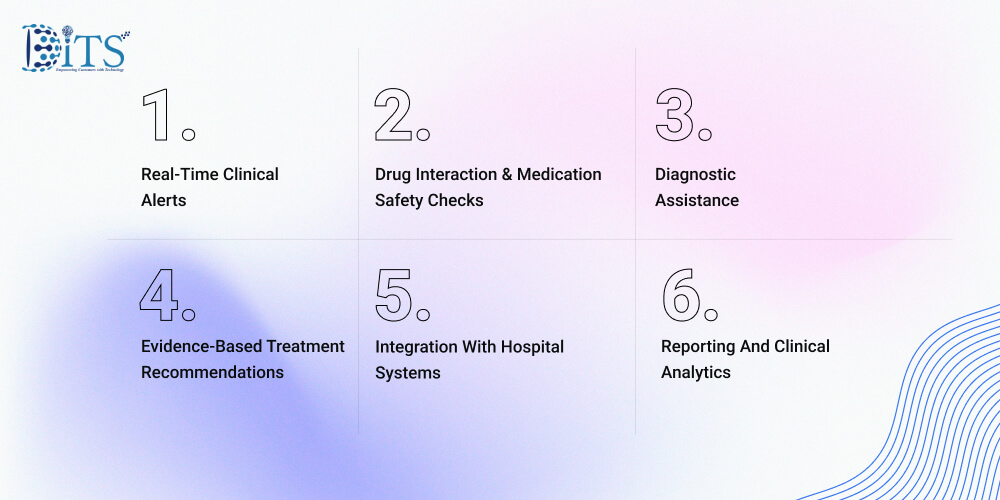
Real-Time Clinical Alerts
One of the most valuable features of CDSS in healthcare is the ability to deliver instant alerts during patient care.
For example, if a physician in a Chicago hospital prescribes medication that conflicts with the patient’s current drugs, the system immediately raises a warning.
Typical alerts include:
- Drug interaction warnings
- Allergy notifications
- Abnormal lab value alerts
- Duplicate test reminders
These alerts appear inside the clinician’s workflow so decisions can be adjusted immediately.
Drug Interaction and Medication Safety Checks
A modern CDSS healthcare platform automatically analyzes prescriptions against drug databases and patient records. If the system detects unsafe dosage levels or harmful drug combinations, it flags the issue before medication is administered.
In busy urban hospitals such as those in New York or Atlanta, where hundreds of prescriptions are processed daily, these safeguards reduce preventable medical errors.
Diagnostic Assistance
Doctors rely on experience, but clinical data often provides additional perspective. Diagnostic support features help physicians evaluate possible conditions based on symptoms, medical history, and test results.
For example:
- Suggesting possible diagnoses based on symptom patterns
- Highlighting overlooked risk indicators
- Recommending follow-up diagnostic tests
This capability becomes especially useful in large healthcare networks where patient cases vary widely.
Evidence-Based Treatment Recommendations
Medical research evolves constantly. Keeping up with new treatment protocols can be challenging for clinicians who already manage demanding schedules.
CDSS platforms help by connecting patient data with updated clinical guidelines. The system compares patient conditions with recommended treatment frameworks and suggests evidence-based care pathways.
Hospitals in the United States rely on this feature to maintain consistent treatment quality across departments.
Integration With Hospital Systems
A decision-support platform only delivers value when it fits naturally into existing healthcare technology environments.
Modern CDSS solutions integrate with:
- Electronic health record systems
- Laboratory information systems
- Pharmacy systems
- Radiology platforms
This integration ensures physicians do not need to switch between multiple systems to access insights.
Many hospitals implementing new platforms often combine them with broader healthcare software development initiatives to modernize digital infrastructure across departments.
Reporting And Clinical Analytics
Healthcare executives require visibility into operational performance. Modern CDSS platforms therefore include analytical dashboards that provide insights into treatment patterns and clinical outcomes.
Common reporting capabilities include:
| Clinical Insight | Operational Value |
| Medication safety reports | Identify prescription risks |
| Treatment compliance tracking | Ensure guideline adherence |
| Diagnostic accuracy trends | Improve care consistency |
| Clinical workflow analytics | Optimize hospital operations |
For healthcare leaders managing facilities in large metropolitan areas like Los Angeles or Houston, these analytics help identify improvement opportunities across entire hospital systems.
In simple terms, the strongest CDSS platforms provide strategic insights that help healthcare organizations continuously refine care delivery.
Benefits of CDSS For US Healthcare Providers
Across healthcare networks in cities such as New York, Phoenix, and San Diego, decision-support systems are helping organizations handle rising patient demand while maintaining consistent care standards.
Below are some of the most practical benefits of CDSS in healthcare that executives see after implementing CDSS platforms.
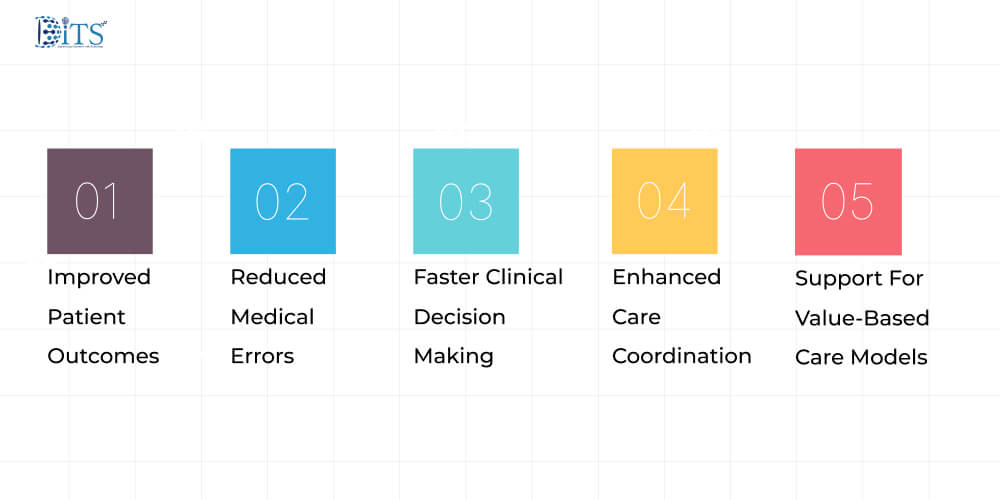
Improved Patient Outcomes
Every clinical decision carries consequences. Even small oversights can lead to complications or extended hospital stays.
A CDSS healthcare platform analyzes patient data in real time and helps physicians make better-informed decisions. It highlights abnormal patterns, suggests treatment protocols, and reminds clinicians of potential risks that may otherwise go unnoticed.
Over time, this leads to:
- More accurate diagnoses
- Earlier detection of complications
- More consistent treatment decisions
Hospitals that adopt these systems often see measurable improvements in patient recovery timelines and overall care quality.
Reduced Medical Errors
Medication mistakes, duplicate tests, and overlooked symptoms remain common challenges across healthcare systems.
CDSS platforms address these risks by providing alerts and safety checks during treatment planning. For instance, if a patient in a hospital in San Francisco has an allergy recorded in their medical history, the system immediately warns the physician before medication is prescribed.
These built-in safeguards significantly reduce preventable errors, which protects both patients and healthcare institutions.
Faster Clinical Decision Making
Physicians often work under intense time pressure. Emergency departments, intensive care units, and surgical teams must process complex information quickly.
A CDSS healthcare system accelerates this process by organizing patient data and presenting relevant insights instantly. Instead of manually reviewing multiple data sources, clinicians receive focused recommendations within seconds.
The result is faster decision-making without compromising clinical accuracy.
Enhanced Care Coordination
Modern healthcare is rarely handled by a single physician. Patients interact with multiple specialists, nurses, and care teams during treatment.
CDSS platforms improve coordination by ensuring that everyone involved in patient care works from the same information framework. Treatment guidelines, medication alerts, and diagnostic insights remain consistent across departments.
This consistency becomes particularly important in large hospital systems across cities like Chicago or Dallas, where hundreds of clinicians collaborate daily.
Support For Value-Based Care Models
Healthcare reimbursement in the United States increasingly focuses on outcomes rather than service volume. Hospitals are rewarded for delivering effective care while minimizing complications and readmissions.
CDSS platforms support this shift by promoting evidence-based treatment and reducing clinical variability.
For healthcare executives, the strategic value becomes obvious. Better decisions lead to better patient outcomes, and better outcomes support sustainable financial performance.
CDSS Integration with EHR Systems
Clinical decision systems rarely operate in isolation. Their real strength appears when they work directly alongside electronic health record platforms used by physicians every day. Without this integration, even the most advanced decision-support system becomes difficult to use.
A well-integrated CDSS in healthcare environment connects seamlessly with EHR systems so clinicians can view patient insights without leaving their primary workflow. In hospitals across cities such as Boston, Houston, and Los Angeles, this integration has become a critical requirement before implementing any new clinical platform.
Here is how this integration typically works.
Importance Of Seamless Integration
Physicians already interact with multiple digital systems during a patient consultation. Adding another standalone tool often slows them down.
When CDSS healthcare platforms integrate with EHR systems, the insights appear directly inside patient records. Physicians can view alerts, recommendations, and safety warnings while reviewing clinical notes or prescribing medication.
The benefits are practical:
- Clinicians spend less time switching systems
- Patient data stays centralized
- Recommendations appear in real time during treatment planning
In a busy emergency department in Chicago, this difference matters. Doctors cannot afford to search across multiple systems while handling critical patients.
Interoperability With Healthcare IT Systems
Modern healthcare organizations operate a network of digital platforms beyond EHR systems. These include laboratory systems, pharmacy software, imaging platforms, and operational management tools.
Effective CDSS platforms are designed to interact with these systems through secure integrations. This interoperability allows the system to access real-time data from across the hospital infrastructure.
Typical integrated systems include:
- Laboratory information systems
- Pharmacy management platforms
- Radiology and imaging software
- Patient monitoring systems
Many hospitals that modernize their digital infrastructure often combine CDSS implementation with broader AI software development initiatives to ensure data flows smoothly across clinical applications.
Examples Of Integrated Clinical Workflows
When CDSS works inside the EHR environment, the clinical workflow becomes far more efficient.
Consider a hospital in San Diego treating a patient with complex cardiac symptoms. The physician opens the patient record and enters new symptoms into the system. Instantly, the integrated CDSS reviews the patient's lab reports, medication history, and clinical guidelines.
Within seconds the system may:
- Suggest diagnostic tests
- Highlight possible medication conflicts
- Recommend treatment protocols based on clinical guidelines
The physician still makes the final decision. However, the supporting insights appear immediately within the existing workflow.
How DITS Can Help Build Clinical Decision Support Systems
DITS supports hospitals and healthcare providers by building scalable CDSS software solutions designed around real clinical environments. Instead of forcing clinicians to adapt to rigid tools, we develop platforms that integrate smoothly with existing hospital systems.
Custom Healthcare Platform Development
DITS offers tailored healthcare software development services to design decision-support systems aligned with hospital operations. These platforms connect with electronic health records, diagnostic systems, and medication databases to support accurate clinical decisions.
Integration With Hospital Systems
A successful CDSS healthcare platform must interact with multiple clinical systems. Our solutions integrate with EHR platforms, laboratory systems, and pharmacy tools so physicians can receive insights directly inside their workflow.
Secure And Scalable Architecture
Healthcare systems require strong security and long-term scalability. DITS builds platforms that meet HIPAA compliance requirements while supporting growing patient data volumes across hospital networks.
At DITS, we also integrate AI in healthcare capabilities during development. Our teams use AI for software development, quality assurance, code quality monitoring, and customization, ensuring each platform remains reliable and adaptable as healthcare technology evolves.
Need Smarter Clinical Decision Support Software Solutions Today?
Develop intelligent healthcare systems that improve patient outcomes, reduce clinical errors, and support real-time medical decision-making processes efficiently.
Conclusion
Healthcare organizations across the United States are facing increasing pressure to deliver faster, safer, and more consistent patient care.
Understanding What is CDSS in healthcare helps healthcare leaders recognize how decision-support systems can strengthen clinical workflows. These platforms analyze patient data, compare it with medical knowledge, and provide timely recommendations that support accurate diagnosis and treatment planning.
Hospitals in major healthcare hubs such as New York, Houston, and Los Angeles are already using CDSS healthcare platforms to reduce preventable errors, improve care coordination, and support evidence-based clinical decisions.
For healthcare executives, the real opportunity lies in building a digital environment where data, clinical expertise, and intelligent software work together. CDSS platforms are becoming a central part of that future, helping healthcare organizations deliver safer and more efficient care in an increasingly complex medical landscape.
FAQs
What is purpose of CDSS in healthcare?
The main objective of CDSS in healthcare is to support physicians and clinical staff when making medical decisions. The system analyzes patient records, lab results, and treatment guidelines to provide recommendations that help improve diagnosis accuracy, treatment planning, and medication safety.
How does CDSS integrate with ehr systems?
A CDSS healthcare platform connects directly with electronic health record systems so clinicians can access insights without leaving the patient record interface. The system reviews patient information stored in the EHR and generates alerts, treatment suggestions, or medication warnings in real time during clinical workflows.
Are CDSS platforms regulated in United States?
Yes. Many clinical decision-support tools must comply with healthcare regulations in the United States. Systems handling patient information must meet HIPAA data protection standards, and certain advanced decision-support tools may fall under oversight from the U.S. Food and Drug Administration depending on their clinical functionality.
How can DITS support CDSS software development?
DITS helps healthcare providers design and implement customized CDSS software platforms tailored to hospital workflows. Our development teams build secure and scalable solutions that integrate with existing clinical systems while supporting accurate and efficient medical decision making.

Nidhi Thakur
With more than 19 years of experience - I represent a team of professionals that specializes in the healthcare and business and workflow automation domains. The team consists of experienced full-stack developers supported by senior system analysts who have developed multiple bespoke applications for Healthcare, Business Automation, Retail, IOT, Ed-tech domains for startups and Enterprise Level clients.
Recent Posts
Explore how intelligent document processing for insurance helps businesses automate document workflows, reduce processing costs, improve accuracy, and strengthen operational efficiency across insurance functions.
Discover how automated medical claims processing reduces delays, manual rework, claim denials, and administrative costs while improving reimbursement speed and operational efficiency.
Learn how to build medical billing software with essential features, integrations, security, and development costs.