Healthcare data and its boundaries are like oil and vinegar. It’s difficult to share as it is sensitive and requires a high level of privacy and security. The abundant health information amassed from EHRs, EMRs, patient portals, insurance forms, and other health systems is like a maze of data with a significant gap between each player. This inability to access data when needed leads to a vague understanding of a patient’s or population’s health needs, which results in poor health outcomes. Thus, building ‘bridges’ to cover this gap between information systems is crucial so that healthcare providers or stakeholders can collaborate and use data in innovative ways to create a better healthcare system of tomorrow. We call this bridge ‘Interoperability.’
When data can be exchanged across different healthcare environments and settings, interoperability becomes an essential lifeline that improves patient care. Despite its common misconception, it encompasses more than just health information technology; rather, it necessitates the integration of multiple data systems.
So, what is interoperability and why is it so important in healthcare? Let’s discuss!
What is Interoperability?
When different healthcare IT systems, devices, and apps communicate and effectively use electronic health records, we call this interoperability. As a result, healthcare providers can access and share a patient's full medical record, regardless of the location or system used. Modern healthcare depends on interoperability to enable coordinated, patient-centered care, improving outcomes and boosting efficiency.
Now is the most crucial time for interoperability, as healthcare systems embrace increasingly sophisticated digital technologies. When healthcare systems communicate effectively, they share information more efficiently, which enhances decision-making, reduces medical errors, and ensures patients receive the best care possible.
Types of Interoperability
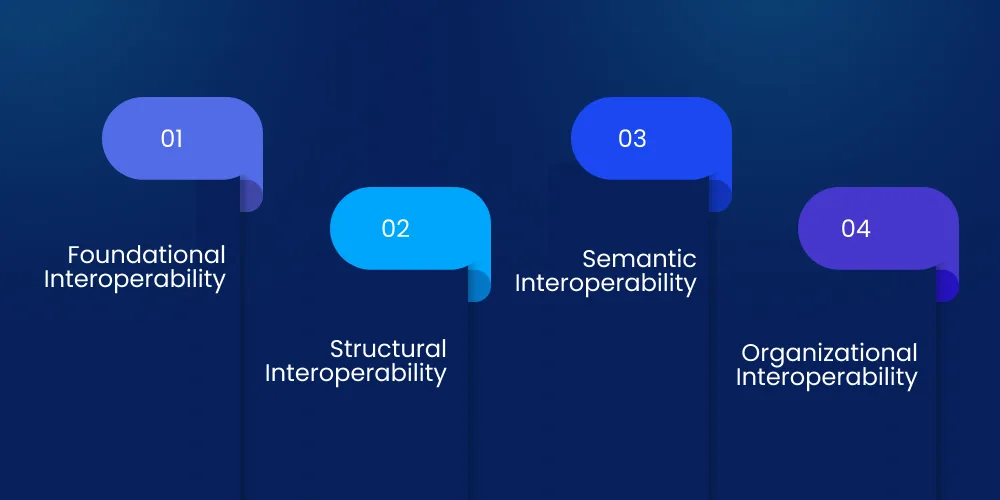
Understanding the three critical levels of data exchange is essential for achieving complete interoperability:
Foundational Interoperability
This represents the most fundamental level of interoperability. In this type of interoperability, data can still be exchanged between systems, even if the receiving system can't understand it. For instance, it ensures that two systems communicate and share raw data, but it does not guarantee that the receiving system can utilize the data effectively.
Here are some examples of Foundational Interoperability -
The term "direct secure messaging" refers to a standard protocol that healthcare providers use to safely transmit patient information.
Health information service providers (HISPs) assist in transferring people's health records from one network to another.
EHR systems enable data export and import capabilities.
Network technologies like virtual private networks (VPNs) enable the secure transmission of healthcare data among various entities.
Structural Interoperability
The intermediate level of structural interoperability achieves standardization of the data format or structure. This ensures that individuals can understand and exchange information such as patient names, addresses, and prescriptions at the field level. Data structural interoperability ensures that systems receiving data can understand it; however, it does not necessarily include the meaning of the data.
Here are some examples of Structural Interoperability -
Universally recognized data formats facilitate the transfer, storage, and retrieval of electronic health records, with Health Level 7 being one example.
Healthcare providers utilize a Continuity of Care Document (CCD) standard for exchanging patient summary information.
Fast Healthcare Interoperability Resources (FHIR) serves as another standard, providing an API along with data formats and elements for the interchange of electronic health records (EHRs).
The Digital Imaging and Communications in Medicine (DICOM) standard establishes a framework for the storage, printing, and transmission of medical imaging data.
Semantic Interoperability
Semantic interoperability represents the highest level of interoperability, ensuring that data is accurately interpreted alongside its standard format exchange. Systems communicate at this level not only with one another but also with the meaning behind the data, ensuring that both sides understand it in the same context. In healthcare, maintaining consistency and accuracy in medical terminology, diagnoses, and treatments across various systems proves crucial.
Here are some examples of Semantic Interoperability -
Healthcare professionals can access the following resources: the International Classification of Diseases, 10th Revision (ICD-10), which standardizes codes for diseases, symptoms, and procedures across healthcare systems.
CDSS, which provides intelligent insights and information to clinicians through semantic interoperability; and FHIR with Semantic Extensions, an interoperable healthcare protocol that ensures effective data usage across various health information technology systems utilized by provider and payer organizations.
Organizational Interoperability
Making an organization collaborate with another requires more than just technical know-how. The health industry requires regulations, laws, and public support to establish, manage, and enhance interoperability. The US Office of the National Coordinator for Health Information Technology runs the Trusted Exchange Framework and Common Agreement. The initiative aims to establish policy guidelines and universal governance for interoperability, simplifying connections between organizations and enabling patients to access their complete medical records from a single location.
Here are some examples of Organizational Interoperability -
Medical facilities and other health care providers voluntarily form Accountable Care Organizations (ACOs) to provide Medicare patients with coordinated, high-quality care.
An integrated delivery network (IDN) describes a group of related healthcare organizations that collaborate to provide a full spectrum of services to a defined region or population of patients.
Health information exchange (HIE) describes a network that enables various entities within a specific area, community, or healthcare system to share their electronic health records.
Programs improve public health by requiring data exchange between public and private healthcare providers.
Interoperability Standards in Healthcare
Organizations should adhere to established protocols and standards to achieve effective interoperability in healthcare. Some of the most crucial healthcare interoperability standards include:
Health Level Seven (HL7)
HL7 serves as the gold standard for integrating, retrieving, sharing, and exchanging electronic health records. Different systems can communicate with each other due to the HL7 standards.
Fast Healthcare Interoperability Resources (FHIR)
The Health Level 7 Interoperability Resources (HL7-FHIR) standard enables the electronic exchange of medical records. State-of-the-art web technologies and data formats like XML and JSON streamline data sharing and integration.
Digital Imaging and Communications in Medicine (DICOM)
DICOM sets the gold standard for all aspects of medical imaging, including transmission, storage, retrieval, printing, and display. It ensures that imaging systems from different companies can collaborate effectively.
Systematized Nomenclature of Medicine Clinical Terms (SNOMED CT)
SNOMED CT serves as a comprehensive clinical terminology that maintains the meaning of health information across various systems by offering a standardized method to represent clinical content in EHRs.
International Classification of Diseases (ICD)
The Organization for International Health Regulations (ICD) classifies medical conditions and diseases worldwide using ICD codes. Standardizing diagnostic information facilitates data aggregation, analysis, and cross-border sharing.
Break Down Healthcare Silos with Interoperability!
Take the first step toward better patient care and collaboration. Get in touch with us to learn how interoperability can make a difference.
Patient information, just like other information in the global data sphere, is exploding. Not only is patient data growing in terms of total volume, but it is also becoming more diverse and complex. More information can provide more and deeper insights, but it creates more challenges in classifying and analyzing data to make it useful. As data grows so does the need for more securely integrating or sharing it.
To understand the role of interoperability in healthcare, take an example of workflow in a health system. There is an HMS that the healthcare staff uses to gather, align, and process information across departments. Then, there are EHRs that are not accessible to patients and a billing or claims management system in between. Furthermore, EMRs and EHRs that are regarded as the central storehouse of patient data, sometimes don’t handle unstructured data like clinician notes, medical images, etc. This means, patient information is often fragmented across specialties and is inaccessible, causing delays in valuable collaboration.
However, when all the systems are interoperable, you get an integrated data ecosystem where critical health data flows seamlessly and communicate with each other. Apart from helping physicians and healthcare providers see a more complete view of patient journeys, here is how it helps organizations across the industry -
With integrated health data systems, health plans could understand their utilization rate or service demand better.
Healthcare providers can use population data to understand key trends and take steps to meet people’s needs.
Healthcare, pharmaceutical, and life science organizations can use data to drive better research.
What Are The Benefits of Interoperability in Healthcare?
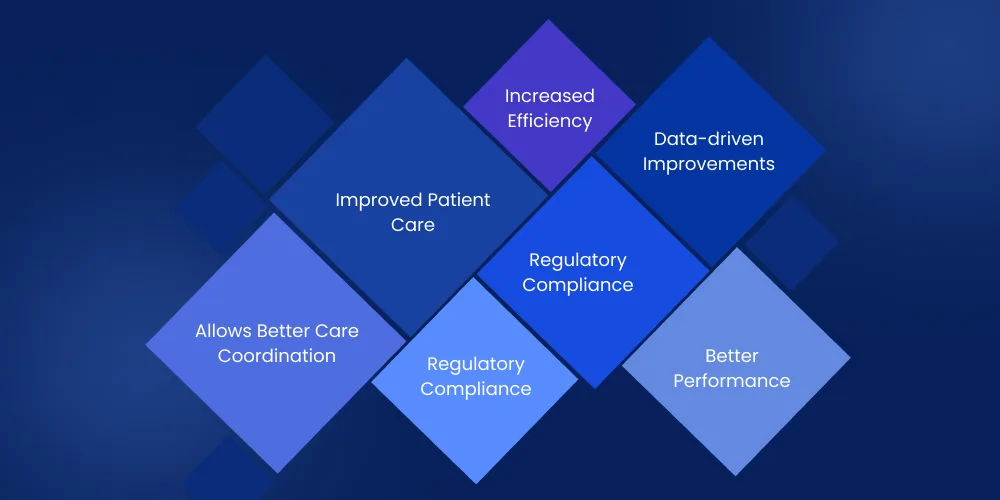
Interoperability brings three important benefits to healthcare -
Improved Patient Care
Doctors and hospitals improve treatment when they access all of their patients' electronic health records. Medical professionals must make split-second decisions that could mean the difference between life and death, so having complete access to patient records is crucial. An emergency team could face a major adverse event or worse during treatment if they admit an unconscious accident victim to the hospital's assessment unit without access to full medical records through their EHR/EMR. This is because the team would not know that the victim has an allergy to specific medications.
Allows Better Care Coordination
Coordinating the efforts of all healthcare providers along the care continuum is critical, from primary care physicians and nurses to specialists and those providing post-acute care. Better communication and coordination can benefit care providers and patients alike, reducing unnecessary testing, conflicting treatment suggestions, and misunderstandings. A patient should have their data follow them, even if they receive treatment elsewhere, whether it's thousands of miles away or months or years later. New software tools gather data from all points of care, decrease duplicate entries, and assist with this.
Regulatory Compliance
Governments and regulatory agencies around the world issue rules and guidelines to ensure the importance of healthcare interoperability. For instance, the US Trusted Exchange Framework and Common Agreement (TEFCA) establishes a universal governance, policy, and technical foundation for nationwide interoperability and has been operational since 2010. The UK Medicines & Healthcare products Regulatory Agency (MHRA) has introduced a new Data Strategy that includes harmonized standards and ontologies to enable interoperability. Additionally, the US Food and Drugs Administration (FDA) has provided guidelines on medical device interoperability since 2010.
Data-driven Improvements
Interoperability makes it possible for healthcare providers to study data trends and use data-driven approaches to improve patient care and other processes.
Better Performance
By reducing the amount of unnecessary administrative work, data interoperability creates satisfying experiences for staff, as well as users.
Increased Efficiency
Healthcare professionals devote numerous hours to meticulously reviewing patient records in their pursuit of excellence in patient care. However, employees experience weariness, make mistakes, and feel poor job satisfaction due to the inefficiency of these manual efforts.
Administrative staff often face a mountain of paperwork, but that number decreases significantly when all systems integrate into one user-friendly interface and automate from that point onward. This frees employees from the burden of menial tasks like data entry, information copying, and verifying that all systems have the latest updates.
Automation can handle appointment scheduling, payment processing, insurance claim submission, pre-authorization acquisition, and the addition of medical codes to patient files.
These other advantages directly relate to the automation and efficiency gains that interoperability enables.
Empower Your Healthcare Systems with Interoperability!
Don’t miss out on the benefits of connected healthcare. Contact us today to learn how we can help you integrate your systems for better patient care.
While most healthcare providers agree that interoperability is the need of the hour, a yawning gap exists between what they need to do and how successfully they do it. This is because there are several challenges that must be overcome to achieve the level of interoperability needed to enjoy the benefits of HIE (Health Information Exchange).
The challenges include -
A Torrent of Standards
Though standard formats like HL7 and FHIR are becoming increasingly popular, and new regulations encourage EHR vendors to provide APIs that support interoperability, many providers use custom EHR systems that are tough to convert to a standard format.
Unjust Data Exchange Practices
There is no paucity of providers in the market who use interoperability to fill their pockets. They charge high fees in order to make patient data accessible, which is a major roadblock to interoperability. Then, there are insurance companies that deny sharing health data with providers. Think of an interoperable health system where you could learn everything about your patient’s treatment journey by looking into their claims.
Financial Burdens
Interoperability requires an initial investment that may be costly for some providers, even though it offers big savings in the long run. Lack of training and skills also affects smooth interoperability. Stakeholders need to invest in upskilling their staff and involve everyone in the process and this takes time.
What is the Future of Interoperability in Healthcare?
With FHIR and HIMSS interoperability initiatives in the discussion, healthcare providers are eager to leverage the potential of shared data and connected care to improve healthcare outcomes. The constant improvement of data exchange between systems will revolutionize the delivery, experience, and management of care in the future of healthcare interoperability. We will see even more powerful interoperability solutions that enhance patient outcomes and boost operational efficiency as time progresses and policy frameworks evolve.
Innovations like the growth of AI and machine learning in healthcare systems pave the way for improvements in data analytics, predictive modeling, and real-time decision support, all interconnected through interoperable platforms. These innovations bring us closer to patient-centered care, enabling more proactive and individualized healthcare strategies.
The entire healthcare system improves its capacity to react more quickly to patient demands and public health issues with increased interoperability. The healthcare sector's unwavering commitment to interoperability ushers in a new era of connected health, characterized by improved care quality, increased patient satisfaction, and new efficiencies.
However, key challenges in automating secure data flow and implementing interoperability still remain. Here is what stakeholders are looking to adopt to overcome interoperability challenges -
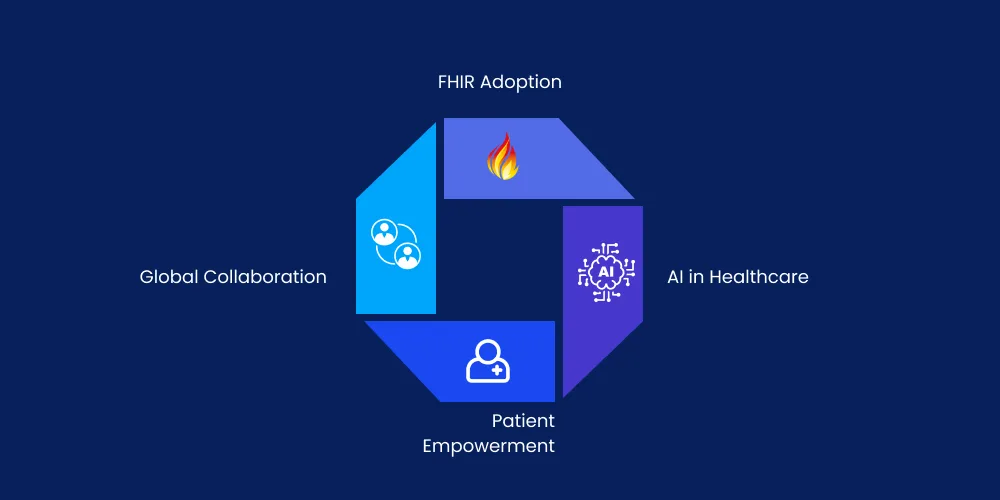
APIs in Healthcare for Secure Third-Party Integrations
APIs make it easy to achieve healthcare interoperability at all levels. By giving patients access to treatment records, claims, lab results, etc., and consolidating patient data into one place so that doctors or clinicians can understand the patient history quickly, APIs bridge the gap between data and functionalities.
FHIR APIs will soon be finding their way to every healthcare platform.
Looking to integrate APIs into your existing network or develop a new one within your strategy? We can help. We offer custom healthcare solutions and build medical interfaces and backends using cutting-edge technology to drive results.
AI in Healthcare
Healthcare data is complex. When it flows from one system to the other, it is crucial to prevent it from overflowing. Luckily, AI systems can process the brimming health data, clinical records, patient forms, etc., and help address interoperability challenges related to data handling.
Patient Empowerment
There is a rising movement toward giving patients more control over their own health records. Personal health records (PHRs) and other patient-centered interoperability solutions give people more control over their health data and make it easier to share it with doctors they trust.
Global Collaboration
International cooperation and standard harmonization drive global interoperability. Programs such as the Global Digital Health Partnership (GDHP) encourage international collaboration and the exchange of information.
FHIR Adoption
Healthcare organizations integrate data from various sources more efficiently with FHIR's simplified data exchange by using modern web technologies like RESTful APIs. Focusing on uniformity will enhance communication among different healthcare systems.
Is Interoperability your Agenda? DITS is the name you can trust to reach your goal.
There is no thumb rule for interoperability, but the key challenge that most organizations face is to comply with healthcare standards and use data to improve their tech capabilities. Here, partnering with a reliable custom healthcare software development service provider can help.
We understand what it takes to deliver value-based care, and we have the industry knowledge, skills, and expertise to help healthcare providers get there. Whether you want to develop a telemedicine platform, HMS, or RCM, we keep interoperability and healthcare regulations at the forefront. We build software that can be integrated with your existing system for streamlined data sharing.
Ready to harness the power of interoperability in your healthcare system? Get in touch with us today!
Transform Your Healthcare IT with Interoperability!
Is your healthcare system ready for the future? Let’s discuss how interoperability can drive your digital transformation.
Providers should access a patient's most current medical records, regardless of where the patient receives treatment, thanks to healthcare system interoperability. Think of a tourist who has an adverse reaction to a prescription and is taken unconscious to a nearby hospital. Clinicians at that facility would have access to a patient's full medical record if there was true system interoperability, regardless of the electronic health record system used by the patient's main care physician.