25+ years of IT software development experience in different domains like Business Automation, Healthcare, Retail, Workflow automation, Transportation and logistics, Compliance, Risk Mitigation, POS, etc. Hands-on experience in dealing with overseas clients and providing them with an apt solution to their business needs.
Fleet management is undergoing a structural transformation. Rising fuel costs, stricter regulatory compliance requirements, increasing customer delivery expectations, and ongoing driver shortages are forcing logistics and transportation companies to rethink traditional operational models. Manual tracking, reactive maintenance, and static route planning are no longer sufficient in a market that demands speed, transparency, and efficiency.
Artificial Intelligence (AI) is revolutionizing the fleet management industry, offering transformative solutions to longstanding challenges such as fuel inefficiency, route optimization, vehicle maintenance, and driver safety. As logistics operations become increasingly complex and data-driven, AI provides the tools necessary for real-time decision-making and predictive analytics, leading to enhanced operational efficiency and cost savings.
Key benefits of AI in fleet management include:
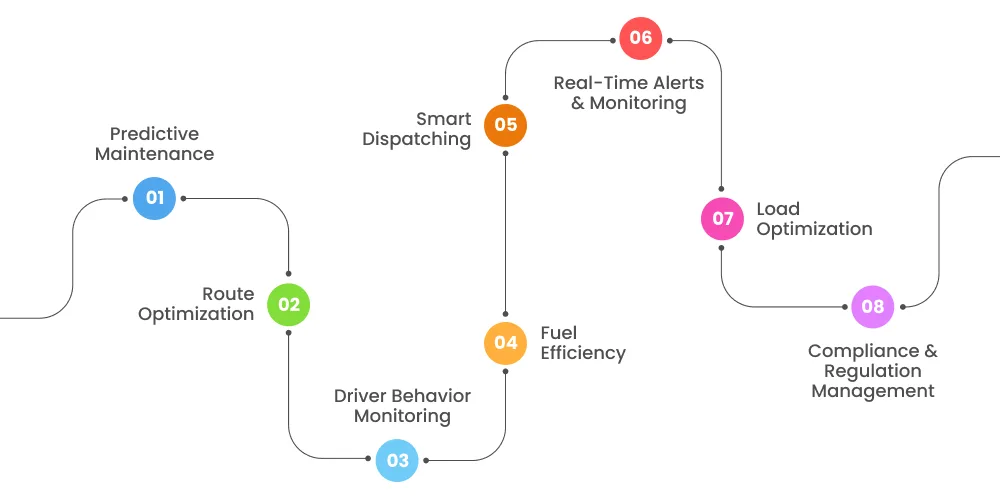
Predictive Maintenance: AI algorithms analyze vehicle data to forecast maintenance needs, reducing unexpected breakdowns and extending vehicle lifespan.
Route Optimization: Real-time traffic and weather data integration allows AI to determine the most efficient routes, minimizing delays and fuel consumption.
Driver Behavior Monitoring: AI systems assess driving patterns to promote safer driving habits and reduce accident rates.
Fuel Efficiency: By optimizing routes and monitoring vehicle performance, AI contributes to significant fuel savings.
In this guide, we explore how AI is used in fleet management, the technologies behind it, implementation strategies, costs, benefits, challenges, and what the future holds for AI-driven fleet ecosystems.
What Is AI in Fleet Management?
Artificial Intelligence (AI) in fleet management refers to the use of machine learning algorithms, predictive analytics, computer vision, and real-time data processing to automate decisions, optimize vehicle operations, and improve overall fleet performance.
In simple terms, AI transforms raw fleet data into actionable intelligence.
Modern fleets generate vast amounts of data from GPS systems, telematics devices, engine control units (ECUs), fuel sensors, dashcams, maintenance logs, and driver behavior reports. AI systems analyze this data continuously to identify patterns, predict outcomes, and recommend or automatically execute operational decisions.
How AI Works in Fleet Operations
Data Collection: Vehicles transmit real-time data through telematics and IoT sensors.
Data Processing: Cloud or edge-based AI models process structured and unstructured data.
Pattern Recognition: Machine learning algorithms detect anomalies, inefficiencies, or risks.
Actionable Output: The system generates alerts, recommendations, or automated responses (e.g., rerouting, maintenance scheduling).
Notable Statistics of AI Integration In Fleet Management
The global market for AI-powered fleet management software was valued at $5.2 billion in 2025 and is projected to reach $14.4 billion by 2030, growing at a CAGR of 18.7%.
A 2025 survey revealed that 40% of AI adopters in logistics experienced over 50% improvements in fuel usage, cost, or routing efficiency.
Despite the clear benefits, only 53% of fleet management organizations have adopted AI solutions, indicating significant potential for growth and innovation in the sector.
As the fleet management industry continues to evolve, integrating AI technologies will be crucial for companies aiming to enhance efficiency, safety, and profitability.
Want to Make Your Fleet Smarter?
Discover how AI can streamline your operations, cut costs, and boost efficiency. Let’s build your AI-driven future.
AI is transforming fleet management by enabling predictive maintenance, route optimization, fuel efficiency, and driver monitoring. With solutions from AI developers and transportation software companies, fleets operate smarter, safer, and more cost-effectively in real time.
Predictive Maintenance
AI-powered systems analyze vehicle health data like engine temperature, vibration patterns, and fuel usage to predict potential breakdowns. This helps reduce unplanned downtime and repair costs. Partnering with an AI development company, fleet businesses have implemented diagnostics to keep their vehicles in top shape.
Route Optimization
AI uses real-time traffic, weather, and delivery schedules to determine the most efficient routes for each vehicle. This minimizes delays and fuel consumption. A leading transportation software development company often integrates these capabilities into custom fleet solutions, helping businesses stay on schedule and cut logistics costs.
Driver Behavior Monitoring
AI analyzes data from onboard sensors to assess driving habits like harsh braking, speeding, and idling. Fleet managers use this insight to coach drivers, improve safety, and reduce insurance claims. A dedicated team of AI developers can design systems that deliver instant feedback and long-term behavioral reports to optimize performance.
Fuel Efficiency
By monitoring vehicle load, driving behavior, and route data, AI algorithms identify patterns that waste fuel. Fleet managers can then implement fuel-saving strategies like rerouting or vehicle upgrades. AI-powered insights have helped many logistics firms cut fuel costs by up to 15%.
Smart Dispatching
AI automates dispatch decisions by evaluating driver availability, vehicle location, and delivery priority. This ensures balanced workloads and faster response times. Companies utilizing intelligent dispatching systems report significantly improved fleet utilization and customer satisfaction.
Real-Time Alerts & Monitoring
AI systems provide instant alerts for events like speeding, route deviation, or mechanical issues. Real-time monitoring enhances safety and helps address issues proactively. These systems are essential for companies managing large fleets across multiple regions.
Load Optimization
AI helps determine the best way to load cargo for balance, space utilization, and fuel savings. This reduces wear on vehicles and improves delivery efficiency. It's especially valuable for companies in long-haul logistics.
Compliance & Regulation Management
AI tracks regulatory requirements such as driving hours, emissions, and vehicle inspections. It automates reporting and alerts managers about compliance risks. This minimizes legal exposure and ensures smoother audits for fleet operators.
Additional Technology That Compliments AI In Fleet Management System
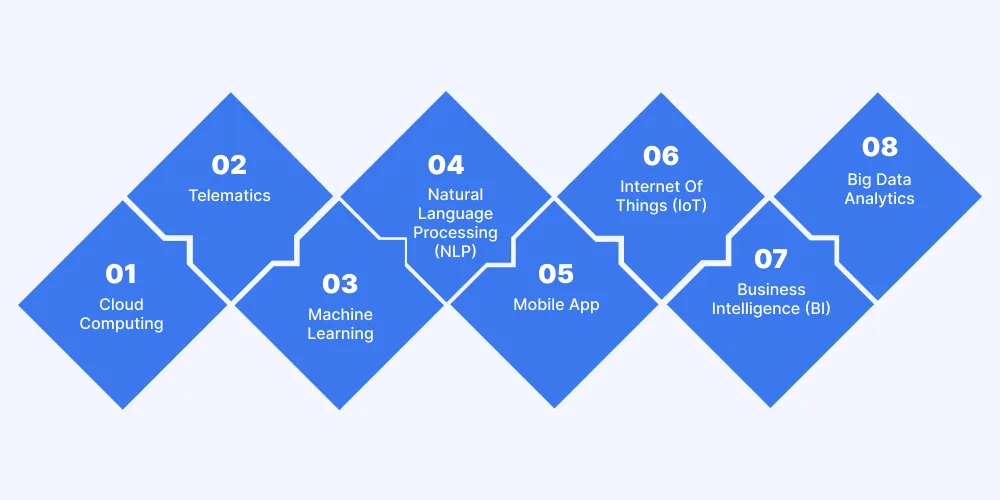
AI in fleet management becomes significantly more powerful when combined with supporting technologies like IoT, cloud computing, and telematics. This enables smarter decisions, predictive insights, and streamlined operations in real time.
Cloud Computing
Cloud infrastructure allows AI systems in fleet management to access, store, and process large amounts of data remotely and securely. It ensures real-time connectivity between vehicles and control centers, enabling faster decision-making, seamless updates, and scalable deployment of AI-powered solutions across fleets of any size.
Telematics
Telematics combines GPS, onboard diagnostics, and telecommunications to gather real-time vehicle data. When paired with AI, it enhances vehicle tracking, driver behavior monitoring, and maintenance forecasting. The synergy between telematics and AI allows fleet managers to make proactive decisions and improve overall fleet performance and safety.
Machine Learning
Machine learning (ML), a subset of AI, continuously learns from historical and real-time data to improve predictions and decision-making. ML powers predictive maintenance, fuel optimization, and route planning in fleet management by recognizing patterns that human analysis may overlook, leading to smarter, adaptive fleet operations.
Natural Language Processing (NLP)
NLP enables AI systems to understand and process human language. In fleet management, NLP powers voice-activated dispatch systems, automated driver communication, and AI chatbot-based customer support. This enhances operational efficiency by reducing manual input and enabling real-time, hands-free interaction for drivers and managers alike.
Mobile App
Mobile applications serve as direct communication hubs between fleet managers and drivers. Integrated with AI, these apps offer real-time route updates, performance feedback, and real-time maintenance alerts. They improve visibility, accountability, and operational agility, making AI-driven insights more accessible to on-the-go teams.
Internet of Things (IoT)
IoT devices like GPS trackers, engine sensors, and dashcams collect data that feeds into AI systems for analysis. These connected devices enhance visibility into vehicle status, cargo conditions, and driver behavior, allowing AI to make informed decisions and generate actionable insights to optimize fleet performance.
Business Intelligence (BI)
BI tools turn raw fleet data into visual dashboards and reports. When integrated with AI, they offer strategic insights into cost trends, operational inefficiencies, and performance metrics. This empowers executives and fleet managers to make data-driven decisions and optimize resources more effectively.
Big Data Analytics
Fleet operations generate massive volumes of data from various sources. Big data analytics processes this information to identify trends, anomalies, and optimization opportunities. When paired with AI, it enhances forecasting accuracy, improves decision-making, and drives continuous improvement in large-scale fleet ecosystems.
Ready to Upgrade Your Fleet Tech?
Explore how AI improves safety, compliance, and driver productivity. Let’s design your AI solution.
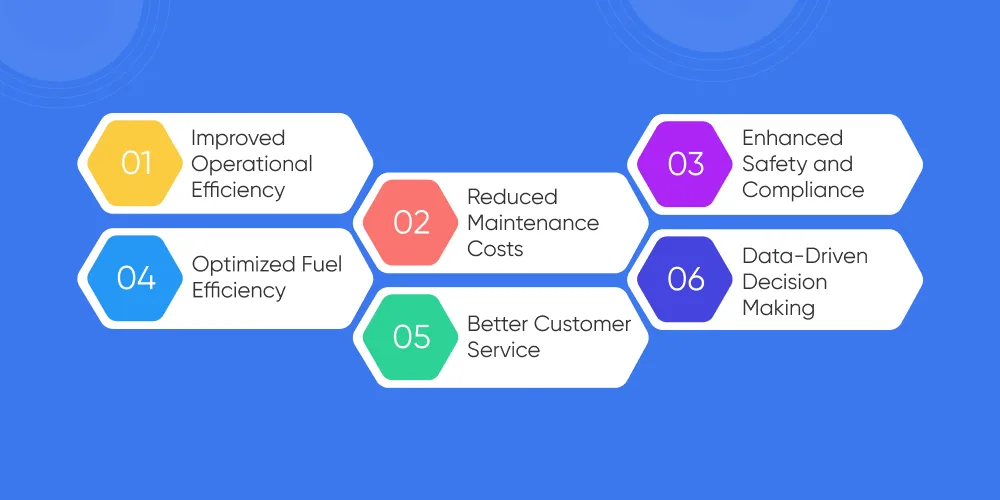
Integrating AI into fleet management delivers measurable gains in efficiency, safety, and cost reduction. By leveraging data and automation, businesses can optimize operations, enhance decision-making, and provide superior service in an increasingly competitive transportation landscape.
1. Improved Operational Efficiency
AI optimizes various aspects of fleet management, from route planning to fuel consumption.
Enhanced routing: AI identifies the fastest routes using real-time traffic data.
Automated tasks: Reduces manual work, streamlining dispatch and maintenance scheduling.
Operational visibility: AI provides real-time updates and insights, improving decision-making and response times.
2. Reduced Maintenance Costs
AI-powered predictive maintenance systems help detect potential vehicle issues before they become major problems.
Proactive repairs: Alerts for maintenance needs reduce emergency repairs and downtime.
Longer vehicle lifespan: Regular, timely maintenance helps extend vehicle life and improve performance.
Cost savings: Avoids costly breakdowns and keeps the fleet running efficiently.
3. Enhanced Safety and Compliance
AI tools monitor driver behavior and ensure compliance with regulations, improving safety across the fleet.
Driver behavior monitoring: AI tracks speeding, harsh braking, and other risky driving habits.
Regulation adherence: Ensures compliance with hours-of-service, vehicle inspections, and safety standards.
Accident prevention: AI detects unsafe conditions and provides real-time alerts to drivers.
4. Optimized Fuel Efficiency
AI analyzes driving patterns and routes to reduce fuel consumption, saving money for the fleet.
Efficient route planning: Minimizes fuel usage by selecting the shortest, least congested paths.
Driving habits optimization: AI detects fuel-wasting behaviors (like idling or excessive speeding) and suggests improvements.
Fuel cost savings: Ongoing improvements lead to a noticeable reduction in fuel expenses.
5. Better Customer Service
AI enhances fleet management capabilities, allowing businesses to provide faster, more reliable service to customers.
Real-time tracking: Customers can track their deliveries, providing transparency and enhancing trust.
Predictive ETAs: AI accurately predicts arrival times based on real-time data, improving service reliability.
6. Data-Driven Decision Making
AI provides valuable insights into fleet performance, enabling data-driven decisions for continuous improvement.
Real-time analytics: AI offers insights on vehicle health, driver behavior, and operational performance.
Strategic planning: Data helps in fleet planning, resource allocation, and budgeting decisions
Continuous optimization: AI systems continuously learn and improve based on the data gathered, ensuring long-term gains.
Cost to Integrate AI into Fleet Management Solution
The AI integration cost starts from $20,000 for a custom AI solution with fine-tuned data and 3rd party API integration to provide complete accuracy to the business. The development cost of AI solution depends on multiple factors including software complexity, engagement model, features, team location, etc.
Cost Breakdown of AI Intergartion Cost in Fleet Management
Category
Estimated Cost Range
What’s Included
Frequency
AI Software Licensing
$5,000 – $25,000/year
Access to AI tools for route optimization, maintenance, etc.
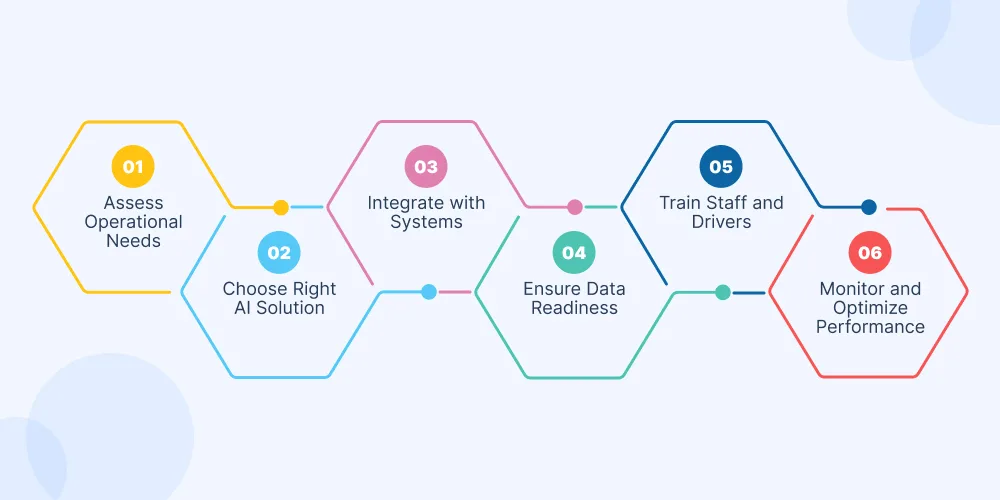
Successful AI integration in fleet management requires a strategic approach from assessing business needs to training staff. These steps ensure seamless adoption, real-time insights, and continuous improvement in fleet performance.
Assess Operational Needs
Begin by identifying the specific pain points in your fleet operations such as maintenance delays, fuel inefficiency, or driver behavior. Understanding these challenges will help determine which AI solutions to prioritize and ensure alignment with your business goals before investing in any advanced systems or technologies.
Choose Right AI Solution
Select AI tools tailored to your business requirements whether it’s route optimization, predictive maintenance, or real-time tracking. Work with a trusted AI development partner or transportation software provider to ensure the solution integrates seamlessly with your current systems and offers long-term scalability.
Integrate with Systems
AI should complement, not replace, your existing fleet management tools. Ensure smooth integration with GPS, telematics, and ERP platforms to create a centralized system where AI can collect and analyze data efficiently for accurate insights and automation.
Ensure Data Readiness
AI relies heavily on clean, structured, and real-time data. Organize and standardize data from vehicles, drivers, and operations. Use IoT devices and telematics systems to continuously feed high-quality data into your AI engine for reliable analysis and decision-making.
Train Staff and Drivers
Introduce training programs to help staff and drivers understand the new AI tools. From using mobile apps to interpreting AI-generated insights, building user familiarity ensures higher adoption, reduces resistance, and maximizes the value gained from your AI-powered system.
Monitor and Optimize Performance
Post-deployment, continuously monitor system performance and gather feedback. AI systems improve over time, especially when supported by real-world data. Use analytics dashboards to track KPIs, fine-tune algorithms, and adapt the AI models as your fleet and business needs evolve.
AI Fleet Management Checklist
Before investing in AI-driven fleet management, organizations should assess operational readiness, technical infrastructure, and strategic objectives. The following checklist helps ensure a structured and risk-mitigated implementation.
1. Define Clear Business Objectives
Are you aiming to reduce fuel costs, improve safety, optimize routes, or lower maintenance downtime?
Establish measurable KPIs (e.g., reduce fuel costs by 12%, cut downtime by 20%).
2. Assess Data Readiness
Do vehicles have telematics and IoT sensors installed?
Is historical fleet data accessible and clean?
Are data streams centralized or siloed across systems?
AI performance depends heavily on data quality and consistency.
3. Evaluate Technology Infrastructure
Is your fleet system cloud-enabled?
Can it integrate with ERP, CRM, or logistics platforms?
Is your cybersecurity framework robust?
Integration capability is critical for enterprise-scale deployment.
4. Choose the Right AI Solution Partner
Do they have domain expertise in fleet or logistics?
Can they demonstrate proven ROI cases?
Do they offer scalability and long-term support?
5. Run a Pilot Program
Start with a limited fleet segment.
Measure performance improvements.
Validate ROI before full-scale rollout.
6. Train Drivers and Operational Teams
Provide education on AI tools and dashboards.
Communicate safety and performance benefits clearly.
Adoption increases when teams understand the value.
7. Monitor Performance and Optimize Continuously
Track KPIs regularly.
Refine AI models with new data.
Scale gradually based on measurable impact.
How DITS Innovations Helps with AI Integration Services for Fleet Management Business
For almost a decade into the industry, we are delivering excellent solution to wide range of business with Iot, AI, cloud computation and software transformation. From software development consultation to MVP, full cycle software development, custom AI development, to deployment and maintenance service we are one stop solution for the business.
Our USPs
100+ dedicated software engineers
97% client retention rate
100% customer satisfaction
On time delivery
Project development transparency
Multiple engagement models
Individual team of developers & project managers
Have Unique Requirements & Expectation from AI Technology?
Share with our AI development experts to get a customized quote and consultation to fulfill the requirements.
Book Consultation Slot!
Conclusion
Ai is no more a futuristic technology, it is the existing and most reliable technology for the business to grow globally to bring accuracy in business and to generate revenue. AI helps the business to know about there users, to get accurate delivery time information, helps with the inventory management, know about the upcoming demand in the market, etc.
Fleet management is the most important thing in most of the online marketplace, and having an advanced AI solution will help the platform to grow business with complete accuracy and transparency.
Frequently asked questions
AI streamlines critical fleet tasks like dispatching, routing, and maintenance scheduling by automating decisions based on real-time data. It helps reduce manual workload, improves fleet visibility, and enhances response times, leading to overall better operational performance.
Dinesh Thakur
25+ years of IT software development experience in different domains like Business Automation, Healthcare, Retail, Workflow automation, Transportation and logistics, Compliance, Risk Mitigation, POS, etc. Hands-on experience in dealing with overseas clients and providing them with an apt solution to their business needs.