With more than 20 years of experience - I represent a team of professionals that specializes in the healthcare and business and workflow automation domains. The team consists of experienced full-stack developers supported by senior system analysts who have developed multiple bespoke applications for Healthcare, Business Automation, Retail, IOT, Ed-tech domains for startups and Enterprise Level clients
Mobile applications are the backbone of every business in today’s digital world, and healthcare is no exception. Healthcare apps are a blessing to humanity, helping monitor chronic diseases, book appointments, access health records, and even connect with healthcare professionals—all from the convenience of home.
Not only do healthcare apps ease the lives of patients and healthcare professionals, but they also present a significant business opportunity. According to various studies and surveys, more than 65% of the global population uses smartphones, and the mobile app market is projected to grow to $189 billion by 2026.
In this blog, we will delve deeper into the benefits of developing healthcare mobile apps for patients and healthcare providers. Let us learn how these apps empower professionals to offer more targeted treatments.
What Are Healthcare Apps?
Healthcare apps are specialized mobile applications designed to simplify and enhance the delivery of medical services and improve overall patient care. These apps cater to a wide range of needs, from helping individuals track their fitness goals to enabling patients to manage chronic conditions, schedule appointments, or even consult with doctors via telemedicine.
For healthcare providers, these apps streamline processes such as patient management, health record maintenance, and remote monitoring, making it easier to deliver personalized and efficient care.
Essentially, healthcare apps act as a bridge between patients and healthcare providers, leveraging technology to make healthcare more accessible, convenient, and effective in today’s fast-paced digital world.
Types of Healthcare Mobile Apps for Patients
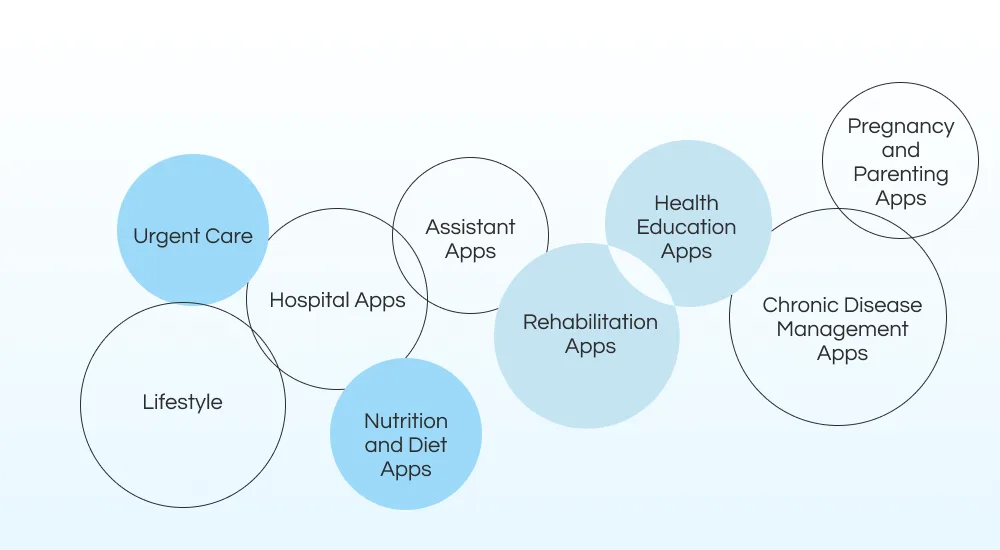
Apps For Urgent Care - Telemedicine Apps, Remote Monitoring Apps, Emergency Alert Apps
Apps To Help In Maintaining a Healthy Lifestyle - Healthy Living Apps, Mental Health Apps, Sleep Management Apps
General Hospital Apps - Productivity apps, Wayfinding Apps, Billing and Insurance Apps
Additional Categories - Rehabilitation Apps, Chronic Disease Management Apps, Pregnancy and Parenting Apps, Nutrition and Diet Apps, Health Education Apps
Revenue Models of Healthcare App for Patients and Providers
How you make money from your healthcare app depends on the type of product. Is it a hospital app for patients, a medical app for providers, or an IoT app connected to a smart device? Here are some common ways to monetize these apps:
Subscription
Getting regular payments from subscribers is great for keeping finances steady. This model works well for apps meant for frequent use, whether mobile or web. In the business world, it's called SaaS (Software as a Service), and it works the same way.
Service Sales
This model involves one-time purchases for different services your organization offers.
Sponsorship
If your app involves using specific medical brands or products, sponsorships can be a good option.
Licensing
This is similar to the SaaS model. You sell licenses to use your software, and in return, you earn royalties.
Device Sales
If your app connects with smart medical devices, you can bundle the software price with the device’s cost.
Patient Data
Pharma companies and research institutions may pay for anonymized patient data and other medical information your app collects.
Revenue can come from various sources, including:
Patients
Healthcare providers
Employers (e.g., corporate wellness programs)
Medical research institutions
Insurance companies (or even government funding)
Transform Your Healthcare Experience Today!
Explore how a healthcare mobile app can improve patient care and streamline communication.
Benefits of Developing Healthcare Apps for Patients
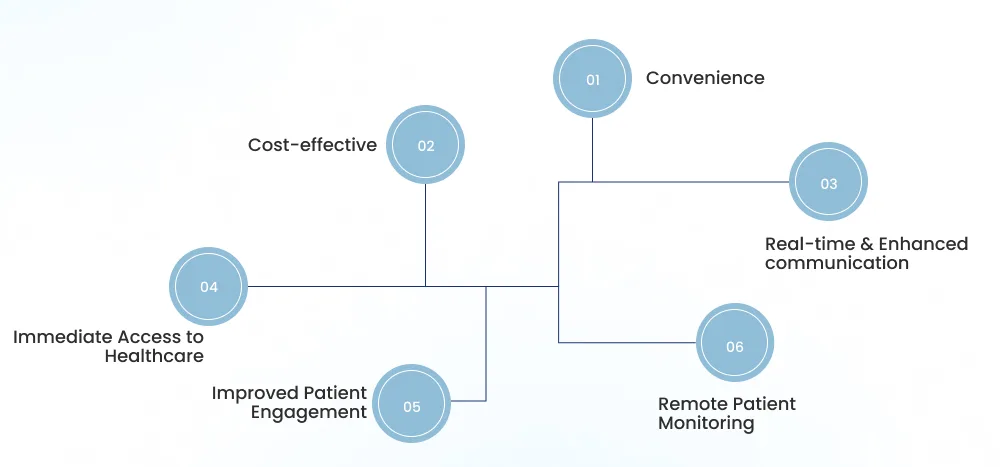
Healthcare apps are reshaping the way patients access and manage their health. Here are some key benefits they offer:
Medical apps provide instant access to care, allowing patients to get assistance whenever and wherever they need it.
These apps help reduce healthcare costs for both patients and providers.
Communication between clinics and patients becomes seamless and efficient with healthcare apps.
Medical apps make healthcare accessible to patients in rural or distant locations.
They encourage patients to actively participate in their healthcare journey.
Medical records are securely stored and easily accessible at any time with the help of healthcare apps.
Patient care, health monitoring, and follow-ups can all be managed using a single platform.
The app integrates effortlessly with wearables to track and monitor health data.
Patients can manage chronic conditions comfortably from home.
Benefits of Developing Medical Apps for Healthcare Providers
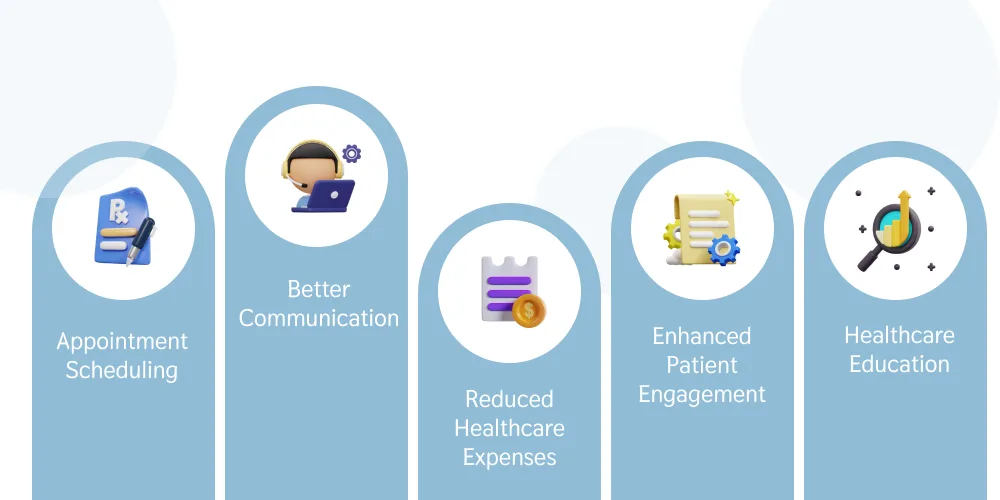
Developing medical apps for healthcare providers offers numerous benefits, from improving patient management and communication to saving time and reducing costs, ultimately enhancing the quality of care.
Healthcare apps make it easier for providers to handle tasks like appointment scheduling, managing medical records, and tracking patient progress.
These apps streamline communication between healthcare providers and patients, helping different teams work together more efficiently for better care.
By handling administrative tasks and paperwork, healthcare apps allow providers to focus more on patient care, ultimately reducing healthcare costs.
Healthcare apps give providers up-to-date patient data, helping them make quick, informed decisions to avoid potential issues.
These apps can integrate CME courses and materials, giving healthcare providers access to the latest medical knowledge and practices to stay current in their field.
How to Develop Healthcare Apps for Patient and Healthcare Providers?
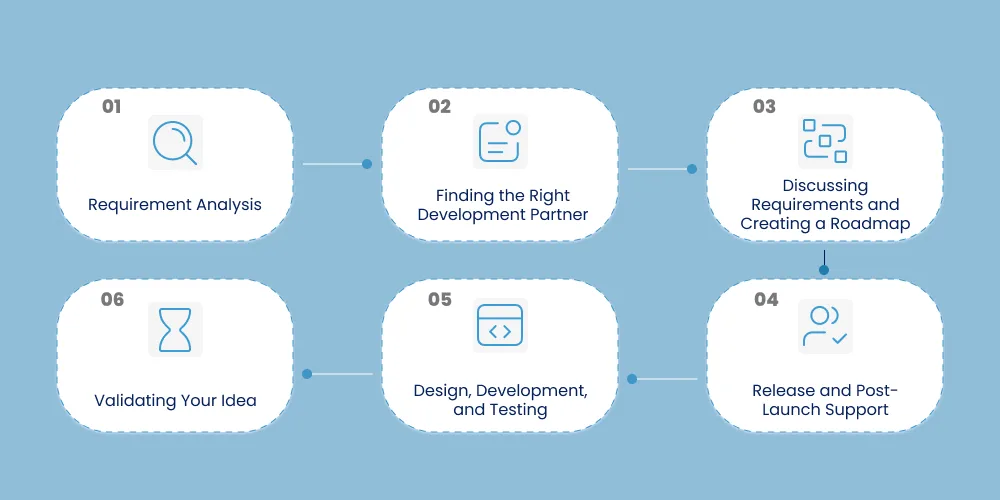
To build a robust, intuitive, and compliant app, we at DITS follow a step-by-step approach.
1. Requirement Analysis - Our expert business analysts start with assessment of business needs like target audience, must have features, monetization strategies, interoperability with the current healthcare systems, required regulations and more.
2. Finding the Right Development Partner - With so many companies offering medical app development services, it's important to do your homework. Take the time to review their portfolio, check customer feedback, and look at their rankings to ensure you’re making an informed choice.
3. Discussing Requirements and Creating a Roadmap - Once you've shared your idea, the development team will provide a clear estimate for your Healthcare app project, outline timelines, and explain their approach for turning your vision into reality.
4. Validating Your Idea - A great way to test your concept is by developing an MVP (Minimum Viable Product) – a simplified version of your app with essential features. It saves time and costs compared to a full-scale launch and allows you to gather valuable user feedback for future improvements.
5. Design, Development, and Testing - Designers will craft user-friendly interfaces based on your goals, while developers work on building the core functionality. Meanwhile, QA team will rigorously test the app to ensure everything is working smoothly. This is the stage where all bugs should be fixed, and the app should be polished to perfection.
6. Release and Post-Launch Support - After thorough testing, your app is ready to launch. But the journey doesn’t end there. Continuous monitoring and timely updates are key to addressing any potential issues. Regular user feedback will help you identify areas for improvement and ensure the app stays relevant and satisfying for users.
Must-Have Features In The Healthcare Apps
There is no one-size-fits-all solution. For every application, you must decide on a unique set of features that not only set it apart from other available applications but also resolve actual problems of patients and healthcare providers on a daily basis. Here are some must have features of healthcare apps for patients -
Health Tracking – This feature allows users to monitor vital signs such as heart rate, glucose levels, blood oxygen, body temperature, and weight on a daily basis or whenever needed. Tracking these metrics helps identify potential health issues early and can prevent serious complications.
Appointments – No one enjoys waiting in long queues to book an appointment, especially when it can be done with just a few taps. This feature not only simplifies the appointment process for users but also reduces the chances of missed appointments by providing reminders and easy rescheduling options.
Real-time Chats - With this essential feature patients can easily connect with their healthcare providers instantly, enabling real-time consultations for quick and effective communication.
HIPAA Compliance - Keeping PHI (Protected Health Information) secure is a must, and HIPAA rules help ensure that health apps follow the right steps. It’s important to encrypt data, use two-factor authentication, secure connections, and follow other safety measures to protect everyone’s information. When developing a healthcare app, making sure its HIPAA-compliant is key to protecting patient data and maintaining trust.
Payment Integration - Integrating various payment models like Paypal, Adyen, Visa or Mastercard credit cards allow patients to easily pay for the service they avail using Healthcare apps.
Wearables Integration - Wearable devices are becoming part of our everyday lives. These devices are capable of tracking or collecting vital information such as heart rate, blood sugar level, blood pressure, and more. These vitals help doctors analyze the patients' overall health and provide better care.
More Features - Patient community, Prescription tracking, EHR, Symptom checker, Doctor management and Staff management are also some must have features of healthcare apps for patients and doctors.
How Much Does it Cost to Build Healthcare Mobile Apps for Patients?
There’s no one-size-fits-all answer when it comes to calculating healthcare app development costs. Why? Because it all depends on the features you need and the app’s complexity.
Want an accurate estimate? Connect with our experts at DITS for a free consultation! Let’s help you break it down and plan the perfect app tailored to your needs.
Start Your Journey to Smarter Healthcare
Don't wait! Reach out today to learn how our healthcare mobile apps can improve patient outcomes.
Our Experience in Healthcare App Development for Patients & Healthcare Providers
Creating a top-notch healthcare app is no walk in the park. With ever-evolving standards, intricate design requirements, and the pressure to deliver excellence, it’s no wonder most businesses realize they can’t go it alone. That’s where Ditstek Innovation comes in.
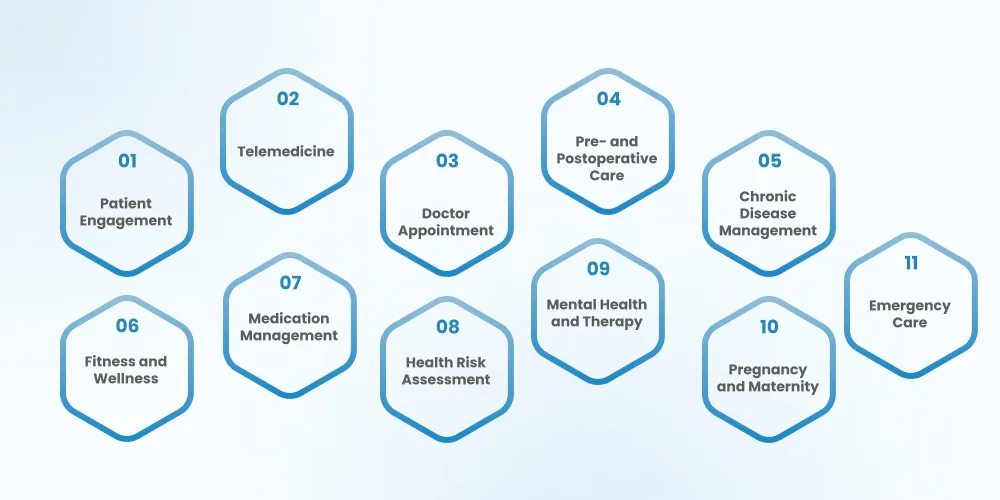
Healthcare Mobile Apps for Patients We Develop
Patient Engagement Apps - These apps enable patients to actively manage their health.
Features of Patient Engagement Apps
Medical records and appointments management
Comprehensive health education resources
Easy search functionality to find the right provider.
Tools for tracking patient-generated health data, ensuring better self-monitoring and insights.
Telemedicine Apps - These apps deliver unparalleled convenience with remote healthcare solutions.
Features of Telemedicine Apps
Secure video appointments with doctors or nurses for real-time consultations.
Expert guidance between visits, ensuring continuous support for patients.
Remote diagnosis for quicker medical assessments.
Vitals and symptom tracking to gather precise insights into patients’ health conditions.
Doctor Appointment Apps - Revolutionize the way patients schedule and manage their healthcare visits with innovative features our doctor appointment apps offer.
Features of Doctor Appointment Apps
Dynamic search filters to help patients find the best healthcare provider.
An interactive in-app calendar for easy appointment booking.
Reminders and notifications for upcoming visits and any appointment changes.
A virtual waiting room for seamless check-ins.
Remote queue monitoring to keep patients informed and reduce wait times.
Integrated payment options for secure and hassle-free transaction management.
Pre- and Postoperative Care Apps - These apps support surgical care by providing patients with tools to manage and monitor their recovery effectively.
Features of Pre- and Postoperative Care Apps Include -
Easily schedule, reschedule, or cancel appointments with healthcare providers.
Receive personalized pre-surgery guidelines to ensure readiness.
Get timely reminders for taking prescribed medications.
Track recovery progress and log vital signs for better care.
Chronic Disease Management Apps - These apps help patients with long-term conditions, such as diabetes, hypertension, or heart disease, manage their health daily.
Features of Chronic Disease Management Apps
Log and analyze data to detect patterns and make informed decisions.
Set personal health goals and track progress over time.
Share health reports with doctors for better remote consultation.
Fitness and Wellness Apps - Offer personalized workout plans, nutrition tracking, and mental wellness tools to promote overall health.
Features of Fitness and Wellness Apps
Create personalized workout plans based on fitness goals and levels.
Track physical activity, calories burned, and exercise progress.
Offer guided meditation and mindfulness exercises for mental wellness.
Provide meal planning tools and nutrition tracking to maintain a healthy diet.
Track sleep patterns and suggest improvements for better rest.
Medication Management Apps - Remind users to take medications on time, track prescriptions, and provide refill alerts.
Features of Medication Management Apps
Send timely medication reminders.
Allow users to track prescription history and upcoming refills.
Offer secure online prescription renewals and medication refills.
Provide detailed medication information including dosage, side effects, and interactions.
Allow users to sync medications with health data to monitor side effects.
Health Risk Assessment Apps - Assess health risks based on lifestyle and medical history, offering tailored advice for risk reduction.
Features of Health Risk Assessment Apps
Provide personalized health risk assessments based on user input.
Offer insights into potential risk factors and suggest lifestyle changes.
Track progress towards reducing health risks over time.
Provide instant reports and actionable health advice.
Share risk data with healthcare professionals for better guidance.
Mental Health and Therapy Apps - Provide online therapy, mood tracking, and mindfulness tools to support mental well-being.
Features of Mental Health and Therapy Apps
Offer online therapy and counseling sessions with licensed professionals.
Track mood and emotional states to identify patterns and triggers.
Provide guided meditation, relaxation techniques, and mindfulness exercises.
Offer self-help tools and exercises for managing anxiety, depression, and stress.
Create a safe and confidential space for users to express feelings and concerns.
Pregnancy and Maternity Apps - Track pregnancy milestones, provide prenatal resources, and offer post-birth care guidance.
Features of Pregnancy and Maternity Apps
Track pregnancy milestones, symptoms, and baby development stages.
Provide prenatal care tips and reminders for appointments and tests.
Offer personalized advice on nutrition, exercise, and self-care during pregnancy.
Log and monitor symptoms and health changes throughout pregnancy.
Offer postpartum recovery guidance and newborn care tips.
Emergency Care Apps - Provide instant access to emergency services, first aid information, and hospital locators in critical situations.
Features of Emergency Care Apps
Provide quick access to emergency contacts and services, including local hospitals.
Offer first-aid instructions for immediate care in emergencies.
Use GPS to find nearby medical facilities or urgent care centers.
Track and share health data with emergency responders if needed.
Offer alerts and updates during natural disasters or public health emergencies.
Apart from this, we also build patient education apps, rehabilitation apps, virtual health coach apps, sleep and rest apps, diet and nutrition apps and more.
Revolutionize Patient Care with Our App Solutions!
Contact us to learn how a healthcare mobile app can enhance your practice and patient engagement.
Understanding your audience’s goals and challenges is crucial when creating a healthcare app. Users seek apps that are easy to use, reliable, and accessible, ensuring a smooth experience that addresses the needs of both patients and healthcare providers.
Nidhi Thakur
With more than 20 years of experience - I represent a team of professionals that specializes in the healthcare and business and workflow automation domains. The team consists of experienced full-stack developers supported by senior system analysts who have developed multiple bespoke applications for Healthcare, Business Automation, Retail, IOT, Ed-tech domains for startups and Enterprise Level clients