25+ years of IT software development experience in different domains like Business Automation, Healthcare, Retail, Workflow automation, Transportation and logistics, Compliance, Risk Mitigation, POS, etc. Hands-on experience in dealing with overseas clients and providing them with an apt solution to their business needs.
Key Takeaways
GPS tracking investment directly impacts fuel control and margin protection.
Development cost depends more on complexity than fleet size alone.
Custom-built systems offer stronger long-term ROI than subscription-only platforms.
Compliance automation reduces regulatory risk and audit stress.
Advanced analytics improve routing accuracy and maintenance planning.
Ongoing maintenance must be budgeted from the start.
Integration with existing business systems prevents data silos.
Strategic implementation converts tracking data into executive-level insights.
In an era where efficiency, accountability, and real-time visibility define the success of a transportation business, GPS tracking systems have evolved as an absolute necessity. Whether you operate a fleet of delivery trucks, manage a logistics company, or run a ride-hailing service, knowing the exact location, speed, and status of every vehicle in your fleet is a competitive advantage that directly impacts your bottom line.
This is where GPS tracking systems for transportation becomes the operational backbone of business. When implemented correctly, they reduce fuel waste by 10 to 20 percent, improve dispatch precision, and create documented compliance trails. In short, they convert movement into measurable data. And data, when used properly, protects margins.
But here is the most crucial question for business owners: How much does it cost to build a GPS tracking system tailored to your transportation business?
The answer isn't one-size-fits-all. The cost of developing a GPS tracking system depends on a wide range of factors from the complexity of features and the technology stack a company choose.
In this blog, we'll break down every cost component involved in building a GPS tracking system for a transportation business.
What Is GPS Tracking Systems for Transportation Businesses
At its core, GPS tracking systems give transportation companies real-time visibility into vehicle movement, driver activity, and asset utilization. But reducing it to “location tracking” misses the bigger picture.
Modern automobile GPS tracking systems combine hardware, connectivity, and cloud software to create a centralized control layer. Fleet managers can monitor routes, dispatch adjustments, fuel usage, and driver performance from a single dashboard. Instead of calling drivers for updates, operations teams see the data live.
Core Capabilities
Real-time vehicle location monitoring with live map visualization
Route optimization integrated with dispatch systems
Driver behavior analytics including harsh braking and idle time
Maintenance alerts based on mileage and engine diagnostics
Automated reporting for operational review
Types Of GPS Tracking Systems
Basic Tracking Platforms
These provide simple location data and trip history. Suitable for small fleets that only need visibility.
Advanced Fleet Management Platforms
These include route intelligence, compliance reporting, fuel tracking, and driver scorecards. Ideal for mid-sized logistics businesses scaling operations.
AI-Powered Predictive Systems
These solutions analyze patterns in fuel usage, vehicle wear, and delivery timelines to forecast issues before they occur. This is where strategic advantage begins.
White-Label Enterprise Solutions
Built for large carriers wanting full branding control and integration with existing Logistics and Transportation software infrastructure.
The right solution depends less on vehicle count and more on operational complexity. A 40-truck interstate carrier may need more intelligence than a 120-vehicle regional distributor. Scale alone does not define need. Operational risk does.
Looking to enhance fleet efficiency with smarter tracking?
Explore how integrating advanced analytics and compliance automation into GPS tracking systems can enhance efficiency and protect margins across operations.
Key Cost Components of Building GPS Tracking Systems
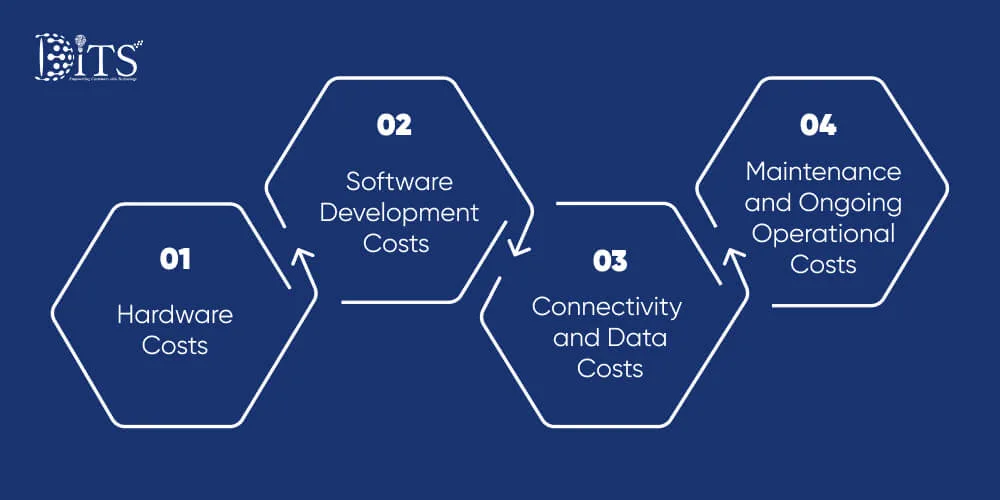
When executives evaluate fleet GPS tracking systems cost, the mistake is looking only at device pricing. The real investment sits across four structured layers.
A. Hardware Costs
Hardware forms the foundation. Without reliable devices, everything else fails.
GPS devices typically range from $50 to $250 per vehicle depending on capability
OBD-II plug-in trackers for quick installation
Hardwired trackers for permanent fleet installations
Dashcams for video telematics, often $100 to $300 per unit
Installation labor average $30 to $80 per vehicle
Choosing low-cost hardware may reduce upfront spending, but frequent device failures or inaccurate readings can quietly inflate long-term operational risk.
B. Software Development Costs
This is where cost variations become significant. Custom-built GPS tracking systems require:
Backend cloud infrastructure for data storage and processing
Mobile applications for iOS and Android
Web-based management dashboards
API integrations with ELD systems, fuel cards, ERP, and TMS platforms
Compliance modules for FMCSA and IFTA automation
Development costs vary depending on feature depth, integration complexity, and scalability requirements. A basic system may start around $40,000, while enterprise-grade builds can exceed $200,000.
C. Connectivity and Data Costs
Tracking requires consistent communication.
SIM cards with 4G or 5G plans
Monthly per-vehicle data charges averaging $10 to $25
Satellite backup for remote coverage zones
Over a 200-vehicle fleet, even a $15 monthly data charge becomes a $36,000 annual line item. Small numbers compound quickly.
D. Maintenance and Ongoing Operational Costs
Post-deployment expenses often surprise companies.
Cloud hosting on AWS, Azure, or GCP
System upgrades and cybersecurity patches
Customer support infrastructure
Long-term data storage for compliance retention
Most transportation companies underestimate this phase. Yet ongoing maintenance typically represents 15 to 25 percent of initial development cost annually. And skipping it leads to system instability.
The takeaway is simple. Building GPS tracking systems for equipment or fleet vehicles is not a device purchase, but a digital infrastructure investment.
Estimated Cost Range to Build GPS Tracking Systems for Transportation in U.S.
Costs vary based on fleet size and operational sophistication.
A small fleet consisting of 10 to 50 vehicles typically requires an estimated investment ranging from $25,000 to $75,000. For a mid-sized fleet of 50 to 250 vehicles, the investment generally increases to between $75,000 and $200,000. In contrast, an enterprise fleet with more than 250 vehicles usually demands a significantly higher investment, ranging from $200,000 to $500,000 or more, depending on the scale and operational requirements.
Several factors influence these ranges:
Custom features versus off-the-shelf solutions
Scalability of architecture
Integration with legacy platforms
Regulatory automation requirements
Here is a simplified comparison of cost dynamics.
Fleet Size
Estimated Development Investment
Estimated Monthly Operating Cost
Typical Complexity Level
10 to 50 Vehicles
$25,000 to $75,000
$1,000 to $3,000
Moderate
50 to 250 Vehicles
$75,000 to $200,000
$3,000 to $12,000
High
250+ Vehicles
$200,000 to $500,000+
$12,000+
Enterprise
These figures reflect structured builds, not basic plug-and-play subscriptions. And while the upfront numbers may appear significant, fuel savings and maintenance optimization often recover investment within 12 to 18 months.
Transportation companies evaluating fleet gps tracking systems cost should also consider how automobile gps tracking systems differ in pricing when advanced analytics and compliance modules are included.
Curious about GPS tracking system development costs?
Understand the investment required for building scalable GPS tracking solutions that align with your fleet size and operational complexity goals.
Build Vs Buy: Should Transportation Companies Develop Custom GPS Tracking Systems for Transportation
Every executive eventually faces this decision. Subscribe to an existing platform. Or build a system aligned precisely with operational workflows.
Off-The-Shelf GPS Software
Prebuilt platforms offer faster deployment and lower upfront cost. Monthly subscription pricing typically ranges from $20 to $60 per vehicle. For smaller fleets, this may appear attractive.
But limitations surface quickly:
Restricted customization
Limited integration flexibility
Ongoing recurring subscription costs
Vendor-controlled feature roadmap
Over five years, subscription expenses across a 150-vehicle fleet can exceed $400,000 and companies will still not own the system.
Custom GPS Tracking Software Development
Custom development requires higher initial capital, yet it provides strategic control.
Full branding ownership
Seamless integration with ERP, TMS, and compliance tools
Tailored dashboards for operations and finance teams
Scalable architecture aligned with growth plans
When transportation businesses already use automotive industry software solutions or custom dispatch platforms, integration flexibility becomes critical. A rigid SaaS tool often creates data silos instead of efficiency.
At DITS, we approach custom builds with structured AI software development methodologies. AI supports code quality, testing automation, and performance optimization throughout development. More importantly, AI is embedded within deployed systems for predictive insights and reporting intelligence. This ensures the final product is not just functional but continuously improving.
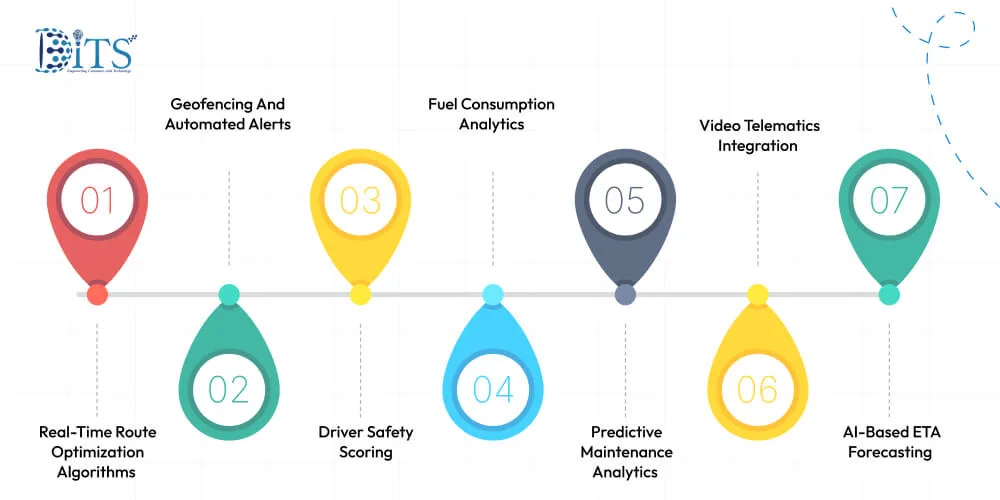
Advanced Features That Increase Development Costs
Advanced functionality elevates operational performance. It also increases development complexity.
Real-Time Route Optimization Algorithms
Dynamic routing based on traffic, weather, and delivery priority reduces fuel usage and late deliveries. Development requires mapping APIs, live data processing, and algorithm tuning.
Geofencing And Automated Alerts
Set virtual boundaries around warehouses or customer zones. Alerts trigger when vehicles enter or exit. Development involves backend event handling and notification systems.
Driver Safety Scoring
Harsh braking, acceleration patterns, and idle time are analyzed to generate performance metrics. This reduces insurance risk and accident frequency.
Fuel Consumption Analytics
Integrating engine data allows monitoring of fuel inefficiencies across routes and drivers. Over time, even a 5 percent improvement creates significant savings.
Predictive Maintenance Analytics
Instead of reacting to breakdowns, the system forecasts service intervals based on usage patterns. Nobody enjoys roadside downtime, especially when delivery windows are tight.
Video Telematics Integration
Dashcam footage synchronized with route data provides evidence for insurance disputes and safety audits.
AI-Based ETA Forecasting
Advanced AI models improve delivery time predictions using historical traffic and operational patterns. This is where asset tracking with GPS monitoring systems evolves from tracking to performance forecasting.
Each additional module may increase development cost by 10 to 20 percent. However, operational savings typically outweigh incremental investment within one to two years.
These enhancements are especially valuable when scaling automobile gps tracking systems, where predictive insights and automation directly influence operational efficiency.
Ready to drive ROI with intelligent GPS tracking?
See how our GPS tracking development approach delivers measurable ROI through fuel savings, predictive maintenance insights, and improved operational transparency.
Compliance Considerations for U.S. Transportation Businesses
Compliance failures are expensive. Not just financially, but reputationally.
FMCSA Regulations
Electronic logging integration must align with federal standards. Non-compliance penalties can exceed thousands per violation.
ELD Mandate Integration
Automated driver hours tracking reduces manual paperwork and audit stress.
IFTA Reporting Automation
Fuel tax calculations across state lines must be precise. Manual reporting increases error risk.
DOT Compliance Documentation
Inspection records, driver logs, and safety documentation require centralized storage.
Data Privacy and Cybersecurity Standards
Fleet data includes sensitive location and operational information. Weak security exposes businesses to liability.
When building gps tracking systems, compliance modules must be integrated from the start. This becomes even more critical for gps tracking systems for equipment operating across multiple jurisdictions.
Factors That Influence Final Cost in U.S. Market
No two transportation businesses operate the same way. Final pricing reflects operational variables.
Fleet size and geographic coverage
Cross-border routes between U.S., Canada, and Mexico
Cybersecurity requirements and data encryption standards
Integration with legacy platforms
Real-time processing volume
For example, companies expanding into heavy equipment logistics often require GPS tracking systems for equipment beyond vehicles. That increases hardware scope and backend capacity requirements.
Similarly, fleets leveraging IoT software development for sensor-based vehicle monitoring will face additional integration costs. However, deeper system connectivity usually delivers better operational control.
For organizations managing mixed fleets, combining vehicles with asset tracking with gps monitoring systems ensures better visibility across both mobile and stationary assets.
Why Choose DITS For GPS Tracking Software Development
Building GPS tracking systems requires more than technical execution. It demands operational clarity, compliance alignment, and scalable architecture that grows with your fleet.
At DITS, we design systems tailored for transportation businesses that need measurable results. From dispatch optimization to compliance automation, every module is structured around performance metrics that leadership teams actually track.
We follow a disciplined AI software development approach where AI supports coding efficiency, automated testing, quality assurance, and long-term maintainability. Beyond development, AI capabilities are embedded inside the platform to power predictive maintenance insights, intelligent routing logic, and performance analytics. The outcome is not just tracking. It is decision intelligence.
Our architecture is built for scale. Whether integrating with existing logistics and transportation software, ELD systems, or ERP platforms, we ensure seamless connectivity without data silos. For fleets managing vehicles, equipment, or mixed assets, we also enable asset tracking with GPS monitoring systems under a unified control layer.
Most importantly, we focus on ROI. Fuel reduction, compliance accuracy, downtime prevention, and operational transparency remain central to every implementation.
Should you build or buy GPS tracking solutions?
Evaluate whether custom GPS tracking software or subscription platforms better suit your long term strategy, integration needs, and business scalability.
Transportation companies operate in a margin-sensitive environment where inefficiency compounds rapidly. Investing in structured, scalable tracking infrastructure transforms fleet operations from reactive management to predictive control.
When designed strategically, GPS Tracking Systems for Transportation reduce fuel waste, improve compliance accuracy, and strengthen client trust. Whether implemented as automobile gps tracking systems or expanded into asset tracking with gps monitoring systems, the value lies in turning operational data into actionable decisions.
Frequently asked questions
Development timelines range from 3 to 6 months for mid-sized fleets and up to 9 months for enterprise-scale implementations with complex integrations.
Dinesh Thakur
25+ years of IT software development experience in different domains like Business Automation, Healthcare, Retail, Workflow automation, Transportation and logistics, Compliance, Risk Mitigation, POS, etc. Hands-on experience in dealing with overseas clients and providing them with an apt solution to their business needs.